French silk ice cream lands in that perfect middle ground between frozen custard and chocolate mousse. It scoops with a satin finish, melts into a deep chocolate cream, and carries the same bittersweet, buttery richness people love in French silk pie without turning heavy or icy. The texture is what makes it memorable: smooth enough to feel luxe, but still light enough that you keep going back for another spoonful.
The trick is building a custard base with egg yolks and just enough heat to thicken it without scrambling. From there, the melted dark chocolate and cocoa work together for depth, while a little whipped cream folded in at the end keeps the final churned ice cream plush instead of dense. I use 70% chocolate here because it keeps the sweetness in check and lets the chocolate taste grown-up and clean, not flat.
Below, I walk through the exact cues that keep the custard silky, plus the best way to fold in the whipped cream so you don’t lose that mousse-like texture.
The custard thickened up exactly when you said it would, and after the churn it had that dreamy mousse texture instead of getting hard and icy in the freezer.
Save this French Silk Ice Cream for the nights when you want a deeply chocolate scoop with a mousse-like finish.
The Custard Has to Stop at 175°F, Not a Degree Later
The whole texture of this ice cream depends on the custard base. Egg yolks thicken beautifully, but once they go past that sweet spot, they start to curdle and turn grainy. I pull the pan at 175°F because that’s hot enough to thicken the mixture into a spoon-coating custard without pushing it into scrambled-egg territory.
Another thing that matters here is the whisking pace when you add the hot dairy to the yolks. A slow stream while whisking constantly keeps the yolks tempered and smooth. If you dump it in all at once, the eggs can seize at the edges before they ever get a chance to blend in.
What the Chocolate and Cream Are Each Doing Here
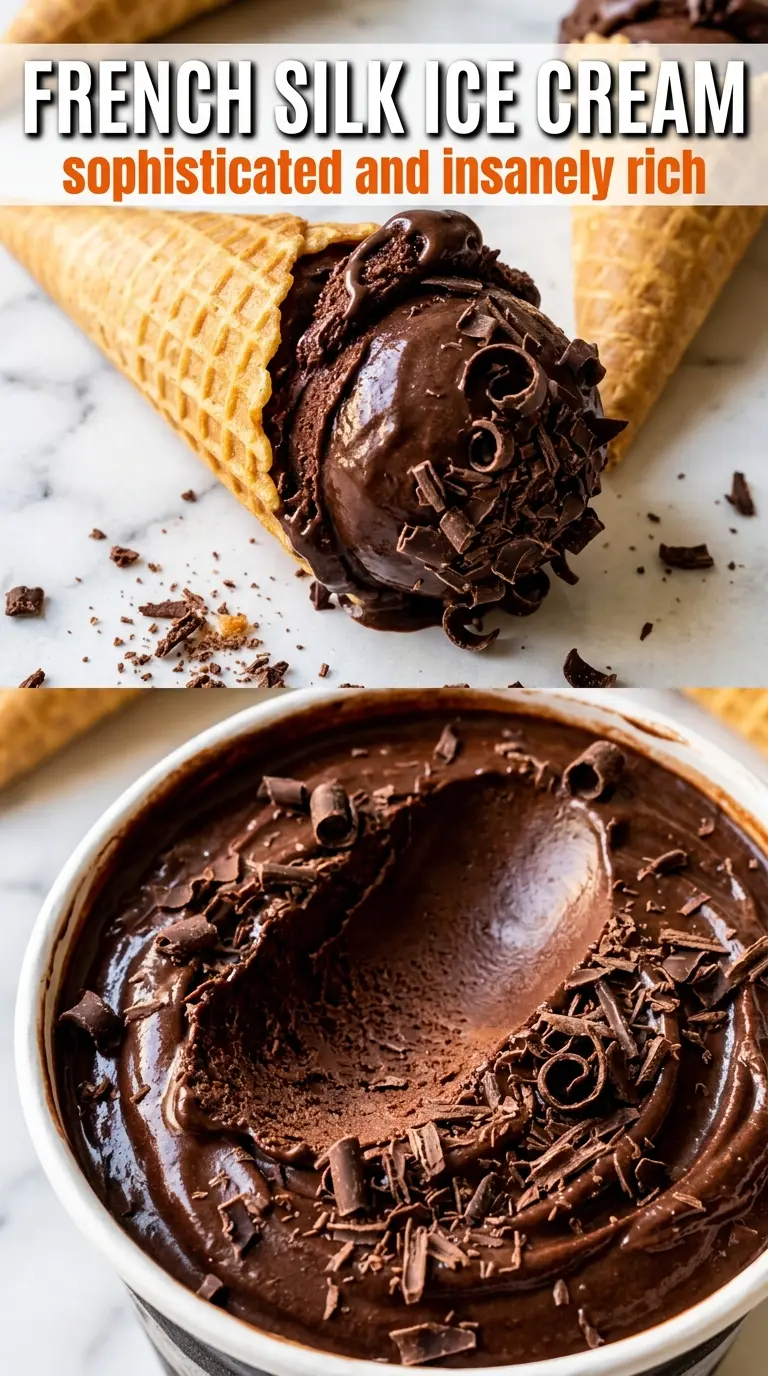
- Dark chocolate — Use a 70% bar if you can. It melts smoothly and gives the ice cream that deep, almost truffle-like bitterness that keeps the dessert from tasting one-note. Chocolate chips work in a pinch, but they usually contain stabilizers that make the flavor less clean.
- Heavy cream — This does two jobs: it enriches the custard and, in that final whipped portion, creates the mousse-like lift. Don’t swap in half-and-half if you want the same plush texture; it won’t whip the same way and the finished ice cream will taste thinner.
- Whole milk — The milk keeps the base from becoming cloying or dense. Lower-fat milk works, but the texture gets less luxurious. If you need a dairy-free version, the closest swap is full-fat canned coconut milk, though you’ll pick up a coconut note.
- Egg yolks — They give the base body and that classic custard richness. There isn’t a direct substitute here if you want the same French silk feel; the yolks are what make it taste velvety instead of just chocolate-flavored.
- Unsweetened cocoa powder — Cocoa sharpens the chocolate flavor and makes the color darker and more intense. It also helps the dessert taste like chocolate all the way through, not just sweet cream with melted chocolate in it.
Turning the Custard Into a Scoopable Frozen Mousse
Melting the Chocolate First
Start by melting the chopped chocolate over a double boiler until it’s glossy and fully smooth, then set it aside. This keeps the chocolate from seizing when it hits the hot custard later. If it gets even a little grainy here, it usually means steam or a drop of water got into the bowl.
Cooking the Custard Without Scrambling It
Heat the cream, milk, and cocoa until the mixture is steaming, not boiling. Whisk it slowly into the sugar-and-yolk mixture, then return everything to the saucepan and cook until it reaches 175°F. The custard should coat the back of a spoon and leave a clean line when you drag a finger through it.
Finishing the Base and Cooling It Completely
Take the pan off the heat before adding the melted chocolate, vanilla, and salt. Whisk until the mixture turns fully smooth, then strain it. That straining step is worth the extra minute because it catches any tiny egg bits before they can ruin the final texture.
Folding for the Silkier Finish
Whip the remaining cream to soft peaks, not stiff ones, then fold it into the cooled custard. Soft peaks disappear into the base without deflating it as much, which is what gives this ice cream that mousse-like body. If the custard is still warm, the whipped cream melts out and you lose the airy finish.
Churning and Firming Up
Chill the base completely before churning, then freeze the churned ice cream until firm. If you rush the chilling stage, the machine has to work harder and the texture gets less smooth. After churning, the ice cream will look softer than store-bought ice cream, but it firms into that ideal silky scoop after a few hours in the freezer.
Use Espresso Powder for a Darker Chocolate Edge
A small pinch of espresso powder will deepen the chocolate flavor without making the ice cream taste like coffee. Stir it into the warm dairy with the cocoa so it dissolves fully. This is the move if you want a more bittersweet finish.
Make It Dairy-Free With Coconut Cream
Swap the heavy cream and milk for full-fat coconut milk and coconut cream, then keep the same technique. The ice cream will still be silky, but it will taste faintly of coconut and won’t be quite as neutral as the original.
Skip the Ice Cream Maker if You’re Making a Frozen Custard Base
If you don’t have a machine, freeze the chilled base in a shallow pan and stir it every 30 minutes until firm enough to scoop. The texture won’t be as airy, but it will still be rich and smooth if you keep breaking up the ice crystals early and often.
Storage and Reheating
- Refrigerator: The custard base can be chilled up to 2 days before churning. Once frozen, the ice cream should stay at its best for about 2 weeks.
- Freezer: Store it in a lidded container with parchment pressed directly on the surface to limit ice crystals. It freezes well, but the texture is best in the first week.
- Reheating: Let it sit on the counter for 5 to 10 minutes before scooping. Don’t microwave it; that melts the edges and leaves the center icy.
Answers to the Questions Worth Asking
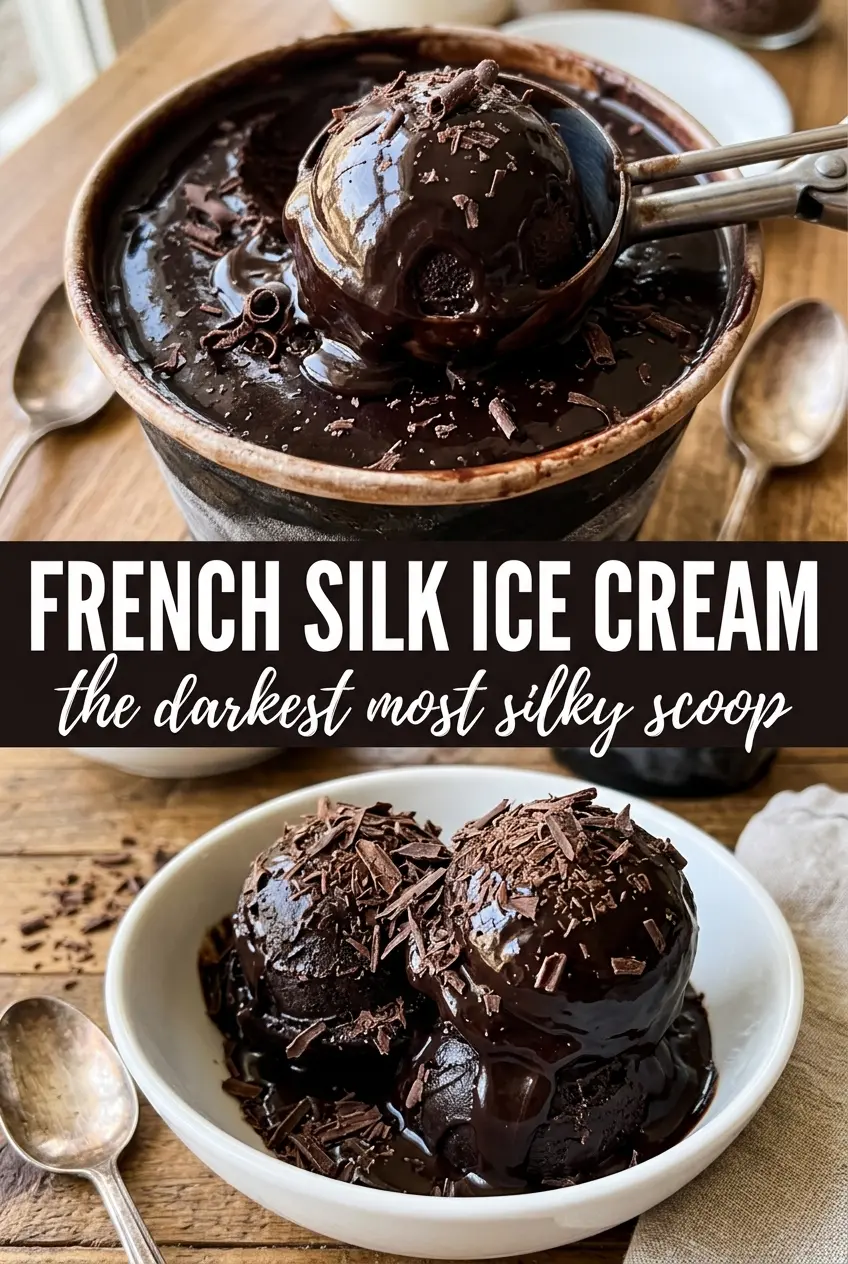
French Silk Ice Cream
Ingredients
Equipment
Method
- Melt the dark chocolate over a double boiler, stirring until smooth, glossy, and fully melted. Remove from heat and set aside.
- Heat 1 1/2 cups heavy cream, whole milk, and cocoa powder until steaming, with small bubbles around the edges. Slowly whisk the hot mixture into egg yolks beaten with granulated sugar.
- Return the mixture to a saucepan and cook, stirring constantly, until it thickens to 175F. Turn off the heat.
- Whisk the melted dark chocolate into the hot custard until completely smooth and shiny. The texture should look uniform with no chocolate streaks.
- Whisk in vanilla extract and salt until evenly incorporated, then strain the custard for an extra-silky texture. Let it cool completely.
- Whip the remaining 1/2 cup heavy cream to soft peaks until it holds gentle ridges. Fold it into the cooled chocolate custard just until no streaks remain.
- Refrigerate the mixture for 4 hours, until thoroughly chilled and pourable like thick cream. Visual cue: it should look smooth and slightly set around the edges.
- Churn in an ice cream maker according to the manufacturer’s timing until it reaches a soft-serve consistency. Then freeze until firm, for a scoopable, mousse-like finish.