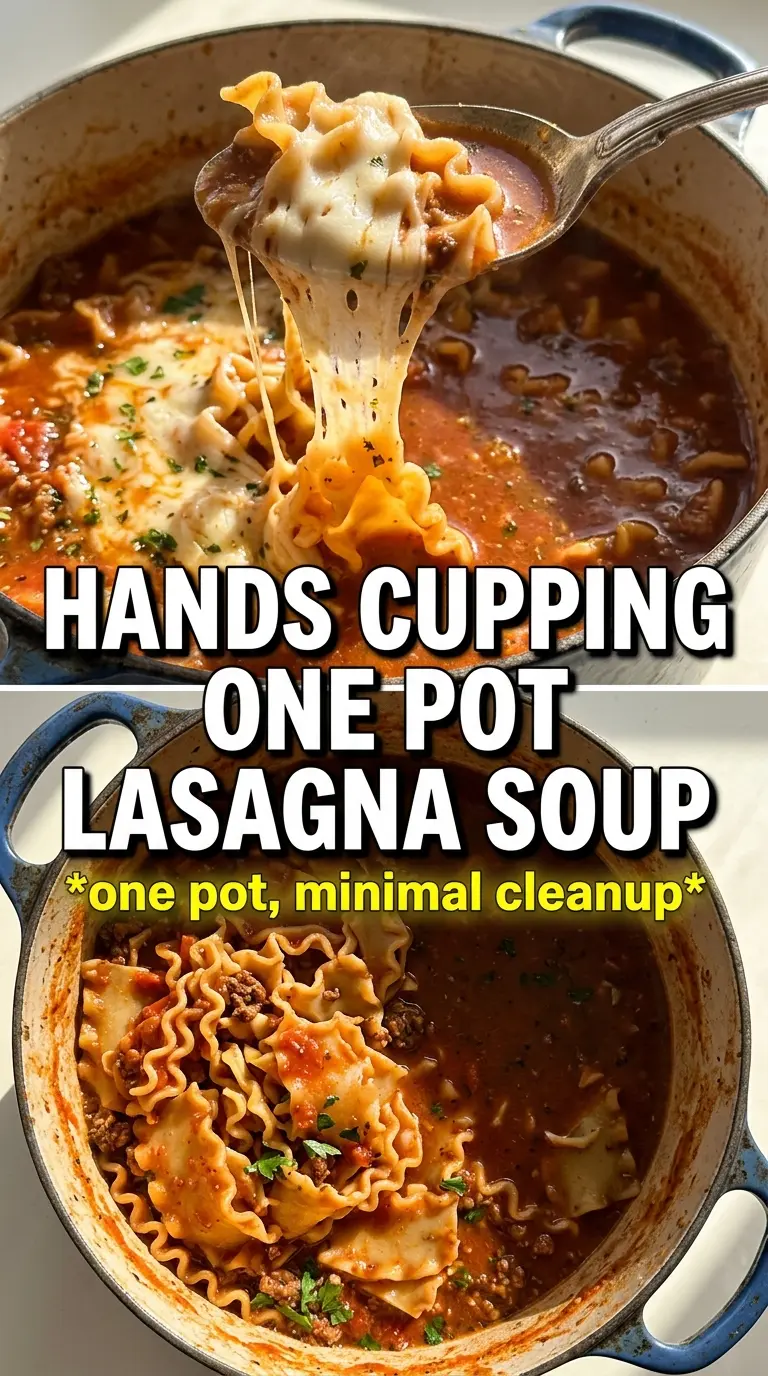
One Pot Lasagna Soup gives you everything people love about lasagna without the layering, baking, or pile of dishes afterward. The broth turns rich and tomatoey, the noodles soften into tender ribbons, and the sausage keeps every bite hearty enough to stand on its own. The best part is the cheese topping melting into the hot soup, turning each bowl into something creamy, savory, and deeply satisfying.
What makes this version work is building the flavor in the pot before the broth goes in. Browning the sausage first gives you a seasoned base, and cooking the tomato paste with the onion and garlic takes away that raw, tinny edge that can make tomato soup taste flat. Broken lasagna noodles are the other key move here — they cook fast, thicken the broth a little as they simmer, and give you that familiar lasagna texture without needing a casserole dish.
Below, I’ve included the small timing details that keep the noodles from sticking and the cheese topping from turning watery. Those are the things that separate a decent soup from the kind you’ll want to make again next week.
The noodles stayed perfectly tender and the broth got thicker as it sat for a few minutes. I loved that the ricotta mixture melted in instead of disappearing, and my husband asked if I could make it again the next night.
Save this one pot lasagna soup for the nights when you want all the comfort of lasagna with a fast, one-pot finish.
The One Place This Soup Usually Goes Wrong
The mistake most people make is letting the noodles sit too long in a rolling boil. Lasagna noodles need enough time to soften, but if the soup is too aggressive, they shed starch fast, stick together, and turn the pot cloudy in a way that feels heavier than it should. A steady simmer gives you better control and keeps the broth tasting clean while the noodles finish cooking.
The other point that matters is the order of the base. If you dump the tomatoes and broth in before the garlic and tomato paste have had a minute or two in the fat from the sausage, you miss the chance to deepen the flavor. That short cook time on the paste matters more than it looks on paper. It makes the soup taste like it simmered longer than it did.
What Each Ingredient Is Actually Doing In This Dish
- Italian sausage — This is the backbone of the soup. It seasons the pot as it browns, so you get built-in flavor instead of having to force it later with extra seasoning. Hot or mild both work; use hot if you want a little more kick without adding extra pepper flakes.
- Tomato paste — This is what gives the broth that cooked-all-day depth. It needs a couple of minutes in the hot pot so it loses the sharp raw taste and turns brick-red and fragrant. That step is worth it and can’t be skipped with a substitute.
- Crushed tomatoes and diced tomatoes — Crushed tomatoes build the body of the soup, while diced tomatoes leave little bursts of texture in the bowl. If you only have crushed tomatoes, use them for both cans and the soup will be a little smoother. If you like a chunkier finish, keep the diced tomatoes exactly as written.
- Lasagna noodles — Broken noodles are what make this feel like lasagna instead of just tomato sausage soup. Break them into rough 2-inch pieces so they fit on a spoon and cook evenly. Thin pasta won’t give the same chew or shape, so it changes the dish more than most swaps.
- Ricotta, mozzarella, and parmesan — This topping is doing the lasagna part. Ricotta gives creaminess, mozzarella melts into strands, and parmesan adds salt and a little bite. If you want a lighter bowl, use less topping; if you want the full lasagna effect, be generous.
Building the Bowl So the Noodles Stay Tender
Browning the Sausage First
Cook the sausage over medium-high heat until it loses its pink color and picks up some caramelized bits on the bottom of the pot. Those browned spots are part of the flavor base, so don’t scrub them away. Drain off excess fat if there’s a lot in the pot, but leave a little behind so the onion has something to cook in.
Cooking the Aromatics and Tomato Paste
Add the onion and let it soften for about 3 minutes before the garlic goes in. The garlic only needs a short cook, just until fragrant, or it can turn bitter. Stir in the tomato paste and let it darken slightly in the hot fat; that short step is what keeps the broth from tasting thin.
Simmering the Broth and Pasta
Once the tomatoes, broth, and seasonings are in, bring the pot to a boil and then settle it down to a simmer before adding the noodles. The noodles should move gently in the liquid, not tumble hard, or they’ll break down too fast. Stir every 2–3 minutes so nothing sticks to the bottom, and start checking at 10 minutes; you want tender noodles with a little chew, not mush.
Finishing With the Cheese Topping
Mix the ricotta, mozzarella, parmesan, and basil in a bowl while the soup finishes cooking. Spoon a generous dollop onto each bowl right before serving so it softens from the heat without disappearing into the broth. If the soup is too hot when it hits the cheese, the ricotta can separate into little curds instead of staying creamy, so let each bowl sit for a minute first if needed.
How to Adapt This for a Smaller Pot, a Lighter Bowl, or Different Sausage
Make It Lighter With Turkey Sausage
Turkey sausage works well here and still gives the soup enough seasoning, but the broth will be a little leaner and less rich. Add a splash more olive oil if the pot looks dry when you cook the onions, and taste carefully at the end because turkey sausage can be less salty than pork.
Make It Vegetarian
Swap the sausage for a plant-based Italian sausage or a mix of sautéed mushrooms and fennel if you want a meatless version with some depth. Use vegetable broth instead of chicken broth. You’ll lose a little of the savory richness from the sausage fat, so the tomato paste step matters even more here.
Make It Gluten-Free
Use a sturdy gluten-free lasagna noodle or another short gluten-free pasta that holds up in soup. Cook it just until tender, because gluten-free pasta can go soft fast if it sits too long in hot broth. If the soup thickens more than you like, add a splash of broth before serving.
Storage and Reheating
- Refrigerator: Store for up to 4 days. The noodles keep soaking up broth, so the soup thickens as it sits.
- Freezer: Freeze the soup without the cheese topping if you can. It freezes best before the noodles go in, because pasta gets soft after thawing.
- Reheating: Warm it gently over medium-low heat with a splash of broth or water. Don’t boil it hard, or the noodles will break down and the sausage can turn tough.
Questions I Get Asked About This Recipe

One Pot Lasagna Soup
Ingredients
Equipment
Method
- Brown the Italian sausage directly in a large wide Dutch oven until cooked through, then drain excess fat.
- Add the diced onion to the pot and cook for 3 minutes, until softened.
- Add the minced garlic and tomato paste and cook for 2 minutes, stirring until fragrant.
- Pour in the crushed tomatoes, diced tomatoes, and chicken broth, then stir in Italian seasoning, dried basil, and red pepper flakes.
- Bring the soup to a boil, then add the broken lasagna noodles.
- Simmer for 10-12 minutes, stirring every 2-3 minutes to prevent sticking, until the noodles are tender.
- Season with salt and pepper to taste, keeping everything in the same pot.
- Mix ricotta, shredded mozzarella, parmesan, and basil together for the cheese topping.
- Serve the soup with a generous spoonful of cheese topping in each bowl.