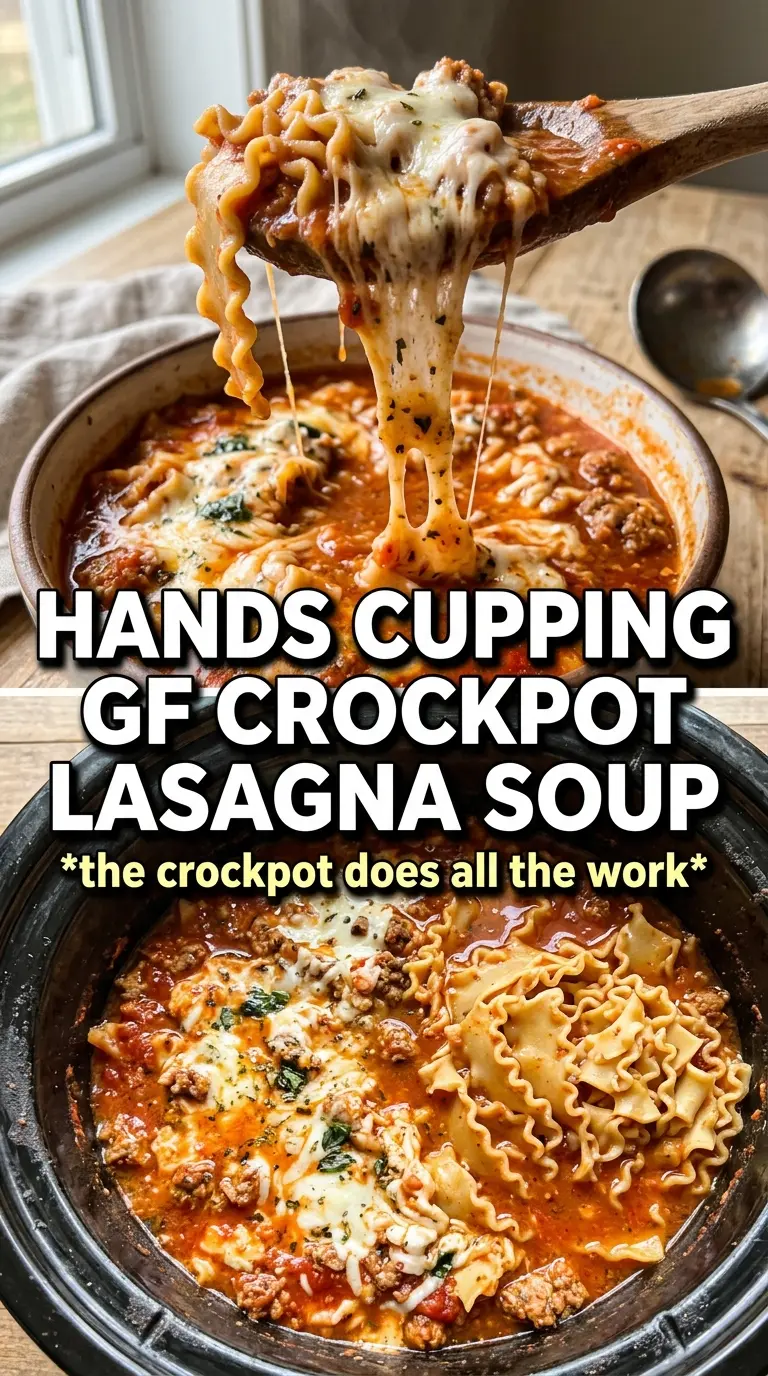
Gluten free crockpot lasagna soup gives you all the things people love about lasagna without the layering, babysitting, or oven space. The broth turns rich and tomato-forward, the sausage adds depth, and the broken pasta soaks up just enough of that seasoned base to feel hearty without getting heavy. The best bowls have a little stretch from the cheese dollop melting into the hot soup, which is exactly why this version keeps showing up in my kitchen.
The slow cooker does the long, gentle work here, but the timing still matters. Brown the sausage first so the soup starts with real flavor instead of a gray, boiled meat taste, and wait to add the gluten-free noodles until the end so they stay intact. Gluten-free pasta can go from tender to mushy fast, especially in a slow cooker, so the last half hour is the part you watch closely.
Below you’ll find the small details that keep the broth balanced, the pasta from overcooking, and the ricotta-mozzarella topping creamy instead of clumpy. If you’ve had gluten-free soup recipes turn soft or bland before, this one fixes both problems.
The sausage stayed crumbly, the broth turned rich without getting greasy, and my gluten-free noodles were still tender after six hours because I added them at the end. The ricotta topping melted into the bowl and made it taste just like lasagna in spoon form.
Save this gluten free crockpot lasagna soup for the nights when you want a slow-cooked, cheesy bowl with no noodle drama.
The Part That Keeps Gluten-Free Noodles From Turning to Mush
The biggest mistake in slow cooker pasta soup is treating gluten-free noodles like regular ones. They don’t hold on as long, and once they cross the line, there’s no bringing them back. That’s why the pasta goes in at the end, after the broth has already picked up flavor from the sausage, tomatoes, and seasonings. By the time the noodles are added, the soup is already where it needs to be.
Browned sausage matters here for more than taste. It gives you little caramelized bits in the bottom of the pan, and those carry into the crockpot and deepen the broth. If you skip the browning step, the soup still works, but it tastes flatter and more one-note. The same goes for tomato paste: it adds body that keeps the soup from tasting like thin tomato water.
What Each Ingredient Is Actually Doing in This Bowl
- Italian sausage — This brings the built-in seasoning and fat that make the broth taste like lasagna instead of plain tomato soup. Mild or hot both work; hot sausage gives the whole pot more kick without extra effort.
- Crushed tomatoes and diced tomatoes — The crushed tomatoes make the broth smooth and substantial, while the diced tomatoes leave little pockets of texture. Using both gives you a soup that feels layered, not pureed.
- Chicken broth — Use a certified gluten-free broth here, since this recipe is only as gluten-free as the stock you pour in. A good broth keeps the tomato from tasting sharp and gives the soup a savory backbone.
- Gluten-free lasagna noodles or penne — Broken lasagna noodles give the most classic feel, but GF penne is a solid backup if that’s what you have. Add either one late and check early, because gluten-free pasta can go soft fast in slow heat.
- Ricotta, mozzarella, and parmesan — This is the lasagna part of the lasagna soup. The ricotta keeps the topping creamy, the mozzarella melts into strings, and the parmesan sharpens everything so the bowl doesn’t taste flat.
Building the Broth Before the Pasta Goes In
Starting with the sausage and aromatics
Brown the sausage first, then drain it before it goes into the slow cooker. You want color on the meat, not steam, because that browning is where the deeper flavor comes from. Add the onion and garlic with the sausage so they soften into the broth instead of staying sharp and raw-tasting. If the sausage is left greasy, the soup can feel heavy, so draining it keeps the texture clean.
Letting the slow cooker do the middle work
Once the tomatoes, broth, tomato paste, and seasonings are in, let the crockpot cook low and slow until the broth tastes rounded and the onion disappears into the base. This is the part that develops the lasagna-like depth without any stirring or fuss. If you’re using the high setting, shorten the time but keep the soup covered so the top doesn’t dry out. The goal is a tomato broth that smells rich and savory, not bright and thin.
Adding the gluten-free pasta at the end
Stir in the broken pasta during the last 30 to 35 minutes and start checking it early. Gluten-free noodles vary a lot by brand, and some will hold their shape better than others. If the broth isn’t bubbling enough to cook them, turn the heat up to high for the finish. Stop cooking when the pasta is tender with a little bite left, because it keeps softening in the hot soup after you turn the crockpot off.
Finishing with the cheese dollop
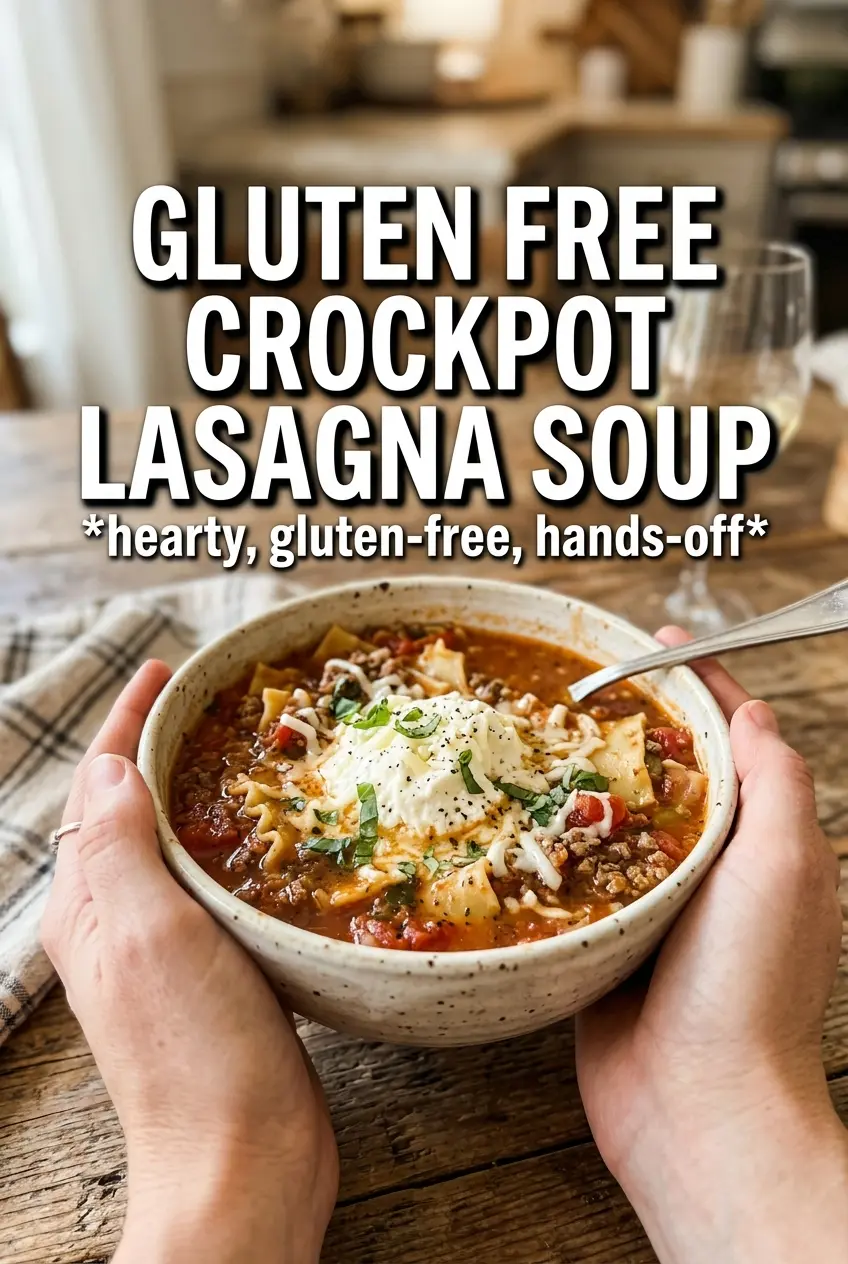
Mix the ricotta, mozzarella, parmesan, and basil right before serving so the topping stays thick and spoonable. Drop a generous scoop into each bowl, then ladle the hot soup around it so the cheese softens instead of disappearing into the pot. That contrast between the creamy top and the brothy soup is what makes the dish taste like lasagna, not just tomato soup with pasta. Salt at the end, after the cheese goes in, so you don’t overshoot the seasoning.
How to Adapt This Soup Without Losing the Good Part
Make it dairy-free
Skip the ricotta-mozzarella-parmesan dollop and serve the soup with a spoonful of unsweetened dairy-free ricotta or a drizzle of olive oil and chopped basil. The soup base itself is already dairy-free, so this swap keeps the flavor focused on tomato and sausage while changing the finish instead of the whole dish.
Use ground turkey or chicken sausage
Lean sausage works if you want a lighter bowl, but it won’t bring as much richness as pork sausage. If you go this route, keep the tomato paste and cheese topping in place so the soup still tastes full and satisfying.
Make it a little spicier
Use hot Italian sausage and increase the red pepper flakes by another 1/4 teaspoon. That gives the broth a slow warmth without turning it harsh, and the ricotta topping helps mellow the heat in each bowl.
Storage and Reheating
- Refrigerator: Store leftovers for up to 4 days. The pasta will keep absorbing broth, so expect a thicker soup the next day.
- Freezer: Freeze the soup base without the pasta for the best texture. Gluten-free noodles tend to turn soft after thawing, so add fresh pasta when you reheat if you want the best bowl.
- Reheating: Warm gently on the stove over medium-low heat, adding a splash of broth if needed. If you reheat it hard and fast, the pasta can break apart and the dairy topping can turn grainy when stirred in too early.
Answers to the Questions Worth Asking
Gluten Free Crockpot Lasagna Soup
Ingredients
Equipment
Method
- Brown and drain the Italian sausage, then add it to the Crockpot with the diced onion and minced garlic.
- Add the crushed tomatoes, diced tomatoes, chicken broth, tomato paste, Italian seasoning, dried basil, and red pepper flakes to the Crockpot.
- Cook on Low for 5–7 hours (or High for 2.5–3 hours) until the tomato broth tastes fully developed.
- In the last 30–35 minutes, add the broken gluten-free lasagna noodles or GF penne to the Crockpot.
- Increase to High if needed, and cook until the GF pasta is tender, checking frequently to prevent overcooking.
- Season the soup with salt and pepper to taste.
- Mix the cheese dollop by combining ricotta, shredded mozzarella, and parmesan.
- Serve hot in bowls with a generous dollop of the cheese mixture, topped with fresh basil.