Dumpling ramen bowl delivers the kind of dinner that tastes layered and finished without asking for much more than a pot, a whisk, and a few smart pantry staples. The broth comes out savory and round with miso and soy, the dumplings stay plump, and the noodles hold their bite instead of turning soft and muddy in the bowl. The best part is how each topping earns its place: silky egg yolk, sweet corn, crisp-tender bok choy, and a little nori to pull everything together.
What makes this version work is keeping the noodles separate until the last minute and building the broth on a gentle simmer instead of a hard boil. Miso loses some of its depth when it gets cooked too aggressively, and ramen noodles can go from springy to swollen fast if they sit in the broth too long. Warming the dumplings directly in the soup keeps the whole bowl cohesive without adding extra steps.
Below, I’m breaking down the one detail that keeps the broth clean and balanced, plus a few ways to adjust the bowl if you want it richer, lighter, or more pantry-friendly.
The broth had such a nice miso depth, and the dumplings stayed tender instead of falling apart. I liked that the noodles were cooked separately because the last bowl was just as good as the first.
Save this dumpling ramen bowl for nights when you want a fast miso broth, tender dumplings, and a glossy soft-boiled egg in one bowl.
The Part That Keeps the Broth Clean Instead of Cloudy
The broth only tastes polished when the miso goes in gently. If you boil it hard after whisking it in, the flavor flattens and the soup can turn slightly coarse instead of smooth and savory. Keep the heat at a quiet simmer, whisk until the paste disappears, then add the dumplings and vegetables once the broth tastes balanced.
Cooking the noodles in a separate pot matters for the same reason. Ramen releases starch fast, and that starch is what makes leftover broth turn heavy and opaque. By draining the noodles before they meet the soup, you keep the broth bright and the texture springy from the first bowl to the last.
What Each Ingredient Is Actually Doing In This Bowl
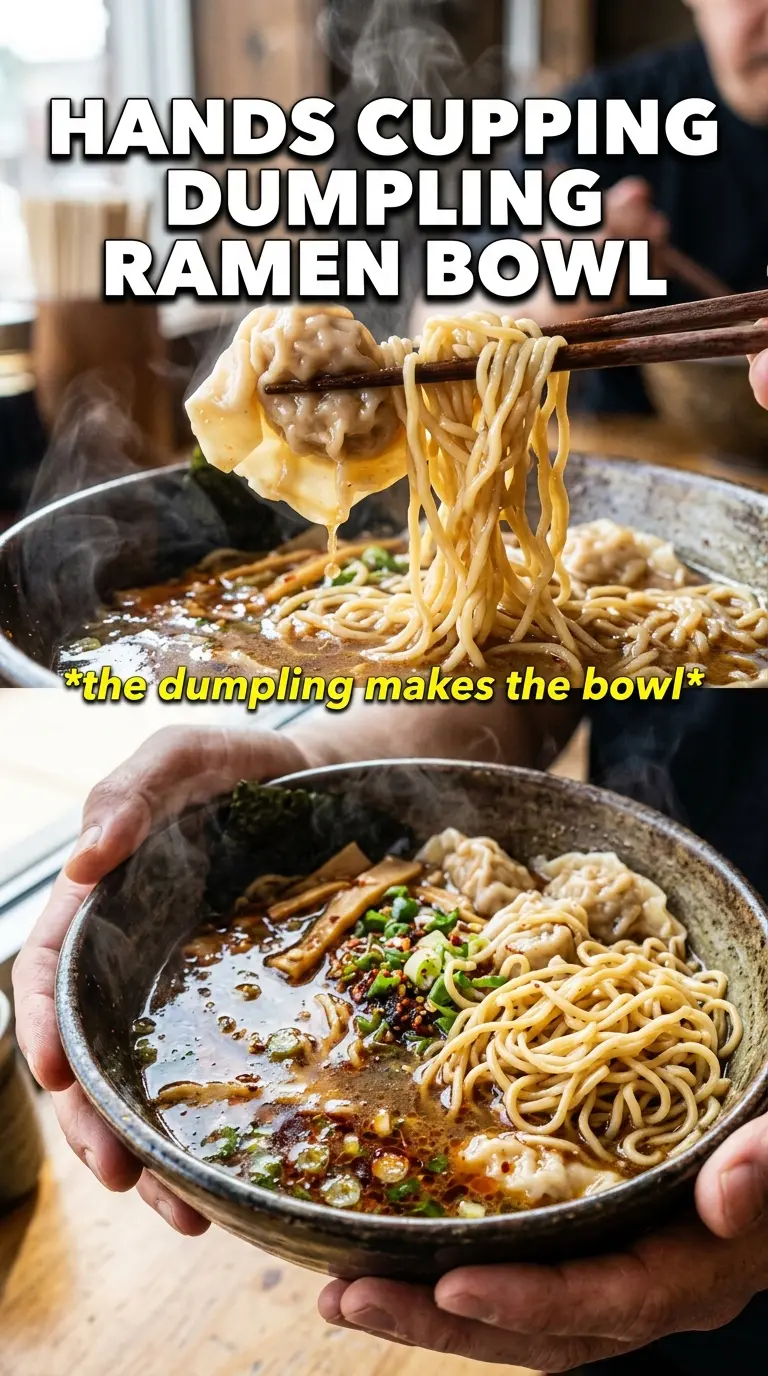
- Frozen dumplings — These carry the whole bowl. Pork dumplings give a little more richness, while chicken keeps the broth lighter. Use them straight from frozen; thawed dumplings can get sticky and lose their shape before they’re heated through.
- White miso paste — This gives the broth its mellow depth. White miso is the one I’d keep exact if you can, because darker miso can overpower the broth and make it taste saltier than you want. Whisk it into hot broth off a hard boil so it dissolves cleanly.
- Fresh ramen noodles — Fresh noodles cook fast and stay springy. Dried ramen works in a pinch, but it usually has a firmer, less bouncy bite and can absorb more broth. Cook them separately and under a minute shy of fully done if they’ll sit while you finish the toppings.
- Soft-boiled eggs — The yolk turns the broth silky as it breaks into the bowl. Seven minutes is the sweet spot for a set white and a runny center; much longer and you lose that contrast.
- Bok choy and corn — Bok choy adds freshness and a little crunch, while corn brings sweetness that balances the miso. Baby bok choy cooks especially well here, but regular bok choy cut into halves works just as well if the stems get a head start in the broth.
Building the Bowl So Nothing Gets Overcooked
Start with a Gentle Miso Broth
Bring the chicken broth to a simmer first, then whisk in the miso, soy sauce, mirin, and sesame oil. You want the miso fully dissolved before anything else goes in, and the broth should taste savory with a little sweetness, not aggressively salty. If the heat is too high, the miso can separate and the broth will lose its clean finish.
Warm the Dumplings in the Broth
Add the frozen dumplings directly to the simmering broth and cook until they’re hot all the way through, about 5 to 7 minutes. They should feel plump and springy, not gummy or torn. Keep the simmer steady; a rolling boil can split the wrappers before the centers heat.
Wilt the Greens Briefly
Drop in the bok choy near the end and cook just until the stems turn bright and the leaves relax, usually 2 to 3 minutes. You’re aiming for tender-crisp stems, not limp greens. If you cook them much longer, they lose their shape and the bowl starts tasting flat.
Finish Each Bowl Separately
Cook the ramen noodles in a separate pot, drain them well, then divide them into bowls before ladling over the broth and dumplings. That order keeps the noodles from soaking up all the broth before you sit down. Top with the egg, corn, green onions, nori, sesame seeds, and chili oil right before serving so the bowl looks sharp and the textures stay distinct.
How to Adjust the Bowl Without Breaking It
Make it dairy-free and naturally silky
This bowl is already dairy-free as written. The silkiness comes from the miso, the egg yolk, and the sesame oil, so you don’t need any creamy add-ins to get a rounded broth. Keep the toppings the same and it still eats like a full, balanced bowl.
Swap in vegetable broth for a lighter bowl
Vegetable broth works well if you want a less meaty base, but it needs the miso and soy sauce to carry more of the flavor. Taste the broth before adding the dumplings and nudge in a little extra soy or salt if it tastes thin. This swap makes the bowl lighter, not weaker, as long as the seasoning is on point.
Use potstickers or wontons if that’s what you have
Any frozen dumpling-style filling can work here, but watch the cook time because thinner wrappers will soften faster than thicker ones. If the package instructions are shorter than 5 minutes, use those as your guide and stop once they’re heated through. The broth still carries the bowl; the dumplings just need to stay intact.
Skip the egg and keep it vegetarian
If you’re making a vegetarian version, use vegetable broth and swap in vegetable dumplings or tofu dumplings instead of pork or chicken. The egg is optional, but if you leave it out, add a few extra sesame seeds or a drizzle of sesame oil at the end so the bowl still feels finished. The key is keeping enough richness in the broth to stand up to the noodles.
Storage and Reheating
- Refrigerator: Store broth, dumplings, noodles, and toppings separately for up to 3 days. The noodles soften quickly if they sit in the soup.
- Freezer: Freeze the broth and dumplings, but not the noodles or toppings. Reheat the frozen broth gently and cook fresh noodles when you’re ready to serve.
- Reheating: Warm the broth over low heat until steaming, then add the dumplings just long enough to heat through. If you boil the leftovers hard, the dumplings can burst and the broth will taste less clean.
Answers to the Questions Worth Asking
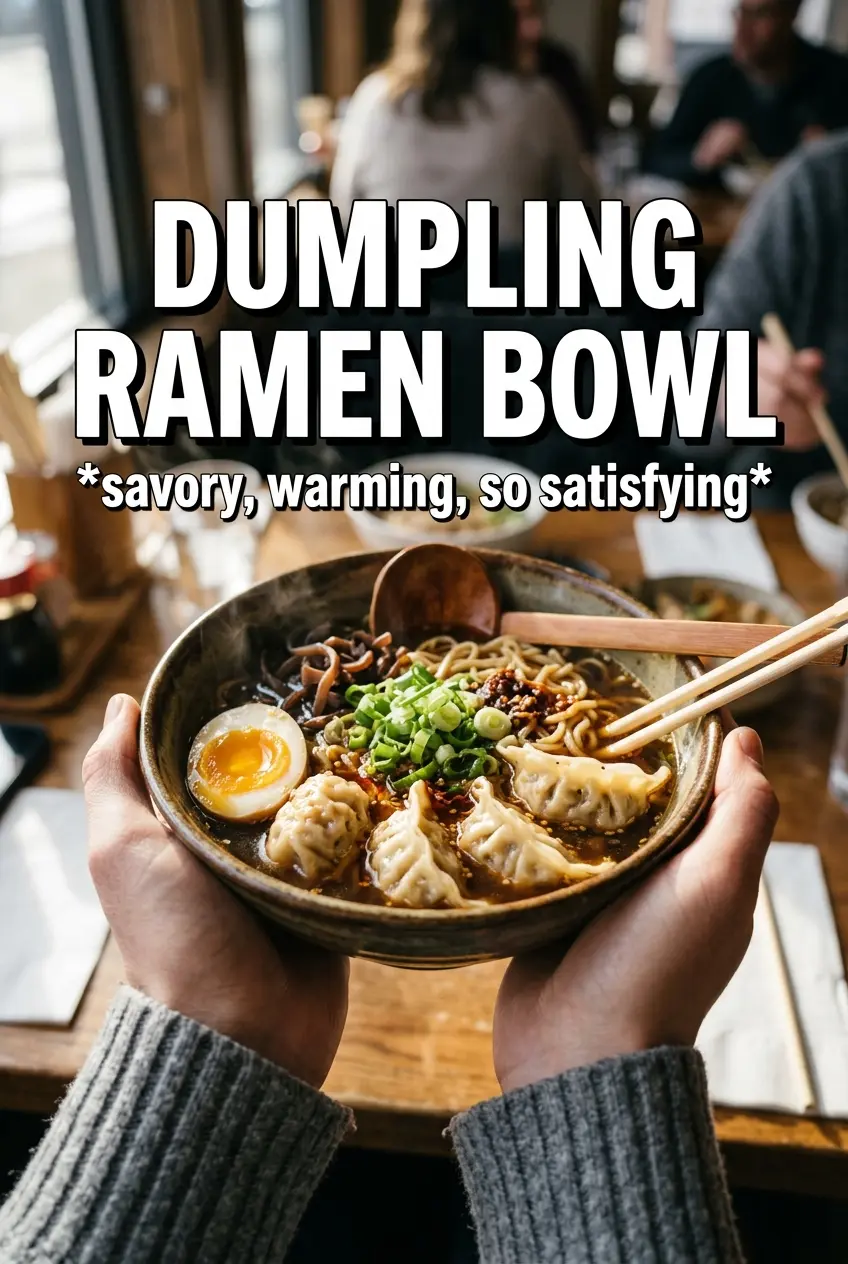
Dumpling Ramen Bowl
Ingredients
Equipment
Method
- Bring the chicken broth to a simmer in a Dutch oven, then whisk in the white miso paste, soy sauce, mirin, and sesame oil until smooth.
- Add the frozen pork or chicken dumplings to the simmering broth and cook for 5-7 minutes, until cooked through.
- Add the halved bok choy and cook for 2-3 minutes, until wilted.
- Cook the fresh ramen noodles separately according to package instructions, then drain them.
- Divide the drained noodles between 4 bowls, then ladle the broth and dumplings over the noodles.
- Top each bowl with halved soft-boiled eggs, corn kernels, sliced green onions, nori, sesame seeds, and chili oil.