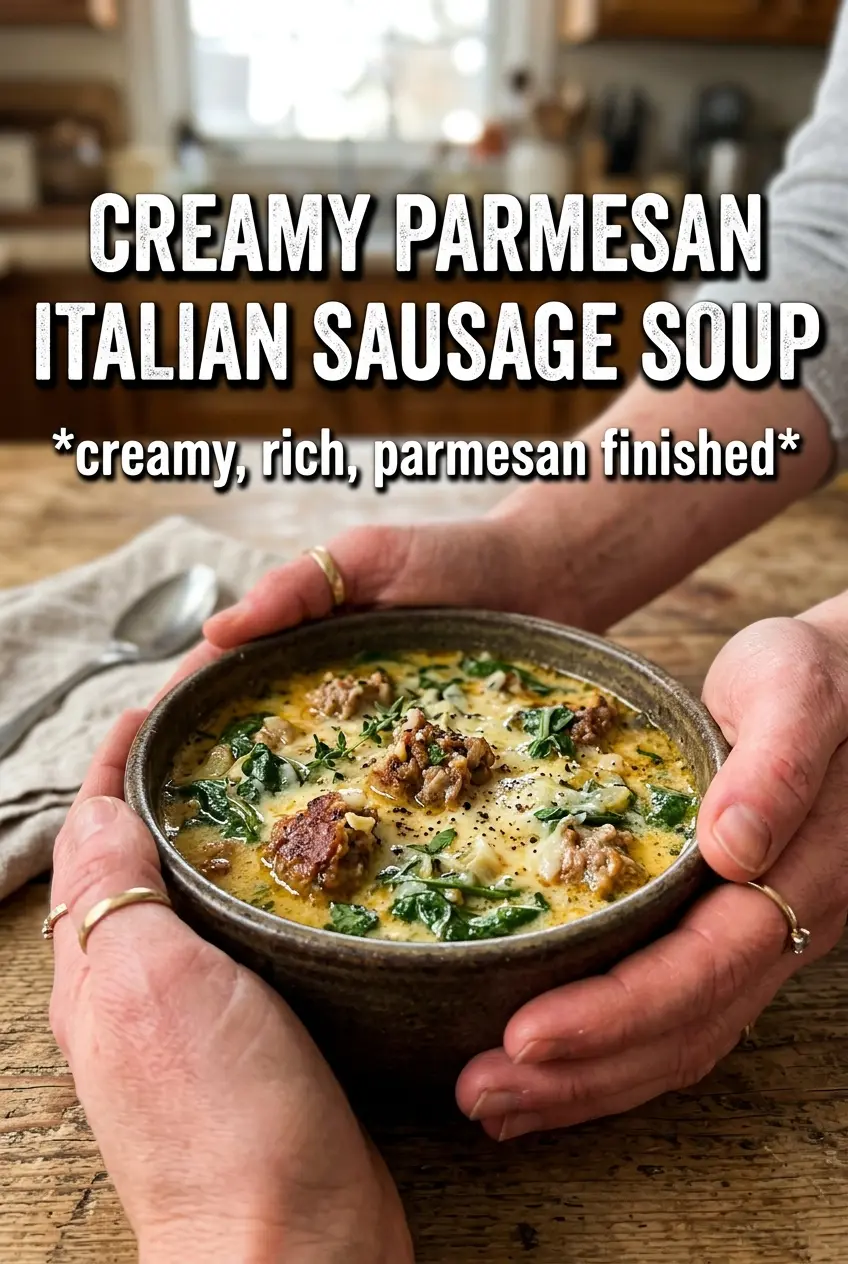
Creamy Parmesan Italian Sausage Soup lands in that sweet spot between cozy and substantial. The broth is silky without feeling heavy, the sausage brings enough salt and spice to keep every spoonful interesting, and the kale and pasta turn it into a full meal instead of a starter pretending to be dinner. What pulls it together is the parmesan broth: it tastes rich and savory, but it still feels clean enough that you want another bowl.
The trick is building the base in the same pot as the sausage. Those browned bits left behind after the sausage cooks give the broth a deeper, more savory backbone than you get from a plain cream soup. A quick flour-and-butter roux thickens the liquid just enough so the parmesan melts in smoothly instead of sinking or turning grainy. Add the cheese off a hard boil, though. High heat is the fastest way to get a broken, greasy soup.
Below, I walk through the points that matter most: how to keep the broth creamy, when to add the pasta so it doesn’t overcook, and the small changes that make this soup work with what you already have in the kitchen.
The parmesan melted into a smooth broth and the pasta stayed tender instead of blowing out. I added a little extra red pepper flakes on top and my husband asked for the leftovers the next night.
Creamy Parmesan Italian Sausage Soup is the one to pin for a rich, one-pot dinner with sausage, kale, and a parmesan broth that stays silky.
The broth breaks if you rush the cheese
This soup looks like it should come together all at once, but the order matters. The roux needs a minute to cook before the broth goes in, or the soup can taste a little raw and floury. Once the broth and cream are added, let the pot come up to a gentle simmer, not a hard boil. That lower heat keeps the cream stable and gives the parmesan a chance to melt into the broth instead of clumping.
The other place people run into trouble is the pasta. If it cooks too long in the soup, it drinks up too much liquid and turns soft fast. Pull the pot as soon as the pasta is tender and the broth still looks slightly loose; it thickens a bit more as it sits. The kale goes in near the end for the same reason. You want it wilted and deep green, not cooked until it loses all texture.
What each ingredient is actually doing in this soup

- Italian sausage — This is the backbone of the soup. Mild sausage gives you a softer, more savory broth; hot sausage brings more heat and makes the red pepper flakes optional. If your sausage releases a lot of fat, drain it before starting the base so the soup doesn’t turn greasy.
- Freshly grated parmesan — Fresh cheese melts into the broth cleanly. The pre-shredded stuff often has anti-caking agents that can make the soup sandy or stringy. Grate it yourself and add it off the boil for the smoothest texture.
- Heavy cream — This gives the soup its body and keeps the parmesan from tasting sharp or salty. Half-and-half can work in a pinch, but the soup will be thinner and more likely to break if it boils.
- Ditalini or another small pasta — Small shapes hold their own in a creamy soup and stay spoon-friendly. If you swap in a larger pasta, the soup stops eating like soup and starts eating like pasta in broth. Cook the shape just until tender so it doesn’t take over the pot.
- Kale — Kale stands up to the hot broth better than delicate greens. Strip out the stems so the leaves soften evenly. Spinach works if that’s what you have, but it will wilt down much faster and give you a softer finish.
Building the pot so the broth stays silky
Browning the sausage first
Cook the sausage until it’s deeply browned in spots and no longer pink. Those caramelized bits are where a lot of the flavor comes from, so don’t rush this stage or cook it over such high heat that the outside darkens before the inside is done. If there is a lot of rendered fat in the pot, spoon off the excess before moving on. A thin coating is enough to carry the onion and garlic.
Cooking the roux long enough
Butter, onion, garlic, and flour build the base of the soup. The flour needs 1 to 2 minutes in the hot fat so it loses that raw taste and turns slightly nutty. Stir constantly here so the garlic doesn’t scorch. If the flour looks dry and pasty, that’s correct; the broth will loosen it into a smooth base in the next stage.
Adding the broth and cream without lumps
Pour the broth in gradually while stirring, scraping the bottom of the pot as you go. That lifts the browned sausage bits into the soup and keeps the flour from clumping. Add the cream once the broth is moving smoothly, then bring everything to a gentle simmer. If the pot starts boiling hard, lower the heat right away; that’s when cream can separate and parmesan gets temperamental later.
Finishing with cheese, greens, and pasta
Let the pasta cook until just tender before the parmesan goes in. Once the heat is lowered, stir in the cheese a handful at a time until it disappears into the broth. Add the kale and sausage near the end so the greens wilt and the meat warms through without overcooking. The soup should look creamy and loose in the pot, not thick like a casserole, because the pasta will keep absorbing liquid after it leaves the stove.
How to adapt this when you need a different kind of soup night
Make it gluten-free
Swap the flour for a gluten-free all-purpose blend that includes a binder, and use a gluten-free small pasta. The texture stays creamy, but gluten-free pasta can soften faster, so pull the soup from the heat as soon as the pasta is done.
Use spinach instead of kale
Spinach works when you want a softer finish and a milder green. Add it in the last minute or two, just until wilted, because it disappears fast and will not hold onto the broth the way kale does.
Make it lighter
You can use half-and-half instead of heavy cream, but the broth will be thinner and a little less stable. Keep the heat lower than you would with cream and don’t let it boil once the dairy goes in. The soup still tastes rich, just not as plush.
Choose turkey sausage
Turkey sausage makes a leaner soup with a cleaner finish. Because it renders less fat, you may want the full amount of butter in the base so the onion and flour still have enough richness to work with. The result is a little lighter but still satisfying.
Storage and Reheating
- Refrigerator: Store for up to 4 days. The pasta will keep absorbing broth, so the soup thickens as it sits.
- Freezer: It can be frozen, but the cream and pasta change texture a bit after thawing. For the best result, freeze it before adding the pasta and kale, then finish those fresh when you reheat.
- Reheating: Warm gently on the stove over low heat, adding a splash of broth or water to loosen it. Don’t boil it; that can make the cream separate and push the pasta past its best texture.
Questions I Get Asked About This Recipe
Creamy Parmesan Italian Sausage Soup
Ingredients
Equipment
Method
- Brown the Italian sausage in a large pot over medium-high heat until cooked through, then drain excess fat and set the sausage aside.
- Melt the butter in the same pot over medium heat, then sauté the onion for 4 minutes until softened.
- Add the garlic and flour, cooking for 1-2 minutes while stirring until the flour smells cooked.
- Gradually add the chicken broth and heavy cream, then stir in the Italian seasoning and nutmeg until smooth.
- Bring the soup to a simmer over medium-high heat, then add the ditalini and cook for 8-9 minutes until tender.
- Reduce the heat to low, then stir in 1 cup of the parmesan until fully melted and the broth looks creamy.
- Add the kale, sausage, and red pepper flakes, cooking for 4-5 minutes until the kale wilts.
- Season with salt and pepper to taste, then top each bowl with the remaining parmesan.