Lasagna soup gives you all the cozy, layered comfort of baked lasagna without the long oven time or the fussy assembly. The broth turns rich and tomato-forward, the noodles soften into the pot, and the sausage gives every spoonful that savory, meaty depth that keeps people coming back for another bowl. The best part is the finish: a cool, creamy cheese dollop melting into the hot soup and turning the whole thing into something that tastes far more involved than it is.
Using spaghetti sauce is the shortcut that makes this version work. It already brings body, seasoning, and a cooked-down tomato base, so you’re not starting from scratch with a thin broth that needs ages to develop flavor. A can of diced tomatoes adds texture and keeps the soup from tasting one-note, while a short simmer keeps the noodles tender without letting them collapse into mush.
Below, I’m breaking down the part that matters most: how to keep the broth balanced, how to time the noodles so they stay intact, and how to adapt the soup if you want it meatless or a little richer.
The noodles stayed perfectly tender and the ricotta topping melted into the broth just enough to make it taste like lasagna without all the layering. My husband went back for a second bowl before I even sat down.
Save this lasagna soup with spaghetti sauce for the nights when you want all the comfort of lasagna in a fast, one-pot bowl.
The Part That Keeps This Soup From Turning Thick and Gummy
The biggest mistake with lasagna soup is treating it like a dump-and-wait pasta dish. The noodles keep absorbing liquid as they sit, which means a pot that looks perfect at minute twelve can become stodgy by minute twenty-five. That’s why the broth needs to stay a little looser than you think at first; it gives the pasta room to finish cooking without stealing all the soupiness.
Spaghetti sauce changes the game here because it already has body. You don’t need to reduce the soup hard, and you don’t want to boil it aggressively after the noodles go in. A steady simmer is enough. If the pot is rolling too hard, the noodles break apart faster and the starch turns the broth cloudy and heavy.
- Browned sausage — This builds the savory base fast. If you use ground beef instead, choose something with a little fat so the soup doesn’t taste thin after you drain the pan.
- Jarred spaghetti sauce — This is the shortcut ingredient that actually earns its place. Pick one you already like the taste of, because its seasoning will be the backbone of the broth.
- Broken lasagna noodles — They give you the right texture without the work of layering. Break them into rough pieces, not tiny shards, so they still feel like lasagna in the bowl.
What the Jar Sauce, Broth, and Cheese Are Each Doing Here

- Spaghetti sauce — This brings tomato depth, seasoning, and a little thickness. A higher-quality jar helps here because its flavor isn’t hidden; it’s carrying the soup.
- Broth — Use beef broth for a deeper, more lasagna-like result, or chicken broth if that’s what you have. Either works, but beef broth gives the finished bowl more backbone.
- Ricotta — This is what makes the finish taste like lasagna instead of just tomato soup with pasta. Full-fat ricotta gives the smoothest spoonful; lower-fat versions can turn grainy if they sit too long.
- Mozzarella and parmesan — Mozzarella gives the melt, parmesan gives the salty edge. Stir them together with the ricotta so the topping tastes balanced instead of one-dimensional.
- Fresh basil — Add it at the end. Cooking it too long mutes the bright, fresh note that keeps the soup from tasting heavy.
Building the Soup in the Right Order
Getting the Meat Properly Browned
Cook the sausage or beef until it has real color, not just until it loses its pinkness. Those browned bits at the bottom are where the deep flavor starts, and they disappear if the heat is too low or the pan is overcrowded. If there’s a lot of fat in the pot after browning, drain most of it off, but leave a thin film behind so the onion can pick up the flavor.
Softening the Onion Before the Tomatoes Go In
The onion needs a few minutes with the meat drippings to turn sweet and translucent. Add the garlic only at the end of that stage, because it burns fast and turns bitter if it sits in the pot too long. Once the garlic smells fragrant, move straight to the liquids so it doesn’t overcook.
Simmering the Broth and Noodles
After the spaghetti sauce, tomatoes, broth, and seasonings go in, bring the pot to a boil only long enough to start the noodles, then drop the heat to a steady simmer. Stir occasionally so the noodles don’t clump or stick to the bottom. They’re done when they’re tender with a little bite left in the center; if you wait until they’re perfectly soft in the pot, they’ll go past that point by the time you serve the bowls.
Finishing With the Cheese Dollop
Mix the ricotta, mozzarella, parmesan, and basil right before serving so the topping stays fresh and creamy. Spoon it generously over each bowl and let it sit for a minute before eating; the heat from the soup softens the cheese without fully dissolving it, which gives you the best lasagna-like effect. If you stir the topping directly into the pot, it disappears into the broth instead of giving you that rich, layered finish.
How to Adapt This Soup When You Need a Different Version
Make it meatless without losing body
Swap the sausage for chopped mushrooms and a little extra olive oil, then use vegetable broth. The mushrooms give you a savory, meaty feel, but the soup will be a little lighter, so let the onion and mushrooms cook until they’ve released their moisture and started to brown.
Use gluten-free pasta without overcooking it
Substitute a sturdy gluten-free lasagna noodle or another short gluten-free pasta, but cook it just until tender and serve right away. Gluten-free noodles soften faster and can break down if they sit in the broth too long, so this version is best eaten fresh.
Make it creamier and richer
Stir in a splash of cream or a spoonful of mascarpone at the very end if you want a rounder, silkier broth. Keep the heat low when you add it, because dairy can separate if it boils hard after it goes in.
Storage and Reheating
- Refrigerator: Store for up to 4 days. The noodles will keep soaking up broth, so expect the soup to thicken.
- Freezer: It freezes, but the noodles soften after thawing. For the best texture, freeze the soup base without noodles and cook fresh pasta when you reheat.
- Reheating: Warm gently on the stove over medium-low heat with a splash of broth to loosen it. A hard boil is the fastest way to turn the noodles mushy and the broth too thick.
Questions I Get Asked About This Recipe
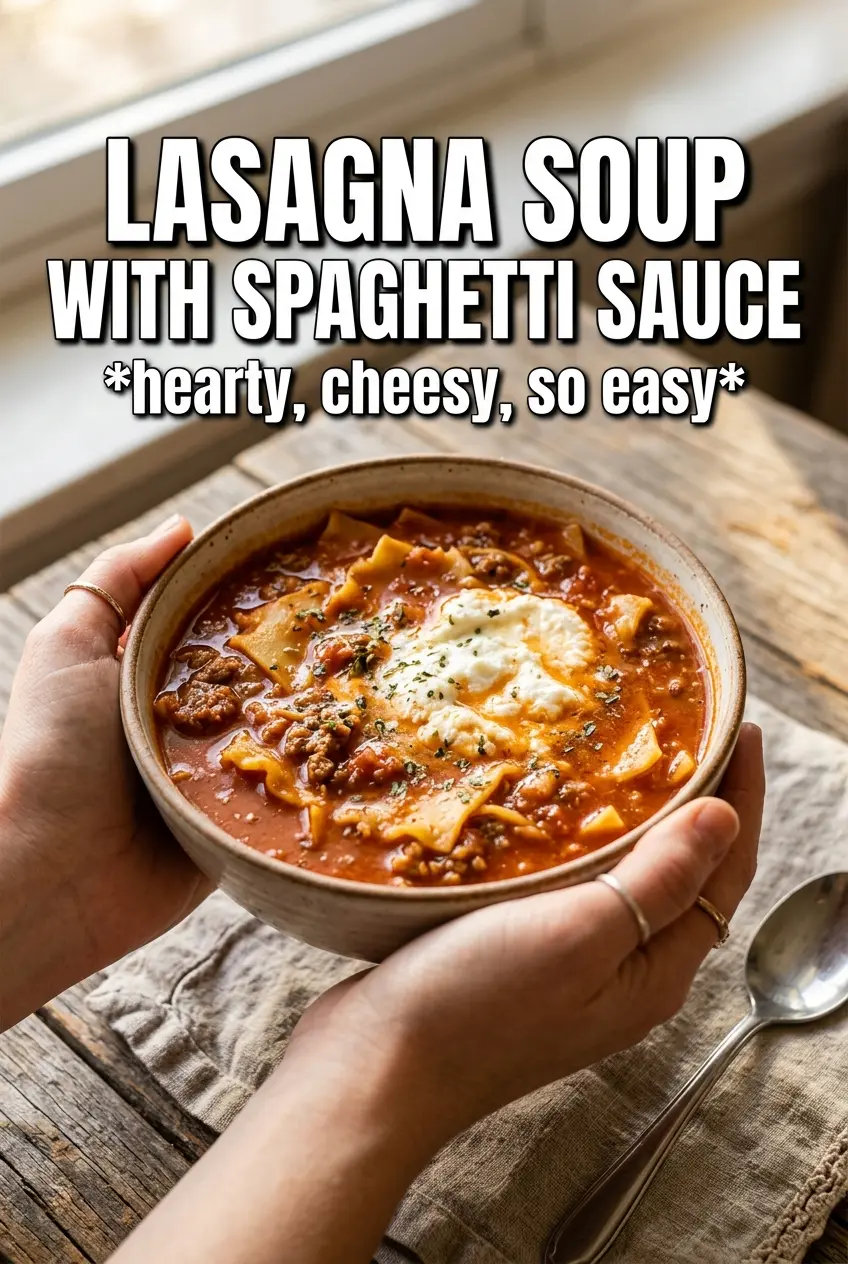
Lasagna Soup With Spaghetti Sauce
Ingredients
Equipment
Method
- Brown the Italian sausage or ground beef in a large pot over medium-high heat, then drain the fat.
- Sauté the onion for 3 minutes, then add the minced garlic and cook for 1 minute.
- Pour in the spaghetti sauce, diced tomatoes, and beef or chicken broth, then stir in Italian seasoning, dried basil, and red pepper flakes.
- Bring the mixture to a boil, then add the lasagna noodles broken into pieces.
- Simmer for 10-12 minutes until the noodles are tender, stirring occasionally.
- Season with salt and pepper to taste.
- Mix the ricotta, shredded mozzarella, parmesan, and fresh basil together to form a thick dollop.
- Ladle the soup into bowls and top each with a generous spoonful of the cheese dollop.