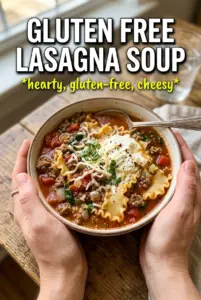
Gluten free lasagna soup gives you the whole comfort of lasagna without the layering, baking, or waiting. The broth turns rich and tomato-forward, the sausage brings enough savory depth to make each spoonful feel complete, and the gluten-free pasta stays tender when it’s added at the right moment. The best part is the cheese dollop melting into the bowl at the end, turning the soup creamy without making it heavy.
This version works because the tomato paste gets cooked until it darkens a little and smells less sharp, which gives the broth a deeper base before the liquid goes in. Using both crushed and diced tomatoes keeps the soup from feeling flat: one gives body, the other leaves you with little bursts of tomato in the broth. Gluten-free pasta can go mushy fast, so I cook it just until tender and serve right away.
Below, you’ll find the small details that matter most here, including how to keep the pasta from soaking up too much broth and how to make the cheese topping taste like an actual part of the soup, not an afterthought.
The broth got that lasagna-style richness without being too thick, and the gluten-free noodles held up better than I expected. The ricotta topping melted in just enough to make every bowl taste creamy and balanced.
Save this gluten free lasagna soup for a bowl with rich tomato broth, savory sausage, and that creamy ricotta-mozzarella topping.
The Mistake That Makes Gluten Free Pasta Go Soft
Gluten-free pasta doesn’t have the same cushion that wheat pasta has, so it goes from tender to tired fast if it sits in the pot too long. The broth keeps carrying heat after you turn off the burner, which means the noodles keep softening even when the soup looks finished. The fix is simple: simmer only until the pasta is just tender, then serve right away.
The other thing that matters here is how much liquid the pasta absorbs. Broken lasagna noodles or GF penne both work, but they’ll keep drinking broth as the soup rests. If you know you’ll have leftovers, keep the cooked pasta separate and add it to each bowl as you reheat.
What Each Ingredient Is Actually Doing In This Bowl
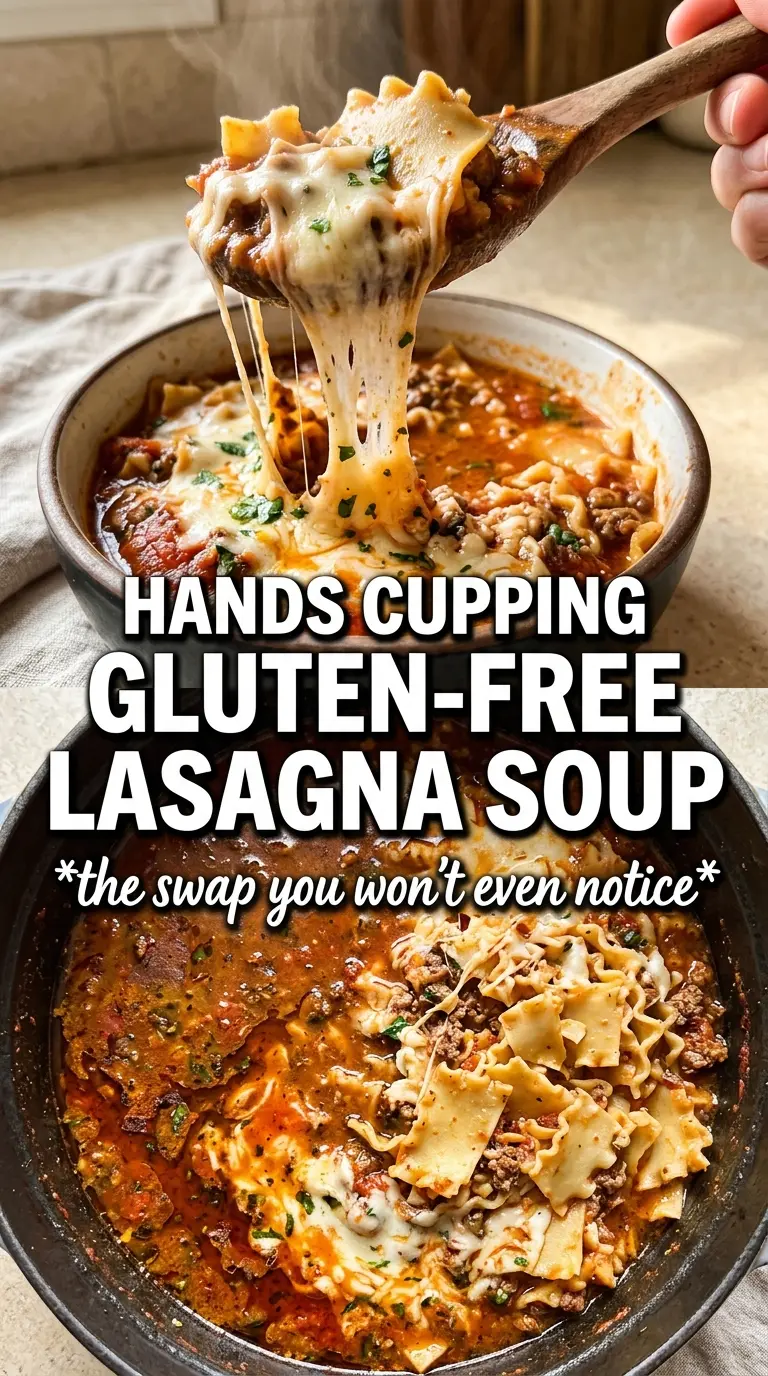
- Italian sausage — This is the main source of savory depth, and it seasons the broth from the start. Mild or hot both work; hot sausage adds more bite without needing extra red pepper. If you want a lighter soup, ground turkey works, but add a pinch more Italian seasoning and a little extra salt.
- Crushed tomatoes plus diced tomatoes — Crushed tomatoes build the body of the broth, while diced tomatoes leave small pieces that taste bright and fresh against the cheese. Don’t swap both for one or the other unless you want a smoother or chunkier soup.
- Tomato paste — This gives the broth that cooked, lasagna-like richness. Let it fry with the onion and garlic for a minute or two; that step pulls out the raw edge and deepens the color.
- Gluten-free pasta — Brown rice lasagna noodles hold the most “lasagna” feel, but GF penne is easier to find and easier to break into spoonable pieces. Cook it just to tender because GF pasta can turn soft faster than regular pasta.
- Ricotta, mozzarella, and parmesan — This topping is what makes the bowl taste like lasagna instead of tomato soup. Whole-milk ricotta gives the best creamy texture, but part-skim will work if that’s what you have.
Building The Broth Before The Pasta Goes In
Brown The Sausage First
Cook the sausage until it’s deeply browned in spots and no pink remains. Those browned bits on the bottom of the pot are part of the flavor base, so don’t wipe them away after draining the fat. If the sausage is crowded and steams instead of browns, cook it in batches or break it up more as it cooks.
Cook Down The Onion And Tomato Paste
Sauté the onion in the same pot until it turns soft and translucent, then add the garlic for just a minute. Stir in the tomato paste and cook it until it darkens slightly and smells sweet instead of sharp. If you rush this part, the soup tastes thinner and more acidic than it should.
Simmer The Broth And Add The Pasta At The End
Pour in the tomatoes, broth, and seasonings, then bring everything to a boil before lowering to a simmer. Add the gluten-free pasta only after the broth is hot and the sausage is back in the pot, then cook just until the noodles are tender. If the pot boils hard the whole time, the pasta can break apart and the broth can reduce too fast.
Finish With The Cheese Dollop
Mix the ricotta, mozzarella, parmesan, and basil in a small bowl until it looks thick and spoonable. Drop a generous spoonful onto each bowl right before serving so it softens into the soup without disappearing completely. If you stir it straight into the pot, the cheese can get lost and the broth won’t have that lasagna-style finish.
How To Adapt This Soup Without Losing What Makes It Work
Make It Dairy-Free
Skip the ricotta-mozzarella topping and finish each bowl with a drizzle of good olive oil and a spoonful of dairy-free pesto if you want extra richness. The soup itself is still full of body from the sausage and tomatoes, so you won’t lose the core of the dish.
Use Ground Turkey Or Chicken
This works well if you want a lighter bowl, but the broth will need a little help. Add an extra pinch of Italian seasoning and a little more parmesan on top, because poultry won’t bring the same built-in seasoning or fat that sausage does.
Make It Ahead For Easy Leftovers
Cook the soup base without the pasta, then refrigerate it and add freshly cooked gluten-free pasta when you reheat. This keeps the noodles from soaking up all the broth and turning soft overnight, which is the most common problem with leftover pasta soup.
Make It Vegetarian
Use a plant-based sausage or replace it with sautéed mushrooms and a little extra tomato paste for deeper flavor. You’ll lose some of the classic sausage richness, so the parmesan and basil become even more important at the end.
Storage and Reheating
- Refrigerator: Store the soup base for up to 4 days. The pasta will keep absorbing liquid, so expect the broth to thicken.
- Freezer: Freeze the soup base without pasta or cheese for up to 3 months. Pasta turns too soft after freezing, so add fresh pasta when reheating.
- Reheating: Warm the soup slowly on the stove over medium-low heat, adding a splash of broth or water if needed. If the pasta is already in the pot, don’t boil it again or it will go mushy fast.
Questions I Get Asked About This Recipe
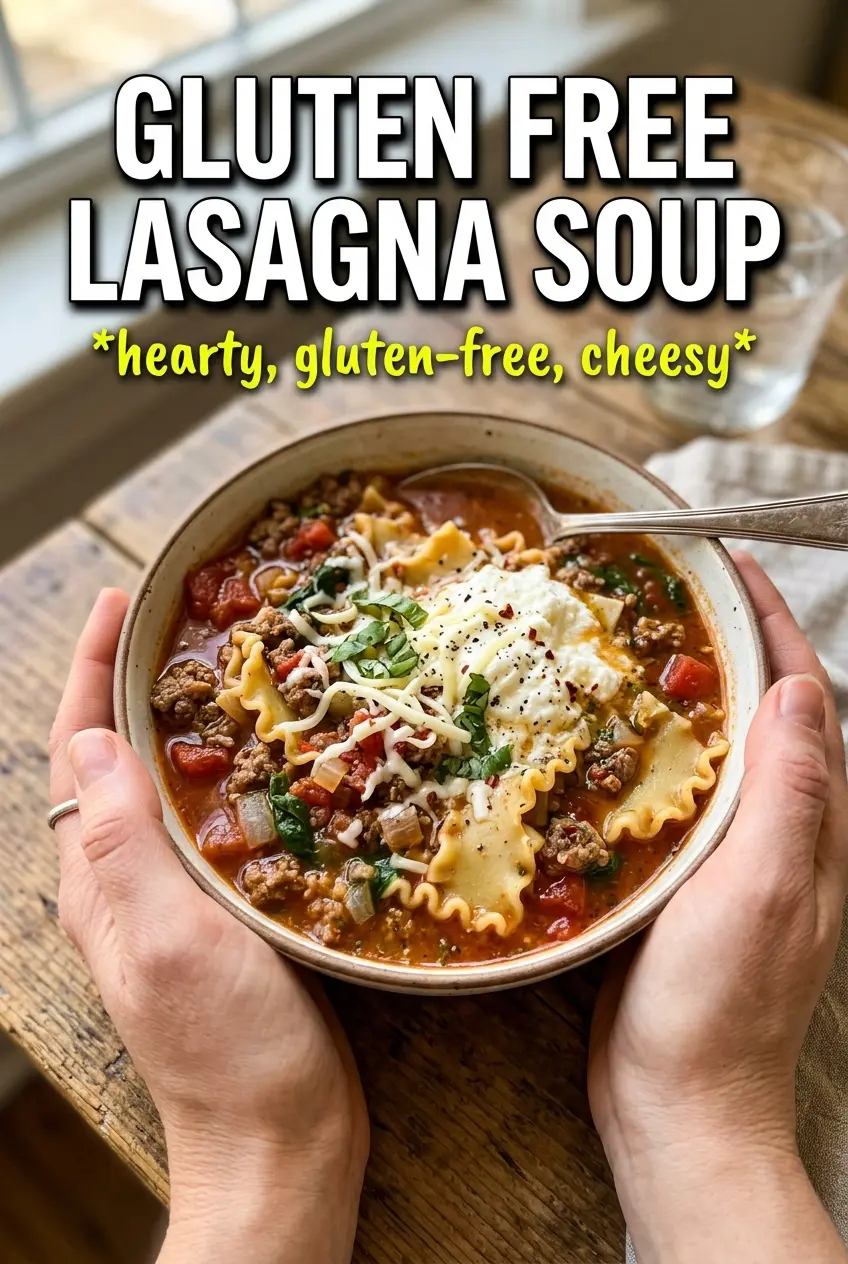
Gluten Free Lasagna Soup
Ingredients
Equipment
Method
- Brown the Italian sausage in a large pot over medium-high heat, then drain the fat and set the sausage aside.
- Sauté the onion in the same pot for 4 minutes; cook until softened, then add the minced garlic and cook 1 minute with a fragrant aroma.
- Stir in the tomato paste and cook for 1–2 minutes to deepen the color.
- Add the crushed tomatoes, diced tomatoes, chicken broth, Italian seasoning, dried basil, and red pepper flakes, then bring the mixture to a boil.
- Add the gluten-free pasta and return the sausage to the pot, then simmer according to the package instructions (usually 8–12 minutes) until the pasta is tender.
- Season the soup with salt and pepper to taste, adjusting for balance as the broth thickens slightly.
- Mix the cheese dollop ingredients (ricotta, shredded mozzarella, parmesan, and fresh basil) until combined and spoonable.
- Serve the soup topped with a generous spoonful of the cheese dollop, letting it melt in the center.