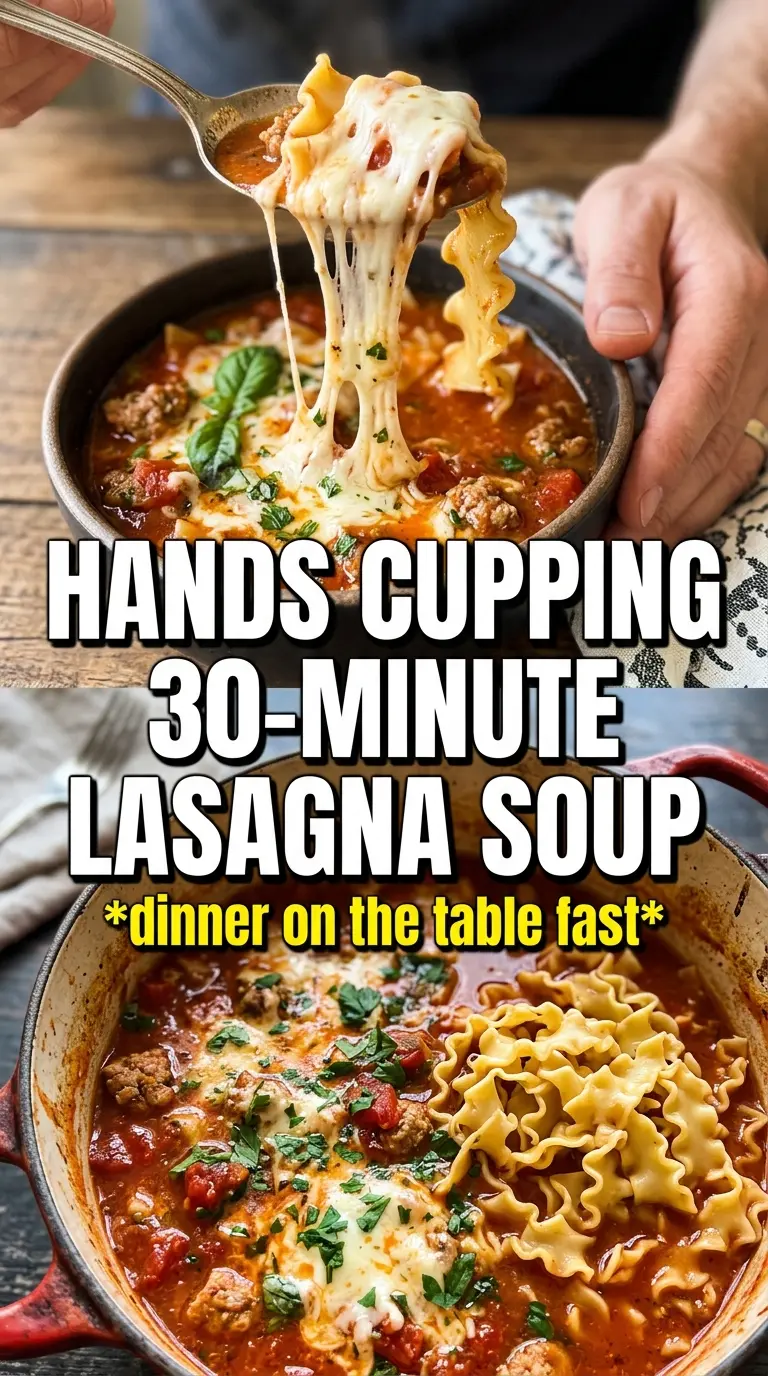
Lasagna soup gives you all the comfort of a baked noodle casserole, but it lands in the bowl faster and with less cleanup. The broth turns rich and tomato-forward, the sausage brings enough heft to make it a full meal, and the broken noodles soak up just enough flavor without turning mushy if you keep an eye on the pot. The best part is the cheese dollop melting into the hot soup, which gives you that creamy, savory finish people expect from lasagna without assembling a pan of layers.
This version works because the sausage browns first, which builds a deeper base before the broth goes in. The marinara does the heavy lifting on flavor, so you don’t need a long simmer, and the noodles cook right in the soup where they can absorb the broth instead of going soft in a separate pot of water. The ricotta-mozzarella topping matters too: it gives you the stretchy, creamy lasagna effect in one spoonful instead of stirring cheese directly into the pot and risking a grainy texture.
If you’ve made a lot of pasta soups before, the timing on the noodles is the part worth watching closely. Below you’ll find the small details that keep the broth bold, the pasta tender, and the cheese topping fluffy instead of clumpy.
The broth was rich and the noodles held up perfectly for dinner, even after sitting a few minutes. That ricotta-mozzarella spoonful melted into the soup and made it taste like actual lasagna without all the layering.
Save this 30-minute lasagna soup for the nights when you want all the cozy pasta flavor with one pot and a quick ricotta finish.
The Trick to Keeping the Noodles in the Sweet Spot
The biggest mistake with lasagna soup is treating the noodles like an afterthought. If they go in too early, they soak up too much broth and turn bloated; if they go in too late, they stay hard in the center and never finish in the time you need. Broken lasagna noodles cook unevenly because the wide pieces want to curl and stick, so the right move is a lively boil, then steady stirring for the first few minutes.
This soup also needs enough liquid at the start. It should look a little loose when the noodles first go in, because those pasta pieces drink up broth fast. By the time the noodles are tender, the soup should still have enough body to spoon easily without becoming thick enough to stand up in the pot.
What Each Ingredient Is Actually Doing in the Bowl
- Italian sausage — This is the backbone of the soup. It seasons the broth from the start and gives you enough fat and browned bits to make the tomato base taste slow-cooked, even when the whole dish comes together in 30 minutes. Mild or hot both work; use hot if you want more heat without adding extra pepper flakes.
- Marinara sauce — A good jarred marinara saves time here because it brings pre-built garlic, tomato, and herb flavor. Pick one you’d actually eat on pasta, since the soup doesn’t have long enough to fix a bland sauce.
- Chicken broth — This loosens the marinara into soup and keeps the flavor savory instead of flat. Homemade or boxed both work, but if yours is salty, hold back on seasoning until the end.
- Ricotta, mozzarella, and parmesan — The ricotta gives the spoonable lasagna feel, the mozzarella adds stretch, and the parmesan sharpens the whole thing. Mixing them together ahead of time keeps the topping creamy instead of stringy clumps of unmelted cheese.
- Lasagna noodles — Broken noodles are the right texture here because they mimic the layers without becoming a heavy pasta stew. Break them into rustic pieces, not tiny shards, so they stay recognizable in the bowl.
- Fresh basil — Don’t skip it if you have it. The basil cuts through the richness and makes the soup taste brighter right before serving.
Building the Pot in the Right Order
Brown the Sausage First
Start with a hot pot and let the sausage get real color before anything else goes in. You want browned edges and small caramelized bits stuck to the bottom, not pale crumbles sitting in rendered fat. If the sausage steams instead of browns, the pot is crowded or the heat is too low. Drain off excess grease, but leave enough behind to cook the onion and carry the flavor forward.
Soften the Onion and Wake Up the Garlic
Add the diced onion to the same pot and cook it until it turns soft and translucent, about 3 minutes. The garlic only needs a minute after that; once it smells fragrant, it’s ready. If the garlic goes in too early or sits over high heat, it can turn bitter, and that bitterness shows up fast in a short-cook soup like this.
Simmer the Broth Before the Pasta Goes In
Pour in the marinara and broth, then add the Italian seasoning and red pepper flakes. Bring the pot to a boil before adding the noodles so the pasta starts cooking immediately and doesn’t sit there absorbing liquid unevenly. Once the noodles are in, stir often, especially along the bottom and edges where broken pieces like to stick together. They’re done when they’re just tender with a little bite left in the center; carryover heat will finish them.
Finish With the Cheese Dollop at the Table
Mix the ricotta, mozzarella, and parmesan just until combined, then spoon it over each bowl instead of stirring it into the pot. That keeps the topping creamy and gives you pockets of melted cheese instead of a heavy, grainy soup. The heat from the broth softens it right away, which is what makes the bowl taste like lasagna instead of tomato soup with pasta in it.
How to Adjust the Soup Without Losing What Makes It Lasagna Soup
Make It Lighter With Turkey Sausage
Turkey sausage works well if you want less richness, but it won’t build quite as deep a broth. Add a little extra olive oil when browning so the onion and garlic have enough fat to cook properly, and expect a cleaner, leaner finish instead of the fuller pork flavor.
Make It Gluten-Free With the Right Noodle Swap
Use a sturdy gluten-free lasagna noodle or a short gluten-free pasta shape that can hold up in broth. Cook it a little less than the package says if you plan to keep leftovers, since gluten-free pasta softens faster after chilling.
Make It Dairy-Free Without Losing the Creamy Finish
Skip the ricotta-mozzarella topping and use a thick dairy-free ricotta or a spoonful of unsweetened cashew cream instead. You lose some of the classic lasagna stretch, but you keep the creamy contrast against the tomato broth.
Stretch It for a Bigger Crowd
Add another cup of broth and an extra handful of broken noodles if you need to feed more people, but keep the seasoning balanced with another spoonful of marinara or a pinch more salt at the end. The soup thickens as it sits, so a little extra liquid keeps it from turning into pasta stew in the serving bowl.
Storage and Reheating
- Refrigerator: Store the soup and cheese topping separately for up to 4 days. The noodles will keep absorbing broth, so expect a thicker pot the next day.
- Freezer: Freeze the soup without the noodles if you can; pasta softens after thawing and can go mushy. If freezing leftovers with noodles already in it, accept a softer texture when reheated.
- Reheating: Warm it gently on the stove over medium-low with a splash of broth or water until it loosens back up. The common mistake is blasting it over high heat, which tightens the noodles and can make the tomato base taste dull.
Questions I Get Asked About This Recipe

30-Minute Lasagna Soup
Ingredients
Equipment
Method
- Brown Italian sausage in a large pot over high heat, then drain excess fat and keep the pot on the heat. Look for no pink remaining and browned bits on the bottom.
- Add the diced onion to the same pot and cook for 3 minutes. Stir until the onion softens and turns slightly translucent.
- Add the minced garlic and cook for 1 minute. Stir constantly until fragrant, without letting it brown.
- Pour in the marinara sauce and chicken broth, then add Italian seasoning and red pepper flakes. Stir until the broth turns evenly red.
- Bring to a boil over high heat, then add the broken lasagna noodles. Confirm a full boil resumes quickly.
- Boil for 10-12 minutes until the noodles are just tender, stirring occasionally to prevent sticking. Watch for noodles to soften while still holding their shape.
- Season with salt and pepper. Taste the broth and adjust until the flavors pop.
- Mix the cheese dollop quickly by combining ricotta, shredded mozzarella, and parmesan. Use a spoon until it forms a thick, scoopable mixture.
- Ladle the soup into bowls and top each with a large spoonful of the cheese mixture and fresh basil. Serve immediately while the broth is hot and the cheese softens.