Deep, spoon-coating broth and fall-apart beef make Crock Pot beef stew the kind of dinner that disappears fast once it hits the table. The slow cooker does the heavy lifting here, but the order of ingredients matters more than most people think. Put the vegetables down first and the beef on top, and they hold their shape instead of dissolving into the sauce.
The red wine adds depth, but the real backbone comes from tomato paste, Worcestershire, and long, low heat. That combination turns the broth from thin and one-note into something dark, savory, and full-bodied. The final cornstarch slurry tightens the stew at the end so it clings to the beef and vegetables instead of pooling at the bottom of the bowl.
Below you’ll find the small timing details that keep the potatoes intact, the best swap if you want to skip the wine, and the reheating trick that keeps the broth from turning dull the next day.
The broth turned deep and rich, and the potatoes held their shape even after reheating the leftovers the next day. My husband kept going back for “just one more bowl.”
Save this Crock Pot beef stew for a low-and-slow dinner with tender beef, thick broth, and vegetables that hold their shape.
The Part That Keeps the Beef Tender Instead of Stringy
Beef stew goes wrong when the meat cooks in a boiling liquid or when the vegetables sit exposed on top for too long. The slow cooker fixes the temperature problem, but the layering still matters. Vegetables on the bottom get the most steady heat and form a cushion, while the beef above them braises gently in the flavored liquid instead of stewing hard at the surface.
Chuck is the right cut because it has enough connective tissue to break down during the long cook. If you swap in a lean cut like sirloin, the meat won’t get more tender with time; it’ll just dry out and turn grainy. The long, low heat is what transforms the chuck into soft chunks that hold together when stirred.
What Each Ingredient Is Actually Doing in the Pot
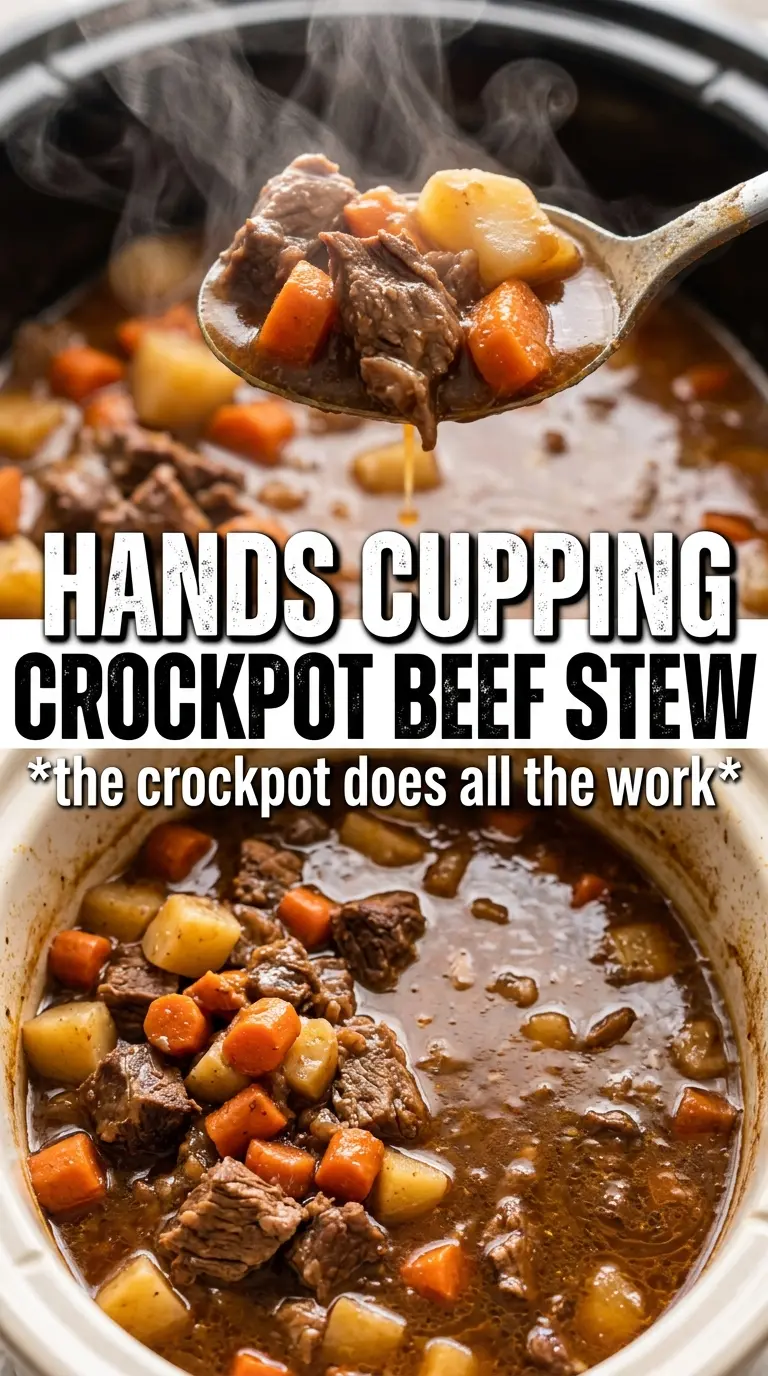
- Beef chuck — This is the stew meat that actually improves with time. The marbling and connective tissue break down into tenderness, which is why it tastes rich instead of dry.
- Red wine — Use it if you can. It gives the broth a deeper, rounder edge that plain broth can’t fully replace. If you skip it, add the extra beef broth and a small splash of red wine vinegar at the end for brightness.
- Tomato paste and diced tomatoes — These add body and quiet acidity. The paste is concentrated enough to darken the broth and make it taste cooked, not flat.
- Worcestershire sauce — This is the ingredient that makes the stew taste savory all the way through. It adds salt, depth, and a little tang without making the broth taste like sauce.
- Baby potatoes — Their waxy texture helps them stay intact. If you use russets, they tend to break down and cloud the broth.
- Thyme, rosemary, and bay leaves — This trio gives the stew its classic herb backbone. Dried herbs work well here because the long cook gives them time to bloom.
How to Build the Broth So It Turns Rich, Not Watery
Layer the vegetables first
Start with the potatoes, carrots, celery, and onion in the bottom of the slow cooker. They act like a rack for the beef and keep it from sitting directly against the hottest surface too long. If you dump everything in together and stir right away, the potatoes can break apart before the beef is done.
Keep the beef on top of the liquid
Season the beef well, then nestle it over the vegetables and add the garlic, broth, wine, tomatoes, tomato paste, Worcestershire, thyme, rosemary, and bay leaves. The meat doesn’t need to be submerged for this to work; the trapped steam and slow braise do the job. If your slow cooker runs hot, resist the urge to crank it higher than needed or the edges of the beef can dry before the center softens.
Finish with slurry only after the beef is tender
Don’t add the cornstarch until the beef is already fall-apart tender. If it goes in early, the sauce can thicken too soon and slow down the braise. Stir the slurry in at the end, then cook on High for 20 to 30 minutes until the broth looks glossy and lightly thickened instead of cloudy and thin.
No-Wine Version
Use extra beef broth in place of the wine. The stew will still be hearty, but it loses a little of the rounded depth that wine brings, so a small splash of vinegar or a squeeze of lemon at the end helps wake it back up.
Gluten-Free Stew
This recipe is naturally close to gluten-free, but Worcestershire sauce can vary by brand. Check the label, then keep the cornstarch slurry as written for thickening; it gives you the same glossy finish without flour.
Make It Ahead for Better Flavor
Stew tastes even better the next day because the broth settles and the herbs mellow into the meat. Cook it fully, cool it, and reheat gently so the potatoes don’t turn mealy and the beef doesn’t toughen from a hard boil.
Freezer-Friendly Meal Prep
This freezes well, but the potatoes soften a bit after thawing. If you’re making it specifically for the freezer, undercook the potatoes slightly and cool the stew completely before packing it up.
Storage and Reheating
- Refrigerator: Keep covered for up to 4 days. The broth thickens as it chills, and the potatoes soften a little more each day.
- Freezer: Freeze for up to 3 months in airtight containers. Thaw overnight in the refrigerator before reheating for the most even texture.
- Reheating: Warm gently on the stove over medium-low heat or in the microwave at half power, stirring once or twice. A hard boil will tighten the beef and can make the potatoes break apart.
Questions I Get Asked About This Recipe
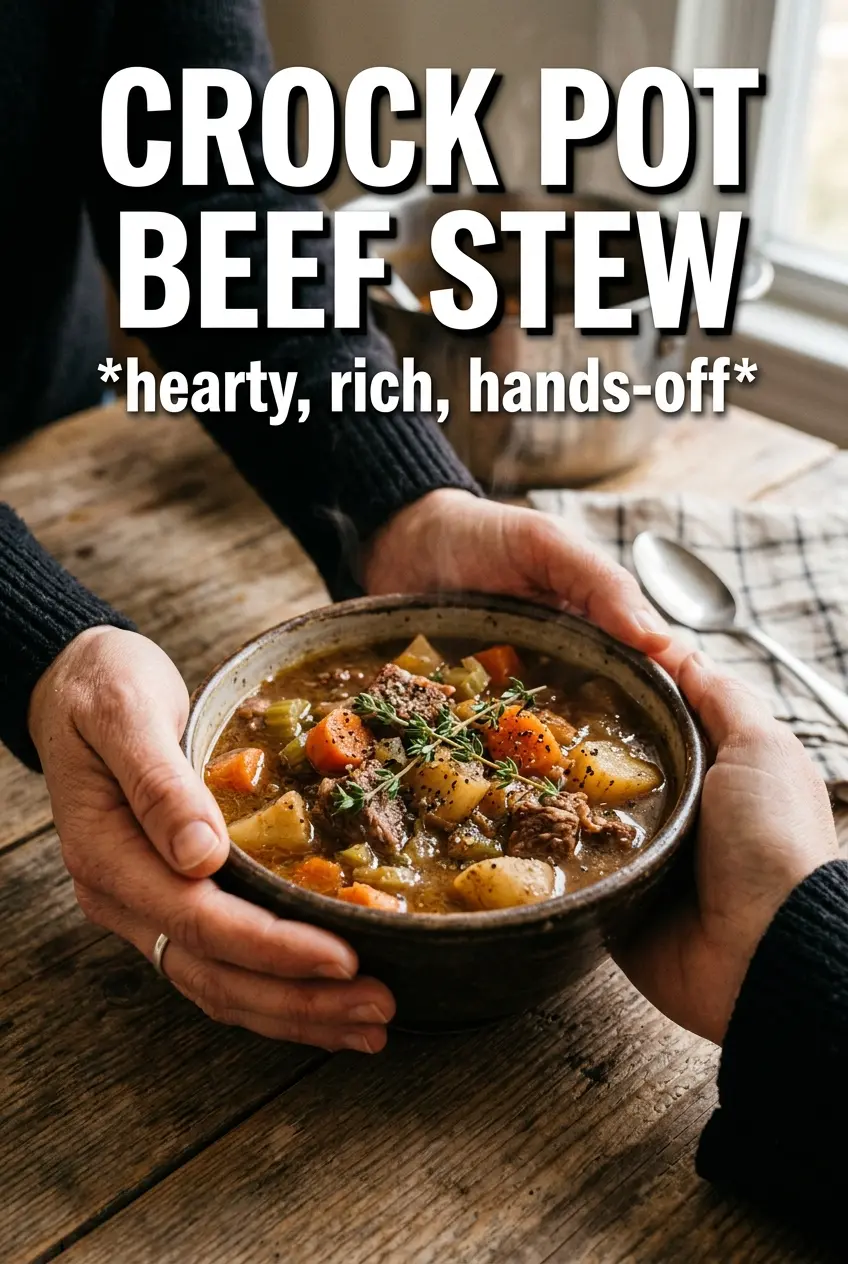
Crock Pot Beef Stew
Ingredients
Equipment
Method
- Season the beef generously with salt and pepper to coat the cubes evenly. The beef should look evenly flecked with seasoning.
- Place the potatoes, carrots, celery, and onion in the bottom of the slow cooker. Spread them out in an even layer so they cook consistently.
- Nestle the beef on top of the vegetables, then add the garlic, beef broth, wine, diced tomatoes, tomato paste, and Worcestershire sauce. Keep the layers compact so the liquid covers the ingredients.
- Stir in the dried thyme, dried rosemary, and bay leaves. Make sure the bay leaves are submerged in the liquid.
- Cook on Low for 8-10 hours until the beef is fall-apart tender. The meat should shred easily when pressed with a spoon.
- Alternatively, cook on High for 4-5 hours until the beef is fall-apart tender. The broth will be deep mahogany and bubbling at the edges.
- Remove the bay leaves, then stir the cornstarch slurry (cornstarch mixed with water) into the stew. The liquid should look slightly cloudy as it thickens.
- Cook on High for 20-30 minutes until the broth thickens and lightly coats a spoon. You should see a slower drip and a glossy surface on the stew.
- Season with salt and pepper to taste and stir to combine. Taste and adjust until the flavors are balanced.