Lasagna soup gives you all the comfort of the classic baked dish without waiting on a casserole to layer and set. The broth turns deep and savory, the noodles soften just enough to feel like lasagna without collapsing, and the ricotta-mozzarella topping melts into the bowl in the best possible way. Every spoonful gets tomato, sausage, pasta, and cheese together, which is exactly why this one ends up in the regular dinner rotation.
The trick is building enough flavor in the pot before the broth goes in. Browning the sausage first leaves behind seasoned fat and browned bits, and that is where the soup gets its backbone. Tomato paste cooks with the onion and garlic long enough to lose its raw edge, and the cheese topping works because it stays cold until the last minute, then softens into the hot soup instead of disappearing into it.
Below, I’ll walk through the part that matters most: how to keep the noodles tender, not mushy, and how to get that ricotta mixture to look dramatic instead of clumpy.
The noodles stayed perfectly tender and the ricotta melted into the soup instead of clumping up. I used the whole milk mozzarella and the bowls came out tasting like lasagna straight from the oven.
Save this lasagna soup for the nights when you want sausage, tomato broth, and a melty ricotta topping without baking a pan of pasta.
The Noodles Need to Stop Short of Fully Soft
Lasagna noodles keep cooking after they come off the heat, and that matters here more than in a baked casserole. If you simmer them until they feel perfect in the pot, they’ll be bloated by the time you ladle the soup into bowls. Pull the soup from the heat when the noodles are tender with just a little bite in the center. They should hold their shape when you stir, not shred apart.
The other common failure is overcrowding the pot with too much pasta or letting the soup boil hard once the noodles are in. A steady simmer is enough. Vigorous boiling makes the noodles rub against each other and turn the broth cloudy and starchy faster than you want.
What Each Ingredient Is Doing in the Bowl
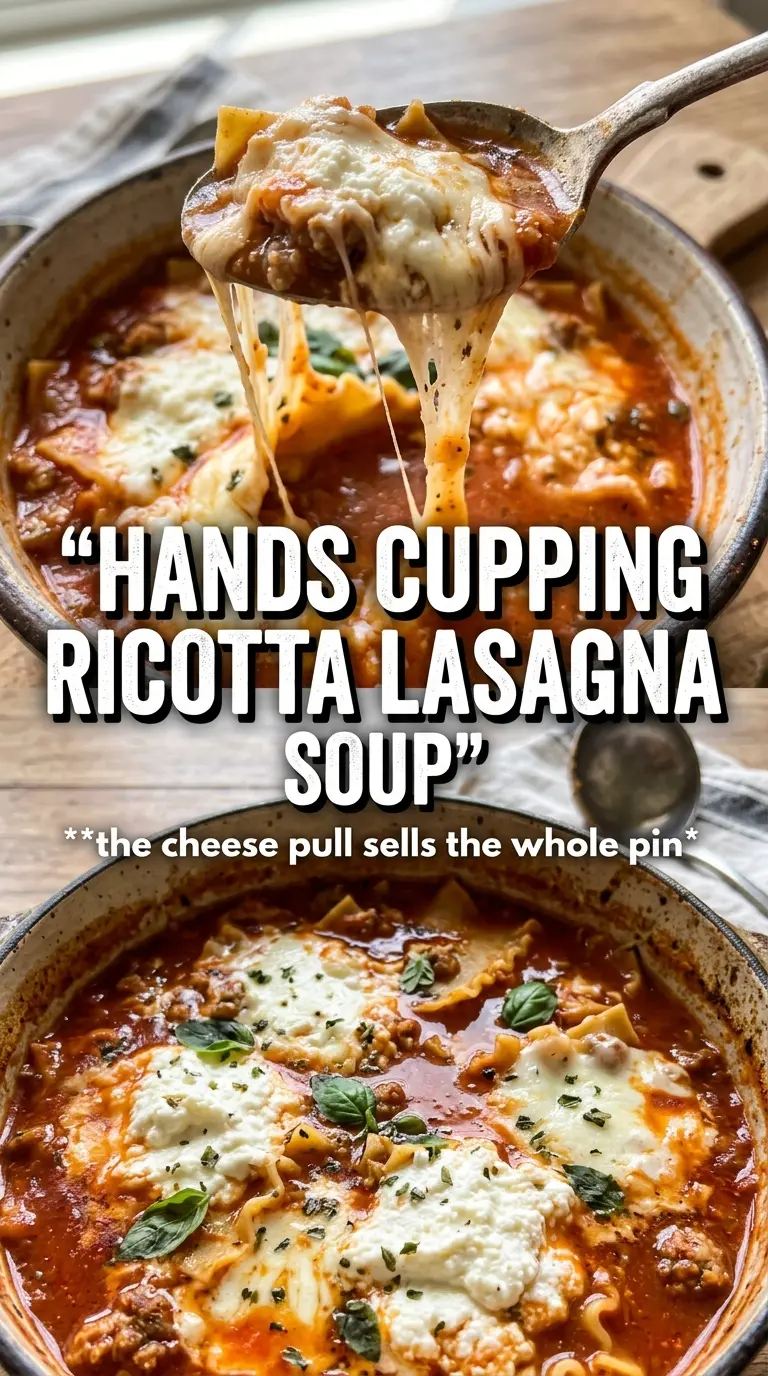
- Italian sausage — This is the main seasoning for the soup. It gives you fat, salt, fennel, and browned bits all at once. Mild or hot both work; hot sausage just brings more heat without changing the method.
- Tomato paste — Don’t skip the short cooking time here. It needs those two minutes with the onion and garlic so it turns sweet and concentrated instead of tasting sharp and tinny.
- Crushed tomatoes plus diced fire-roasted tomatoes — The crushed tomatoes build body, while the fire-roasted tomatoes add little pockets of smoky depth. If you only have regular diced tomatoes, the soup still works, but it will taste a little flatter.
- Whole milk ricotta — Whole milk ricotta gives the topping a creamy, spoonable texture. Part-skim ricotta can work, but it tends to taste drier and less luxurious once it hits the hot broth.
- Whole milk mozzarella — Use the full-fat version for the best melt. Pre-shredded mozzarella works in a pinch, but freshly shredded cheese melts smoother because it doesn’t carry the anti-caking starch that can make the topping gritty.
- Fresh basil and parmesan — The basil brightens the bowl right at the end, and the parmesan adds salt and a nutty finish. The tiny pinch of nutmeg in the cheese mixture is subtle, but it rounds out the ricotta and makes the topping taste a little more like the filling in baked lasagna.
Building the Pot in the Right Order
Brown the sausage first
Cook the sausage over medium-high heat until it’s deeply browned, not just no longer pink. You want the crumbles to pick up some color because that browning carries into the broth. If there’s a lot of fat in the pot after it cooks, drain off the excess, but leave behind the browned bits stuck to the bottom. That’s the start of your sauce.
Cook the onion and tomato paste together
Add the diced onion to the same pot and let it soften in the sausage drippings until it turns translucent and smells sweet. Then add the garlic and tomato paste and cook them together for about two minutes. The paste should darken slightly and coat the onions. If the garlic starts browning hard, the heat is too high and the soup will pick up bitterness instead of depth.
Simmer before the noodles go in
Once the tomatoes, broth, and seasonings are in, bring everything to a boil, then settle it down to a lively simmer. This is when the broth picks up the sausage and tomato flavor and starts tasting like a finished soup instead of a loose sauce. Add the broken lasagna noodles only after the broth is seasoned and hot. If they go in too early, they’ll drink up liquid before the base has enough flavor.
Finish with the cheese topping at the table
Stir the ricotta, mozzarella, parmesan, basil, and nutmeg together until the mixture looks thick and unified. It should be scoopable, not runny. Ladle the soup into bowls first, then drop in a generous spoonful of the cheese mixture so it softens on contact instead of melting away in the pot. That contrast between hot broth and cold cheese is what makes each bowl feel like lasagna in soup form.
How to Adapt This for Different Kitchens
Make it gluten-free
Use a sturdy gluten-free lasagna noodle or a short gluten-free pasta that can hold up in broth. Add it near the end and watch it closely, since gluten-free pasta can go from firm to soft faster than wheat noodles. The soup base stays the same; the only thing that changes is the timing.
Make it lighter without losing the lasagna feel
Use lean Italian sausage or half sausage and half ground turkey. You’ll lose some richness, so keep the tomato paste step and don’t skimp on the parmesan in the topping. That’s what keeps the soup tasting full instead of thin.
Make the cheese topping ahead
Mix the ricotta topping up to a day in advance and keep it covered in the fridge. The basil will soften a little, but the flavor gets better as the cheeses settle together. Stir it once before serving so the parmesan is evenly distributed.
Storage and Reheating
- Refrigerator: Store the soup and cheese topping separately for up to 4 days. The noodles will continue to absorb broth, so expect a thicker soup on day two.
- Freezer: Freeze the broth and sausage base without the noodles or cheese for up to 3 months. Cook fresh noodles after thawing for the best texture; frozen cooked pasta turns soft and grainy.
- Reheating: Warm the soup gently on the stove over medium-low heat with a splash of broth or water. Don’t hard-boil it, or the noodles will break down and the tomato base can taste flat.
Answers to the Questions Worth Asking
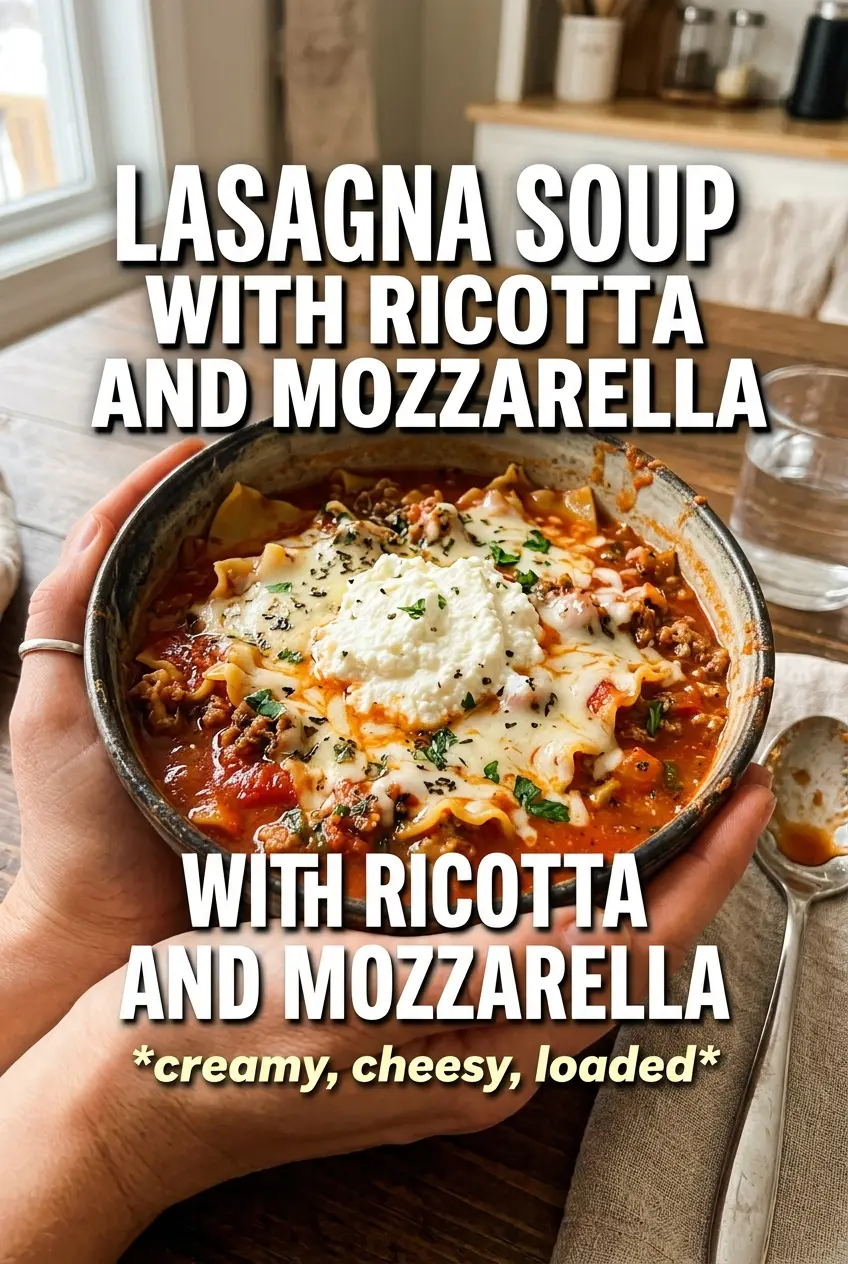
Lasagna Soup With Ricotta And Mozzarella
Ingredients
Equipment
Method
- Brown the Italian sausage in a Dutch oven over medium-high heat, breaking into crumbles, until browned; drain excess fat.
- Sauté the onion for 4 minutes in the same pot, then add the garlic and tomato paste and cook for 2 minutes.
- Add the crushed tomatoes, diced fire-roasted tomatoes, beef broth, Italian seasoning, dried basil, dried oregano, and red pepper flakes, then bring the mixture to a boil.
- Add the lasagna noodles broken into rough 2-inch pieces, then simmer for 10 to 12 minutes until the noodles are cooked through.
- Season generously with salt and pepper.
- Mix the ricotta, mozzarella, parmesan, fresh basil, nutmeg, salt, and pepper together until well combined.
- Ladle the soup into bowls and drop a very large dollop of the cheese mixture into each bowl, letting it melt into the hot soup.