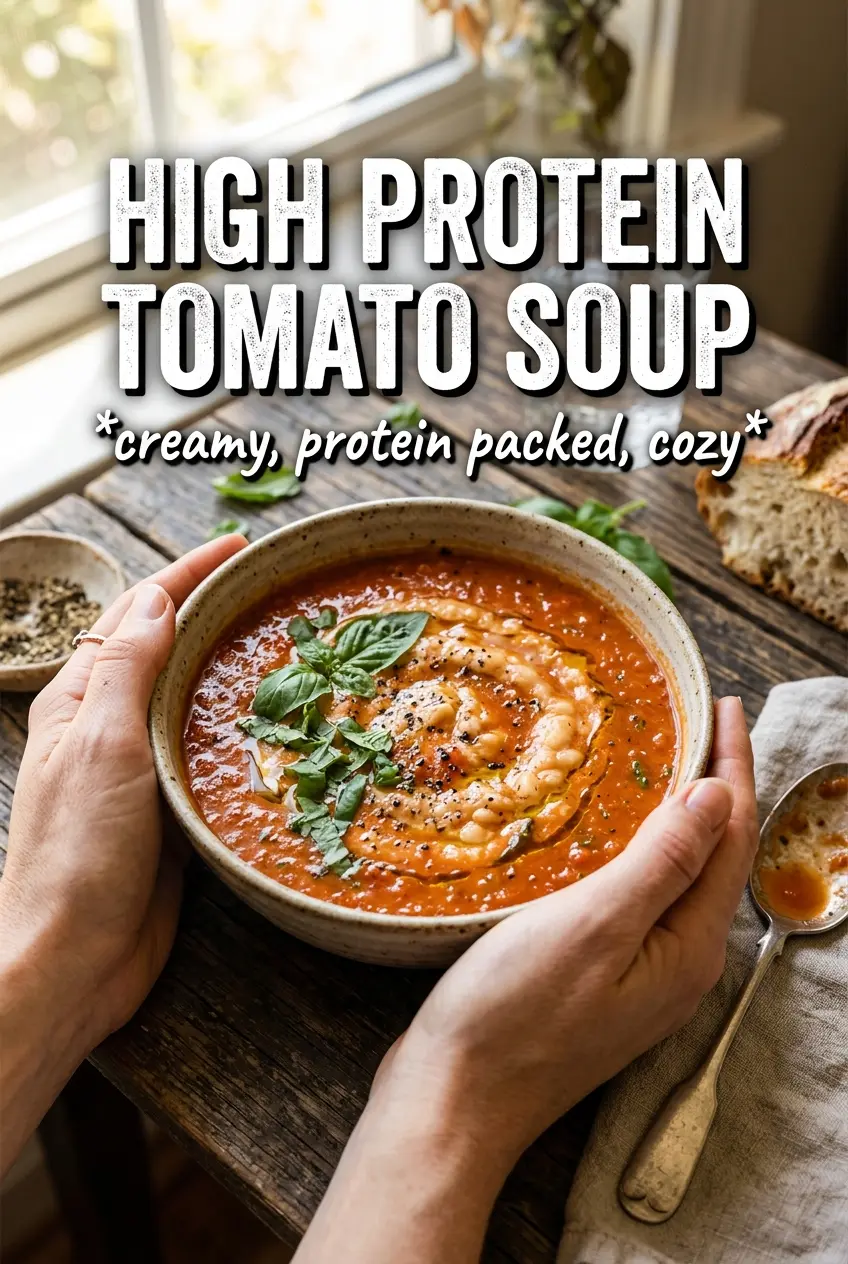
Silky tomato soup gets a real upgrade here: more body, more staying power, and a spoonable texture that feels far richer than the ingredient list suggests. The blended white beans disappear into the base, so you get a bowl that tastes like classic tomato soup but eats like a full meal. That extra protein changes the whole experience. One bowl actually holds you.
The trick is keeping the flavor bright while building enough depth to carry the beans. Onion, garlic, and tomato paste cook first so the soup starts with a savory base instead of tasting flat and canned. Then the tomatoes simmer long enough to soften and concentrate before everything gets blended smooth. The yogurt or cream goes in off the heat, which keeps the soup from turning grainy or splitting.
Below you’ll find the method that keeps the soup creamy without muting the tomato flavor, plus the small finishing moves that make a plain bowl feel complete. If you’ve ever wanted tomato soup that works for dinner, not just a side, this is the one to keep close.
The beans blended in so smoothly that nobody guessed they were there, and the soup had that rich, velvety texture I usually only get from much heavier recipes.
Save this high protein tomato soup for a creamy, blended bowl that still tastes bright and tomato-forward.
The Part That Keeps This Soup Creamy Instead of Grainy
The biggest mistake with tomato soup like this is adding the dairy while the pot is still hot. Greek yogurt and cream both need a calm finish, not a bubbling boil. If you stir them in over heat, the texture can turn broken or a little curdled, especially with the acidity from the tomatoes. Pull the pot off the burner before that last step and the soup stays smooth and glossy.
The other thing that matters is blending long enough. White beans need a full spin through the soup so they vanish into the background instead of leaving a chalky texture. An immersion blender works well here because you can control the smoothness right in the pot, but a regular blender does the same job if you work in batches and vent the lid carefully.
What Each Ingredient Is Actually Doing In This Bowl

- Whole plum tomatoes — These give the soup its clean tomato flavor and enough body to stand up to the beans. Whole canned tomatoes usually taste better than diced because they’re packed in juice, not extra calcium chloride, and they break down into a softer, silkier base.
- White beans — This is the protein boost that makes the soup filling without changing the tomato flavor in any obvious way. Cannellini or great northern beans both work; rinse and drain them well so the soup doesn’t pick up a starchy canning taste.
- Tomato paste — A small amount deepens the color and brings a cooked, concentrated tomato note that canned tomatoes alone can miss. Let it fry briefly with the onion and garlic so it loses that raw tinny edge.
- Greek yogurt or cream — Cream gives the softest, richest finish, while Greek yogurt adds tang and a little extra protein. If you use yogurt, stir it with a few spoonfuls of warm soup in a bowl first so it loosens before going back into the pot.
- Honey or sugar — Tomatoes need a little sweetness to round out the acidity, especially when using canned fruit. Start small; you want the soup balanced, not sweet.
Building the Base Before the Blend
Cooking Down the Onion and Garlic
Start by softening the onion in olive oil until it turns translucent and sweet at the edges, not browned and bitter. That five-minute head start matters because raw onion can make the final soup taste sharp. Add the garlic and tomato paste after the onion has softened so the garlic doesn’t burn before the paste has a chance to cook. The paste should darken slightly and smell sweet, almost caramelized.
Letting the Tomatoes and Beans Simmer Together
Once the tomatoes, broth, beans, and herbs go in, bring the pot to a steady simmer and let it work for the full 20 minutes. You’re looking for the tomatoes to collapse completely and the broth to pick up a deeper red color. If the heat is too high, the liquid reduces too fast and the soup can taste flat instead of rounded. A gentle simmer gives the beans time to soften enough to blend into the background.
Blending Until the Soup Turns Velvety
Blend until the soup is fully smooth, with no visible bean skins or tomato pieces left behind. If it still looks a little loose, keep blending; the texture tightens as the soup rests for a minute. If you’re using a countertop blender, work in small batches and don’t fill it more than halfway with hot soup. The goal is a silky finish, not a speckled puree.
The Final Stir Before Serving
Take the pot off the heat, then stir in the yogurt or cream, honey, salt, and pepper. This is where the soup wakes up: the acid settles, the color softens, and the finish turns creamy without feeling heavy. Taste it after the dairy goes in, because it often needs a little more salt than people expect. Fresh basil on top gives the bowl a bright finish that cuts through the richness.
Ways to Adjust This Soup Without Losing the Point
Make It Dairy-Free
Use olive oil at the finish instead of cream or yogurt, or stir in a splash of full-fat coconut milk for a softer texture. Coconut milk will mute the tomato flavor a little and add a faint sweetness, so keep the honey low if you go that route.
Make It Vegetarian
Use vegetable broth instead of chicken broth and the soup stays just as satisfying. A good vegetable broth should still taste savory and a little rounded; if yours is thin, add an extra spoonful of tomato paste or a pinch more salt to bring the flavor back.
Make It Even Higher in Protein
Use Greek yogurt at the end and add a second can of beans if you want the soup to eat more like a meal. The texture gets a little thicker, so add extra broth until it pours the way you like it.
Make It Spicier
Increase the red pepper flakes or finish each bowl with a tiny pinch of cayenne. The heat should sit in the background and sharpen the tomato flavor, not take over the bowl.
Storage and Reheating
- Refrigerator: Store in an airtight container for up to 4 days. It thickens as it chills because of the beans, so expect a denser texture the next day.
- Freezer: Freeze the soup before adding the yogurt or cream for best results. Dairy can separate after thawing, but the tomato-bean base freezes well for up to 3 months.
- Reheating: Warm gently over low heat, stirring often and adding a splash of broth if it has tightened up. If you used yogurt, don’t boil it on reheating or the texture can turn grainy.
Answers to the Questions Worth Asking
High Protein Tomato Soup
Ingredients
Equipment
Method
- Heat the olive oil in a large pot over medium heat, then sauté the onion for 5 minutes until softened.
- Add the garlic and tomato paste and cook for 2 minutes, stirring, until fragrant and slightly darkened at the edges.
- Add the canned whole plum tomatoes, white beans, broth, dried basil, dried oregano, and red pepper flakes to the pot.
- Simmer for 20 minutes, stirring occasionally, until the flavors meld and the tomatoes break down.
- Blend completely smooth using an immersion blender, pulsing carefully until no bean or tomato pieces remain.
- Stir in the honey and season with salt and pepper to taste.
- Remove from heat, then stir in the Greek yogurt or cream until fully combined and creamy.
- Serve hot, topped with fresh basil.