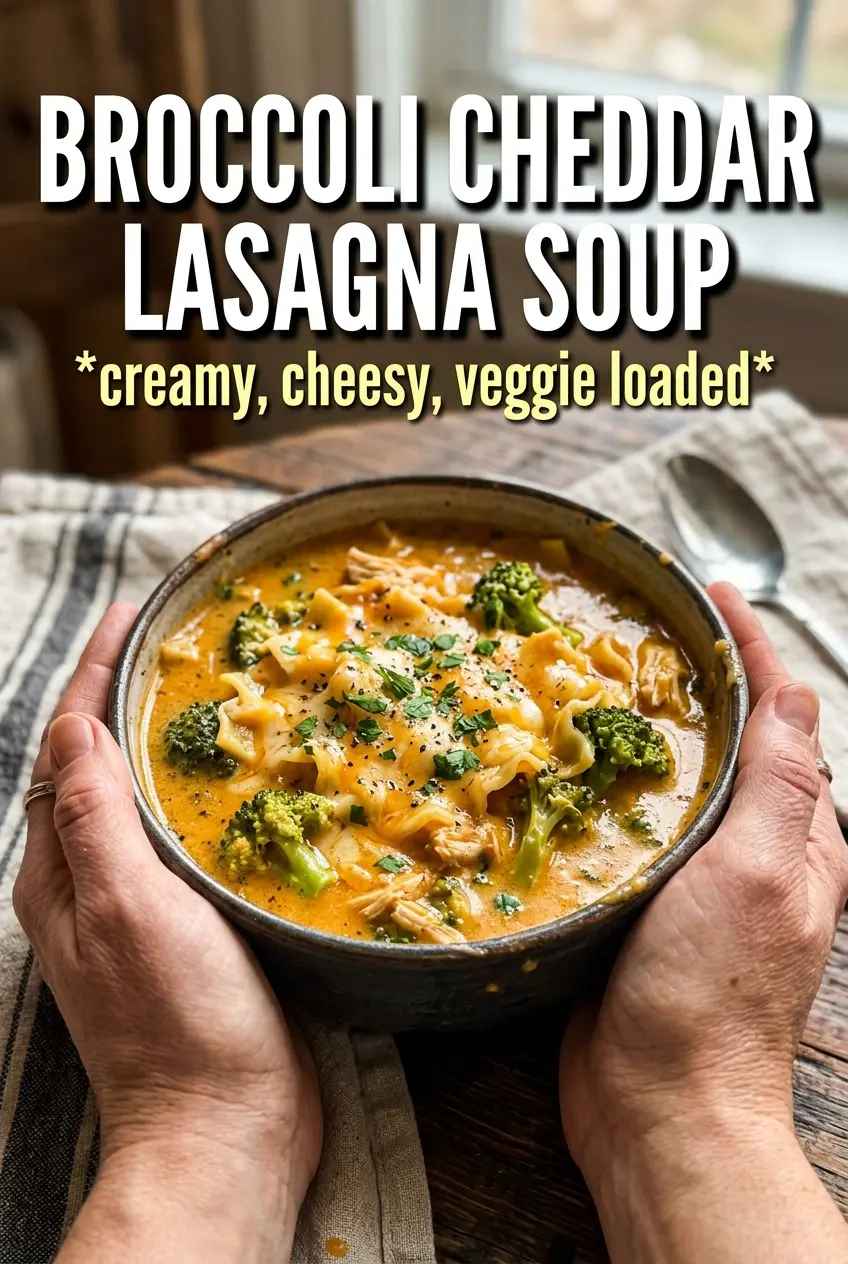
Broccoli cheddar lasagna soup lands in that sweet spot between cozy and substantial: thick enough to eat with a spoon, rich enough to feel like dinner, and packed with enough broccoli and pasta to hold its own as a main dish. The broth turns velvety from cream and cheddar, while the broken lasagna noodles give you those floppy, satisfying edges that make each bite feel a little more playful than a standard broccoli cheddar soup.
What makes this version work is the timing. The noodles go in before the broccoli, so they have time to soften without turning the vegetables dull or overcooked. The cheese stays smooth because it goes in off the heat, after the soup has finished simmering. That keeps the broth creamy instead of grainy, which is where a lot of cheese soups go sideways.
Below, I’ve laid out the small details that matter most: how to keep the cheese from breaking, when the broccoli should go in, and what to do if you want to skip the chicken without losing body in the bowl.
The broth turned out silky and the cheddar melted right in without getting grainy. I loved that the noodles stayed sturdy and the broccoli was still bright and tender at the end.
Save this broccoli cheddar lasagna soup for the nights when you want a creamy, noodle-filled dinner with a sharp cheddar finish.
The Broth Stays Creamy Because the Cheese Goes in Last
Most cheese soups fail for one of two reasons: the roux gets rushed, or the cheese hits the pot while the broth is still boiling hard. This soup avoids both problems. The flour cooks in the butter just long enough to lose its raw taste, then the broth and cream build a base that thickens as it simmers. Once the noodles and broccoli are cooked, the heat comes off before the cheddar goes in. That matters. High heat pushes cheddar toward a stringy, greasy texture instead of the smooth melt you want.
The broken lasagna noodles also do some useful work here. They release a little starch into the broth and help the soup feel fuller without needing extra cream or a second thickener. Keep the simmer gentle once the noodles are in, or they’ll shed too much starch and turn the soup pasty instead of silky.
What Each Ingredient Is Actually Doing in This Bowl
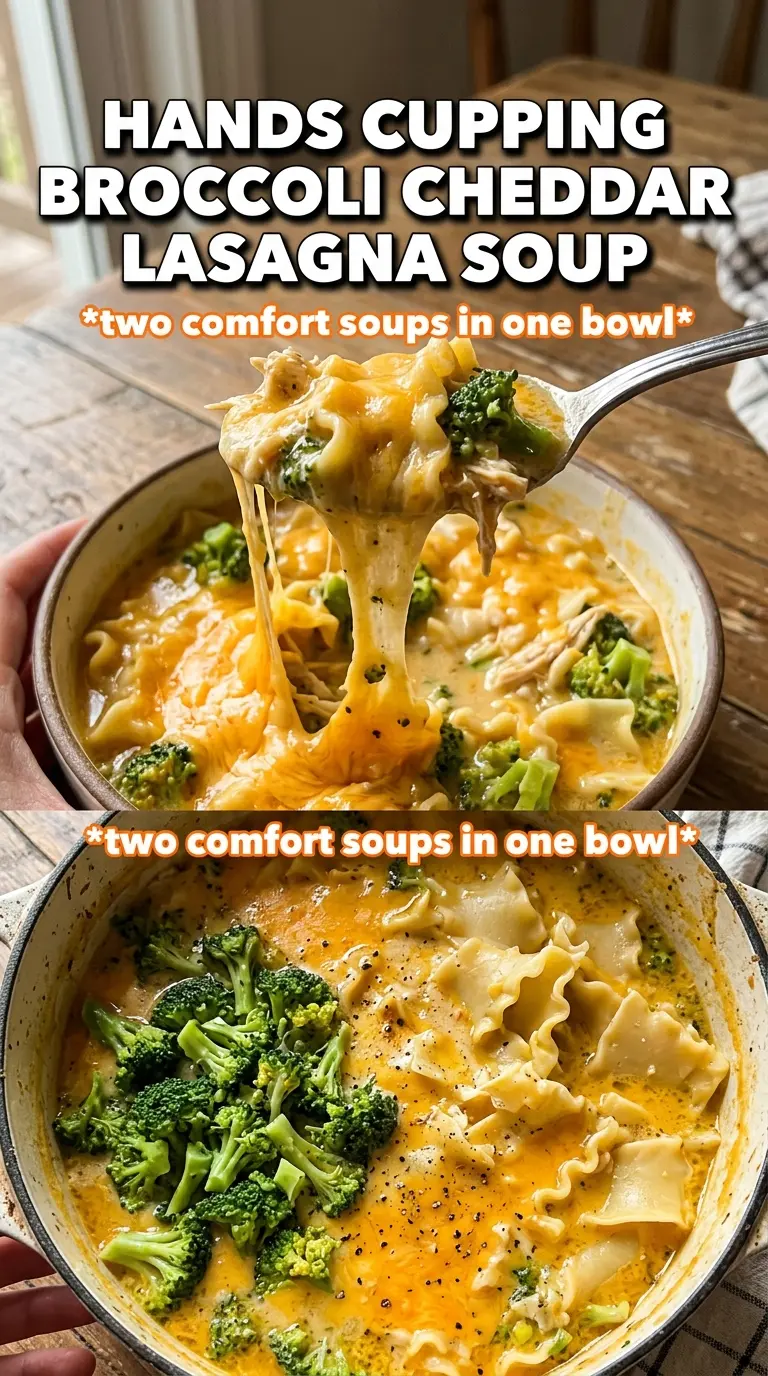
- Broccoli florets — Cut them small so they cook through in the short finish time. Big florets stay raw in the center while the noodles overcook. Fresh broccoli gives the cleanest flavor and the best color, but frozen florets can work in a pinch if you add them straight from frozen and expect a softer texture.
- Sharp cheddar — This is the flavor anchor. Mild cheddar melts fine, but it tastes flatter and the soup can end up one-note. Buy a block and shred it yourself if you can, because pre-shredded cheese often has anti-caking starches that can make the broth less smooth.
- Heavy cream — Cream gives the soup its body and protects the cheddar from turning thin. Half-and-half can work, but the soup will be lighter and a little less plush. I wouldn’t swap in milk unless you’re okay with a thinner broth.
- Dijon mustard — You don’t taste mustard here in a sharp, obvious way. It wakes up the cheddar and keeps the soup from tasting heavy. If you skip it, the soup still works, but the cheese flavor reads a little duller.
- Lasagna noodles — Broken noodles give you the comfort of pasta without turning this into a casserole in a bowl. Don’t overbreak them into tiny pieces; larger shards hold up better and give the soup more of that lasagna feel.
- Chicken breast, optional — This adds protein and makes the soup more filling, but it isn’t required. If you leave it out, the broth and noodles still carry the dish well. If you use it, dice it small so it cooks quickly and doesn’t turn chewy.
The Order That Keeps the Noodles Tender and the Broccoli Green
Building the Aromatic Base
Melt the butter first, then cook the onion until it softens and turns translucent at the edges. That little head start takes the raw bite out of the onion and gives the soup a sweeter base. Add the garlic for just a minute; once it starts smelling fragrant, move on. If garlic browns, it brings bitterness into the whole pot.
Making the Roux Do Its Job
Whisk in the flour and let it cook for 1 to 2 minutes before you add liquid. It should smell a little nutty, not pasty. This is what keeps the broth from tasting like raw flour later. Add the broth and cream gradually while stirring so the flour dissolves evenly and doesn’t clump at the bottom.
Cooking the Pasta Before the Broccoli
Bring the pot to a gentle simmer and add the broken lasagna noodles. Stir them a few times in the first minute so they don’t stick together. After about 8 to 10 minutes, they should be nearly tender but still have a little bite. That’s the point to add the broccoli; if the noodles are fully soft before the vegetables go in, they’ll drift into mush by the time the broccoli is ready.
Finishing Off the Heat
Cook the broccoli just until it turns bright green and tender-crisp, then pull the pot off the burner. Stir in the cheddar a handful at a time until it melts into a smooth, thick soup. If the cheese looks grainy, the pot was still too hot. Let it sit off the heat for a minute, then stir again and it usually comes back together. Season at the end, after the cheese is in, because cheddar brings its own salt.
How to Change the Bowl Without Losing the Character of the Soup
Make It Vegetarian Without Losing Body
Skip the chicken and use vegetable broth instead of chicken broth. The soup still feels full because the roux, cream, noodles, and cheddar bring enough richness on their own. If you want a little more heft, add an extra cup of broccoli or a handful of sautéed mushrooms with the onions.
Make It Gluten-Free
Use your favorite gluten-free pasta and swap the flour for a 1:1 gluten-free flour blend. Cook the noodles just to barely tender, because gluten-free pasta can soften fast once it sits in hot broth. The soup will be a little less silky, but the cheddar still gives it plenty of body.
Use Rotisserie Chicken for Faster Prep
If you already have cooked chicken, stir it in near the end with the broccoli instead of browning raw chicken in the pot. That keeps the meat tender and cuts the active cooking time down. Shred it or chop it small so it disappears into the soup instead of feeling like add-in chunks.
Storage and Reheating
- Refrigerator: Store for up to 4 days. The noodles will keep absorbing broth, so it gets thicker by the next day.
- Freezer: It freezes, but the cream and cheddar can separate a bit on thawing. For the best texture, freeze before adding the cheese and noodles if you know you’ll make it ahead.
- Reheating: Warm it slowly over low heat and add a splash of broth or cream to loosen it. Don’t boil it again, or the cheese can turn oily and the broccoli can go dull.
Questions I Get Asked About This Recipe
Broccoli Cheddar Lasagna Soup
Ingredients
Equipment
Method
- Melt the butter in a large pot, then sauté the diced onion for 4 minutes until softened.
- Add the minced garlic and cook for 1 minute until fragrant, stirring to prevent browning.
- Add the diced chicken breast (if using) and cook for 4 minutes until no longer pink.
- Whisk in the all-purpose flour and cook for 1-2 minutes to remove the raw flour taste.
- Gradually add the chicken broth and heavy cream while stirring, then stir in the garlic powder and Dijon mustard until smooth.
- Bring the soup to a simmer, then add the broken lasagna noodle pieces.
- Simmer for 8-10 minutes until the noodles are almost tender, stirring occasionally to prevent sticking.
- Add the broccoli florets and cook for 3-4 more minutes until the broccoli is bright green and tender-crisp.
- Remove the pot from heat and stir in 2 cups of the shredded sharp cheddar until melted and creamy.
- Season with salt and pepper to taste, then serve topped with the remaining cheddar.