Clear vegetable soup only works when the broth tastes full before the vegetables finish cooking, and that balance is what makes this pot worth keeping in rotation. The broth stays light, but it still carries enough body from potatoes, tomatoes, and the first sauté of onion, carrot, and celery to taste like an actual meal. Every spoonful gives you something different: tender potatoes, sweet corn, soft peas, and green beans that still hold their shape.
The trick is building the base in layers instead of dumping everything in at once. Starting with the onion, carrot, and celery gives the broth a savory backbone, and adding the potatoes before the quicker-cooking vegetables keeps them intact without turning the soup cloudy or mushy. The peas and corn go in at the end for a reason — they only need a few minutes, and longer cooking drains away their sweetness.
Below, I’m walking through the small decisions that keep this soup bright instead of bland, plus a few swaps that work when your pantry doesn’t match the ingredient list exactly.
The broth came out clear and flavorful, and the potatoes held their shape instead of falling apart. I loved that the peas and corn stayed sweet at the end.
Save this vegetable soup for the nights when you want a clear broth, tender potatoes, and bright peas in one pot.
The Step That Keeps Vegetable Soup from Tasting Flat
The biggest mistake in vegetable soup is treating the broth like background noise. If you build everything in plain water and only season at the end, the vegetables taste boiled instead of savory. The onions, carrots, and celery need a few minutes in olive oil first so the pot starts with sweetness and depth before any liquid goes in.
The other thing that matters is timing. Potatoes go in early because they need the full simmer to turn tender, but peas and corn should stay out of the pot until the last few minutes. If they go in too soon, they lose color and taste dull, and the whole soup starts to feel tired instead of fresh.
What Each Vegetable Is Doing in the Pot
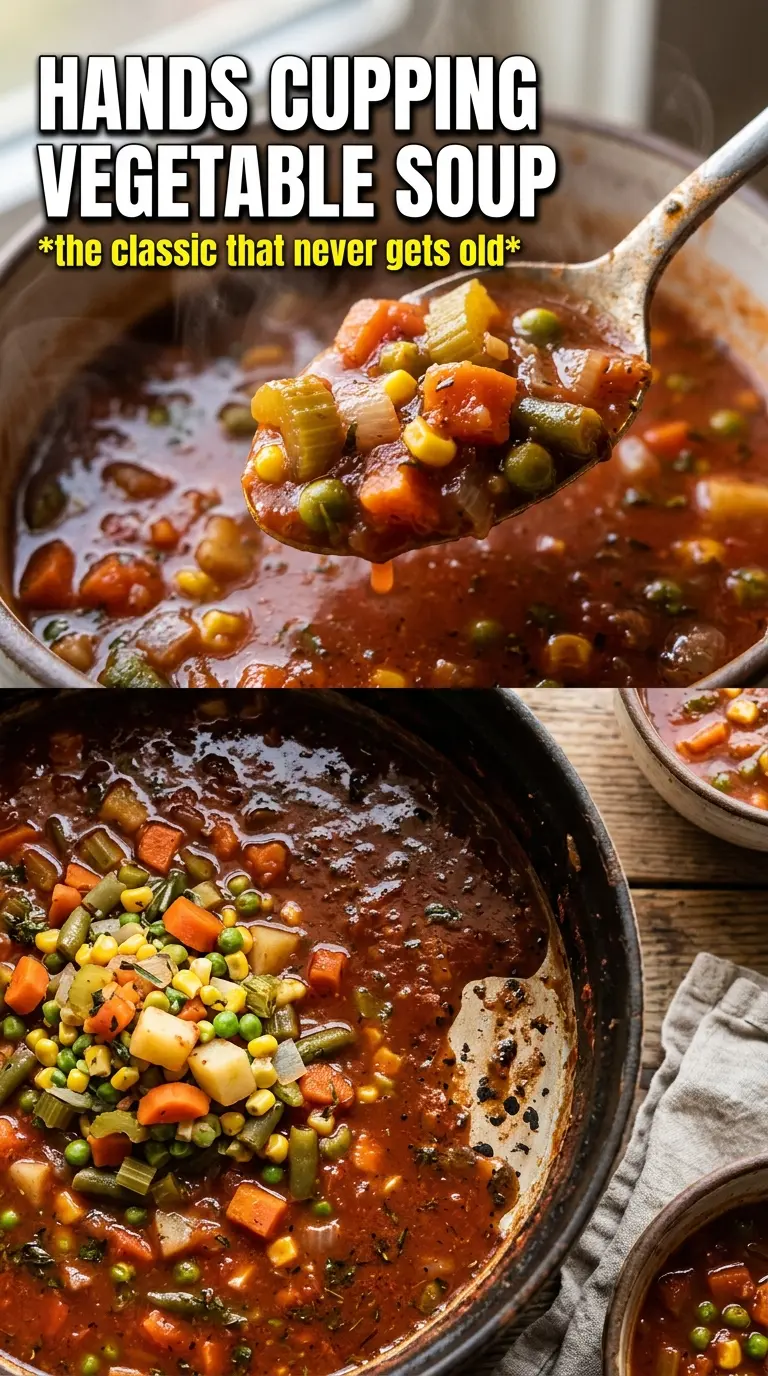
- Potatoes — These give the soup body and make it feel like dinner instead of a thin starter. Yukon Golds hold their shape a little better than russets, but any peeled, medium-starch potato works.
- Carrots, celery, and onion — This is the flavor base. Don’t rush this first sauté, because those vegetables soften and release sweetness that plain broth can’t fake.
- Garlic — It only needs a minute. Longer than that and it can turn sharp or bitter once the broth goes in.
- Diced tomatoes — They add acidity and keep the soup from tasting one-note. A good canned tomato is fine here; you don’t need anything fancy.
- Frozen peas and corn — Frozen works best because they’re picked at peak sweetness and hold up beautifully at the end. Fresh is fine in season, but frozen is often better in a soup like this.
- Vegetable broth — Use the best-tasting broth you can find, since it carries the whole pot. If yours is very salty, hold back on added salt until the end.
Building the Soup in the Right Order
Softening the Base
Start with olive oil, onion, carrots, and celery in a large pot over medium heat. You want the onion to turn translucent and the carrots to start losing their raw edge, not browned edges or crisp bits. If the heat is too high, the vegetables color before they soften, and the broth never gets that clean, mellow backbone. Stir often and give them the full five minutes.
Adding the Garlic and Broth
Garlic only needs a short minute in the pot before the liquid goes in. Once it smells fragrant, add the broth, tomatoes, potatoes, thyme, parsley, and bay leaf all at once. Bring it up to a boil, then turn it down to a steady simmer; a hard boil can break the potatoes apart before the soup is done.
Cooking the Vegetables in Stages
Let the potatoes simmer first, then add the green beans once the broth has had time to settle. Green beans need more time than peas or corn, but not enough to go limp. When the potatoes are just tender and the beans still have a little snap, the soup is on track. If the beans turn drab green, they stayed in too long.
Finishing with Sweet Vegetables
Add the corn and peas at the very end and cook just until they’re hot. This keeps the peas bright and the corn sweet instead of starchy. Pull out the bay leaf before you season the pot, then taste and add salt and pepper until the broth wakes up. Fresh parsley on top gives the soup a clean finish and makes the bowl taste as fresh as it looks.
How to Adapt This Soup When Your Pantry Is Missing Something
Make It Heartier with Beans
Stir in a can of drained white beans or chickpeas with the broth. They add protein and make the soup thicker without changing the basic flavor, though the broth will feel a little more rustic and less light.
Use What You Have for the Vegetables
Swap in zucchini, cabbage, or spinach for the green beans if that’s what’s in the fridge. Just match the cooking time to the vegetable: zucchini goes in late, cabbage can simmer longer, and spinach only needs a minute or two at the end.
Make It Gluten-Free and Naturally Vegan
This soup already fits both diets as written as long as your vegetable broth is gluten-free. That makes it an easy one to serve to a mixed table without changing the texture or flavor at all.
Add Pasta or Rice for a Bigger Meal
Cook small pasta or rice separately and add it to each bowl before ladling in the soup. If you put it straight into the pot, it keeps soaking up broth and turns the leftovers thick and starchy.
Storage and Reheating
- Refrigerator: Store in an airtight container for up to 4 days. The potatoes will soften a bit more as it sits, but the soup still holds up well.
- Freezer: It freezes well for up to 3 months, though the potatoes may turn slightly grainier after thawing. Cool it completely before freezing in portioned containers.
- Reheating: Warm it gently on the stove over medium-low heat until hot. Don’t boil it hard, or the potatoes can break down and the peas will lose their color.
Questions I Get Asked About This Vegetable Soup
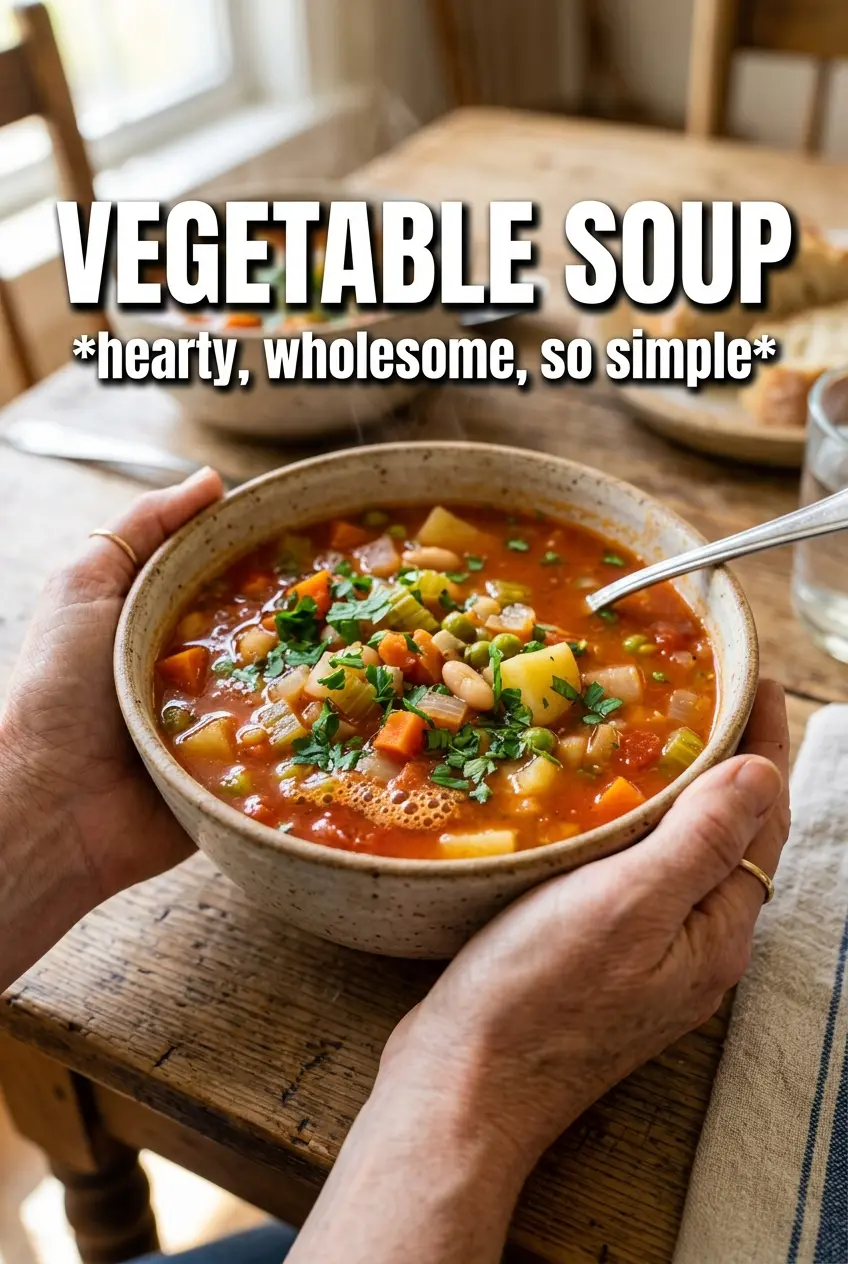
Vegetable Soup
Ingredients
Equipment
Method
- Heat olive oil in a large pot over medium heat, then sauté onion, carrots, and celery for 5 minutes, stirring until glossy and slightly softened.
- Add garlic and cook for 1 minute, stirring constantly to keep it fragrant but not browned.
- Add vegetable broth, diced tomatoes, potatoes, thyme, dried parsley, and bay leaf; stir to combine and bring the mixture to a boil.
- Reduce heat to maintain a gentle simmer and cook for 15 minutes, until the potatoes start to soften.
- Add green beans and cook for 8 minutes, until potatoes and beans are tender.
- Add corn and peas and cook for 3 minutes, until heated through and bright in color.
- Remove the bay leaf, then season with salt and pepper to taste.
- Garnish with fresh parsley before serving.