Pasta coated in creamy avocado dressing lands somewhere between a pasta salad and a guacamole-laced side dish, and that’s exactly why it disappears fast. The dressing clings to every ridge of the pasta instead of pooling at the bottom of the bowl, and the lime keeps it bright enough that each bite tastes fresh, not heavy. It’s the kind of side dish that still feels welcome next to grilled chicken, burgers, or a simple pile of vegetables.
The trick is treating the avocado like a dressing base, not a chunky add-in. Once it’s blended with lime juice, olive oil, garlic, salt, and pepper, it turns silky and coats the pasta evenly. Rinsing the pasta cold stops the cooking and helps the sauce stay green and clean-tasting instead of getting dull and mushy. The tomatoes, corn, red onion, and cilantro bring crunch, sweetness, and sharpness so the whole bowl tastes balanced.
Below, I’ll walk through the one timing detail that keeps the avocado from browning too quickly, plus a couple of smart swaps if you need to adjust the mix for what’s in your fridge.
The avocado dressing turned out so creamy and coated the pasta evenly, and after an hour in the fridge it still tasted bright thanks to the lime. My husband kept going back for another spoonful.
Creamy avocado pasta salad with lime and cilantro is at its best when the dressing hits the noodles while everything is still cold.
The Reason Avocado Stays Creamy Instead of Turning Gluey
Avocado can make a dressing lush and smooth, but it can also go thick and pasty if it gets too much resistance or sits too long before it coats the pasta. The lime juice helps with both flavor and color, but it also keeps the avocado tasting clean instead of flat. The real move here is to blend the dressing until it’s fully emulsified, then toss it with cold pasta right away so the sauce spreads in a thin, even layer instead of clumping.
Rinsing the pasta under cold water matters more than people think in a salad like this. Hot pasta keeps steaming in the bowl, and that steam pushes the avocado toward dull color and a softer texture. Cold pasta gives you a cleaner bite and helps the dressing stay on the surface where it belongs.
- Texture control: This salad works because the avocado is blended smooth before it ever hits the pasta. Leave it chunky and it won’t coat evenly.
- Acid balance: Lime juice does the heavy lifting for brightness and color. Lemon works in a pinch, but the flavor turns a little sharper and less mellow.
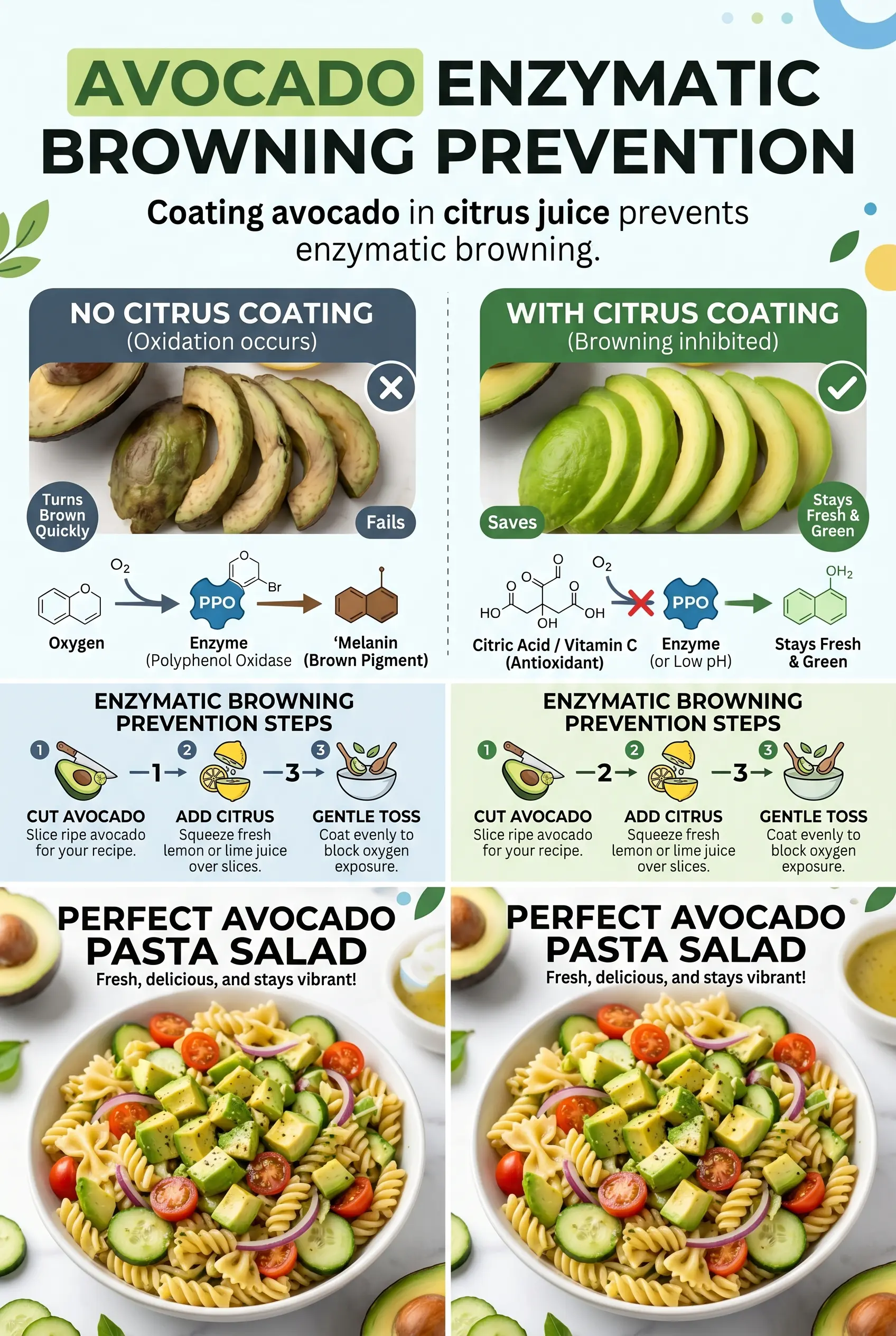
- Timing: Toss the salad soon after blending the dressing. The longer the avocado sits exposed, the faster it oxidizes.
- Cooling the pasta: Cold pasta helps the dressing stay creamy instead of thinning out from residual heat.
What Each Ingredient Is Actually Doing in This Bowl
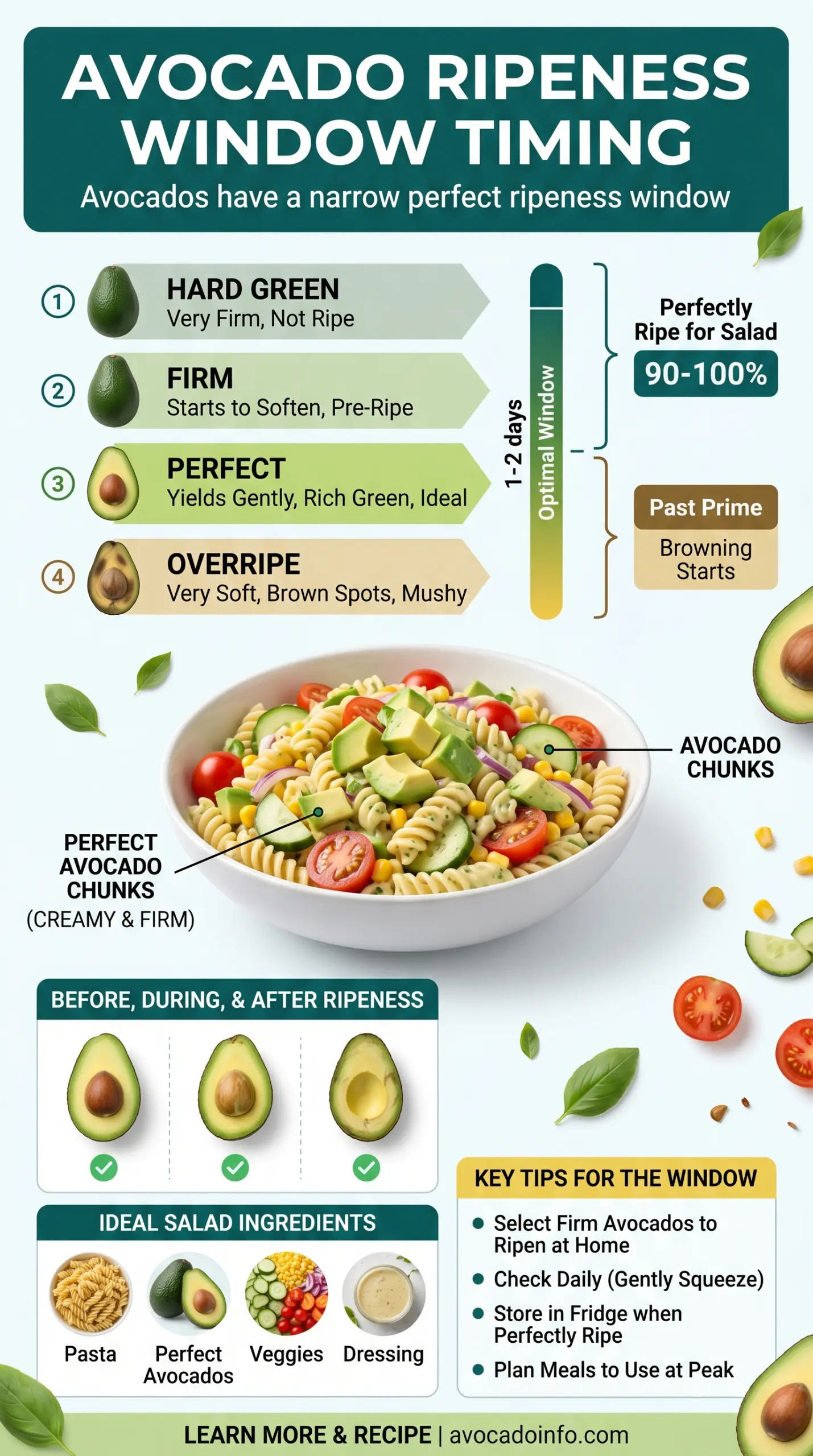
- Avocados: Use ripe avocados with some give when pressed. If they’re firm, the dressing turns grainy and won’t blend into that silky coat you want.
- Lime juice: This keeps the salad bright and slows browning. Bottled lime juice works if that’s what you have, but fresh juice tastes cleaner and more vivid.
- Olive oil: It loosens the avocado just enough to make it pourable and helps the dressing cling to the pasta. A mild olive oil is best here so it doesn’t overshadow the herbs and vegetables.
- Garlic: Raw garlic gives the dressing a little backbone. If you want it softer, grate it finely instead of leaving it in big minced pieces.
- Cherry tomatoes, corn, and red onion: These are the crunch and sweetness that keep the salad from tasting one-note. Fresh corn is great, but thawed frozen corn is the easiest swap and works well.
- Cilantro: Add it at the end so it stays bright and doesn’t sink into the dressing. If cilantro tastes soapy to you, use chopped parsley instead.
Building the Salad So the Avocado Coats Every Piece
Cook the Pasta Past the Bite-Test Stage by a Minute
Cook the pasta according to the package directions, then drain it and rinse it under cold water until it loses its heat. For pasta salad, a slightly softer noodle works better than al dente because it absorbs the dressing without tasting dry. If the pasta goes into the bowl warm, the avocado dressing will loosen and the whole salad can turn creamy in a messy way instead of a clean, coated way.
Blend the Dressing Until It Looks Like Green Cream
Put the avocados, lime juice, olive oil, garlic, salt, and pepper in a blender or food processor and run it until the mixture looks completely smooth. Stop and scrape the sides if you see pale streaks or small avocado bits, because those little lumps don’t disappear later. The dressing should pour slowly off a spoon. If it’s too thick, add a teaspoon of water or a little more lime juice.
Toss the Vegetables First, Then Add the Dressing
Combine the pasta, tomatoes, corn, and red onion in a large bowl before adding the avocado dressing. That order matters because it spreads the vegetables through the pasta before the dressing starts clumping around the first few pieces it touches. Toss gently but thoroughly so every curve of pasta gets a thin coat and the tomatoes don’t get crushed.
Chill Briefly and Add the Cilantro at the End
Refrigerate the salad for up to 1 hour so the flavors settle and the dressing firms up a little. Any longer and the avocado starts to lose its bright color, which is why this salad is best made close to serving time. Right before it goes to the table, fold in the cilantro so it stays fresh and fragrant instead of wilting into the dressing.
Make It Heartier with Black Beans
Stir in a drained can of black beans if you want this to eat more like a lunch salad. They add protein and a little earthy contrast, but they also make the bowl heavier, so I’d keep the pasta-to-dressing ratio generous.
Dairy-Free and Naturally Vegetarian
This recipe already works as a dairy-free vegetarian side, which is part of why it’s such an easy crowd recipe. If you want to keep it fully plant-based, just check the pasta shape you buy and pair it with a neutral olive oil so the avocado stays front and center.
Swap the Herbs for What You Have
If cilantro isn’t your thing, parsley or a small handful of chopped basil works. Parsley keeps the flavor clean, while basil makes the salad taste softer and a little sweeter.
Storage and Reheating
- Refrigerator: Best eaten within 1 day. The avocado will darken and the dressing can loosen as it sits.
- Freezer: Don’t freeze this salad. Avocado turns grainy after thawing and the pasta loses its texture.
- Reheating: Serve it cold. If it’s been chilled hard, let it sit at room temperature for 10 to 15 minutes and toss it again before serving. Warmth speeds up browning and makes the dressing break down.
Answers to the Questions Worth Asking
Avocado Pasta Salad
Ingredients
Equipment
Method
- Bring a pot of water to a boil and cook the penne or rotini according to package directions, until tender but not mushy. Drain and rinse thoroughly with cold water to stop the cooking and keep the pasta firm.
- In a blender, combine avocados, lime juice, olive oil, garlic, salt, and pepper. Blend until completely smooth and creamy, scraping down as needed so no avocado bits remain.
- Add the cooked pasta, cherry tomatoes, corn, and red onion to a large bowl. Toss to distribute the vegetables evenly.
- Pour in the avocado dressing and toss until the pasta and vegetables are coated throughout. Keep tossing until the salad looks uniformly green and creamy.
- Refrigerate the pasta salad for up to 1 hour, covered, to firm up the texture. Note the avocado may brown if stored longer than 1 hour.
- Top the chilled pasta salad with fresh cilantro right before serving. Serve cold for the freshest, most vibrant flavor.