Pasta salad gets a lot more interesting when the dressing isn’t a heavy mayo situation and instead tastes like cold, garlicky tzatziki clinging to every curve of the noodles. This version stays creamy after chilling, and the cucumber, dill, feta, and olives give it the kind of bright, salty balance that keeps people going back for another scoop. It’s the sort of side dish that disappears fast at cookouts, but it’s just as good on a Tuesday night when dinner needs something cool and fresh alongside the main meal.
The key is controlling the cucumber. Half gets grated and squeezed into the dressing for that tzatziki flavor, while the rest stays diced for crunch so the salad doesn’t turn watery or muddy. Rinsing the pasta under cold water stops the cooking and keeps the dressing from getting absorbed the second it hits the bowl. A little sour cream with the Greek yogurt gives the sauce a rounder texture and keeps it from tasting too sharp once it’s chilled.
Below you’ll find the small details that make this salad hold up well after resting, plus a few ways to adjust it if you want to lighten it up or make it fit what’s already in your fridge.
The dressing coated the pasta beautifully after chilling, and the grated cucumber kept it tasting like real tzatziki instead of a heavy creamy salad. I made it the night before and it was even better the next day.
Keep this Greek tzatziki pasta salad handy for potlucks, meal prep, and any table that needs a creamy chilled side with cucumber, dill, and feta.
The Reason the Dressing Stays Creamy After It Chills
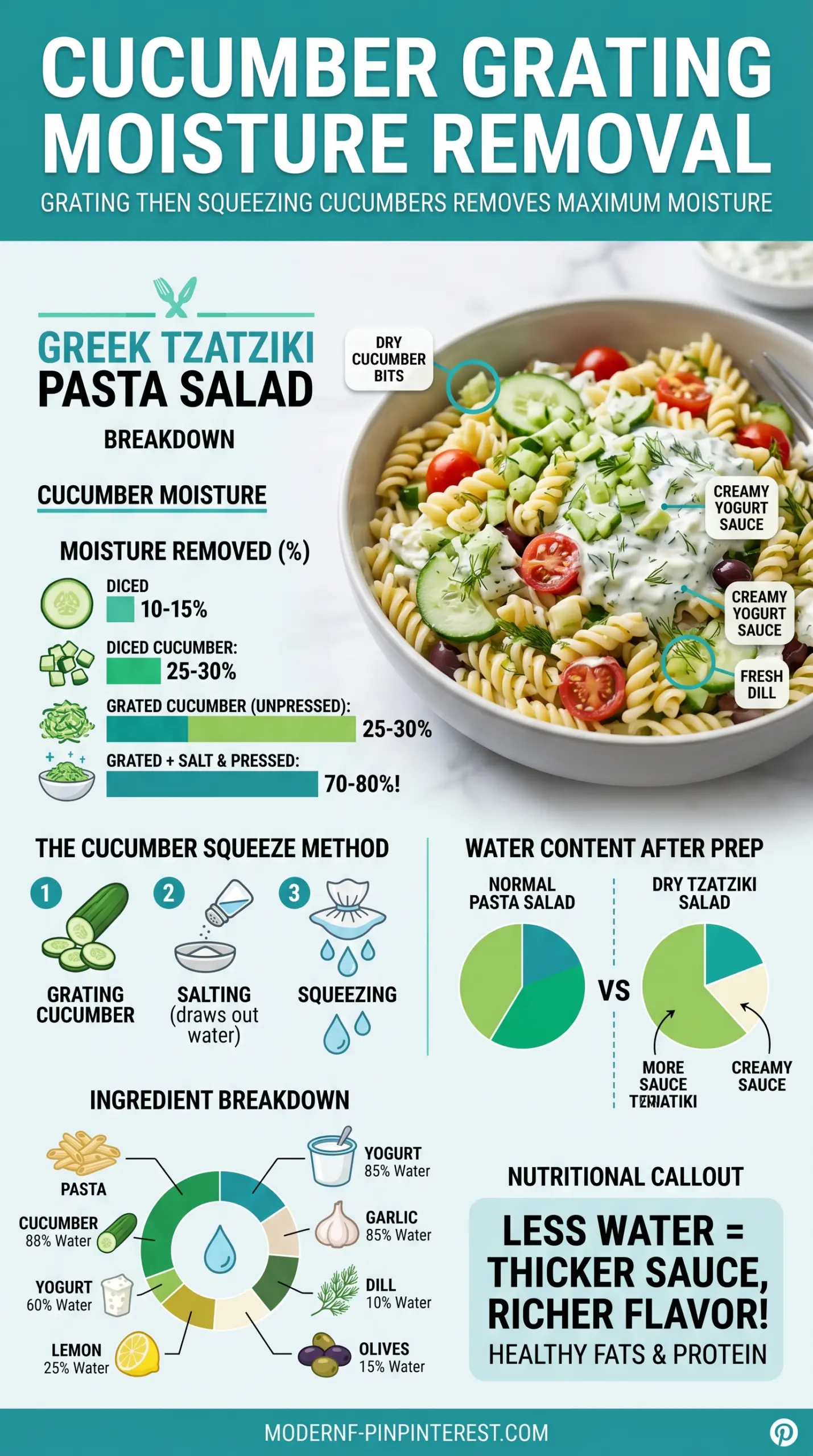
Most pasta salads get watery because the cucumber and pasta both keep releasing moisture after they’re dressed. This version avoids that in two ways: the grated cucumber gets squeezed dry before it goes into the tzatziki, and the pasta gets rinsed cold so it doesn’t keep steaming in the bowl. That means the sauce starts out thick enough to cling, instead of thinning into a slick puddle by the time it reaches the table.
The other thing that matters here is the ratio of yogurt to sour cream. Greek yogurt brings tang and body, but sour cream softens the sharp edge and gives the dressing a more spoonable texture once it’s chilled. If you skip that balance and use only yogurt, the salad can taste tight and a little chalky after an hour in the fridge.
- Grating only half the cucumber gives you tzatziki flavor without turning the whole salad soggy.
- Cold-rinsed pasta stays separate and doesn’t drink up all the dressing before serving.
- Dill needs to go in fresh. Dried dill won’t give the same bright herbal finish here.
- Feta folds in best at the end so it stays in crumbles instead of dissolving into the dressing.
What Each Ingredient Is Actually Doing in This Salad
- Greek yogurt — This is the backbone of the tzatziki flavor and the source of the thick, tangy dressing. Use full-fat if you want the most stable texture after chilling.
- Sour cream — It rounds out the yogurt and keeps the dressing from tasting too sharp. If you need a swap, plain whole-milk yogurt works, but the dressing will be a little looser.
- Cucumber — Half gets grated for the dressing and half gets diced for crunch. That split is what gives the salad its fresh tzatziki feel without flooding the bowl with water.
- Red onion — Dice it small so it gives bite without overpowering each forkful. If raw onion is too strong for you, soak the dice in cold water for 10 minutes and drain well.
- Kalamata olives and feta — These bring the salty, briny finish that makes the salad taste complete. Don’t swap them for mild ingredients unless you’re okay losing that Greek-style edge.
Building the Bowl So the Dressing Clings Instead of Sliding Off
Cook and Cool the Pasta
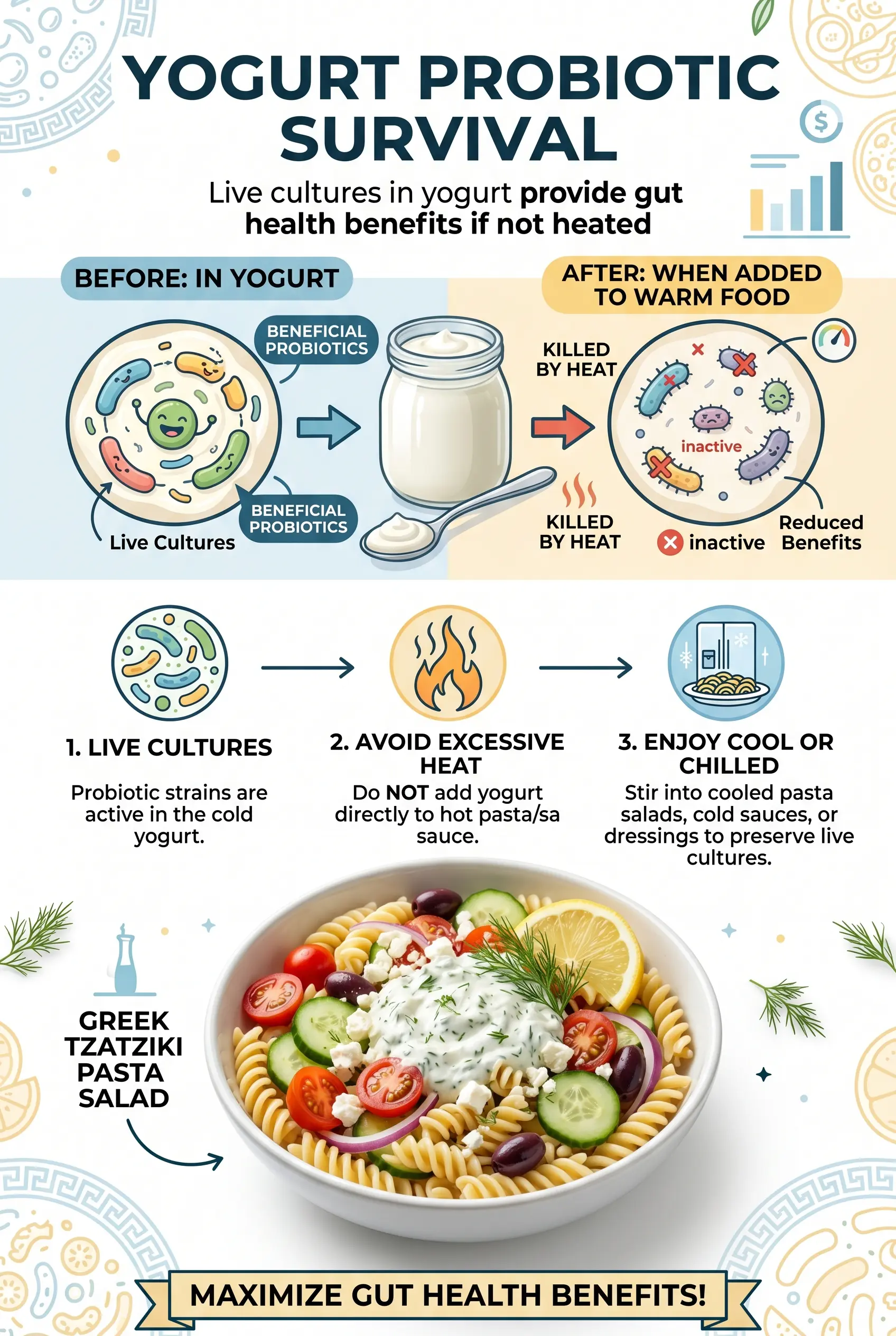
Cook the pasta until just tender, then drain it and rinse under cold water until it feels cool to the touch. You want the noodles fully cooled before they meet the dressing, or they’ll warm the tzatziki and make it thinner. Let the pasta drain well so extra water doesn’t pool at the bottom of the bowl.
Mix the Tzatziki Base
Grate half the cucumber and squeeze it hard in a clean towel or your hands until most of the liquid is gone. Stir it into the yogurt, sour cream, garlic, lemon juice, dill, salt, and pepper until the dressing looks thick and speckled with cucumber. If it seems loose at this stage, it’ll only get looser once the pasta and vegetables go in, so don’t skip the squeeze.
Fold in the Vegetables and Pasta
Add the cooled pasta, diced cucumber, tomatoes, red onion, and olives to a large bowl, then spoon in the tzatziki mixture. Toss gently until every piece is coated, then fold in the feta last so it stays intact. The salad should look creamy and well dressed, not soupy; if there’s excess dressing at the bottom, the pasta was either still warm or the cucumber wasn’t drained enough.
Let It Chill Before Serving
Refrigerate the salad for at least an hour before serving. That resting time lets the pasta absorb some of the flavor and gives the garlic, lemon, and dill a chance to settle into the yogurt base. Give it one quick stir before plating, because the dressing will thicken a bit as it chills.
Make It Lighter with Extra Cucumber and Less Dairy
You can swap part of the sour cream for more Greek yogurt and add a little extra diced cucumber for a fresher, lighter salad. The dressing will taste tangier and a bit less plush, but it still clings well if you keep the cucumber well-drained.
Make It Gluten-Free
Use your favorite gluten-free pasta, but cook it just to the firm side of done. Gluten-free pasta can soften fast after chilling, so stop before it gets too tender or the salad turns mushy by the next day.
Swap the Pasta Shape for More Dressing Cling
Rotini and penne both work, but short shapes with ridges or curves hold the tzatziki better than smooth pasta. If you want the dressing in every bite, choose a shape that traps little bits of cucumber and feta instead of letting them slide to the bottom.
Storage and Reheating
- Refrigerator: Store covered for up to 3 days. It may thicken a little as it sits, and the vegetables will soften slightly.
- Freezer: Don’t freeze this salad. The yogurt dressing breaks and the cucumber turns watery after thawing.
- Reheating: This is meant to be served cold. If it tightens up in the fridge, stir in a spoonful of yogurt or a splash of lemon juice instead of warming it.
Answers to the Questions Worth Asking
Greek Tzatziki Pasta Salad
Ingredients
Equipment
Method
- Cook penne or rotini pasta according to package directions until al dente, then drain and rinse with cold water to cool quickly and stop carryover cooking.
- Grate half the cucumber and squeeze out excess moisture, then mix it with Greek yogurt, sour cream, garlic, lemon juice, fresh dill, salt, and pepper until smooth and creamy.
- Combine pasta, remaining diced cucumber, cherry tomatoes, red onion, and Kalamata olives in a large bowl.
- Add tzatziki sauce and toss to coat all pasta pieces evenly.
- Gently fold in feta cheese so the crumbles stay intact and don’t fully disappear.
- Refrigerate the pasta salad for at least 1 hour to chill and let the flavors meld before serving.