Bacon Ranch Chicken Foil Packets come off the grill juicy, smoky, and packed with everything that makes dinner feel complete in one neat little bundle. The chicken stays tender, the bacon renders enough to season the vegetables, and the potatoes catch all that ranchy, savory drippings as they cook. When you open the packets and the cheese melts into the steam, the whole thing smells like a campfire meal that took more effort than it did.
The trick here is building the packet so everything finishes at the same time. Thin halved baby potatoes need to sit closest to the heat, while the broccoli goes in where it can steam without turning mushy. Heavy-duty foil matters too, because regular foil tears too easily once the bacon starts rendering and the packets get moved around on a grate or grill.
Below, I’ve included the timing that keeps the chicken juicy instead of dry, plus a few smart swaps for oven baking and sheet pan cooking when you’re not cooking over a fire.
The potatoes were tender in the same amount of time as the chicken, and the bacon kept the ranch flavor from tasting flat. I opened one packet a minute early and the cheese melted perfectly without overcooking the broccoli.
Save these Bacon Ranch Chicken Foil Packets for a smoky, cheesy dinner that cooks in one packet with no pan to scrub.
The Reason Foil Packets Go Soggy Before They’re Done
The biggest mistake with chicken foil packets is packing everything in at the same size and expecting it to cook evenly. Chicken breasts, potatoes, and broccoli each need different amounts of heat and moisture, so the packet has to be arranged with intention. If the potatoes are left in big chunks, they’ll still be firm when the chicken is done. If the broccoli sits directly against the foil for the whole cook, it can go limp and lose its color before the cheese ever melts.
The other failure point is sealing the packets too loosely. Steam is what cooks the vegetables and keeps the chicken moist, but too much open space inside the foil means heat escapes and the potatoes lag behind. A tight seal traps the bacon drippings, ranch seasoning, and vegetable steam together, which is what gives the finished packets that rich, coated taste instead of a bland baked chicken dinner.
- Chicken breasts — Use boneless breasts of similar size so they finish together. If one is much thicker, pound it lightly to even the shape before wrapping.
- Baby potatoes — Halving them is important. Whole small potatoes won’t soften in the same window as the chicken.
- Broccoli florets — Add them in florets that are on the small side so they steam tender without turning stringy.
- Heavy-duty foil — This isn’t the place to swap in thin foil. The packets need to hold up to turning, steam, and bacon fat without splitting.
What Each Ingredient Is Doing Once the Packet Seals
- Chicken breasts — They act as the main protein and stay juicy because they’re protected by the foil steam. You can use chicken thighs, but they’ll cook a little faster and give a richer result.
- Ranch seasoning mix — This is the seasoning backbone. It seasons the chicken and vegetables at the same time, and dry ranch works better than bottled dressing because it doesn’t add extra liquid that can make the packet watery.
- Bacon — The bacon does more than add flavor; it bastes the chicken as it cooks and seasons the potatoes with rendered fat. Thick-cut bacon works, but it needs a few extra minutes or thinner slices to wrap neatly.
- Potatoes and broccoli — These turn it from chicken dinner into a full meal. The potatoes soak up the drippings, and the broccoli gives you a fresh, green bite that keeps the packet from feeling heavy.
- Cheddar cheese — Add it at the end, not at the start. Cheese cooked the whole time can turn greasy and stiff; melting it briefly over the finished hot packet gives you that soft, stretchy top.
Building the Packets So Everything Finishes Together
Season and Wrap the Chicken First
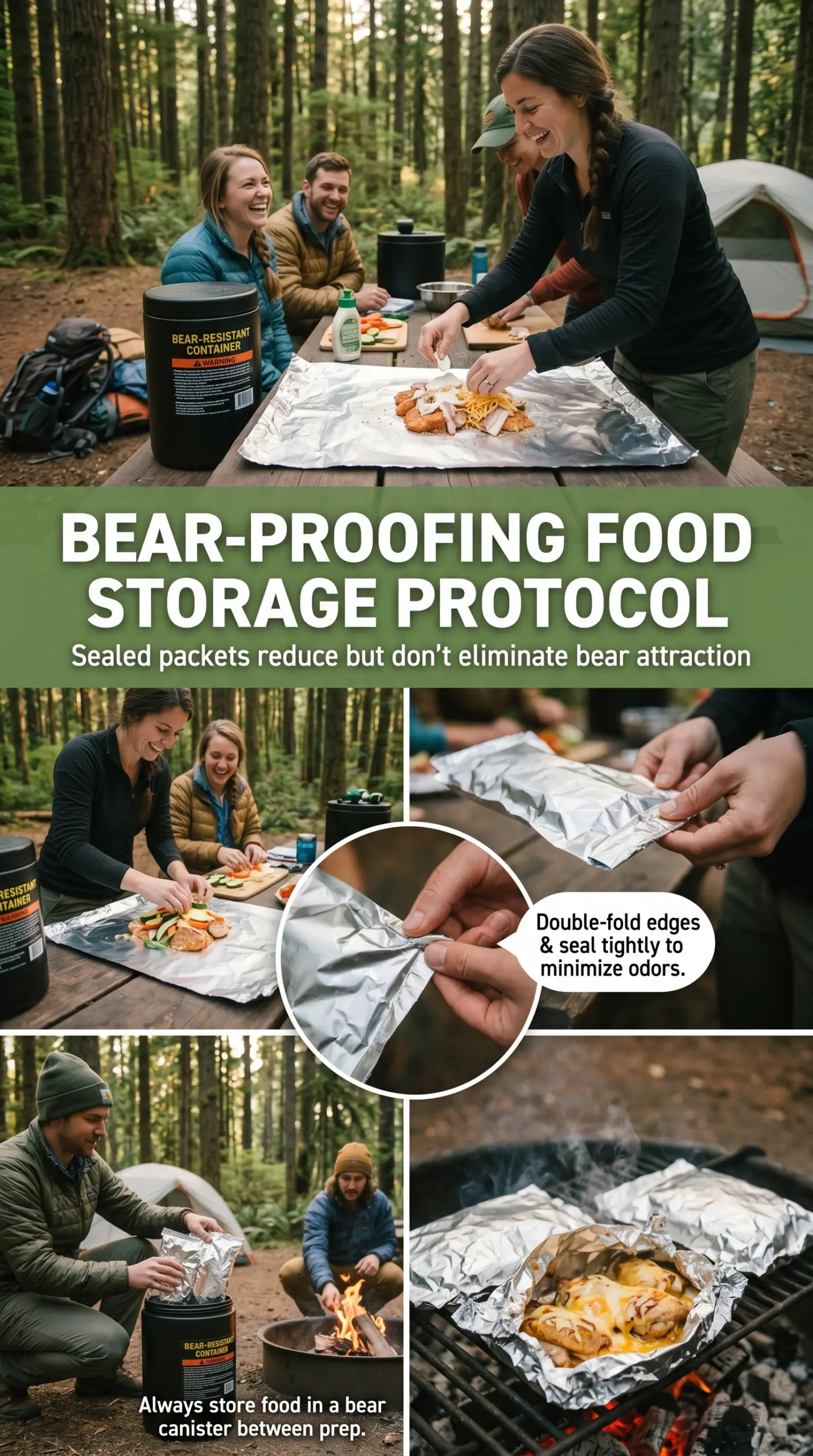
Set each chicken breast on its own sheet of foil and sprinkle the ranch seasoning directly over the top and sides. Wrap two slices of bacon around each breast so the meat stays covered as it cooks. If the bacon won’t stay put, tuck the ends underneath the chicken rather than using toothpicks, which can poke holes in the foil and leak steam.
Arrange the Vegetables by Heat Need
Scatter the halved potatoes around the chicken first, then tuck the broccoli in close to the top or edges. Potatoes need the most time, so they should be the most exposed to the packet’s heat. The broccoli should sit where it can steam instead of roast hard; if it’s buried under the chicken, it can overcook before the potatoes soften.
Seal Tight and Cook Over Medium Heat
Fold the foil into a sealed packet with enough room for steam to circulate, but not so much space that the ingredients just sit there. Place the packets on a medium grill grate or campfire grate and cook for 20 to 25 minutes. The safest check is the chicken’s internal temperature: pull them when the thickest part reaches 165°F and the potatoes can be pierced with a fork without resistance.
Melt the Cheese at the Very End
Open the packets carefully because the steam inside is hot enough to burn you. Sprinkle cheddar over the chicken while everything is still sizzling, then close the packet for another minute or two so the cheese softens. If the cheese goes on too early, it can separate and get oily instead of melting into the bacon and ranch.
How to Adapt These Foil Packets for Different Nights
Oven-Baked Version
Bake the sealed packets on a sheet pan at 400°F if you’re cooking indoors. The timing stays close to the grill method, but the oven gives you a more even finish and is easier when you want a no-mess dinner without managing flame or charcoal.
Dairy-Free Adjustment
Skip the cheddar or use a dairy-free shred that melts well. The bacon and ranch still carry the flavor, so you won’t lose the savory backbone of the dish, but the finish will be a little less creamy and rich.
Low-Carb Swap
Replace the potatoes with zucchini chunks or cauliflower florets if you want a lower-carb packet. Zucchini cooks faster and releases more moisture, so cut it larger and add it on top rather than at the bottom of the packet.
Storage and Reheating
- Refrigerator: Store leftovers in an airtight container for up to 3 days. The potatoes soften a bit more after chilling, but the flavor holds up well.
- Freezer: The cooked chicken and bacon freeze better than the vegetables. If you plan to freeze it, leave out the broccoli and add fresh vegetables when reheating.
- Reheating: Reheat covered in the oven at 325°F until hot through. Microwaving works in a pinch, but it tends to make the chicken rubbery and the broccoli dull.
Answers to the Questions Worth Asking
Bacon Ranch Chicken Foil Packets
Ingredients
Equipment
Method
- Place each boneless chicken breast on a sheet of heavy-duty aluminum foil and sprinkle with ranch seasoning mix evenly across the surface.
- Wrap each chicken breast with 2 slices of bacon so the bacon covers the top and sides.
- Surround the chicken with baby potatoes (halved) and broccoli florets within the foil so they sit close to the chicken.
- Fold the foil up and over to form sealed packets, pressing edges tightly so steam stays inside.
- Place packets on a campfire grate over medium heat for 20-25 minutes until the chicken reaches 165°F.
- Open the packets, sprinkle shredded cheddar cheese over the hot chicken and vegetables, and reseal briefly just until the cheese melts.
- Serve immediately, keeping the chicken and vegetables together in the packet juices.