Gluten-free Italian pasta salad lands best when the pasta still holds its shape after chilling and the dressing clings to every ridge instead of pooling at the bottom of the bowl. The right balance is cold, savory, tangy, and sturdy enough to sit on a buffet without turning soft or watery.
The trick is starting with pasta that’s cooked just past tender, then rinsed cold so it stops right away. Gluten-free pasta can go from underdone to fragile fast, and once it’s tossed with salami, mozzarella, crunchy vegetables, and Italian dressing, the salad needs a little extra chill time to settle into itself. That rest is what pulls the whole bowl together.
Below, I’m walking through the two spots where this salad usually goes off the rails: the pasta texture and the seasoning after it chills. Those details make the difference between a bowl that tastes flat and one people keep going back to for seconds.
I’ve made a lot of pasta salads, but this one held up after chilling and the gluten-free rotini stayed springy instead of mushy. The dressing soaked in overnight without making the whole bowl soggy, and the salami with the mozzarella gave it a nice, hearty bite.
Save this gluten-free Italian pasta salad for the kind of side dish that stays colorful, sturdy, and satisfying after chilling.
The Pasta Texture That Keeps Gluten-Free Salads From Turning Soft
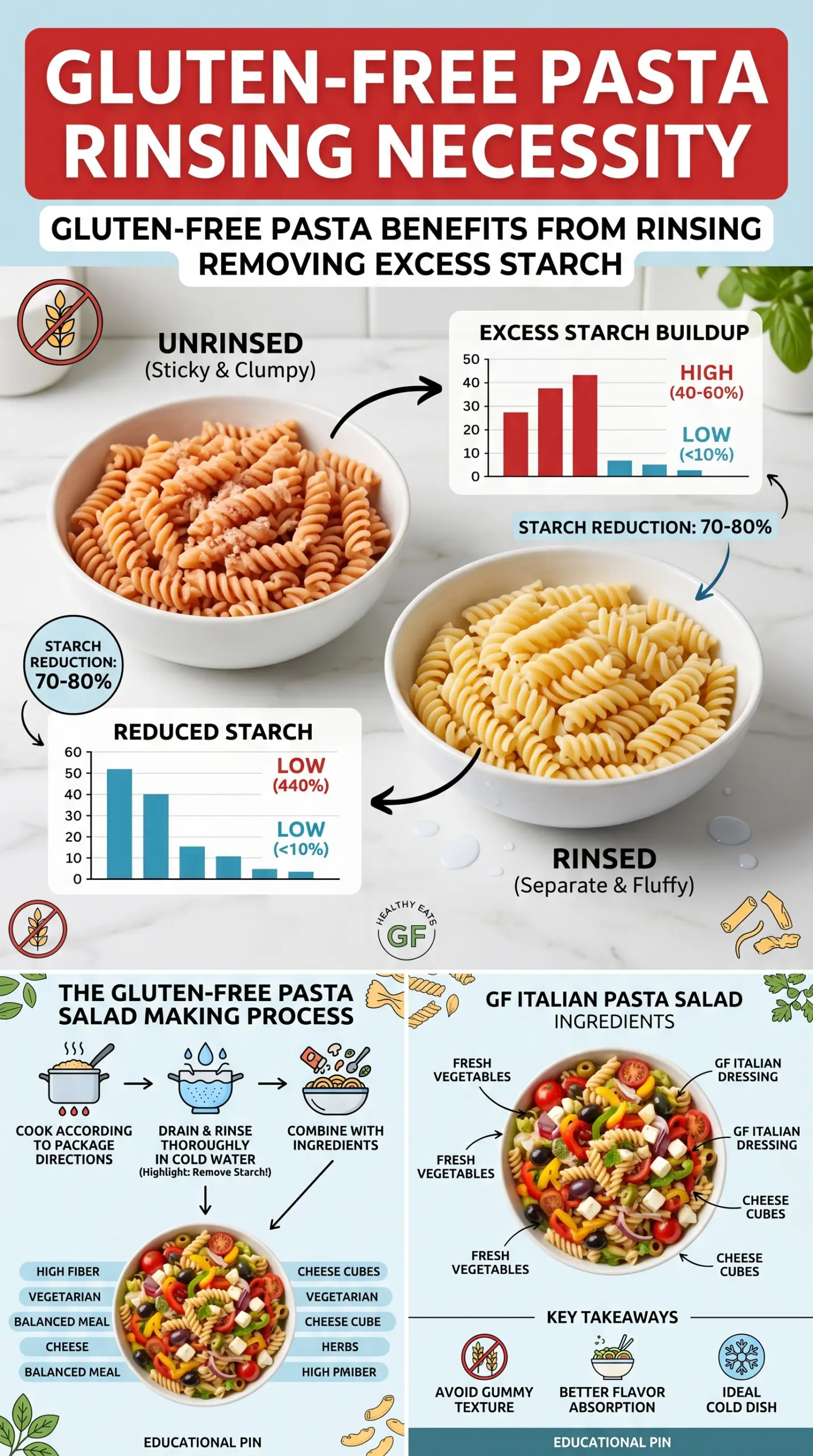
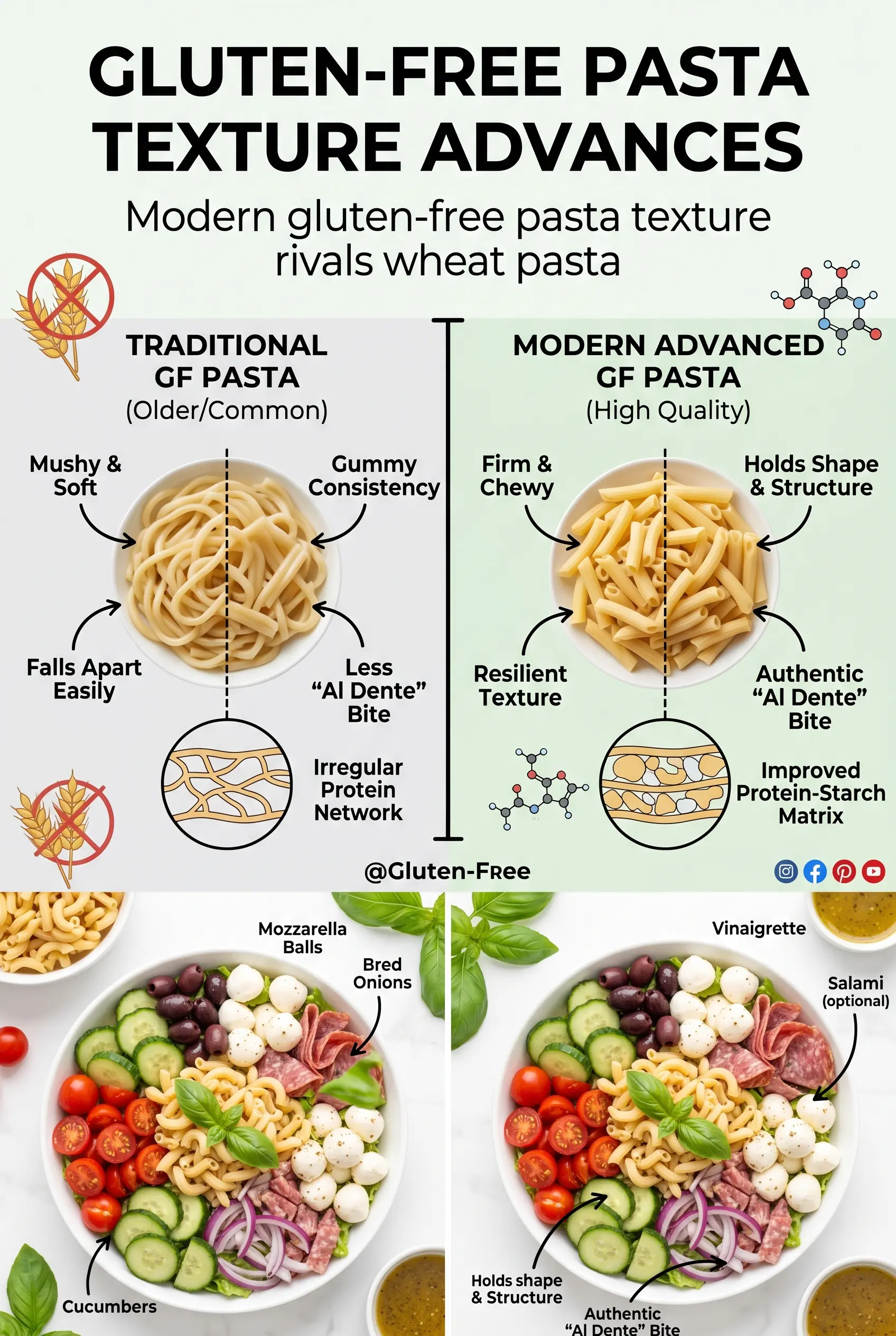
Gluten-free pasta has less forgiveness than wheat pasta, which is why pasta salad can go wrong fast if you treat it the same way. Cook it according to the package, but start checking a minute or two before the timer says it’s done. You want it tender with a little bite, not fully soft, because it keeps absorbing dressing while it chills.
Rinsing under cold water matters here. It stops the cooking and knocks off some starch so the dressing doesn’t turn gummy on the outside of the noodles. If your pasta tends to break apart, don’t stir it aggressively in the first minute after draining; toss it gently while it’s still warm enough to take on the dressing, but not so hot that it melts the mozzarella.
What Each Ingredient Is Actually Doing in the Bowl
- Gluten-free pasta — Rotini or penne gives the dressing places to cling, which matters more here than with a smoother noodle. Use a sturdy brand that holds its shape after chilling; delicate blends can crumble once tossed with the vegetables and cheese.
- Italian dressing — This carries the acid and seasoning for the whole salad, so don’t use a thin or bland one. If yours tastes sharp straight from the bottle, that’s okay; it softens after it sits with the pasta and salami.
- Salami and mozzarella — These make the salad feel like a meal instead of a side. Cube both small enough that they distribute through the bowl, or you’ll end up with a few heavy bites and a lot of pasta with nothing on it.
- Cherry tomatoes, cucumber, olives, and red onion — These add crunch, salt, and brightness, but they also bring moisture. Dice the cucumber and onion evenly so they chill into the dressing without overwhelming any single bite.
- Parmesan and Italian seasoning — The Parmesan sharpens the dressing and helps season the pasta itself, while the seasoning gives the salad that familiar Italian-American deli-salad finish. Add them before the chill so the flavors can settle in instead of sitting on the surface.
Building the Salad So It Tastes Better After It Sits
Cooking the Pasta Past the First Stall
Boil the pasta until it’s just tender, then drain it right away and rinse it cold. Gluten-free pasta often keeps softening after the water is gone, so if it feels perfect in the colander, it’s already too late. A slightly firm center is what you want because the dressing and chilling time finish the job. If the pasta is overcooked, the salad turns dense and breaks apart when you toss it.
Tossing While the Pasta Is Still Cooperative
Combine the pasta with the salami, mozzarella, vegetables, dressing, Parmesan, and seasoning in a large bowl. Toss gently but thoroughly so the dressing reaches the ridges and the seasoning doesn’t clump in one spot. If the bowl looks dry after mixing, don’t panic; the pasta will absorb some dressing as it chills, so a light glossy coating is enough at this stage.
Letting the Chill Time Do Its Job
Cover the bowl and refrigerate for at least 2 hours. That rest gives the pasta time to take on the dressing and lets the flavors settle into each other instead of tasting separate and sharp. If you serve it too soon, the dressing can seem thin and the onion can taste aggressive. Right before serving, toss again and add a splash more dressing if the pasta has soaked up more than you expected.
Three Ways to Adjust This Pasta Salad Without Losing the Point
Make it dairy-free
Skip the mozzarella and Parmesan, then add a little more dressing and a handful of extra olives for richness and salt. The salad stays bright and satisfying, but it loses some of the creamy, chewy contrast that makes the original feel fuller.
Swap the salami for something lighter
Use diced pepperoni, chopped cooked chicken, or leave the meat out entirely and add extra cucumber and tomatoes. Pepperoni gives a spicier, saltier bite; chicken makes it milder and more lunch-friendly; vegetarian version leans more on the dressing and cheese for substance.
Use a different gluten-free pasta shape
Rotini is my first choice because the spirals hold dressing, but penne works well if it’s a sturdy brand. Avoid tiny shapes that collapse in the fridge or very delicate rice blends that break when you toss the salad a second time.
Storage and Reheating
- Refrigerator: Keeps for 3 to 4 days in a covered container. The pasta absorbs more dressing as it sits, so expect the salad to look a little drier on day two.
- Freezer: Don’t freeze this one. The vegetables turn watery and the gluten-free pasta loses its texture after thawing.
- Reheating: Serve it cold or at cool room temperature. If it looks dry after refrigeration, toss in a spoonful or two of extra Italian dressing instead of trying to warm it, which would soften the pasta and make the cheese greasy.
Answers to the Questions Worth Asking
Gluten-free Italian Pasta Salad
Ingredients
Equipment
Method
- Cook gluten-free pasta according to package directions (may take longer than regular pasta) and keep it at a steady boil until tender, 10 minutes total. Drain the pasta and rinse with cold water to cool it quickly and prevent clumping.
- Combine the pasta, salami, mozzarella, tomatoes, cucumber, olives, and red onion in a large bowl and toss gently to distribute evenly. Make sure vegetables are chopped to bite-size for balanced texture.
- Add the gluten-free Italian dressing, Parmesan, and Italian seasoning, then toss to coat so the pasta looks glossy and evenly speckled. Mix thoroughly but avoid mashing the mozzarella.
- Season with salt and pepper to taste and toss once more to evenly distribute seasoning. Stop when flavors are balanced rather than over-salted.
- Refrigerate for at least 2 hours before serving to let flavors meld and the dressing cling to the pasta. Cover to prevent fridge odors from affecting the salad.
- Toss again right before serving and adjust dressing if needed. If it seems dry, add a splash of extra gluten-free Italian dressing and re-toss until coated.