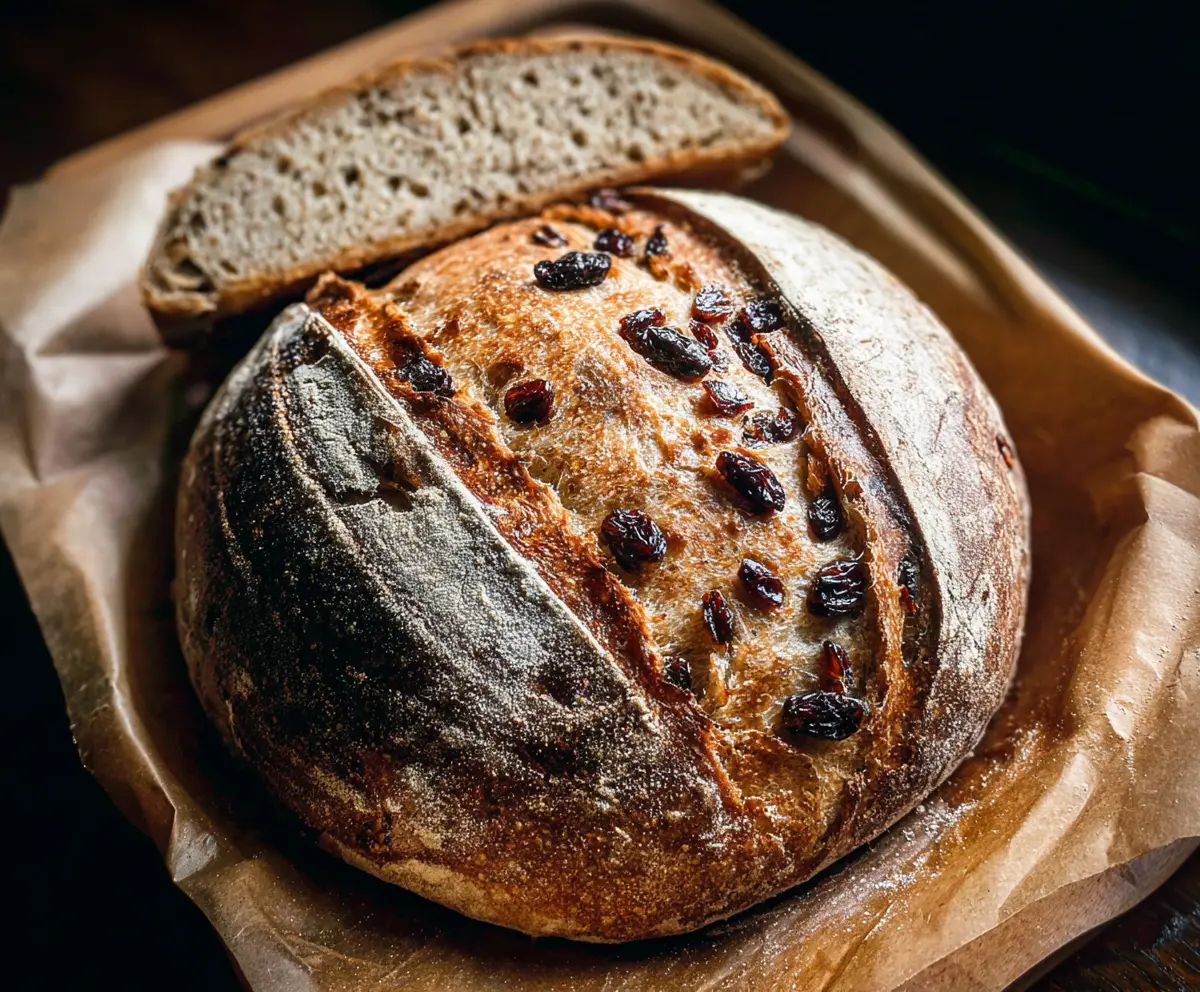
This warm and cozy Cinnamon Raisin Sourdough Bread is a delightful treat! It’s soft, with swirls of sweet cinnamon and juicy raisins that make every slice special.
Nothing beats the smell of bread baking in the oven! I love to enjoy it toasted with a little butter and a sprinkle of cinnamon sugar. Perfect for breakfast or a snack! 😍
Key Ingredients & Substitutions
Bread Flour: This is key for a great structure. High protein content gives your bread strength. If needed, you can use all-purpose flour, but the texture might be slightly softer.
Whole Wheat Flour: Adds a nutty flavor and extra nutrients. If you lack it, feel free to use more bread flour or try spelt flour for a unique twist.
Sourdough Starter: Your starter needs to be active! If you don’t have one, consider using store-bought yeast as a last resort, though it will change the bread’s character.
Raisins: Dark or golden raisins work best for sweetness. You can substitute them with dried cranberries or currants if you’re in a pinch.
Cinnamon: Essential for flavor! If you’re not a fan of cinnamon, nutmeg or cardamom can be great alternatives for a different spice kick.
How Do You Achieve the Right Texture with Stretch and Folds?
Stretch and folds help develop the gluten structure in your dough, giving it strength and chew. Here’s how to do it right:
- After mixing, let the dough rest for 30 minutes.
- Every 30 minutes, wet your hands to prevent sticking.
- Lift one side of the dough and fold it over to the middle; rotate and repeat until all sides are folded.
- This process should happen 3-4 times each session for two hours, which enhances the dough’s elasticity.
Don’t rush this step! It’s essential for that chewy crust and airy crumb you’ll love.
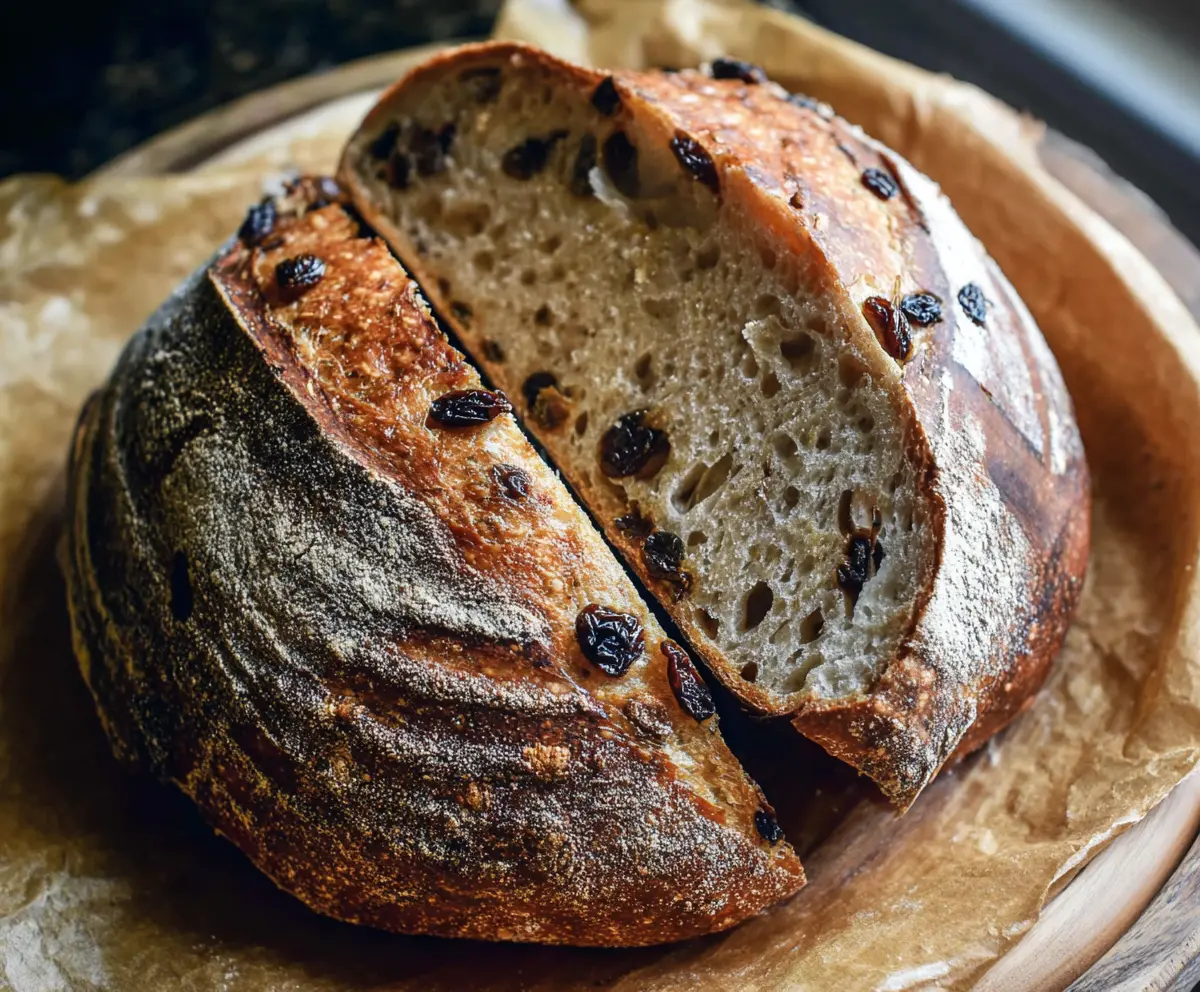
How to Make Cinnamon Raisin Sourdough Bread
Ingredients You’ll Need:
For the Dough:
- 500g bread flour
- 100g whole wheat flour
- 350g water (room temperature)
- 100g active sourdough starter (100% hydration)
- 10g salt
- 2 tbsp granulated sugar or honey
- 2 tsp ground cinnamon
- 150g raisins (preferably dark or golden raisins)
Optional:
- 1 tbsp melted butter (to brush on crust after baking)
How Much Time Will You Need?
This recipe will require about 6-8 hours for the entire process, including 4-6 hours for your starter to be prepared, plus 3-4 hours for bulk fermentation and overnight proofing. It’s a great project to do throughout the day while you’re home!
Step-by-Step Instructions:
1. Prepare the Starter:
Make sure your sourdough starter is active and bubbly. Feed it 4-6 hours before you plan to mix the dough so it’s ready to go.
2. Mix the Dough:
In a large bowl, combine the bread flour, whole wheat flour, ground cinnamon, and granulated sugar (or honey). Then, add the active sourdough starter and the room temperature water. Stir until everything comes together into a shaggy dough. It’s okay if it looks a little messy at this stage!
3. Autolyse:
Cover your bowl with a cloth or some plastic wrap and let it rest for about 45 minutes to 1 hour. This step helps the flour hydrate and kicks off gluten development.
4. Add Salt and Raisins:
Once the autolyse is done, sprinkle the salt over the dough and add the raisins. With wet hands, fold the dough in the bowl until the salt and raisins are evenly mixed throughout. Don’t worry; this process is all about getting those delicious chunks distributed!
5. Bulk Fermentation with Stretch and Folds:
Cover the dough again and let it rise at room temperature (around 21-24°C / 70-75°F). For the first 2 hours, every 30 minutes, perform gentle stretch and folds. Just lift one side of the dough and fold it over the middle, rotate the bowl, and repeat this about 3-4 times.
6. Bulk Fermentation Continuation:
After the two hours with stretch and folds, let the dough rise uncovered for an additional 2-3 hours or until it doubles in size and has some nice bubbles on the surface. This fermentation process builds lots of flavor!
7. Shape the Dough:
Once your dough has fermented, turn it out onto a lightly floured surface. Shape it into a round boule by folding the edges to the center, then gently tightening the dough by turning it against the surface to create tension.
8. Final Proof:
Place the shaped dough seam-side up in a well-floured banneton or a bowl lined with a linen cloth. Cover it and refrigerate overnight or for 8-12 hours. This slow proofing enhances flavor and texture!
9. Preheat the Oven:
The next day, place a Dutch oven or a heavy oven-safe pot with a lid inside your oven and preheat to 250°C (480°F) for at least 30 minutes. This helps create a steamy environment for your bread.
10. Prepare for Baking:
Once preheated, carefully remove the hot Dutch oven from the oven. Turn the dough out onto a piece of parchment paper, and gently score the top of the dough with a sharp knife or lame, making a few slashes to help it expand while baking.
11. Bake the Bread:
Lift the dough using the parchment paper and carefully place it into the Dutch oven. Cover with the lid and bake for 20 minutes to get that nice initial rise.
12. Finish Baking:
After 20 minutes, remove the lid, and reduce the oven temperature to 220°C (430°F). Bake for another 20-25 minutes until the crust becomes deeply golden and crisp. Your kitchen will smell amazing!
13. Cool:
After baking, remove the bread from the Dutch oven and transfer it to a wire rack. If you like, brush the crust lightly with melted butter for a lovely shine and tenderness. Let the bread cool completely before slicing—it will be worth the wait!
Enjoy your delicious, homemade Cinnamon Raisin Sourdough Bread fresh or toasted!
Can I Use All-Purpose Flour Instead of Bread Flour?
Yes, you can substitute all-purpose flour for bread flour, but keep in mind that the texture may be slightly softer and the bread won’t rise quite as high. Bread flour has a higher protein content, which contributes to better gluten formation.
What If My Sourdough Starter Isn’t Active?
If your sourdough starter isn’t active, it won’t give your bread the proper rise or flavor. Make sure to feed it 4-6 hours before using it, or wait until it’s bubbly and has doubled in size. If you don’t have an active starter, consider using commercial yeast instead, but this will change the character of the bread.
Can I Add Other Ingredients Like Nuts or Seeds?
Absolutely! You can enhance the flavor and texture by adding nuts, seeds, or even more spices. Just be mindful of not adding too much to avoid overpowering the dough. Mix them in during the “Add salt and raisins” step.
How to Store Leftovers?
Store any leftover bread in a paper bag at room temperature for up to 3 days, or wrap it in plastic wrap and freeze for longer storage. To enjoy, simply toast slices directly from the freezer or let them thaw at room temperature.