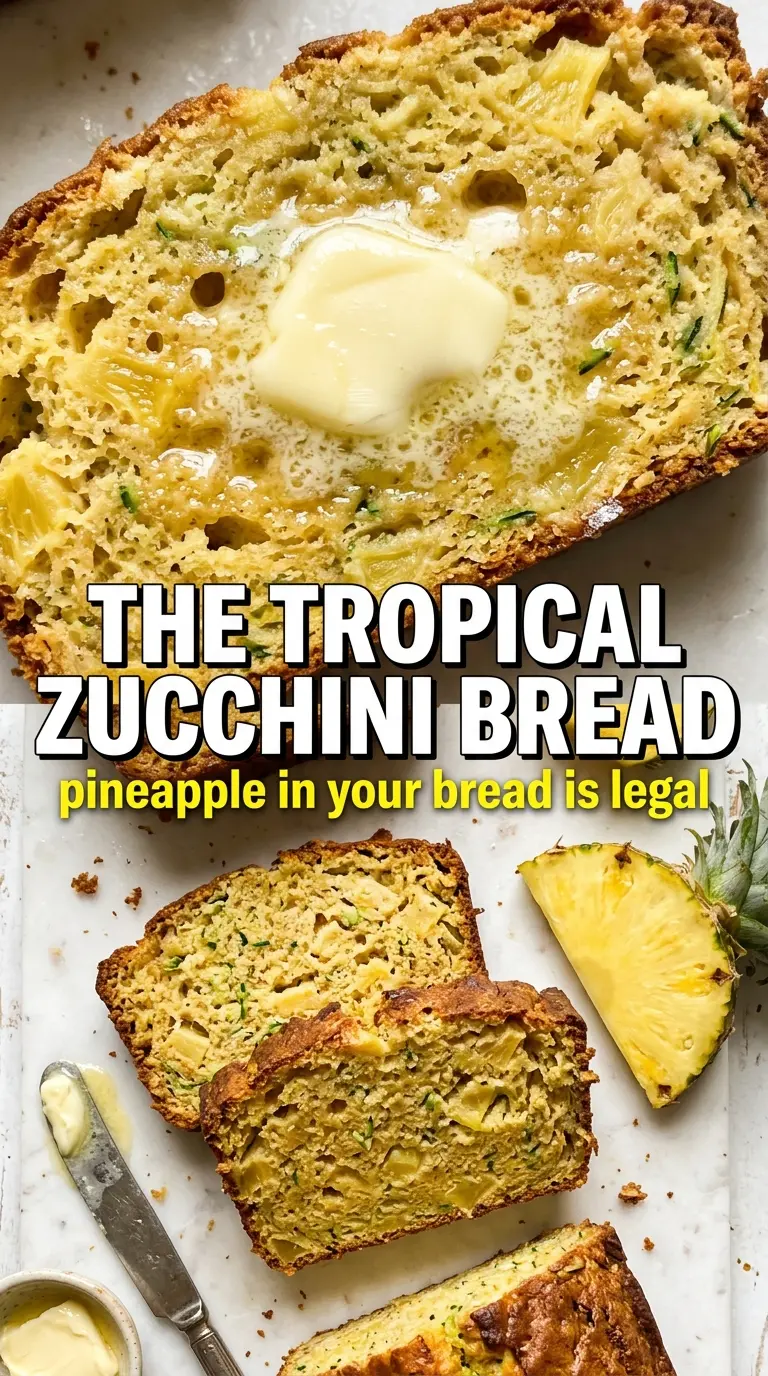
Pineapple zucchini bread comes out tender, fragrant, and just sweet enough to feel like a treat without turning into cake. The crumb stays moist for days thanks to the combination of grated zucchini and drained crushed pineapple, and the cinnamon gives the loaf enough backbone to keep the tropical sweetness from tasting flat. A thin pineapple glaze over the top pulls everything together and adds a bright finish to each slice.
What makes this version work is the way the moisture is handled. The zucchini gets squeezed dry before it goes into the batter, and the pineapple is drained instead of dumped in with its juice. That keeps the loaf from baking up gummy in the center. Oil also helps here more than butter would, since it keeps the texture soft even after the bread cools.
Below you’ll find the exact cues I use to tell when the loaf is done, plus a few swaps that still keep the texture right if you want to change up the mix-ins.
The loaf baked up with a really tender crumb and the pineapple flavor came through without making it wet. I loved that the glaze soaked in just a little while it was still warm.
Love the moist crumb and tropical pineapple glaze? Save this pineapple zucchini bread for the next time you want a soft, sweet loaf that stays tender for days.
The Moisture Trap Most Quick Breads Fall Into
Pineapple zucchini bread can go wrong fast if both main add-ins go in with too much liquid. Zucchini releases water as it bakes, and crushed pineapple brings its own juice, so if you skip the draining and squeezing step, the center turns dense and damp instead of tender. The goal is a loaf that feels soft and plush, not heavy.
Mix the batter just until the flour disappears. Overmixing builds structure in a quick bread like this, and that structure works against the soft crumb you want. A few streaks are fine before the pan goes into the oven; the batter finishes coming together as it bakes.
- Drained crushed pineapple — This gives you tropical flavor without flooding the batter. Reserve a little juice for the glaze, but don’t add the full can liquid to the loaf.
- Grated zucchini — Squeeze it dry after grating. That one step keeps the texture light and keeps the loaf from collapsing in the center.
- Oil — Oil keeps quick bread softer than butter once it cools. It’s the better choice here because the loaf already has enough flavor from pineapple, cinnamon, and coconut.
What Each Ingredient Is Doing in the Loaf
- All-purpose flour — Standard flour gives the loaf enough structure to hold the pineapple and zucchini without turning tough. A 1:1 gluten-free blend should work if it includes xanthan gum, but the crumb will be a little more delicate.
- Baking soda and baking powder — This combination gives the loaf lift and helps it brown. The pineapple adds acidity, which helps the baking soda do its job.
- Cinnamon — Just enough to warm up the flavor without covering the fruit. It makes the loaf taste rounded instead of one-note sweet.
- Sweetened coconut — Optional, but it adds a little chew and doubles down on the tropical note. Leave it out if you want a cleaner pineapple-zucchini flavor.
- Powdered sugar glaze — The reserved pineapple juice is what makes the glaze taste bright instead of plain sweet. Add the juice slowly so it drizzles instead of turning runny.
Folding, Baking, and Knowing When It’s Done
Building the Batter Base
Whisk the dry ingredients first so the baking soda and baking powder are evenly distributed. In a separate bowl, beat the sugar, eggs, oil, and vanilla until the mixture looks smooth and slightly thickened. That base should look glossy before the fruit goes in. If the eggs and oil stay separated, keep mixing for another few seconds before adding the pineapple and zucchini.
Adding the Fruit Without Waterlogging the Loaf
Stir in the drained pineapple and squeezed zucchini before the flour goes in. That helps the fruit coat itself in the wet ingredients so it doesn’t sink as the loaf bakes. If you see a puddle forming in the bowl, the pineapple wasn’t drained enough. Spoon off any obvious liquid now rather than hoping the oven will fix it later.
Getting the Bake Right
Once the dry ingredients are folded in, stop as soon as the flour disappears. Scrape the batter into the loaf pan and bake until the top is deep golden and a toothpick comes out clean or with just a few moist crumbs. If the center still looks glossy, it needs more time. Quick breads often brown before the middle is set, so tenting loosely with foil for the last stretch can keep the top from overbaking.
Glazing While the Loaf Is Warm
Let the bread cool for about 15 minutes before glazing. Warm bread absorbs a little of the glaze, which gives you a soft, sweet finish instead of a hard shell on top. If the loaf is piping hot, the glaze melts off the sides. If it’s completely cool, it sits more like icing and won’t soak in at all.
Make It Dairy-Free Without Changing the Texture
This loaf already uses oil, so it’s naturally dairy-free as written. The only thing to watch is the glaze: use the pineapple juice and powdered sugar exactly as written and you won’t need any milk or butter to finish it.
Skip the Coconut for a Cleaner Crumb
Leaving out the coconut makes the loaf a little more uniform and lets the pineapple and zucchini stand out. The bread still stays moist, but the texture will be softer and less chewy.
Turn It Into Muffins Instead of a Loaf
Spoon the batter into a lined muffin tin and start checking at 20 to 24 minutes. Muffins bake faster and the edges set before the centers overcook, which is helpful if you want individual portions for breakfast boxes.
Storage and Reheating
- Refrigerator: Store in an airtight container for up to 4 days. The crumb stays moist, and the glaze may soften a little but won’t hurt the texture.
- Freezer: Wrap slices or the whole cooled loaf tightly and freeze for up to 3 months. Thaw at room temperature before warming so the glaze doesn’t turn sticky from trapped condensation.
- Reheating: Warm slices briefly in the microwave or a low oven. Long reheating dries quick bread out fast, so just heat until the center is no longer cold.
Questions I Get Asked About This Recipe
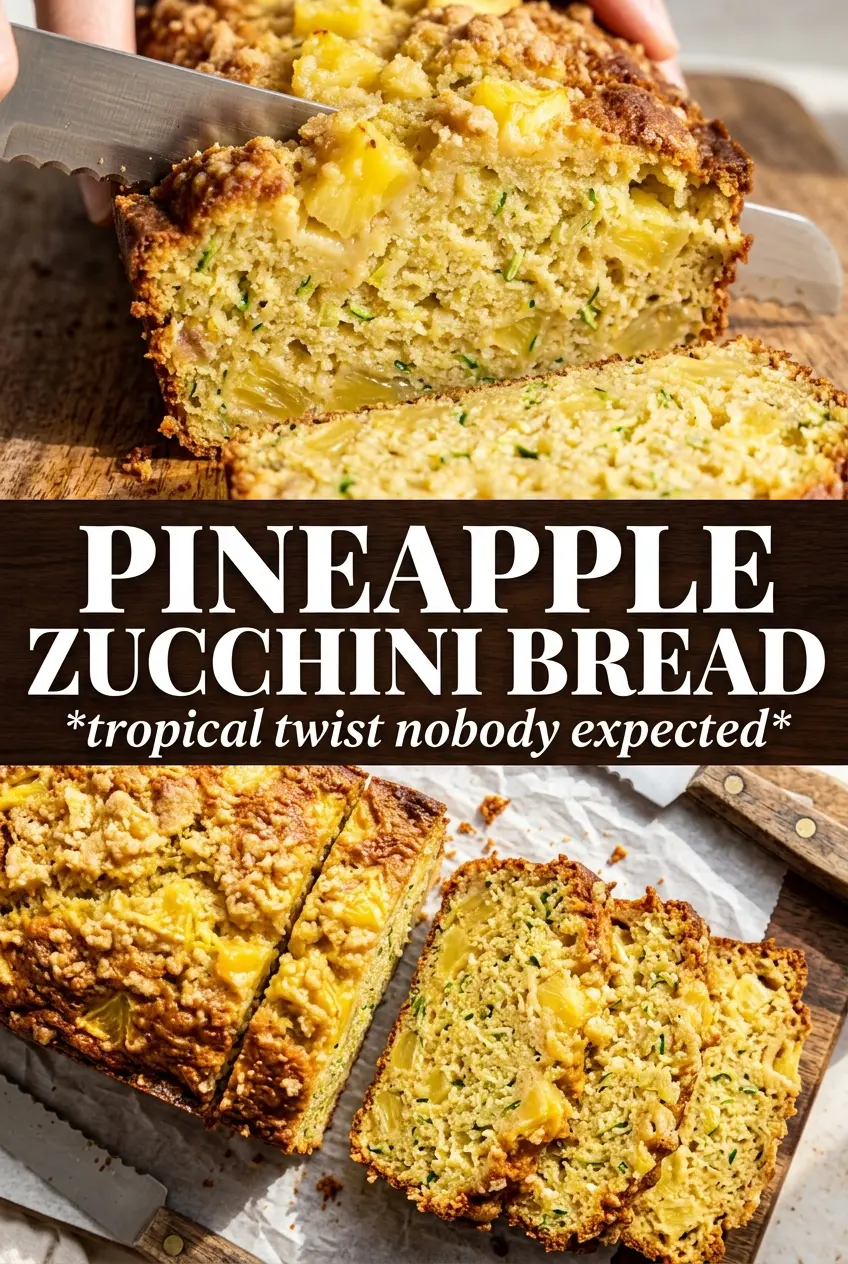
Pineapple Zucchini Bread
Ingredients
Equipment
Method
- Preheat the oven to 350°F and grease a 9x5 loaf pan. Use a light coating so the loaf releases cleanly after baking.
- Whisk all-purpose flour, baking soda, baking powder, salt, and cinnamon together until evenly combined. You should see no streaks of baking powder or clumps of flour.
- Beat granulated sugar, eggs, vegetable oil, and vanilla extract until smooth. The mixture should look glossy and fully blended.
- Stir in drained crushed pineapple and grated squeezed zucchini. Stop once the pineapple and zucchini are distributed through the batter.
- Fold the dry ingredients into the wet ingredients until just combined; do not overmix. The batter should look thick with no dry flour pockets.
- Fold in shredded sweetened coconut if using. The batter will look speckled with coconut.
- Pour the batter into the prepared loaf pan and smooth the top. Fill the pan evenly so it bakes uniformly.
- Bake at 350°F for 55–65 minutes, until a toothpick comes out clean. The top should be golden and spring back slightly when touched.
- Cool the loaf for 15 minutes in the pan. It will set enough to slice without tearing.
- Mix powdered sugar with reserved pineapple juice and drizzle over the warm loaf before serving. The glaze should fall in thin ribbons and set on the surface.