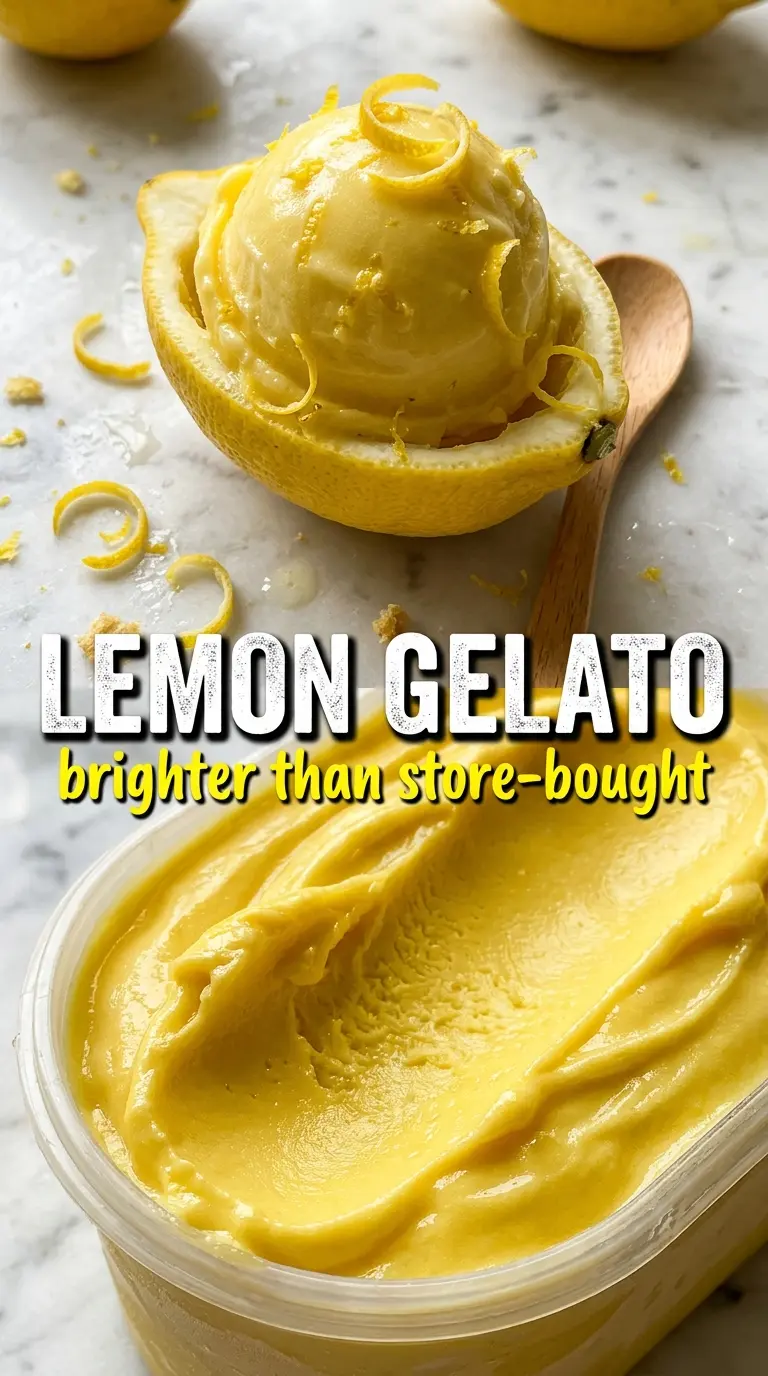
Lemon gelato lands somewhere between bright citrus custard and frozen silk. It holds its shape on the spoon, but the finish stays clean and sharp instead of heavy, and that balance is what keeps people going back for another scoop. The flavor is bold enough to taste like fresh lemon, yet the texture stays denser and smoother than sorbet.
The trick is building a small custard first, then adding the lemon at the end so the dairy stays smooth and the citrus stays vivid. Cornstarch gives the base a little extra body, which helps the gelato churn into that tight, scoopable texture without turning icy. If the mixture looks a little too thin before chilling, don’t worry — it firms up a lot after the cold rest.
Below, I’ve included the timing that matters most, the reason the lemon goes in off the heat, and the swaps that still give you a proper creamy freeze instead of a watery one.
The lemon flavor stayed bright and the custard thickened up exactly like it should. I churned it for the full 20 minutes and got the creamiest homemade gelato I’ve made so far.
Save this creamy lemon gelato for the days when you want a bright Italian dessert with a custard-smooth finish.
Why This Gelato Stays Creamy Instead of Turning Icy
The biggest mistake with lemon gelato is adding too much acid too early. Lemon juice can thin the base and make dairy act grainy if it goes in while the custard is still over heat. Here, the custard is cooked first, thickened with yolks and a little cornstarch, then the lemon goes in after the pan comes off the burner. That keeps the texture smooth and gives the citrus a cleaner, sharper taste.
The second thing that matters is density. Gelato is churned with less air than ice cream, so the base needs enough body before it ever hits the machine. If you skip the full chilling time, the mixture won’t freeze with that tight, spoonable texture; it’ll churn up softer and taste less polished.
- Egg yolks — They give the gelato its custard base and help it freeze with a finer texture. Whole eggs won’t give the same richness or body.
- Cornstarch — This is the insurance policy. It helps the base thicken cleanly and keeps the finished gelato from freezing too hard.
- Fresh lemon juice — Bottled juice tastes flat here. Fresh juice gives the bright, clean acidity that makes this dessert wake up on the tongue.
- Lemon zest — The zest carries the lemon oil, which is where a lot of the aroma lives. Don’t skip it; juice alone won’t taste as full.
What Each Ingredient Is Actually Doing in the Bowl
- Whole milk — This keeps the base light enough to taste like lemon instead of straight cream. Lower-fat milk will work in a pinch, but the gelato won’t feel as round on the palate.
- Heavy cream — A little cream softens the freeze and gives the gelato a richer finish. Too much cream turns this into ice cream territory, so keep the ratio as written.
- Sugar — Sugar does more than sweeten; it also keeps the mixture from freezing into a brick. If you cut it too far, the texture gets hard and dull.
- Vanilla and salt — Both are small, but they matter. Vanilla softens the sharp edge of the lemon, and salt keeps the flavor from tasting one-dimensional.
Building the Custard So It Freezes Smooth
Warming the Dairy
Heat the milk and cream until they’re steaming, not boiling. You want enough heat to temper the yolks later, but not so much that the dairy scorches on the bottom of the pan. If you see a skin forming or bubbles racing up the sides, pull it back; that’s hotter than you need.
Tempering the Yolks Without Scrambling Them
Whisk the yolks, sugar, and cornstarch until they look pale and thick, then stream in the hot milk while whisking constantly. The goal is to raise the temperature gradually so the yolks thicken instead of turning into soft bits. If the mixture starts to look grainy, stop pouring for a second and whisk harder before adding more.
Cooking to the Right Thickness
Return the mixture to the saucepan and cook over medium heat, stirring constantly, until it coats the back of a spoon and looks like loose pudding. Don’t chase a hard boil; that’s how custard breaks. You’re looking for a gentle thickening that holds a line when you drag a finger through it on the spoon.
Adding the Lemon at the Finish
Take the pan off the heat before stirring in the lemon juice, zest, vanilla, and salt. The base should smell bright and taste clean, not cooked. If you add the lemon while the custard is still actively bubbling, you raise the chance of curdling and lose some of that fresh citrus edge.
Chilling Before Churning
Set the bowl over an ice bath, cool it down completely, then refrigerate for at least 4 hours. Cold base means smoother churning and smaller ice crystals. If you rush this stage, the gelato will taste fine but turn softer and less refined in the machine.
How to Adapt This Lemon Gelato Without Losing the Texture
Dairy-Free Version
Use full-fat canned coconut milk in place of the milk and cream. The texture will still be creamy, but the flavor shifts toward coconut, so the lemon should stay front and center and not be masked by anything extra.
Extra Tart Lemon Gelato
Add a little more zest rather than more juice if you want the lemon to taste louder. Extra juice can loosen the custard and make the freeze less smooth, while zest sharpens the aroma without changing the structure much.
No Ice Cream Maker
Pour the chilled base into a shallow freezer-safe dish and stir it every 30 minutes as it freezes. The texture won’t be quite as dense, but frequent stirring breaks up the crystals and gets you closer to gelato than a solid block of ice.
Storage and Freezing
- Refrigerator: The base can sit covered for up to 2 days before churning, and the lemon flavor actually settles in nicely.
- Freezer: Store churned gelato in an airtight container for up to 2 weeks. Press parchment or plastic wrap directly on the surface to slow ice crystals.
- Reheating: Not applicable. For serving, let it stand at room temperature for 5 to 10 minutes so the scoop softens enough to yield without melting around the edges.
Answers to the Questions Worth Asking
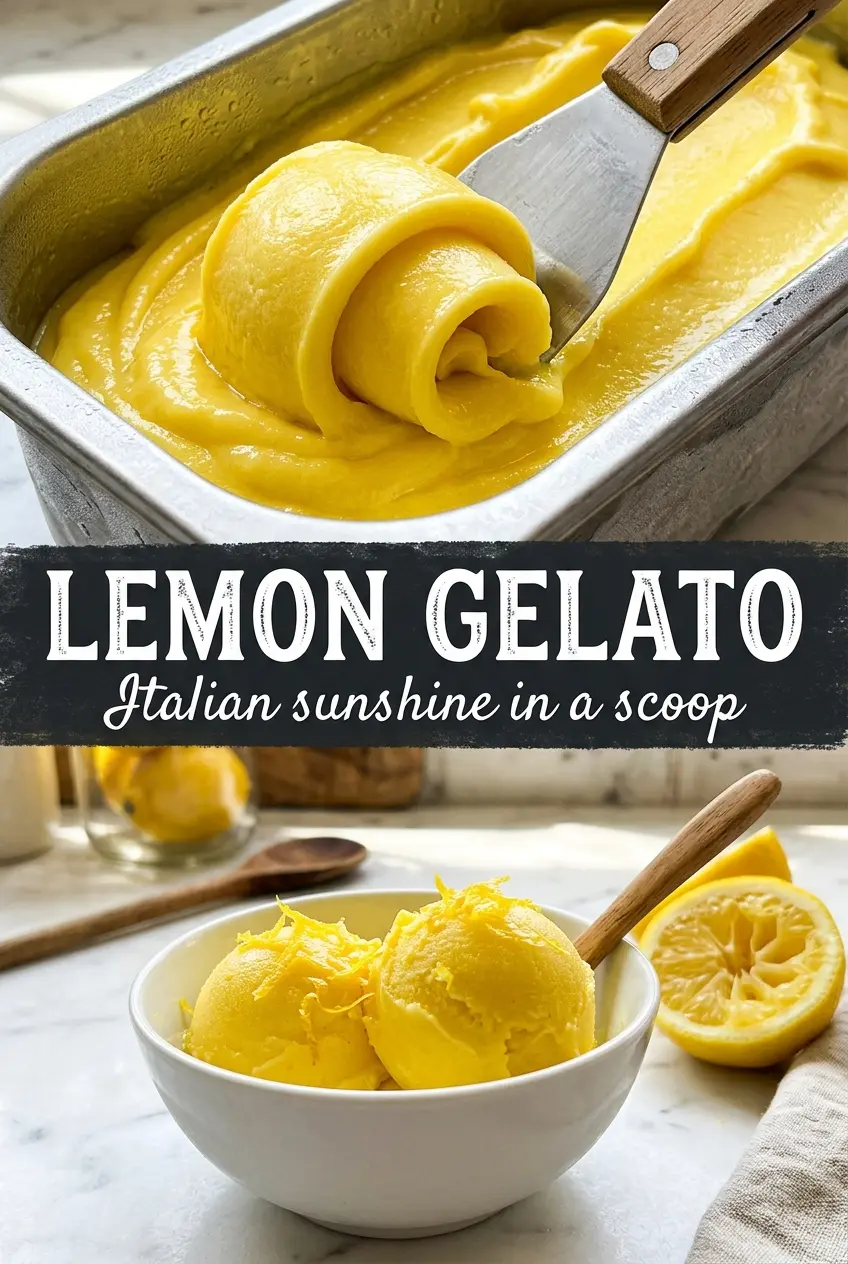
Lemon Gelato
Ingredients
Equipment
Method
- Combine whole milk and heavy cream in a saucepan and heat until steaming, with small bubbles forming around the edges.
- Remove from heat once the mixture is steaming and keep it hot for tempering.
- In a bowl, whisk egg yolks, granulated sugar, and cornstarch until pale and thick.
- Slowly whisk the hot milk mixture into the egg yolk mixture to temper, keeping the whisk moving to prevent scrambling.
- Return everything to the saucepan and cook over medium heat, stirring constantly, until thickened to a pudding consistency (about 10–15 minutes).
- Remove from the heat and stir in fresh lemon juice, lemon zest, vanilla extract, and salt until smooth.
- Cool completely over an ice bath, stirring occasionally so the custard stays lump-free.
- Refrigerate at least 4 hours until well chilled.
- Churn the cold mixture in an ice cream maker on the lowest setting until dense, with a pale yellow appearance.
- Serve immediately for a soft-set texture, or freeze 1–2 hours for a firmer gelato.