Moist, spiced zucchini cake is one of those desserts that disappears fast because it tastes a little like carrot cake, only softer and more tender. The crumb stays plush for days, the cinnamon and nutmeg give it that warm bakery feel, and the cream cheese frosting lands on top like the exact amount of tang the cake needs.
The trick with zucchini cake is balance. Grating the zucchini finely and squeezing it dry keeps the batter from turning heavy or gummy, while the oil gives you that soft, almost melt-in-your-mouth texture people expect from a good sheet cake. The spices are measured to support the zucchini, not cover it up, so every bite tastes cozy without leaning too sweet.
Below, I’ve included the small details that make the cake bake evenly in a 9×13 pan and the frosting stay fluffy instead of runny. If you’ve ever had zucchini cake come out dense or watery, the fixes here matter.
The cake stayed unbelievably moist, and squeezing the zucchini dry kept it from turning soggy. The frosting set up thick and spreadable, and the whole pan was gone by the next day.
Save this zucchini cake for when you want a tender spice cake with thick cream cheese frosting and a moist crumb that never turns heavy.
The Small Mistake That Turns Zucchini Cake Heavy
Zucchini brings a lot of water with it, and that’s the thing that separates a tender sheet cake from a damp one. If the zucchini goes straight from grating into the bowl, it can dilute the batter enough to make the center bake up soft in the wrong way, almost pasty. Squeezing it dry doesn’t mean removing every trace of moisture; it means getting rid of the excess so the cake batter can set properly around it.
The other place people go wrong is overmixing after the dry ingredients go in. Once the flour hits the wet mixture, stir only until the streaks disappear. A few small lumps are fine. That light hand keeps the crumb soft instead of tight, which matters even more in a cake like this because the zucchini is already working to soften the texture.
- Zucchini — Fresh zucchini adds moisture and a gentle vegetable sweetness, but it needs to be grated finely and squeezed in a clean kitchen towel or paper towels. Skip the squeezing and the cake can bake up gummy in the middle.
- Oil — Vegetable oil gives this cake its lasting tenderness. Butter adds flavor, but oil keeps the crumb softer for longer, which is the right tradeoff for a frosted sheet cake.
- Cinnamon and nutmeg — These spices are what make the cake read as dessert instead of quick bread. Cinnamon does most of the work, while nutmeg adds depth without making the cake taste like a spice loaf.
- Cream cheese — Softened cream cheese is what gives the frosting its tang and structure. Cold cream cheese leaves little bits behind; too-warm cream cheese can make the frosting loose.
What Each Ingredient Is Actually Doing in This Zucchini Bread or Baked Good

- Zucchini (the moisture keeper) — Grate finely and squeeze out excess moisture. The remaining moisture adds tenderness without sogginess.
- Flour (the structure base) — Don’t overmix or the baked good becomes tough. Mix just until dry ingredients are incorporated.
- Sugar (the sweetness and browning) — This tenderizes and helps create browning. Adjust based on other ingredients.
- Oil or butter (the richness) — This creates tender crumb. Oil makes moister; butter makes richer.
- Eggs (the binder) — These hold everything together and add structure. Use room temperature eggs.
- Leavening (baking powder or soda) — This creates rise and light crumb. Too much makes it taste bitter.
- Spices (cinnamon, nutmeg, or allspice) — These warm up zucchini flavor. Layer so no single one overpowers.
- Optional mix-ins (nuts, chocolate, or dried fruit) — These add texture and prevent bland taste.
Mixing the Batter So It Stays Tender
Whisk the dry ingredients first
Start by whisking the flour, cinnamon, baking soda, baking powder, salt, and nutmeg together until the spices disappear into the flour. This matters more than it sounds like it does, because the leavening needs to be evenly dispersed or the cake can rise unevenly and cave slightly in the center. A quick whisk also breaks up little clumps of cinnamon that would otherwise streak the batter.
Build the wet base until it looks smooth
Beat the sugar, oil, eggs, and vanilla together until the mixture looks glossy and thickened slightly. You’re not whipping in air here the way you would for a sponge cake; you’re building an even emulsion so the oil doesn’t separate later. Stir in the zucchini after that, and the batter will look loose and a little shaggy, which is exactly what it should do.
Stop as soon as the flour disappears
Fold the dry ingredients into the wet mixture just until no dry flour remains, then add the walnuts if you’re using them. Overmixing at this stage is the fastest way to get a tough cake, especially in a batter this moist. Pour it into the prepared pan right away so the baking soda starts working in the oven instead of sitting in the bowl.
Bake until the center springs back
The cake is done when the top looks set, the edges pull slightly from the pan, and a toothpick in the center comes out clean or with a few moist crumbs. If the toothpick shows wet batter, give it a few more minutes and check again. Pull it too early and the center can sink as it cools; pull it too late and you lose the soft texture that makes this cake worth making.
Make it with walnuts or leave them out
The walnuts add a little crunch and a caramel-like nuttiness that plays well with the cinnamon. Leaving them out gives you a smoother, more classic zucchini cake texture, and the cake still bakes up just as moist.
Make it dairy-free
Use a dairy-free cream cheese and butter alternative for the frosting. The cake itself is already dairy-free, so this swap keeps the structure intact while changing almost none of the baking method.
Turn it into cupcakes
Divide the batter into lined muffin cups and bake until the tops spring back and a tester comes out clean, usually in about 18 to 22 minutes. You’ll get a higher frosting-to-cake ratio and a slightly firmer edge on each cupcake.
Storage and Reheating
- Refrigerator: Store covered for up to 5 days. The frosting stays best chilled, and the cake stays moist.
- Freezer: Freeze unfrosted cake squares tightly wrapped for up to 2 months. Frosting doesn’t freeze as neatly, so add it after thawing.
- Reheating: Bring slices to room temperature before serving. If you warm them, do it briefly and only after removing any frosting, because cream cheese frosting will melt and slide.
Answers to the Questions Worth Asking
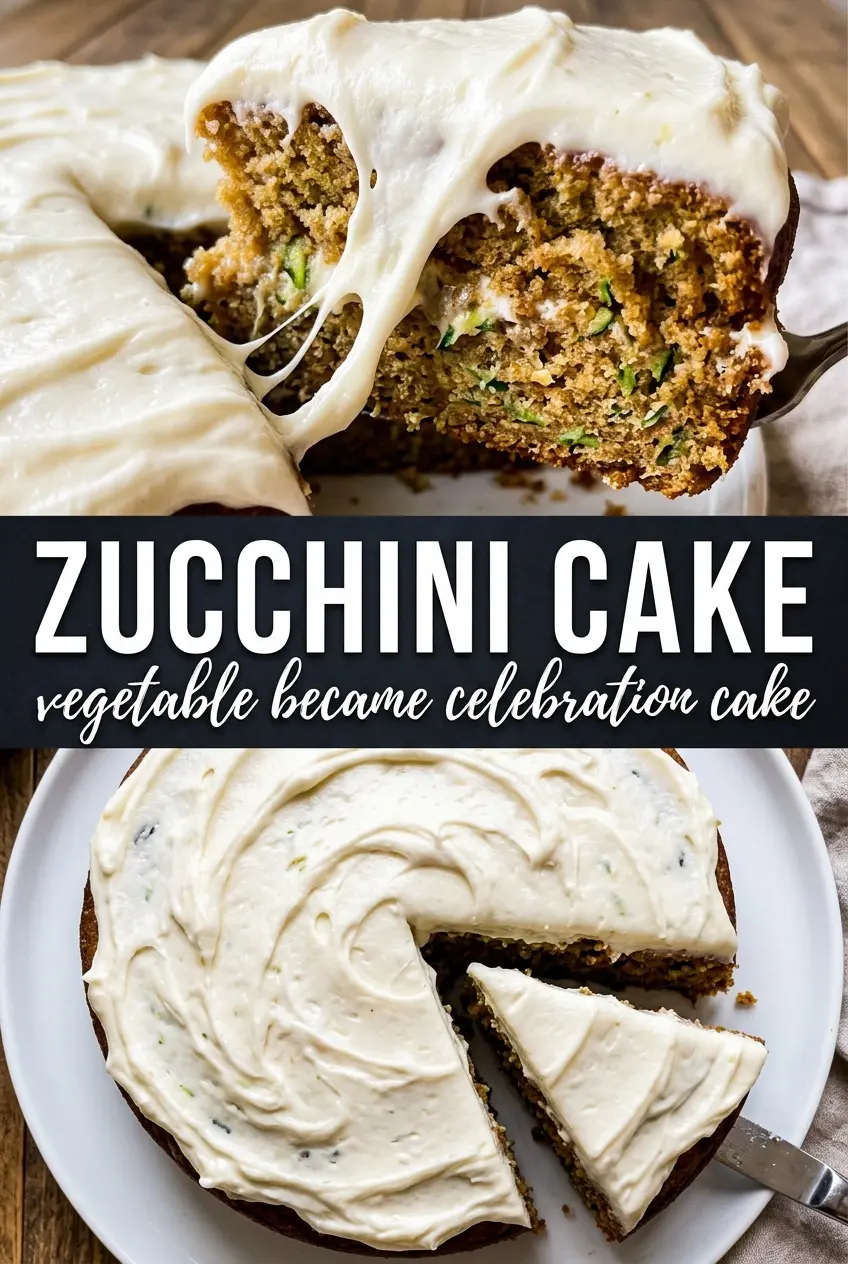
Zucchini Cake
Ingredients
Equipment
Method
- Preheat oven to 350°F and grease a 9x13 baking pan.
- Whisk all-purpose flour, cinnamon, baking soda, baking powder, salt, and nutmeg together until evenly combined.
- Beat granulated sugar, vegetable oil, eggs, and vanilla extract until smooth.
- Stir in grated and squeezed-dry zucchini until the batter looks uniformly mixed.
- Fold the dry ingredients into the wet ingredients until just combined; fold in chopped walnuts if using.
- Pour batter into the greased pan and spread evenly.
- Bake for 30–35 minutes at 350°F until a toothpick comes out clean.
- Cool the cake completely before frosting (at least 30 minutes) so the frosting doesn’t melt.
- Beat cream cheese, softened butter, powdered sugar, vanilla, and milk until light and fluffy.
- Spread the cream cheese frosting evenly over the cooled cake and slice into squares to serve.