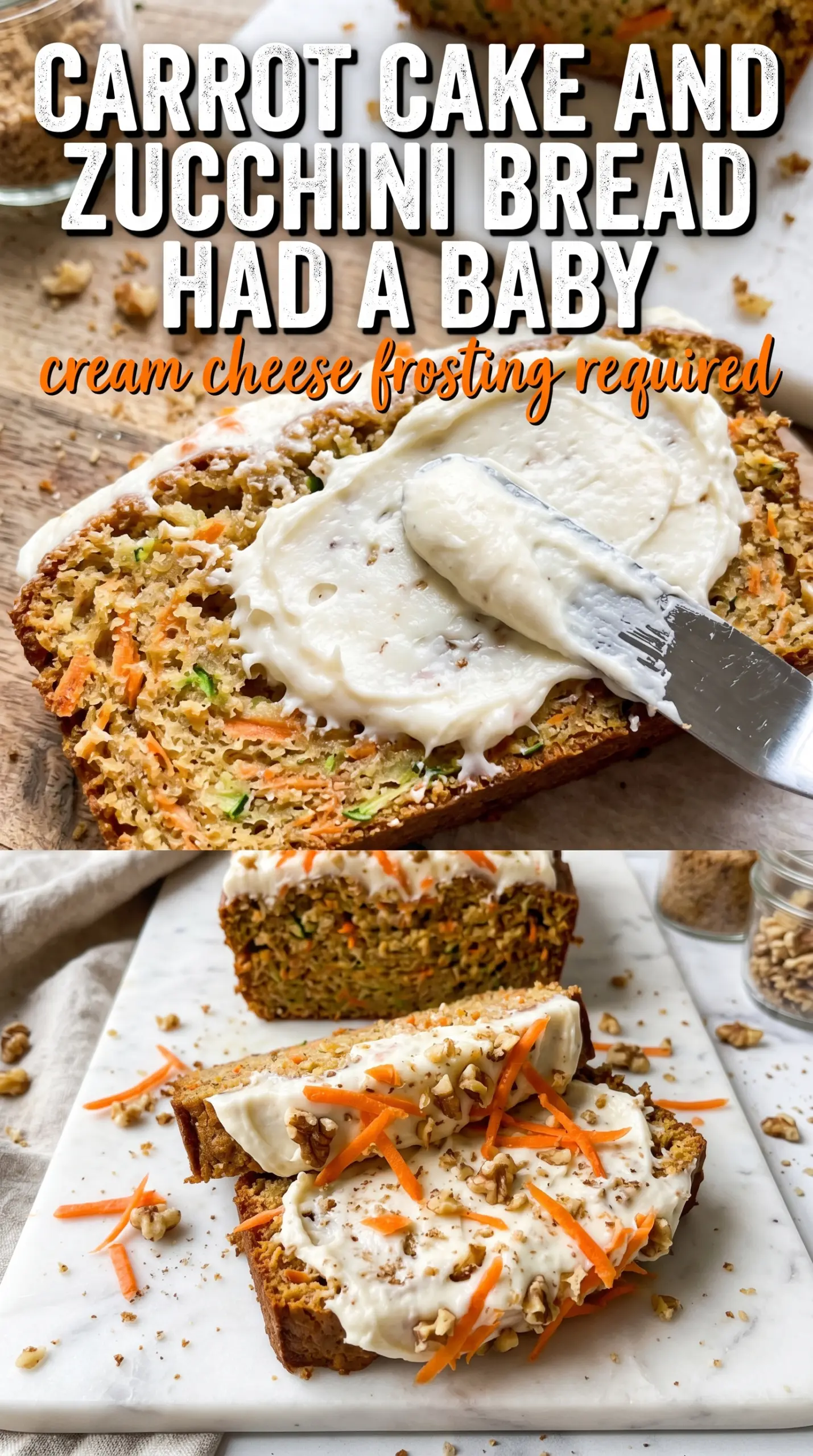
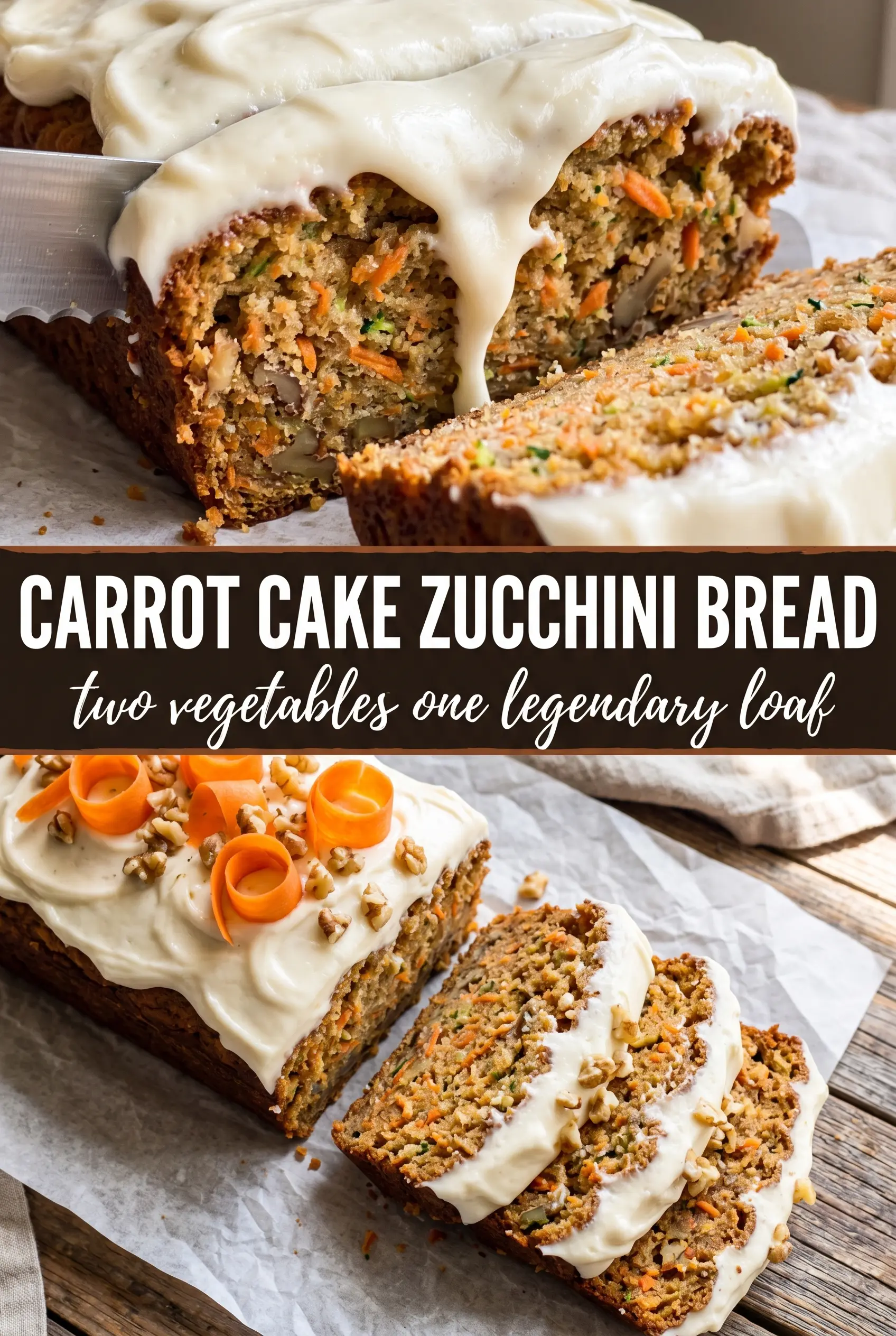
Carrot cake zucchini bread bakes up tender and moist with a soft crumb, warm spice, and just enough sweetness to taste like a treat without eating like dessert. The zucchini disappears into the batter, but it leaves behind the kind of texture that keeps a loaf from drying out by the next day. Carrots bring a little natural sweetness and those orange flecks that make every slice look homemade in the best way.
What makes this version work is the balance. Brown sugar gives the loaf a deeper flavor than plain white sugar, Greek yogurt adds moisture without making the batter heavy, and the oil keeps the crumb soft even after chilling. The zucchini needs to be squeezed dry or the loaf can turn gummy in the center, while the carrots should be finely grated so they melt into the batter instead of staying crunchy.
Below, you’ll find the small details that matter most: how to keep the loaf from sinking, what to do if you want to skip the frosting, and the best way to store a slice once that cream cheese topping is on.
The loaf stayed incredibly moist, and squeezing the zucchini dry made a big difference. The cream cheese frosting set up nicely once it cooled, and the cinnamon came through without overpowering the carrots.
Save this carrot cake zucchini bread for the days when you want a spiced breakfast loaf with cream cheese frosting and a super moist crumb.
The Part That Keeps This Loaf Moist Instead of Dense
Quick breads like this one can go wrong in two ways: too wet in the middle or too heavy all the way through. The fix is in the produce. Zucchini brings moisture, but only if you squeeze out the extra liquid first; otherwise the batter steams instead of baking, and the center stays tacky. Carrots add sweetness and texture, but they need to be finely grated so they soften fully in the oven.
The other thing that keeps this loaf from turning dense is restraint. Once the dry ingredients go in, stir only until the flour disappears. Overmixing builds gluten in a batter that already has a lot going on, and that’s how you end up with a tight, bready slice instead of a soft one.
What Each Ingredient Is Actually Doing in This Loaf
- All-purpose flour — Gives the loaf its structure without making it dry. I wouldn’t swap in whole wheat cup-for-cup here unless you want a much heavier crumb.
- Brown sugar — Adds moisture and a deeper, almost caramel note that works better here than plain white sugar. Packed brown sugar also helps keep the loaf soft after it cools.
- Greek yogurt — Brings tenderness and a little tang, which keeps the loaf from tasting flat. Plain yogurt works too if that’s what you have.
- Zucchini — This is the moisture insurance. Squeeze it dry before measuring so you keep the texture soft without making the batter watery.
- Carrots — Fine shreds melt into the bread and give it that carrot cake look and flavor. Bigger shreds can stay a little firm.
- Cream cheese frosting — The frosting turns the loaf into something that feels special. It needs the loaf to cool completely or it will slide right off.
Getting the Batter, the Bake, and the Frosting to Line Up
Mix the dry ingredients first
Whisk the flour, baking soda, baking powder, salt, cinnamon, ginger, and nutmeg together until the spices are evenly distributed. That keeps one bite from tasting like plain bread and the next one like a spice bomb. If you see clumps of cinnamon, break them up now, not after the wet ingredients go in.
Build the wet base until smooth
Beat the brown sugar, eggs, oil, yogurt, and vanilla until the mixture looks glossy and unified. It won’t be fluffy like cake batter, and that’s fine. The goal is a smooth base so the oil is fully dispersed before the zucchini and carrots join in.
Fold in the vegetables gently
Stir in the grated zucchini and carrots before adding the flour mixture. They should look evenly scattered through the batter, not sitting in wet pockets at the bottom of the bowl. If you’re adding raisins or pecans, fold them in at the very end so they don’t clump together.
Bake until the center sets
Scrape the batter into a greased 9×5 loaf pan and bake until a toothpick inserted in the center comes out clean or with a few dry crumbs. The top should be domed and browned, and the loaf should pull slightly from the sides of the pan. If the top is getting dark before the middle is done, tent it loosely with foil for the last 10 to 15 minutes.
Cool completely before frosting
Let the loaf cool all the way before you beat together the cream cheese frosting and spread it on top. If the bread is even a little warm, the frosting softens and sinks instead of sitting in that thick layer you want. A cooled loaf also slices cleanly, which matters here because the frosting is part of the appeal.
How to Change the Loaf Without Losing the Good Part
Make it nutty and chunkier
Add the pecans and skip the raisins for a little more crunch and a toastier finish. The nuts stay pleasant in the crumb, but they’ll make each slice feel a little more rustic and less cake-like.
Skip the frosting for breakfast
Leave the cream cheese frosting off and the loaf reads more like a true breakfast quick bread. You still get the spice, moisture, and carrot-cake flavor, just with a lighter finish that travels better for lunchboxes or grab-and-go slices.
Dairy-free version
Use a plain dairy-free yogurt in place of the Greek yogurt and top the cooled loaf with a dairy-free cream cheese frosting if you want the same style of finish. The crumb stays tender, though the tang will be a little softer than with regular yogurt.
Make it into muffins
Divide the batter among lined muffin cups and bake until the centers spring back and a tester comes out clean. Muffins bake faster and won’t need the full hour, so start checking early to keep them from drying out.
Storage and Reheating
- Refrigerator: Store frosted slices in an airtight container for up to 5 days. The crumb stays moist, and the frosting firms up a bit in the fridge.
- Freezer: Freeze the unfrosted loaf tightly wrapped for up to 2 months. Frosting doesn’t freeze as nicely on top, so add it after thawing for the best texture.
- Reheating: Warm a plain slice briefly in the microwave or let it come to room temperature. If it’s frosted, don’t heat it hard or the topping will melt and slide.
Answers to the Questions Worth Asking
Carrot Cake Zucchini Bread
Ingredients
Equipment
Method
- Preheat oven to 350°F and grease a 9x5 loaf pan for easy release. Ensure the pan is fully coated with a thin, even layer.
- Whisk all-purpose flour, baking soda, baking powder, salt, and cinnamon, ginger, and nutmeg until the dry mix is evenly colored. Look for no visible spice clumps.
- Beat brown sugar, eggs, vegetable oil, Greek yogurt, and vanilla extract until smooth. The mixture should look glossy and uniform.
- Stir in grated and squeezed-dry zucchini and finely grated carrots. Fold until the vegetables are distributed throughout.
- Fold dry ingredients into wet just until combined, being careful not to overmix. Stop when you no longer see streaks of flour.
- Fold in raisins or pecans if using. You should see them suspended evenly in the batter.
- Bake at 350°F for 55–65 minutes until a toothpick comes out clean. The top should be set and lightly browned, and the center should no longer look wet.
- Cool the loaf completely before frosting. The loaf must be fully cooled to prevent the frosting from melting.
- Beat cream cheese, powdered sugar, vanilla, and milk until smooth. Stop when the frosting is thick and spreadable with no lumps.
- Spread the frosting generously over the cooled loaf. Swirl the top for a thick, cake-like finish.