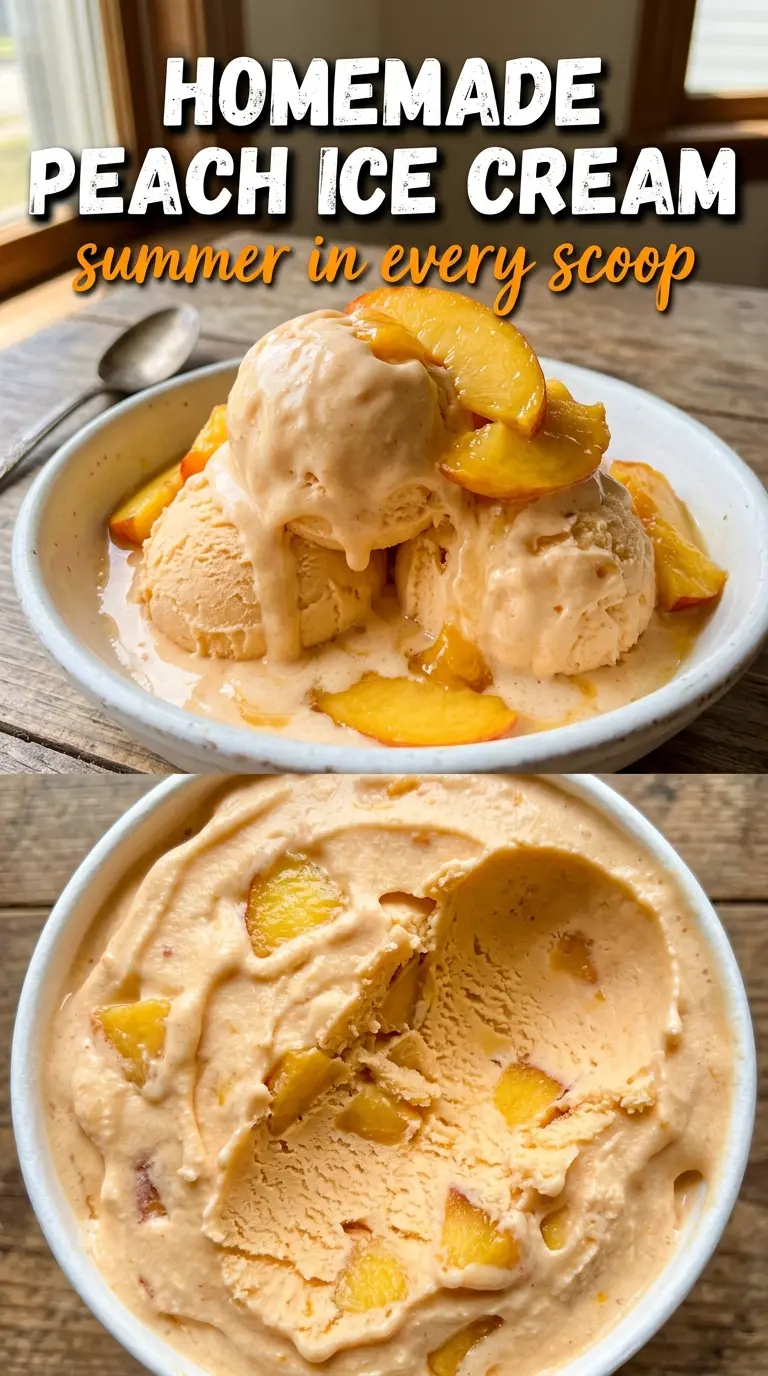
Pale golden peach ice cream with real fruit pieces is the kind of dessert that disappears fast because each scoop tastes like the best part of peach season, only colder and creamier. The custard base keeps the texture smooth instead of icy, and the mix of blended peach puree plus chunky fruit gives you both full peach flavor and little soft bites in every spoonful.
What makes this version work is the balance. The peaches get a little sugar and lemon first, which draws out juice and sharpens the flavor before they ever hit the cream. Then the custard cooks just enough to thicken, so the finished ice cream sets up rich without turning heavy. Cinnamon stays in the background, but it gives the peaches a warmer, deeper note that keeps the flavor from tasting flat.
Below you’ll find the step that keeps the custard silky, the best way to keep the fruit from turning mushy, and a few adjustments if your peaches are extra sweet, not quite ripe, or you want to make this ahead.
The custard was silky and the peach pieces stayed soft instead of icy. I chilled it overnight and it churned into the prettiest scoopable ice cream with a real fresh peach flavor.
Save this homemade peach ice cream for the days when you want a creamy custard base and fresh peach pieces in every scoop.
The Custard Temperature That Keeps Peach Ice Cream Smooth
Ice cream only feels luxurious when the base is cooked enough to thicken but not so much that the eggs scramble. For this recipe, 175°F is the sweet spot. At that point the custard coats a spoon, and the yolks have done their job without turning grainy.
The other thing that matters is adding the hot dairy slowly to the yolks. If you dump it in, the eggs seize and you get little cooked bits floating in the pot. A slow stream with constant whisking warms them gently first, which gives you a smooth base that churns into a clean, creamy scoop instead of something chalky.
- Egg yolks — These give the ice cream its custard body and the soft, rich texture that keeps it from freezing hard.
- Heavy cream and whole milk — The cream carries richness, while the milk keeps the ice cream from becoming overly dense. Don’t swap in low-fat dairy if you want the same scoopable texture.
- Fresh peaches — Ripe peaches matter here. If yours are just okay, let them sit with the sugar and lemon a little longer so the fruit can soften and give up more juice.
- Lemon juice — It brightens the peaches and keeps the flavor from tasting heavy or one-note. There isn’t a great substitute that does the same job.
Turning Fresh Peaches Into the Right Ice Cream Base
- Peach prep — Peeling the peaches matters more than people think. Peach skins can turn stringy or slightly bitter once frozen, so take the extra minute to peel them before dicing. Macerating with sugar pulls out juice and starts the flavor base, and blending only part of the fruit keeps the final texture lively instead of baby-food smooth.
- Custard cooking — Keep the heat moderate and stir constantly, especially around the corners of the pot. If the custard sits still too long, the eggs on the bottom can thicken unevenly and leave a slightly scrambled taste. Straining the base is cheap insurance and catches any tiny cooked bits before they ever reach the churn.
- Cinnamon and vanilla — Vanilla rounds out the peaches, and cinnamon adds a soft warmth that reads as deeper peach flavor rather than spice cake. Use a light hand; too much cinnamon takes over fast.
How to Cook and Churn It Without Losing the Fruit
Macerating the Peaches
Toss the diced peaches with a quarter cup of sugar and the lemon juice, then let them sit for 30 minutes. The fruit should look glossy and slightly syrupy by the end, with juice pooling in the bowl. Blend about two cups of that mixture until smooth and leave the rest chunky, because this is what gives the ice cream both body and fresh peach bites. If your peaches are very juicy, drain off a spoonful or two before churning so the finished ice cream doesn’t get slushy.
Building the Custard
Heat the cream and milk until steaming, not boiling. In a separate bowl, whisk the yolks with the remaining sugar until they look pale and slightly thickened, then whisk in the hot dairy in a slow stream. That gradual step is what keeps the eggs from turning into bits of cooked scramble. Return everything to the pot and cook, stirring constantly, until the custard reaches 175°F and lightly coats the back of a spoon.
Adding the Peach Flavor
Strain the custard into a clean bowl, then stir in the vanilla, cinnamon, and blended peach puree. The base should smell fragrant and look pale gold with a peach tint. Set the bowl over an ice bath and stir until it cools down, then refrigerate until completely cold. If you churn a warm base, the machine can’t freeze it fast enough and the texture will end up loose and icy.
Churning and Finishing
Churn the chilled base in your ice cream maker until it thickens to soft-serve consistency, then add the chunky peach pieces in the last five minutes. The ice cream should look thick, smooth, and mound softly on the dasher. Transfer it to a freezer-safe container and freeze at least two hours before scooping. That final freeze firms the structure without letting it turn rock hard.
How to Adapt This for Different Peaches and Different Freezers
Extra Sweet Summer Peaches
If the peaches are very ripe and sweet, keep the lemon juice as written and don’t increase the sugar. The fruit already brings a lot of sweetness, and too much sugar can make the ice cream slow to freeze and a little too soft.
Using Frozen Peaches
Frozen peaches work when fresh ones aren’t good yet. Thaw them first and drain off excess liquid before macerating, or the base can get too watery. The flavor is still good, but fresh peaches give a brighter finish and a better fruit texture.
Dairy-Free Version
Swap in full-fat canned coconut milk for the cream and whole milk, then use a dairy-free custard base made with cornstarch or a plant-based thickener instead of egg yolks. The texture will be a little less rich and more coconut-forward, but it still churns into a creamy frozen dessert.
Storage and Reheating
- Refrigerator: Store the custard base before churning for up to 2 days. After freezing, keep the finished ice cream covered for up to 2 weeks for the best texture.
- Freezer: This freezes well, but the peach pieces soften a little over time. Press parchment directly on the surface before sealing the container to limit ice crystals.
- Reheating: Not applicable. For serving, let the container sit at room temperature for 5 to 10 minutes so the custard softens enough to scoop cleanly. If you try to force a frozen block with a hot spoon or microwave, the edges melt before the center is usable.
Questions I Get Asked About This Recipe

Homemade Peach Ice Cream
Ingredients
Equipment
Method
- Toss the diced peaches with 1/4 cup granulated sugar and the lemon juice, then let macerate for 30 minutes until glossy and juicy.
- Blend 2 cups of the peach mixture smooth, then set the remaining peach mixture aside so you keep visible chunks.
- Heat the heavy cream and whole milk over medium heat until steaming, not boiling.
- Whisk the steaming milk mixture slowly into the egg yolks beaten with the remaining 1/2 cup granulated sugar to temper.
- Return the mixture to heat and cook to 175°F, stirring constantly, until it thickens enough to lightly coat a spoon.
- Strain the custard, then stir in the vanilla extract, cinnamon, and the blended peach puree until evenly combined.
- Cool the custard completely over an ice bath, stirring occasionally so it chills evenly.
- Refrigerate for at least 2 hours until cold through.
- Churn the chilled peach custard in an ice cream maker until it reaches a thick, soft-serve texture.
- Add the chunky peach pieces during the last 5 minutes of churning so they stay suspended in the ice cream.
- Freeze for at least 2 hours until scoopable and firm.