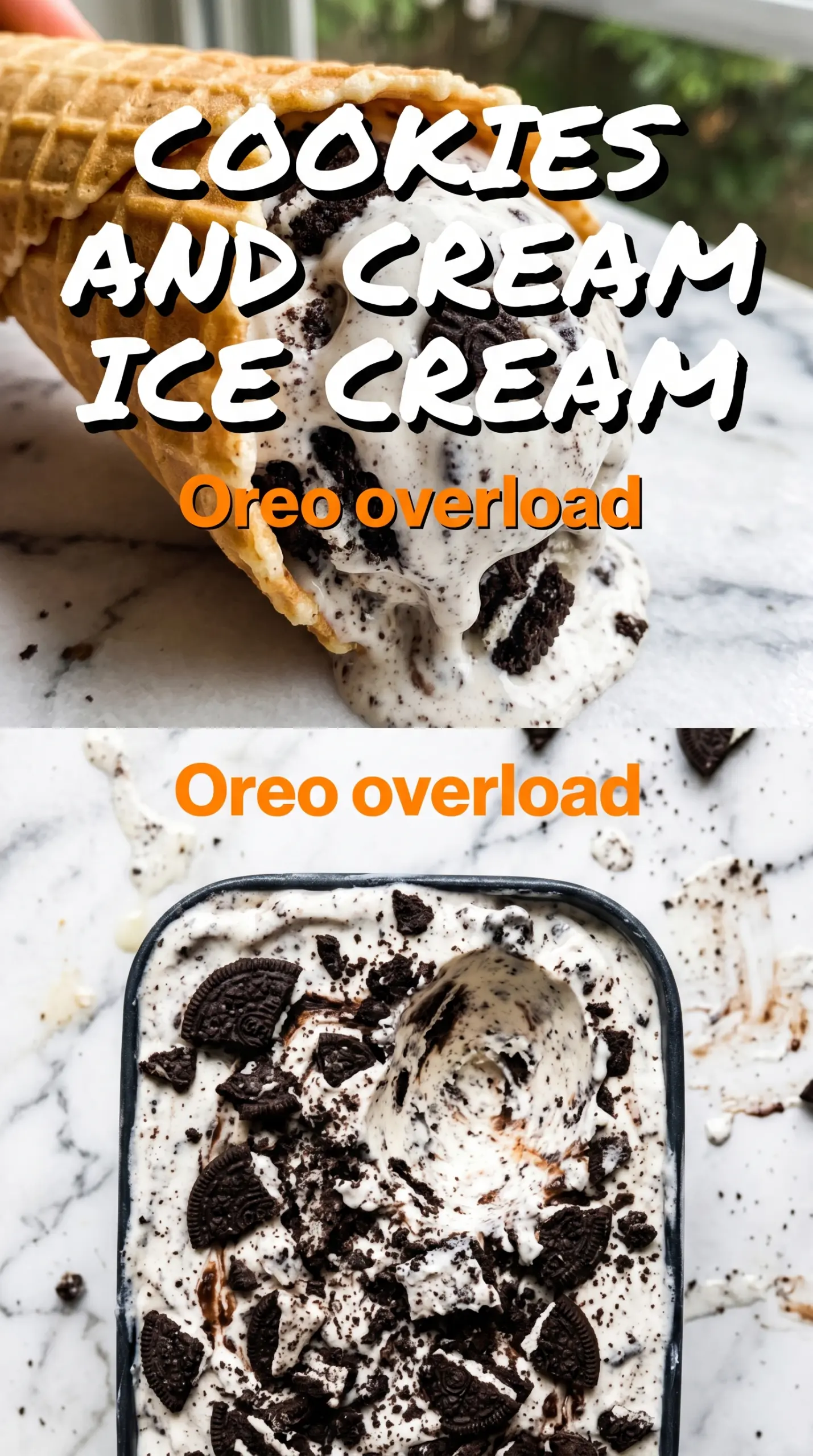
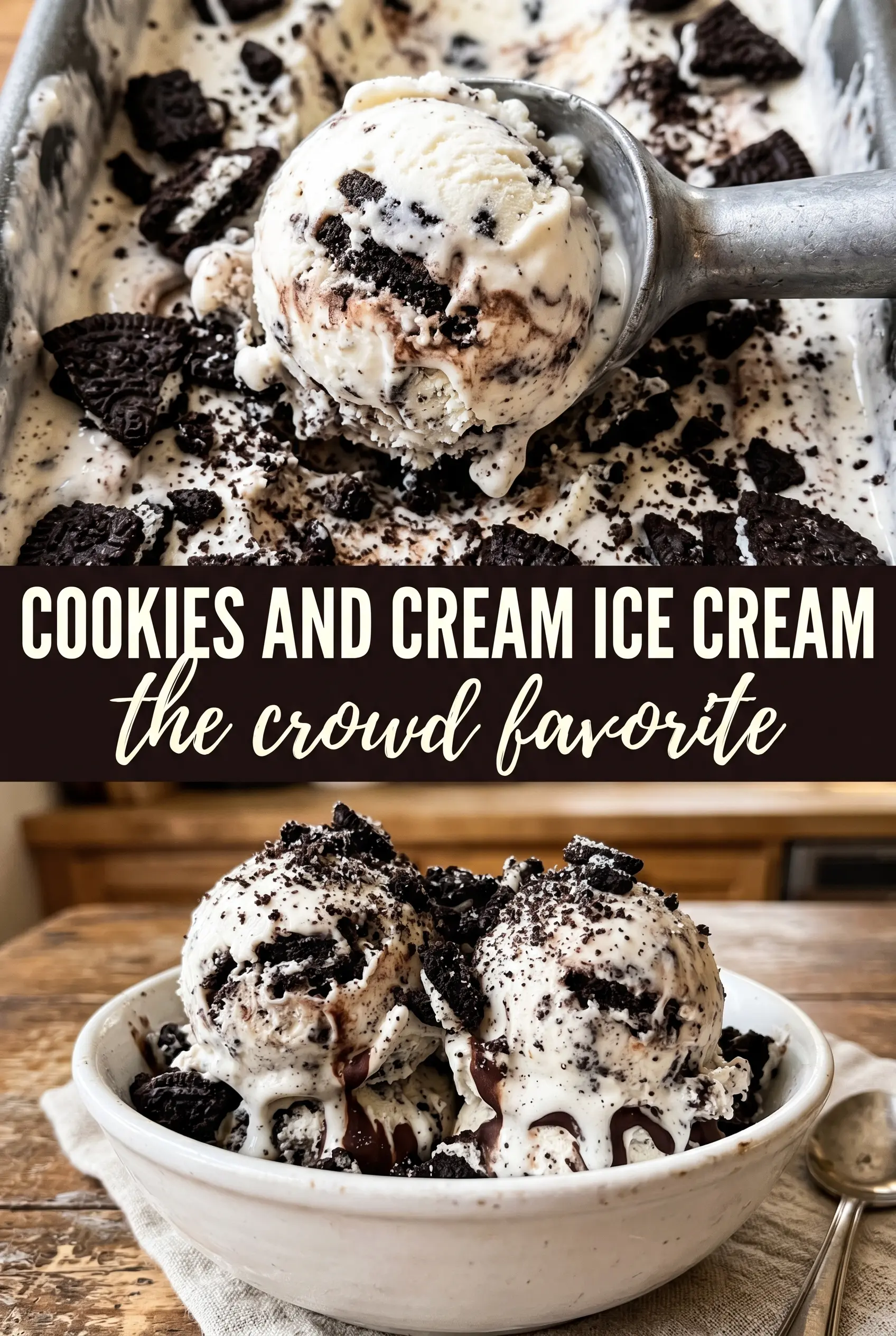
Snow-white custard ice cream packed with chunky chocolate cookie pieces hits that sweet spot between creamy and crunchy that makes you keep going back for one more spoonful. The vanilla base stays clean and rich, while the cookie bits soften just enough in the churn to turn every bite into cookies-and-cream instead of plain vanilla with add-ins.
The trick here is treating the custard like custard, not just warm dairy. The egg yolks give this ice cream its plush body, and cooking it gently to 175°F keeps it smooth instead of eggy or grainy. Chilling the base fully before churning matters too; cold custard freezes faster in the machine, which means a lighter texture and better cookie suspension instead of hard clumps sinking to the bottom.
Below you’ll find the cue I watch for when the custard is ready, the best way to crush the cookies so you still get big pieces, and a few swaps for making it your own without losing that classic Oreo-style result.
The custard came out silky and the cookie pieces stayed big enough to give each scoop crunch. I chilled it overnight and it churned into the creamiest cookies and cream ice cream I’ve made at home.
Save this cookies and cream ice cream for the nights when you want thick vanilla custard, big Oreo chunks, and a freezer dessert that scoops beautifully.
The Custard Can’t Be Rushed If You Want a Smooth Freeze
Ice cream gets grainy when the base is pushed too hot or too fast. The egg yolks need gentle heat to thicken the dairy into a custard, and the goal is a nappe-like texture that coats the back of a spoon without ever looking scrambled. If the pan runs hot, the yolks tighten into tiny bits and you’ll taste it later, even if you strain the mixture.
Cooking to 175°F gives you a set custard with enough body to churn into a dense, creamy scoop. Stop stirring for even a minute and the bottom can catch, especially in a thin saucepan, so keep the spatula moving across the whole base and lift the pan off the heat the moment it reaches temperature.
What Each Ingredient Is Actually Doing in This Ice Cream
- Base ingredient (cream, milk, or custard) — This provides the foundation and richness. Quality matters.
- Sweetener (sugar, honey, or condensed milk) — This sweetens and prevents ice crystals. The ratio is critical.
- Flavor element (vanilla, fruit, chocolate, coffee, or other) — This defines the ice cream personality. Use quality ingredients.
- Egg yolks (if making custard base) — These create richness and silky texture. Optional but elevates ice cream.
- Churning (if using ice cream maker) — This incorporates air and prevents ice crystals. Critical for smooth texture.
- Freezing temperature and time — Proper freezing prevents rock-hard texture. Store at 0°F or below.
- Mix-ins (chocolate, cookies, fruit, or swirls) — These add texture and prevent one-dimensional flavor. Add near end of churning.
- Serving temperature (slightly soft, not rock hard) — This provides creamy mouthfeel. Remove from freezer 5 minutes before serving.
What the Cookies Are Doing Beyond Crunch
- Heavy cream — This gives the ice cream its rich, airy body. You need the fat here; lower-fat cream will freeze harder and taste flatter.
- Whole milk — Milk lightens the base so it doesn’t freeze into a brick. Swap in half-and-half only if you want a heavier, softer set; using more cream than that makes the texture sluggish in the churn.
- Egg yolks — They thicken the custard and give the finished ice cream a softer scoop straight from the freezer. There’s no true substitute if you want this exact French-style texture, though a cornstarch-based base can work in a pinch.
- Vanilla extract — It rounds out the dairy and keeps the cookie flavor from tasting flat. Use the good stuff here; the vanilla is one of the few flavors that still comes through after freezing.
- Chocolate sandwich cookies — Roughly crushed cookies are the whole point. Aim for a mix of big chunks and smaller bits so you get both crunch and that cookies-and-cream swirl effect when some of the crumbs soften in the churn.
Building the Base Without Scrambling the Eggs
Warm the Dairy First
Heat the cream and milk until steaming, not boiling. Tiny bubbles around the edge are enough. If the dairy is boiling, it can shock the yolks and make the custard harder to control. Keep the heat moderate and watch for steam rising off the surface.
Temper the Yolks Slowly
Whisk the sugar into the yolks first, then stream in the hot dairy gradually while whisking constantly. This step keeps the yolks from turning into sweet scrambled eggs. A thin stream and steady whisking matter more than speed here.
Cook to the Right Thickness
Return everything to the saucepan and stir over medium-low heat until the custard reaches 175°F. It should coat the spoon and leave a clean line when you drag a finger through it. If you push it past that point, the texture gets heavier and the flavor can turn eggy.
Strain, Chill, and Churn
Pour the custard through a fine mesh sieve to catch any tiny cooked egg bits, then stir in the vanilla and salt while it’s still warm. Chill it completely before churning; a warm base takes longer to freeze and won’t hold the cookie pieces as well. Add the crushed cookies in the last 2 minutes so you still get some chunk, not a full collapse into muddy crumbs.
Make It No-Churn With Whipped Cream and Sweetened Condensed Milk
Skip the custard and fold 2 cups whipped heavy cream into 1 can sweetened condensed milk plus vanilla and salt, then add the cookies. The texture will be softer and a little sweeter than the churned version, but it freezes well and still gives you that classic cookies-and-cream bite.
Dairy-Free Version
Use full-fat coconut milk in place of the cream and milk, and swap in a dairy-free chocolate sandwich cookie. The result freezes a little firmer and carries a coconut note, but the cookie pieces still give you the same familiar contrast.
Extra Chunky Cookie Style
Crush half the cookies into rough pieces and leave the rest in bigger shards. Bigger pieces stay more distinct after freezing, while the finer crumbs help create that cookies-and-cream look through the base.
Storage and Reheating
- Refrigerator: Store the custard base up to 3 days before churning, covered tightly. Once churned, the ice cream should go straight to the freezer.
- Freezer: Freeze in an airtight container for up to 2 weeks for the best texture. After that, the cookie pieces can get icy and the surface may pick up freezer flavor.
- Reheating: Ice cream doesn’t need reheating, but it does need a short rest on the counter before scooping. Let it sit 5 to 10 minutes so the edges soften; trying to force a scoop through it too early just tears up the texture.
Answers to the Questions Worth Asking
Cookies and Cream Ice Cream
Ingredients
Equipment
Method
- Heat the heavy cream and whole milk in a saucepan until steaming, then slowly whisk into the beaten egg yolks and sugar.
- Return the mixture to the saucepan and cook over medium-low heat, stirring constantly, until the custard reaches 175°F.
- Strain through a fine mesh sieve, then stir in the vanilla extract and salt and cool completely.
- Refrigerate the cooled custard at least 4 hours until very cold.
- Churn in an ice cream maker according to the manufacturer’s instructions.
- During the last 2 minutes of churning, add the crushed chocolate sandwich cookies so some stay chunky while some dissolve for a cookies-and-cream swirl effect.
- Transfer the ice cream to a container and freeze until firm, with a solid set and scoopable texture.