White lasagna zucchini boats turn a pan of humble zucchini into a creamy, bubbling dinner with real comfort-food energy. The shells stay tender but still hold their shape, the ricotta filling stays rich without feeling heavy, and the béchamel gives every bite that silky, lasagna-like finish. When the mozzarella browns on top and the sauce bubbles at the edges, the whole dish feels a little more special than the time it takes to make it.
What makes this version work is the balance. The zucchini flesh gets chopped and folded back into the filling, so nothing goes to waste and the boats don’t taste watery or bland. A quick béchamel, made on the stovetop before everything goes into the oven, keeps the white sauce smooth and clean-tasting instead of greasy. The egg in the ricotta mixture matters too — it helps the filling set so the boats slice neatly instead of spilling across the pan.
Below, I’ll walk through the part that matters most: how to keep the zucchini tender without collapsing, how to build the sauce so it stays smooth, and what to change if you want to make this with different protein or no chicken at all.
The béchamel stayed silky and the zucchini held its shape instead of turning mushy. I used rotisserie chicken, and the filling set up beautifully after baking.
Save these white lasagna zucchini boats for the nights when you want creamy ricotta, blistered mozzarella, and a low-carb dinner that still eats like lasagna.
The Step That Keeps Zucchini Boats from Going Watery
The biggest failure with zucchini boats is usually moisture. Zucchini gives off a lot of water in the oven, and if the shells are scooped too thin or the filling is too loose, the whole pan turns soupy instead of creamy. Leaving about a quarter-inch border gives the boats enough structure to hold the filling without collapsing.
There’s another small move that matters: the chopped zucchini flesh goes back into the filling. That keeps the flavor centered on zucchini instead of chicken and cheese alone, but it also means you’re not packing extra raw moisture into the shells. The béchamel helps here too. It acts like a binder and a sauce at the same time, so the filling bakes into layers instead of separating.
- Don’t scoop too aggressively — thin walls are the fastest way to get broken boats.
- Use the chopped zucchini flesh — it adds body and keeps the filling from feeling overstuffed with dairy.
- Let the sauce thicken on the stove — if it’s still thin when it goes into the oven, the final dish will loosen up instead of set.
What Each Ingredient Is Actually Doing in These White Lasagna Zucchini Boats
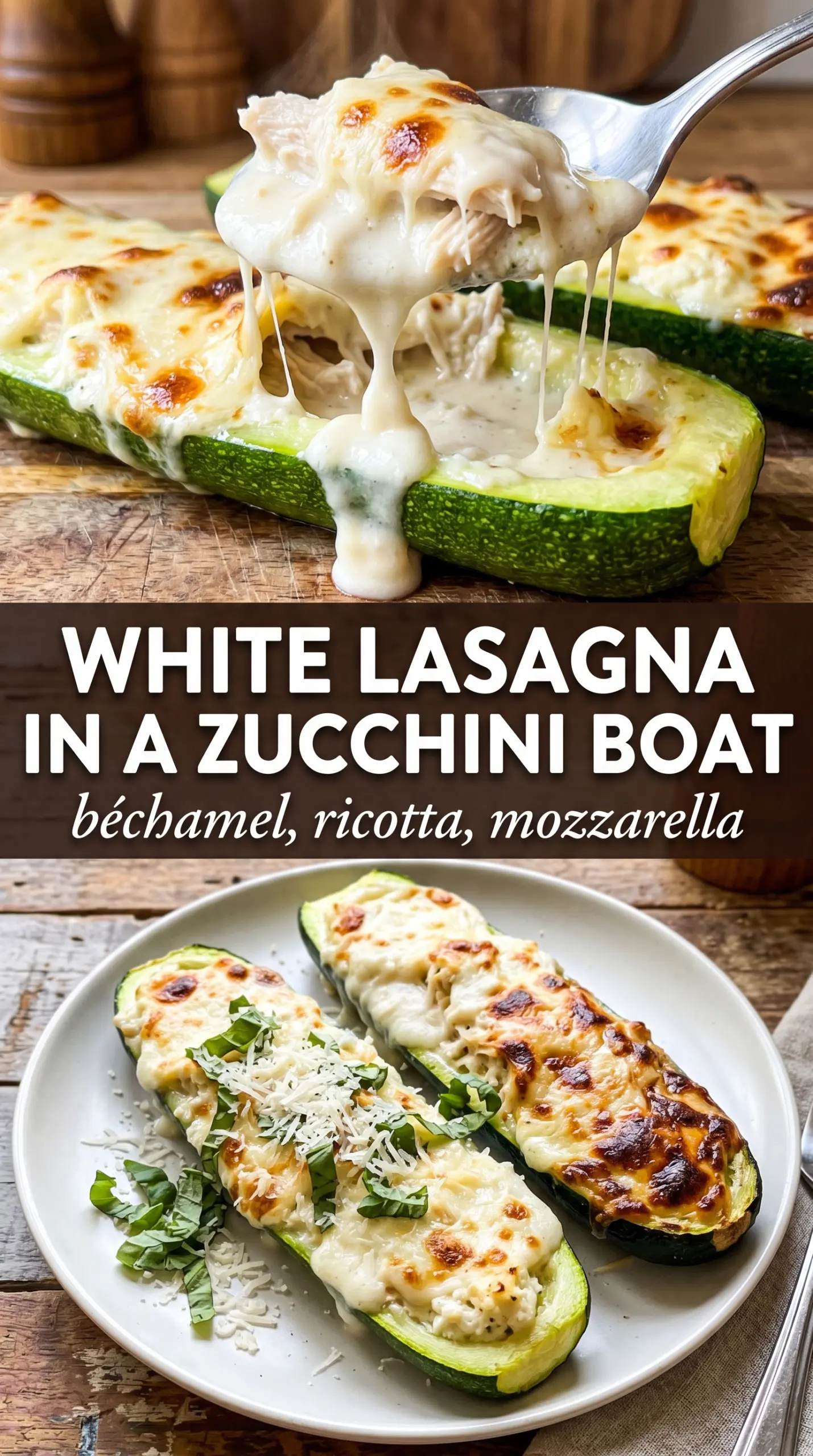
- Zucchini — The shells are the vessel, but they’re also part of the flavor. Look for large, straight zucchini so you can make even boats that bake at the same rate.
- Cooked chicken — Shredded chicken gives the dish its lasagna-style heartiness. Rotisserie chicken works well here because it’s already seasoned and stays tender in the oven.
- Ricotta — This is what gives the filling that soft, creamy middle. Whole-milk ricotta tastes better and sets more cleanly than low-fat ricotta, which can turn grainy or watery.
- Béchamel — This is the difference between a cheesy bake and a white lasagna vibe. The flour-and-butter base thickens the milk into a sauce that clings to the filling instead of running to the bottom of the dish.
- Mozzarella — Use shredded mozzarella for the top so it melts into a full blanket and browns at the edges. Fresh mozzarella has too much moisture for this dish.
- Parmesan — It sharpens the filling and the sauce. Grated parmesan from a wedge melts more smoothly than the pre-shredded kind, which can stay a little sandy.
Building the Layers So the Filling Bakes Cleanly
Carving the Zucchini Shells
Cut each zucchini in half lengthwise and scoop out the center, leaving enough flesh to keep the boats sturdy. A spoon works fine, but a small measuring spoon gives you better control near the edges. Chop the scooped flesh and set it aside right away so you can fold it into the filling later. If the boats look flimsy before they even hit the oven, they’ll slump once the cheese starts melting.
Making the Béchamel
Melt the butter over medium heat, whisk in the flour, and cook it just long enough to lose the raw flour smell. Then add the milk slowly while whisking constantly. The sauce should go from thin to glossy and lightly thickened without any lumps; if you dump the milk in too fast, the flour can clump before it has a chance to dissolve. Pull the pan off the heat before stirring in the parmesan, nutmeg, salt, and pepper so the cheese melts smoothly instead of turning stringy.
Filling and Baking
Mix the ricotta, egg, parmesan, parsley, chopped zucchini, and chicken until the filling looks cohesive but not overworked. Spoon a thin layer of béchamel into each shell first, then add the ricotta mixture and finish with more sauce on top. That bottom layer helps keep the zucchini from sticking and gives you a richer bite from the first forkful. Bake until the edges are bubbling and the mozzarella is deeply melted with browned spots; if the top is blond and the center still looks wet, give it a few more minutes before serving.
Three Ways to Make This Dish Fit the Night You’ve Got
Make It Meatless
Skip the chicken and add one small sautéed onion with chopped spinach or mushrooms. The filling will be a little softer and less sturdy, but the béchamel and egg still give it enough body to bake neatly. This is the best swap if you want the same creamy white lasagna feel without the extra protein.
Dairy-Free Version
Use a dairy-free ricotta and a plant-based milk thickened into a béchamel with vegan butter and flour. The flavor won’t be as rich as the original, but the texture can still work well if you keep the sauce thick and don’t overbake. Choose a melting vegan mozzarella for the top if you want the same browned finish.
Gluten-Free Swap
Swap the flour in the béchamel for a gluten-free all-purpose blend that includes xanthan gum, using the same amount by weight or volume listed in the recipe card. The sauce may thicken a little faster, so whisk steadily and don’t walk away from the pan. Everything else in the dish stays the same.
Make-Ahead for a Busy Night
You can assemble the boats a few hours ahead, cover them, and refrigerate until baking time. Hold back the mozzarella until right before they go into the oven so the top doesn’t get soggy. If you bake them straight from the fridge, add a few extra minutes and wait for the center to bubble.
Storage and Reheating
- Refrigerator: Store leftovers in an airtight container for up to 4 days. The zucchini softens a bit, but the filling stays creamy.
- Freezer: Freeze after baking for the best result. The texture of zucchini changes a little after thawing, but these still hold up better than most stuffed vegetable dishes.
- Reheating: Reheat covered in a 350°F oven until hot, then uncover for the last few minutes to bring back the top. The common mistake is blasting them in the microwave from the start, which makes the zucchini watery and the cheese greasy.
Questions I Get Asked About This Recipe
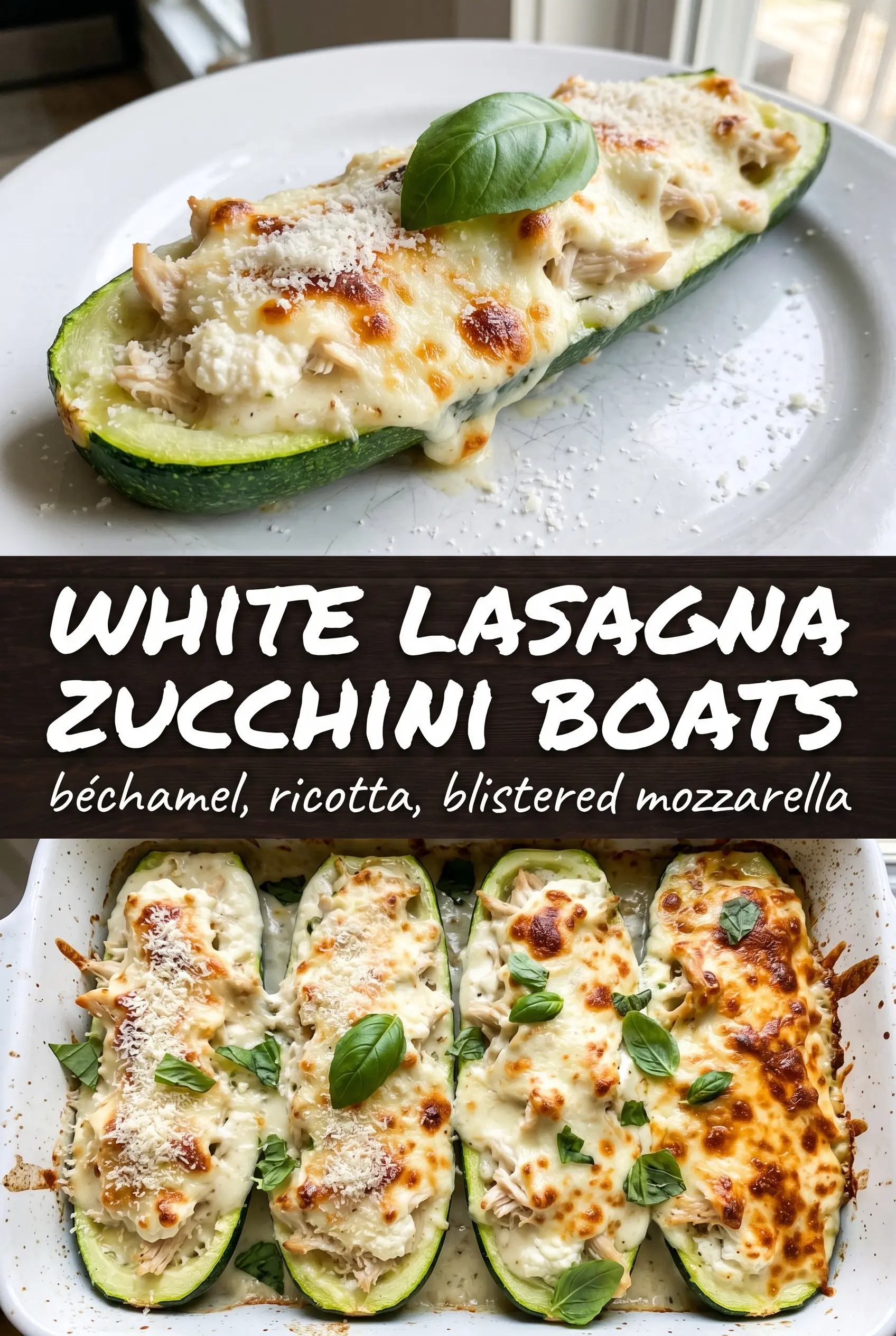
White Lasagna Zucchini Boats
Ingredients
Equipment
Method
- Preheat the oven to 400°F to get ready for baking the assembled zucchini boats.
- Halve the zucchini lengthwise and scoop out the centers, leaving a 1/4-inch shell; chop the removed flesh and set it aside.
- Melt the butter in a saucepan over medium heat, then whisk in the flour and cook for 1 minute.
- Slowly whisk in the whole milk until smooth and thickened, then stir in the parmesan, nutmeg, salt, and pepper.
- Mix the ricotta with the egg, parmesan, parsley, chopped zucchini flesh, and shredded chicken, then season with salt and pepper.
- Spoon a thin layer of bechamel into each zucchini shell.
- Fill each shell with the ricotta chicken mixture.
- Finish each boat with more bechamel on top.
- Top with the shredded mozzarella.
- Bake for 25–30 minutes until golden and bubbly, then garnish with extra parmesan and basil.