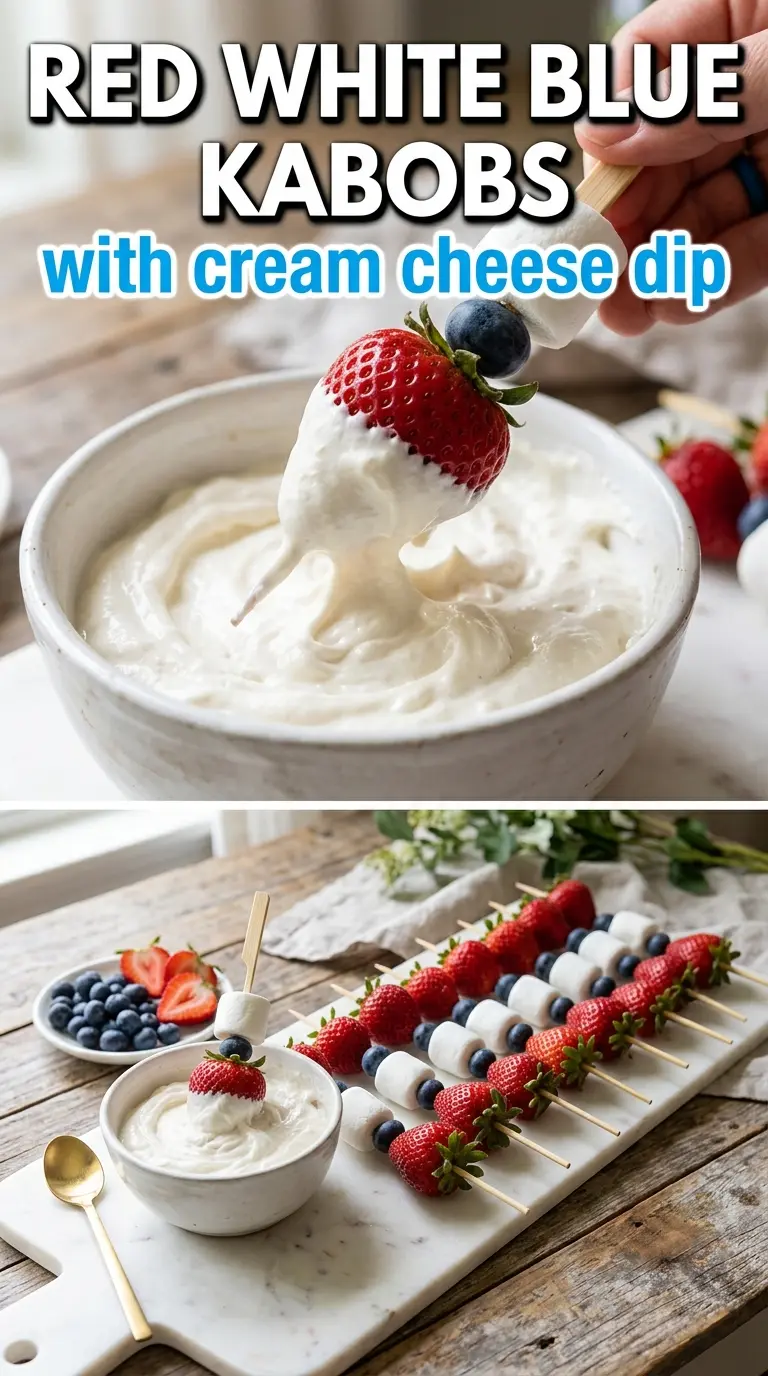
Red, white, and blue fruit kabobs disappear fast because they hit the sweet spot between playful and practical. They look festive lined up on a tray, but they also solve a real party problem: no cutting, no plates full of sticky fruit salad, and no last-minute fuss when guests start drifting in. The mix of juicy strawberries, cool blueberries, and soft white marshmallows gives each bite a little contrast, so they feel fun instead of one-note.
The part that makes these work is the rhythm of the threading. Keeping the fruit in a repeating pattern makes the kabobs look neat and intentional, and it also keeps the colors balanced on every skewer. If your strawberries are especially large, halving them helps the kabobs stay stable and keeps the proportions right. Marshmallows work better than you might expect here because they stay soft and hold their shape without adding extra moisture.
Below, you’ll find the small details that keep the kabobs looking fresh and tidy, plus a few smart swaps if you need to work with what’s already in the fridge. I’ve also included the one timing note that matters most so the fruit stays cold and the marshmallows don’t pick up too much moisture before serving.
The strawberries stayed juicy, the marshmallows didn’t get soggy, and the whole tray looked gorgeous on the table. I made them two hours ahead and they still tasted fresh when the guests arrived.
Like this patriotic fruit skewer recipe? Save it to Pinterest for easy red, white, and blue party snacks that look festive with almost no prep.
The Small Detail That Keeps Fruit Kabobs Looking Clean on the Tray
The biggest mistake with fruit kabobs is packing them too tightly or using fruit that’s already wet on the surface. When that happens, the marshmallows pick up moisture, the strawberries slip on the skewer, and the whole thing starts to look messy before the party even starts. Dry fruit threads neatly and holds its position, which matters more here than almost any seasoning or garnish ever could.
Another thing worth knowing: the order of the ingredients changes the way the kabobs eat. Putting a blueberry next to a marshmallow keeps the textures from feeling flat, and repeating the same pattern across every skewer makes the platter look polished without any extra effort. If your skewers are short, stop before you crowd the last piece on. A little breathing room keeps the kabobs easier to grab and less likely to split.
What Each Ingredient Is Actually Doing in This Recipe
- Primary ingredient (the star) — Quality matters most. Choose the best you can find.
- Cooking medium (oil, butter, or broth) — This carries flavors and prevents dryness.
- Seasonings (salt, pepper, spices, herbs) — Layer flavors so nothing overpowers. Build depth gradually.
- Aromatics (garlic, onion, herbs) — Cook with fat to bloom flavors. Become the foundation.
- Supporting ingredients — Complement the main ingredient without overpowering it.
- Sauce or liquid (if applicable) — Brings flavors together. Balance richness with acid.
- Acid (lemon, vinegar, wine, or other) — Brightens and prevents flat-tasting results.
- Final finish (garnish, glaze, or sauce) — Prevents one-dimensional taste and adds visual appeal.
What Each Part of the Skewer Is Doing
- Strawberries — These give you the boldest color and the juiciest bite. Use berries that are ripe but still firm; overripe strawberries can slide around and tear when you thread them. If they’re large, halving them makes the kabobs easier to balance and keeps the red pieces from overpowering the rest of the skewer.
- Blueberries — Blueberries add contrast in both color and texture, and they’re the easiest part of the kabob to work with. Leave them whole so they hold their shape and don’t burst on the skewer. Bigger blueberries look best here because they read clearly on a platter.
- Large marshmallows or white grapes — Marshmallows give the soft, sweet center that makes these feel like a party treat, while white grapes turn the kabobs into a fresher, less sugary version. Marshmallows are the classic choice and hold up well for a short chill in the fridge. If you use grapes, dry them completely after washing so they don’t make the skewers slippery.
- Wooden skewers or bamboo picks — Longer skewers let you repeat the color pattern and create that flag-like look. Short picks work for appetizer trays, but they limit how much fruit you can add. Soak bamboo skewers only if you’re serving them on a warm day and want the ends to stay smooth, though it isn’t necessary for a no-cook recipe like this one.
Threading the Pattern So Every Skewer Looks Intentional
Start With the Firmest Piece
Begin with a blueberry or a strawberry so the skewer has a sturdy anchor right away. Marshmallows are soft enough to tear if you spear them first and then try to force firmer fruit through the same spot. Keep the pieces snug, but don’t crush them together. The kabob should look full, not jammed.
Repeat the Color Rhythm
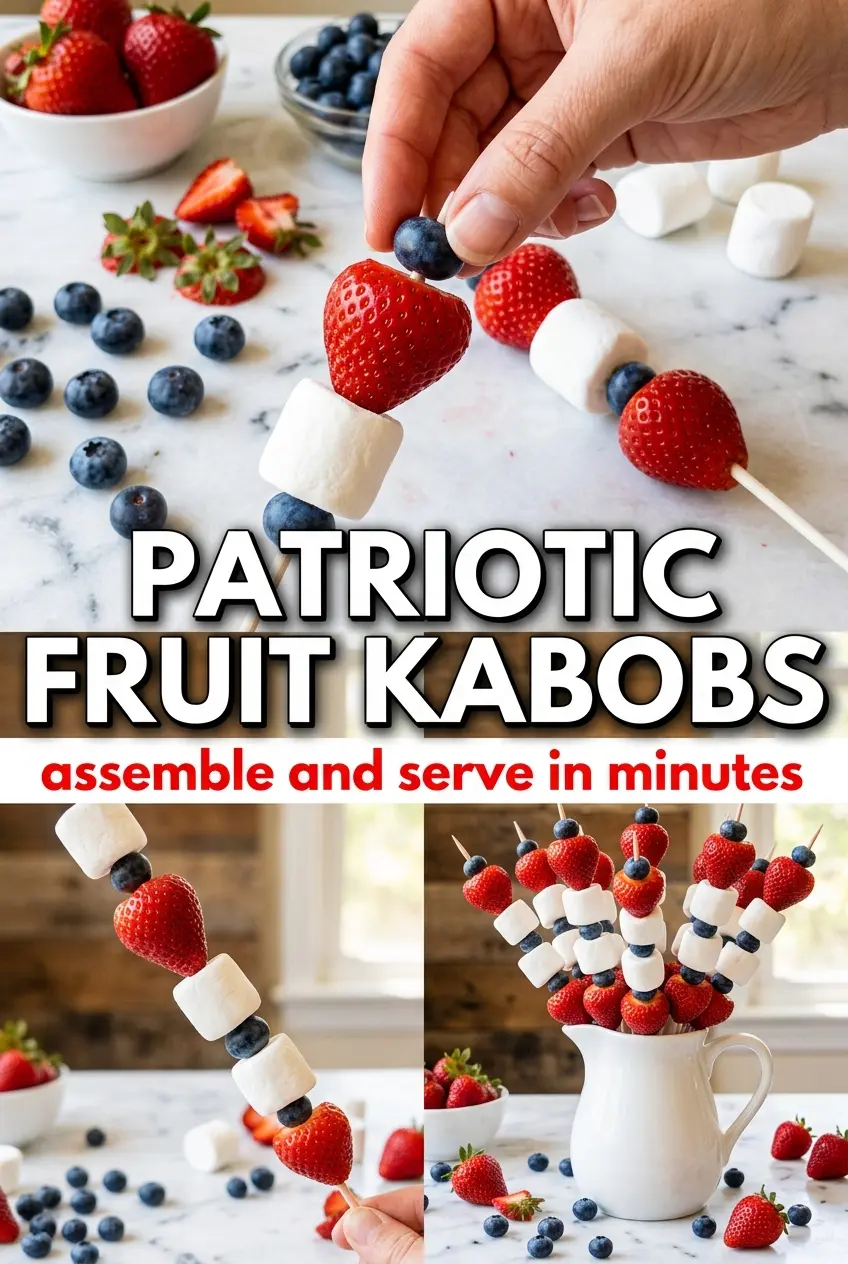
Use a repeating sequence of blueberry, marshmallow, strawberry, then repeat it again if the skewer length allows. That rhythm is what gives the tray its clean, graphic look. If one skewer ends up with an extra berry and another doesn’t, the platter starts to feel uneven, so keep the pattern consistent across the whole batch.
Stop Before the Skewer Feels Overloaded
Leave a little bare space at the bottom so the kabobs are easy to pick up and the fruit doesn’t slide into the holder or serving dish. If you try to squeeze on one more piece, the skewer can split a strawberry or pop through a marshmallow at an awkward angle. The best-looking kabobs have balance, not maximum volume.
Chill Only Until Serving Time
Lay the finished skewers in a single layer and chill them just until the party starts. A short rest firms up the fruit and keeps everything cold, but sitting too long can make the marshmallows a little sticky, especially if the fruit wasn’t fully dry. Two hours ahead is the sweet spot.
Three Ways to Adapt These Fruit Kabobs for Different Crowds
Swap the Marshmallows for White Grapes
This keeps the red, white, and blue look but makes the kabobs lighter and less sugary. Grapes need to be washed and dried thoroughly before threading, or they’ll make the skewer slippery. The result tastes fresher and works well when you want an appetizer that leans more fruit-forward.
Make Them Dairy-Free and Gluten-Free Without Changing a Thing
As written, these kabobs already fit both needs if your marshmallows are made without gelatin concerns for your group and your skewers are plain wood. There’s no breading, no dairy, and no hidden flour to work around. That makes this one of the easiest party foods to place on a mixed-diet table.
Use Larger Fruit for a More Substantial Skewer
If you want these to feel more like a dessert skewer than a light snack, choose the biggest strawberries you can find and leave the blueberries whole and plump. The kabobs will look fuller and hold up better on a buffet table. Just keep the pieces dry so the extra size doesn’t turn into extra slipping.
Make Them a Little More Kid-Friendly
Shorten the skewers or use small bamboo picks if you’re serving kids at a picnic or backyard cookout. The smaller format is easier to handle and less likely to break if little hands grab them fast. You’ll still get the same patriotic look, just in a size that’s easier to eat.
Storage and Reheating
- Refrigerator: Store assembled kabobs up to 2 hours before serving. After that, the fruit still tastes fine, but the marshmallows can start to soften and the tray loses that crisp, fresh look.
- Freezer: Don’t freeze these. The strawberries turn mushy when thawed, and the marshmallows change texture in a way that doesn’t work for a fresh party kabob.
- Reheating: No reheating needed. Serve them straight from the fridge, and pat the fruit dry first if any condensation forms. Wet fruit is the main reason these go from neat to slippery.
Questions I Get Asked About This Recipe
Red, White & Blue Fruit Kabobs
Ingredients
Equipment
Method
- Wash and prep all fruit by hulling the strawberries and leaving the blueberries whole. Keep strawberries as dry as possible before threading.
- Thread each skewer in a repeating pattern of 1 blueberry, 1 marshmallow, then 1 strawberry—repeat 2–3 times per skewer depending on skewer length. Leave a small gap at the top so the sequence stays neat and upright.
- Line completed skewers on a serving platter or tray, then refrigerate until ready to serve. Chill for up to 2 hours ahead so the marshmallows stay firm and the fruit looks vibrant.
- Serve chilled as a grab-and-go party appetizer or dessert. Arrange kabobs in a fan pattern for a patriotic, flag-like presentation.