Zucchini lasagna with ground beef lands with everything people want from a baked pasta dinner: a rich meat sauce, a creamy middle, and a browned top that slices cleanly instead of collapsing into a puddle. The zucchini stays tender without turning mushy, and the layers hold their shape just enough to give you that satisfying square on the plate.
The trick is treating the zucchini like an ingredient that needs preparation, not just assembly. Salting and roasting the planks pulls out extra moisture before they ever meet the sauce, which is what keeps the finished casserole hearty instead of watery. The beef sauce also needs a little time to simmer down until it’s thick enough to cling to the layers.
Below, I’ll walk through the one step that keeps this lasagna from going soggy, what each layer is doing, and how to adjust it if you want to make it a little lighter or stretch it for another meal.
I followed the zucchini-sweating step and roasted the planks first, and the lasagna sliced clean instead of turning watery. The meat sauce was thick enough to stay in the layers, and even the leftovers reheated without falling apart.
Keep this zucchini lasagna with ground beef handy for the nights when you want a hearty bake with no noodles and a deeply browned cheese top.
The Step That Keeps Zucchini Lasagna From Going Watery
Zucchini holds a lot of water, and that’s the part that sinks most lasagnas before they even leave the pan. Salt the planks first, let them sit long enough to draw out moisture, then pat them dry and roast them until they’ve softened and released even more liquid. That extra effort is what gives you clean layers instead of a sloppy bake.
The other place this dish goes wrong is in the sauce. If the beef mixture is loose when it goes into the pan, it keeps steaming the zucchini and you end up with soup around the edges. Simmer the sauce until it looks thick and spoonable, not glossy and thin.
- Salting the zucchini pulls out water before baking, which keeps the casserole from collapsing.
- Roasting the planks helps them cook down without dumping moisture into the pan.
- Reducing the sauce matters more here than in a regular meat sauce because the zucchini needs a thicker partner.
What Each Layer Is Doing in the Dish
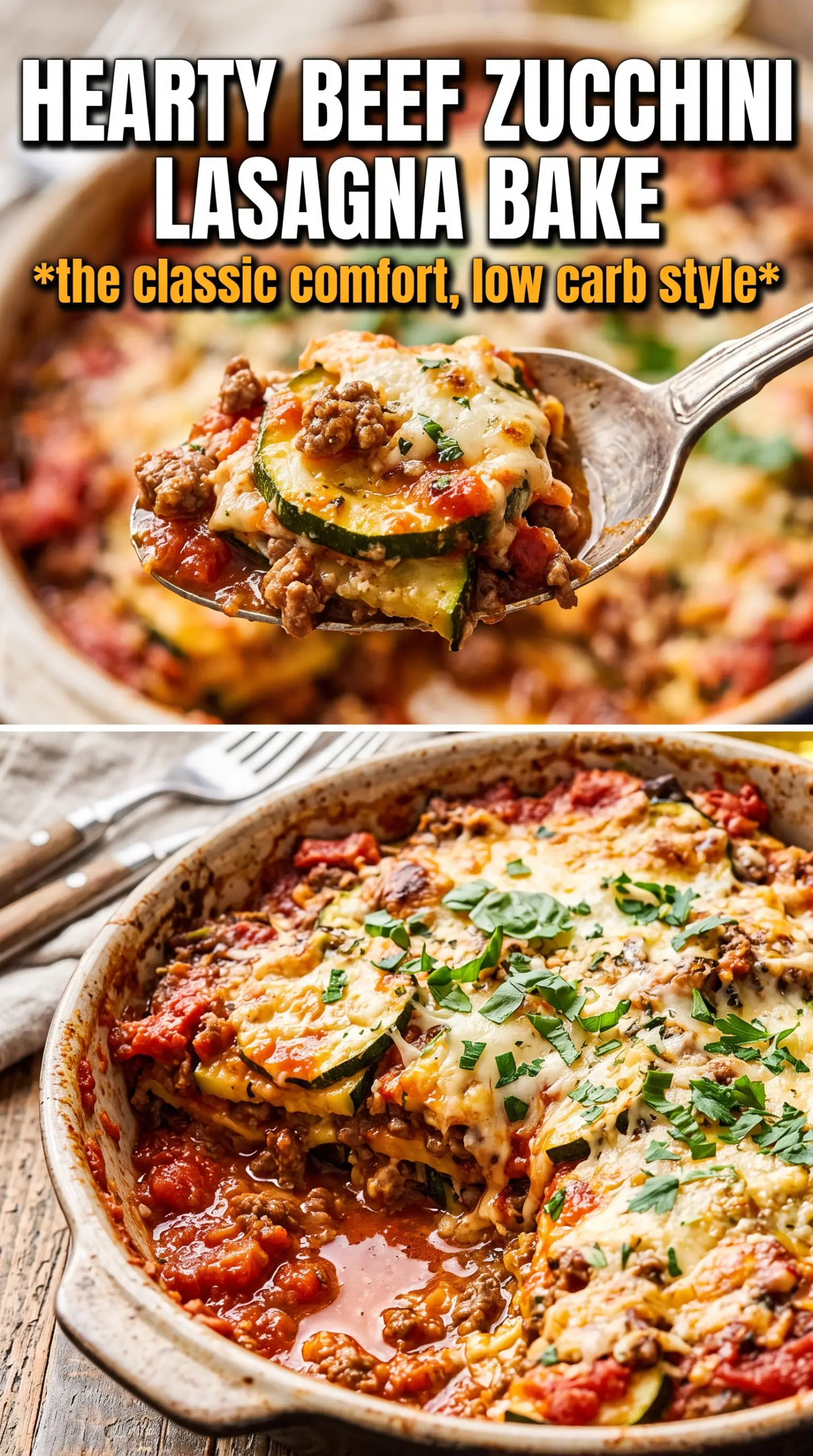
- Zucchini replaces the noodles, but it doesn’t behave like pasta. It needs the salt-and-roast treatment so it softens without flooding the pan. Thin, even planks matter more than perfect-looking ones.
- Ground beef gives this lasagna its backbone. An 80/20 blend works well because there’s enough fat for flavor, but draining off excess grease keeps the finished slices from feeling heavy.
- Crushed tomatoes and tomato paste build a sauce that tastes cooked, not raw. The paste gives body and that deep tomato note you’d miss if you skipped it.
- Ricotta, egg, and parmesan create the creamy layer that holds together under the sauce. The egg helps it set, and the parmesan keeps the filling from tasting flat.
- Mozzarella goes on top and between layers for stretch and browning. Shredding it yourself melts more evenly than the pre-bagged kind, which often has a coating that can make the top a little dull.
Building the Layers So They Slice Cleanly
Drying the Zucchini Fully
After salting, pat the zucchini until the surface feels dry and almost tacky, not slick. If you see moisture pooling on the board, keep blotting. Any water left behind will leak into the ricotta and dilute the sauce as the lasagna bakes.
Cooking Down the Beef Sauce
Brown the beef with the onion first so you build flavor before the tomatoes go in. Once the tomatoes and seasoning are added, simmer until the sauce clings to a spoon and no longer looks watery around the edges. If it still runs across the pan like soup, it isn’t ready for layering.
Assembling for Structure
Spread a thin layer of sauce on the bottom so the zucchini doesn’t stick. Build in even layers and don’t overstuff the ricotta; too much filling makes the lasagna slide apart when it’s cut. Finish with sauce and mozzarella on top so the cheese browns instead of drying out under the foil.
Baking and Resting
Covering the pan first lets the center heat through without burning the top. Uncovering at the end gives you that deep golden cheese with a few darker spots at the edges. Then let it rest for the full 15 minutes. If you cut it early, the layers will spill out before they have a chance to set.
Ways to Adapt This Without Losing the Texture
Make it lighter with turkey
Swap the ground beef for ground turkey if you want a leaner pan. The flavor will be milder, so keep the onion, garlic, tomato paste, and Italian seasoning in place and don’t skip the simmer time. Turkey gives you a softer finish, but the texture still holds once the lasagna rests.
Make it dairy-free
Use a dairy-free ricotta-style substitute and a melty plant-based mozzarella. The top won’t brown quite the same way, but the dish still slices well if the zucchini is dried properly and the sauce is thick. Choose an unsweetened substitute so the tomato sauce stays savory.
Skip the egg in the ricotta layer
If you need an egg-free version, leave it out and add a little extra parmesan for body. The filling will be a touch softer, so the resting time matters even more. It won’t hold as firmly, but it still tastes rich and layered.
Stretch it for a bigger crowd
Add another zucchini or two and increase the sauce by about half if you need more servings. Use a deeper baking dish if you have one, because shallow layering makes the casserole harder to cut neatly. The total bake time may run a few minutes longer if the pan is fuller.
Storage and Reheating
- Refrigerator: Store covered for up to 4 days. The layers hold up well, though the zucchini will soften a little more on day two.
- Freezer: This freezes well in portions. Wrap tightly and freeze for up to 2 months; thaw overnight in the refrigerator before reheating.
- Reheating: Reheat covered in a 350°F oven until hot in the center, or use the microwave for single servings. Don’t blast it uncovered on high heat or the cheese will toughen before the middle warms through.
Answers to the Questions Worth Asking
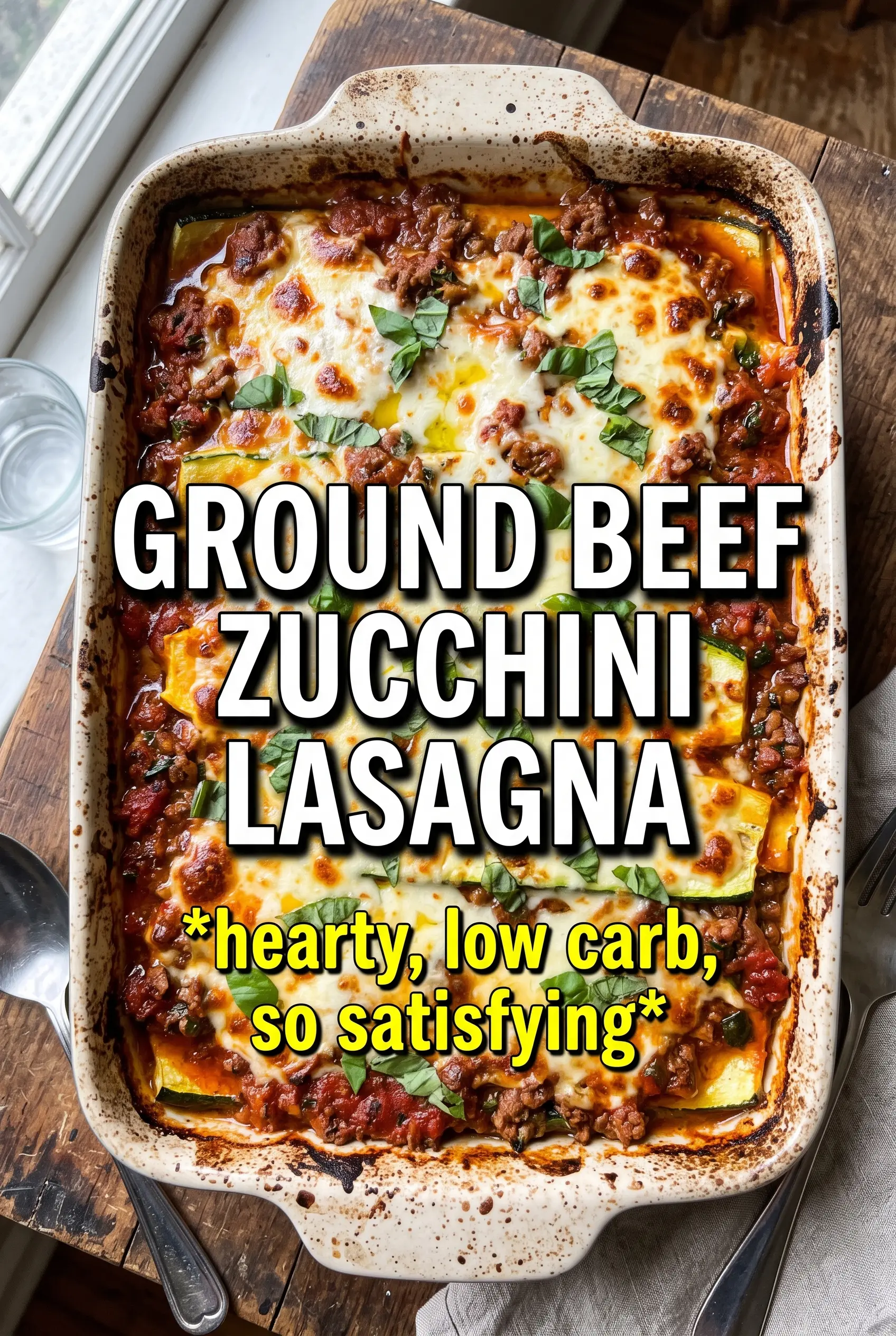
Zucchini Lasagna with Ground Beef
Ingredients
Equipment
Method
- Salt the zucchini planks and let them rest for 20 minutes to draw out moisture; keep them in a single layer so the liquid sweats evenly.
- Pat the zucchini very dry, then roast on a sheet pan at 425°F for 12 minutes to prevent a watery lasagna.
- Brown the ground beef with the diced onion in a cast iron skillet until the beef is no longer pink.
- Drain excess fat, then add the minced garlic and cook until fragrant, about 1 minute.
- Add crushed tomatoes, tomato paste, Italian seasoning, fennel seeds, and red pepper flakes, then simmer for 15 minutes until thick.
- Season the beef sauce with salt and pepper to taste and set it aside while you assemble.
- Mix ricotta with the egg, grated parmesan, fresh parsley, salt, and pepper until smooth and well combined.
- Preheat the oven to 375°F and grease a 9x13 dish.
- Assemble the lasagna by spreading beef sauce on the bottom, layering zucchini planks, adding ricotta, then beef sauce and mozzarella.
- Repeat the layers, then end with beef sauce and mozzarella on top for a browned finish.
- Cover tightly with foil and bake at 375°F for 40 minutes.
- Uncover and bake at 375°F for 15 minutes until the mozzarella is golden and the top is deeply browned.
- Rest the lasagna for 15 minutes before serving so the layers hold together when sliced.