Zucchini lattice lasagna pulls off the rare trick of looking fancy without losing the soul of a baked lasagna. The top bakes into a golden woven pattern of green zucchini and yellow squash, while underneath you still get the same rich meat sauce, creamy ricotta, and bubbling mozzarella people expect from a proper pan of lasagna. It slices cleanly after a short rest, and that lattice stays intact long enough to earn a few stunned looks at the table.
What makes this version work is the way the zucchini is handled. The planks need to be thin enough to bend without snapping, and the filling needs to be thick enough that the vegetables don’t slide around as they bake. I also keep the top layer tight and overlapping, which helps the lattice hold its shape instead of collapsing into a soft pile of squash. A light brush of oil and a shower of parmesan are what turn the top from pale and watery to bronzed and savory.
Below, you’ll find the exact trick for weaving the lattice, plus the one resting step that keeps the slices neat instead of slumping on the plate.
The zucchini stayed tender but not mushy, and the lattice actually held together when I sliced it. I used sweet Italian sausage and the whole pan disappeared fast.
Save this zucchini lattice lasagna for the night you want a showstopper pan of pasta with a woven squash top.
The Trick to Keeping a Vegetable Lattice from Going Limp
The problem with a zucchini-topped lasagna is moisture. Zucchini and yellow squash both give off water as they bake, and if the filling underneath is loose, the whole top turns slick and slouches before the pan even hits the table. The fix is to keep the sauce thick and the strips thin. A watery marinara or chunky undercooked filling will steam the vegetables from below and blur the lattice pattern you worked to build.
That’s why the meat sauce here needs a proper simmer after the marinara goes in. It should look glossy and spoonable, not soupy. The zucchini planks also need to be cut lengthwise and thin enough to bend; thick slices crack when you weave them and leave gaps that collapse in the oven. If the strips feel stiff, trim them thinner instead of forcing the pattern.
What Each Layer Is Actually Doing in This Lasagna
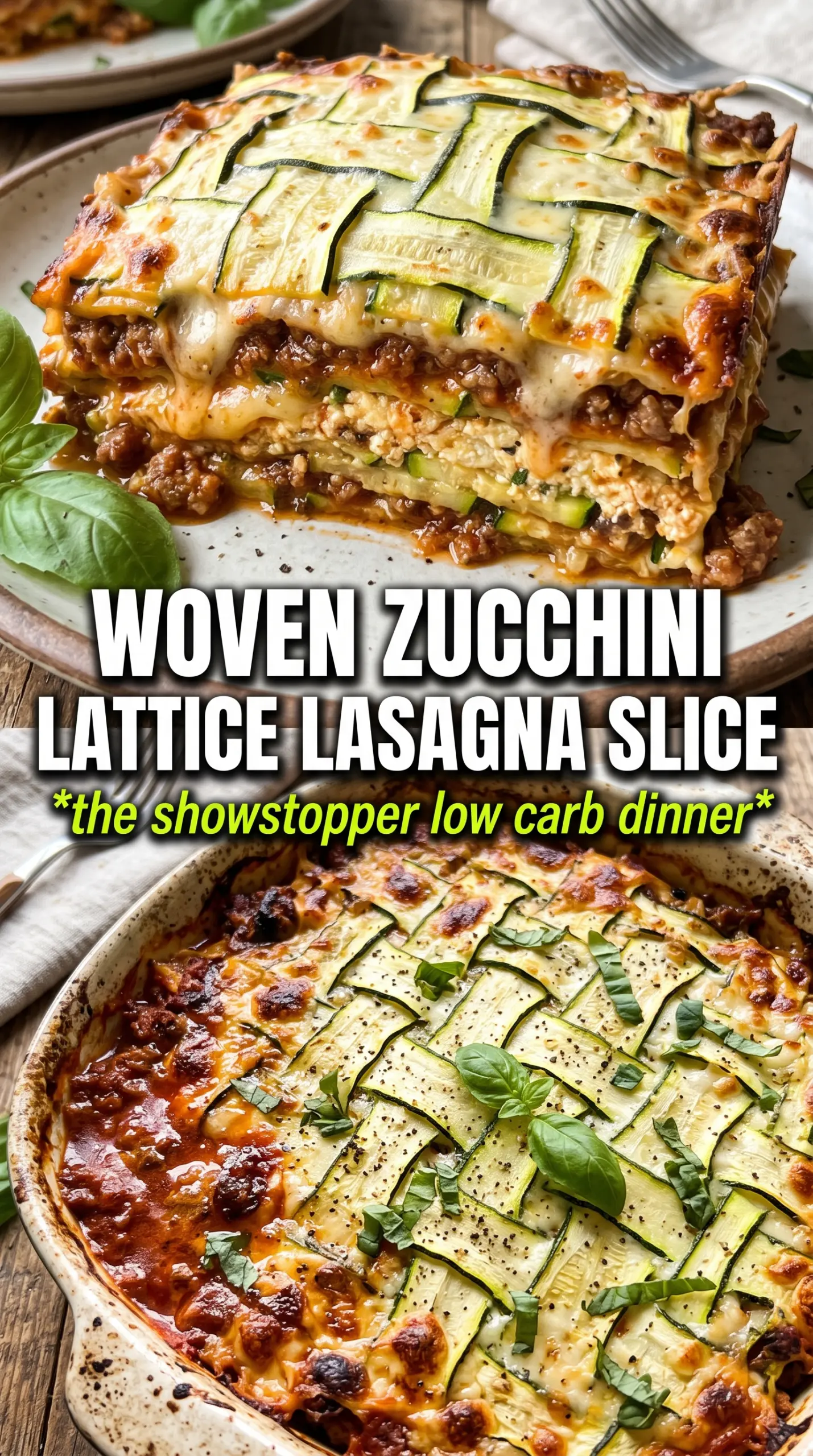
- Green zucchini and yellow squash — The two colors make the lattice readable after baking, and both bring a tender, lightly sweet finish. Pick firm squash with smooth skin; older, oversized ones hold too much water and make the top soft. If you only have zucchini, the lattice still works, but you lose that striking contrast.
- Ground beef or Italian sausage — This gives the lasagna enough heft to stand up to the vegetables. Sausage adds more seasoning straight from the pan, while beef gives a cleaner, classic red-sauce taste. Either one works, but the meat has to be browned well and drained so the final bake isn’t greasy.
- Ricotta mixture — The egg and parmesan help the ricotta set into creamy layers instead of spreading into the sauce. Stir it until just combined; whipping it smooth isn’t necessary and can make the layer feel too loose. Salt and pepper matter here because ricotta is mild and needs seasoning to keep the whole dish from tasting flat.
- Mozzarella and parmesan — Mozzarella gives the stretch, parmesan gives the top its salty, bronzed finish. Use a low-moisture mozzarella if you can, because fresh mozzarella releases more liquid and can soften the lattice. The extra parmesan on top helps the squash brown instead of steaming.
Building the Pan So the Top Bakes, Not Boils
Cooking Down the Sauce
Brown the meat with the onion until the onion softens and the meat loses its raw pink color, then drain off the fat before adding garlic, marinara, and Italian seasoning. Let that simmer for 10 minutes so the sauce thickens and the flavors settle together. If you skip that simmer, the lasagna will release too much liquid in the oven and the lattice will slide.
Mixing the Ricotta Layer
Stir the ricotta with the egg, parmesan, parsley, salt, and pepper until the mixture looks evenly speckled and cohesive. You want it thick enough to spread in dollops, not run across the pan. If it looks wet, the filling will loosen as it bakes and make the slices slump.
Weaving the Zucchini Top
Lay the zucchini and squash strips over the top in alternating colors, weaving them under and over each other as tightly as you can without tearing the planks. Start near one edge and work steadily across the pan so the pattern stays even. If a strip breaks, tuck the broken end under an adjacent plank instead of trying to patch it later with a loose piece.
Baking Until the Edges Bubble
Brush the lattice with olive oil and finish with parmesan before baking at 375°F for 40 to 50 minutes. You’re looking for bubbling sauce at the edges and a top that turns deep gold in spots. If the lattice browns too quickly before the center is hot, lay a loose sheet of foil over the top for the last stretch of baking.
Resting Before the First Slice
Let the lasagna rest for 15 minutes before cutting into it. That pause lets the cheese settle and gives the lattice a chance to hold its shape. If you cut it too soon, the layers will run and the woven top will lose the sharp pattern that makes this dish special.
How to Adapt the Lattice Without Losing the Effect
Use sausage instead of beef for a deeper, spicier pan
Italian sausage gives the sauce more built-in seasoning and a little more richness. Use mild sausage for a classic result or hot sausage if you want a stronger finish. The texture stays the same, but the flavor lands a little bolder and rounder.
Make it gluten-free without changing the structure
This recipe is naturally close to gluten-free as written if your marinara is safe. Use extra zucchini planks in place of any pasta layer, and check that the sausage or marinara doesn’t contain hidden gluten. The finish stays the same: rich, layered, and sturdy enough to slice cleanly.
Go vegetarian by swapping in a thick vegetable ragù
A mushroom-and-onion sauce works well here as long as you cook off the moisture first. Mushrooms need time to brown and lose their water before they can carry the dish, otherwise the pan turns loose. The lasagna stays hearty, but the flavor shifts earthier and a little lighter.
Storage and Reheating
- Refrigerator: Store leftovers covered for up to 4 days. The lattice softens a little, but the flavor deepens after a night in the fridge.
- Freezer: Freeze baked slices tightly wrapped for up to 2 months. The zucchini top won’t stay crisp after thawing, but the lasagna still reheats well if you accept a softer finish.
- Reheating: Warm covered in a 350°F oven until hot through, or reheat individual slices gently in the microwave. The biggest mistake is blasting it uncovered, which dries out the cheese before the center warms.
Questions I Get Asked About This Recipe
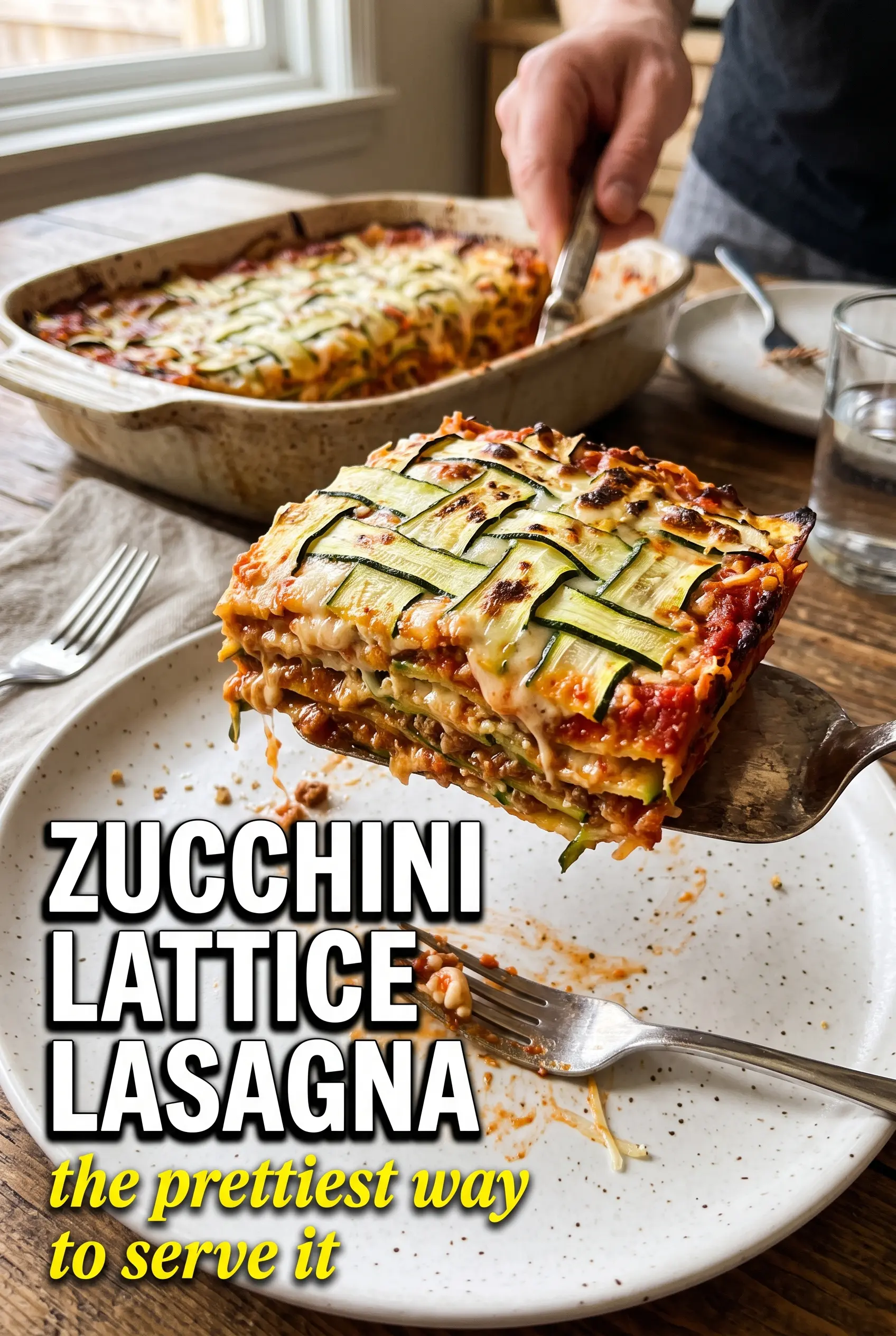
Zucchini Lattice Lasagna
Ingredients
Equipment
Method
- In a Dutch oven, brown the ground beef (or Italian sausage) with the diced onion until the meat is cooked through. Drain excess fat, then stir in minced garlic for 30 seconds until fragrant.
- Add marinara sauce and Italian seasoning, then bring to a simmer. Simmer for 10 minutes so the sauce thickens slightly.
- In a bowl, combine ricotta, egg, grated parmesan, chopped parsley, salt, and black pepper until smooth and evenly mixed. Set aside while you prep the baking dish and zucchini planks.
- Preheat the oven to 375°F. Grease a 9x13 baking dish and set it aside.
- Spread a layer of meat sauce across the bottom of the greased baking dish. Add a layer of extra zucchini planks or lasagna noodles, then spoon on the ricotta mixture.
- Top the ricotta with more meat sauce, then sprinkle shredded mozzarella evenly over the surface. Keep the top layer slightly covered so the lattice can be woven tightly.
- Lay alternating zucchini and yellow squash strips over the top in a tight lattice pattern, weaving them under and over each other. Continue until the entire surface is covered with a geometric weave.
- Brush the lattice with olive oil so the strips brown nicely, then sprinkle with parmesan. Make sure parmesan reaches the edges of the lattice for even color.
- Bake at 375°F for 40–50 minutes until the lattice is golden and the filling bubbles around the edges. If the top is browning too quickly, tent loosely with foil.
- Rest for 15 minutes before slicing so the lattice pattern sets and stays intact. Slice and serve warm.