Warm zucchini walnut bread bakes up with a tender, tightly knit crumb and little bursts of toasted nutty crunch in every slice. The zucchini keeps the loaf moist without making it heavy, while cinnamon and nutmeg give it that familiar bakery-style aroma that makes the whole kitchen smell like you’ve been at it all morning.
What sets this version apart is the way the walnuts are treated twice: lightly toasted first, then folded into the batter so their flavor stays distinct instead of fading into the loaf. I also leave the zucchini unsqueezed, which sounds counterintuitive but gives the bread the soft, plush texture people want from a good zucchini loaf. Sour cream adds just enough richness to keep the crumb from drying out in the oven.
Below, you’ll find the small details that matter most here, including how to avoid a gummy center and how to get neat slices once the loaf has cooled.
The walnuts stayed crunchy after baking, and the loaf sliced cleanly once it cooled. I loved that the zucchini made it moist without turning the middle dense or wet.
Love the crunchy walnuts and moist crumb in this zucchini walnut bread? Save it to Pinterest for the next time you have extra zucchini and want a classic breakfast loaf.
The Trick to Keeping Zucchini Bread Moist Without Making It Heavy
Most zucchini breads fail in one of two ways: they bake up dry because the batter was overmixed, or they turn gummy because too much flour got packed in to fight the zucchini. This loaf lands in the middle by leaning on enough fat and dairy to stay tender, while the zucchini itself brings moisture that the crumb can actually absorb. The result is soft and sliceable, not wet or spongey.
The other piece that matters is the nuts. Toasting the walnuts before they go into the batter deepens their flavor and keeps them from tasting flat after baking. If you skip that step, the bread will still work, but it won’t have the same contrast between the sweet spiced crumb and the toasty crunch.
- Don’t squeeze the zucchini. The extra moisture helps the loaf stay plush for days, and the batter is written to handle it.
- Fold, don’t beat, once the flour goes in. Overworking the batter builds toughness and makes the bread bake up dense.
- Use a 9×5-inch loaf pan. A smaller pan can leave the center underbaked before the top sets.
- Test with a toothpick in the center. A few moist crumbs are fine; wet batter means it needs more time.
What the Walnuts, Sour Cream, and Zucchini Each Bring to the Loaf
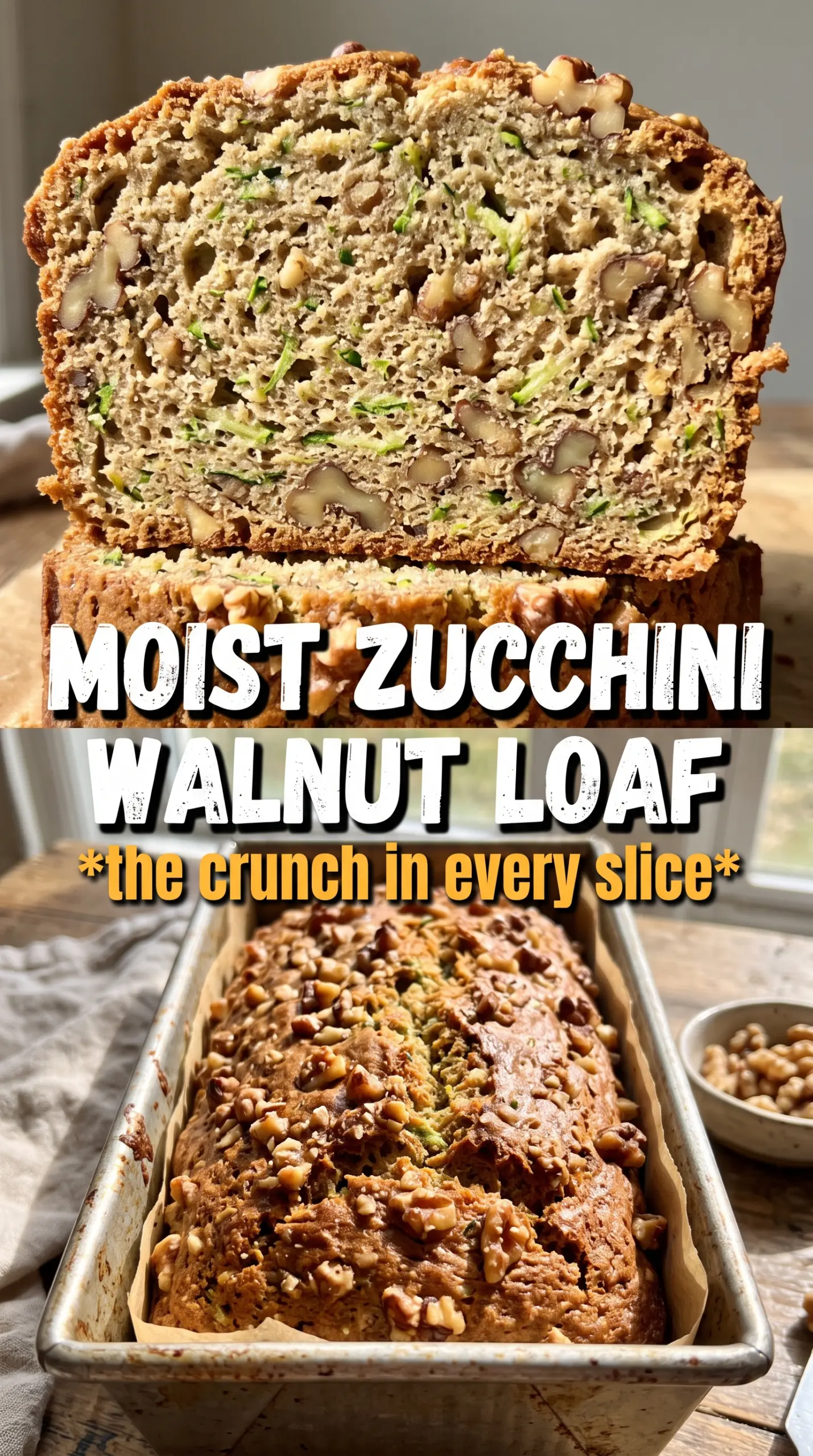
- Zucchini — Grated zucchini gives the loaf moisture and tenderness without an obvious vegetable taste. Leave it unsqueezed here so the bread stays soft, but grate it finely so it disappears into the crumb instead of creating stringy pockets.
- Walnuts — Roughly chopped walnuts give the best texture because you get little crunches in every slice instead of large hard chunks. Toasting them first is worth the extra few minutes; it wakes up the flavor and keeps them from tasting raw after baking.
- Sour cream — This adds richness and helps the bread stay tender after it cools. Plain Greek yogurt can work in a pinch, but the loaf will be a little tangier and slightly less plush.
- Cinnamon and nutmeg — These spices round out the loaf and keep it from tasting one-note sweet. Don’t overdo them; the goal is warm background flavor, not spice cake.
- Vegetable oil — Oil keeps the crumb moist longer than butter does in a loaf like this. Melted butter can be used, but the texture will be a touch firmer once the bread cools.
Building the Batter So the Middle Bakes Through
Toast the walnuts first
Put the walnuts in a dry skillet over medium heat and stir them for 3 to 4 minutes, just until they smell warm and nutty. Pull them off the heat as soon as you catch that aroma, because they can go from toasted to bitter fast. Let them cool before they hit the batter so they don’t warm the eggs or soften the mixture.
Mix the wet ingredients until smooth
Whisk the sugar, eggs, oil, sour cream, and vanilla until the mixture looks glossy and fully combined. You’re not trying to whip air into it; you’re building a smooth base that will carry the zucchini evenly through the loaf. If the mixture looks curdled at this stage, the sour cream was too cold, but the batter usually comes together once the dry ingredients go in.
Fold in the flour gently
Add the flour mixture and stir just until the last streaks disappear, then fold in the zucchini and walnuts. Stop as soon as the batter looks evenly mixed, because too much stirring develops gluten and gives you a tougher loaf. The batter will be thick and spoonable, not pour-thin.
Bake until the center is set
Scrape the batter into the pan, smooth the top, and add walnut halves if you’re using them. Bake at 350°F for 55 to 65 minutes, then test the center with a toothpick. If it comes out with wet batter, keep baking in 5-minute bursts; pulling it too early is the fastest way to end up with a gummy middle even when the top looks done.
How to Adapt This Loaf Without Losing the Texture
Make it dairy-free
Swap the sour cream for an equal amount of unsweetened dairy-free yogurt or plant-based sour cream. That keeps the moisture level close to the original, though the loaf may bake up a little less rich on the palate. Choose a thick version so the batter doesn’t thin out.
Skip the nuts
Leave out the walnuts and add a few tablespoons of extra zucchini, but don’t go overboard. The loaf will still be moist, though it loses the crunchy contrast that makes this version stand out. A sprinkle of raw sugar on top can give it a little texture back.
Make it gluten-free
Use a 1:1 gluten-free flour blend that includes xanthan gum. The loaf will still be tender, but it may be slightly more delicate when slicing, so let it cool fully before cutting. Almond flour alone won’t hold the structure well enough for this recipe.
Turn it into muffins
Divide the batter among lined muffin cups and start checking them around 20 to 24 minutes. Muffins bake faster, so the edges set before the centers dry out, which gives you a lighter, more portable version of the same bread. You’ll lose the classic loaf slice, but gain better portion control and faster baking.
Storage and Reheating
- Refrigerator: Store wrapped or in an airtight container for up to 5 days. The loaf stays moist, and the walnut texture holds up well.
- Freezer: Freeze whole or sliced for up to 3 months. Wrap tightly in plastic, then foil, and thaw at room temperature so the crumb doesn’t turn wet from condensation.
- Reheating: Warm slices in a toaster oven or a low oven for a few minutes. The biggest mistake is microwaving too long, which makes the bread rubbery and softens the walnuts.
Questions I Get Asked About This Recipe
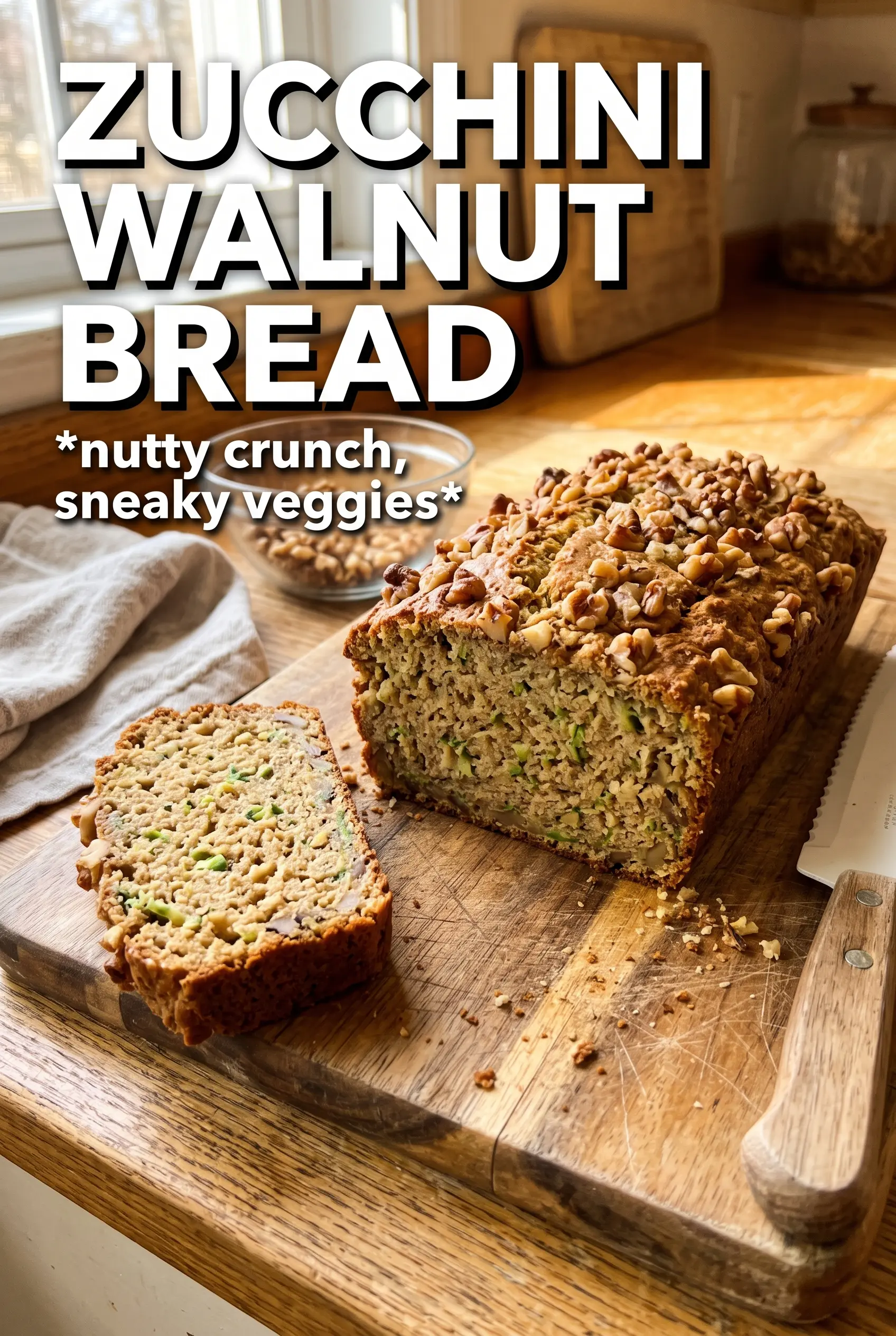
Zucchini Walnut Bread
Ingredients
Equipment
Method
- Preheat the oven to 350°F and grease a 9x5 loaf pan.
- Toast walnuts in a dry skillet over medium heat for 3–4 minutes, until fragrant, then let cool.
- Whisk all-purpose flour, baking soda, baking powder, salt, cinnamon, and nutmeg together.
- Beat granulated sugar, eggs, vegetable oil, sour cream, and vanilla extract until smooth.
- Stir in grated zucchini (unsqueezed) until evenly distributed.
- Fold the dry ingredients into the wet until just combined, then fold in toasted walnuts.
- Pour the batter into the greased loaf pan and arrange walnut halves on top if desired.
- Bake at 350°F for 55–65 minutes, until a toothpick comes out clean.
- Cool the loaf for 20 minutes before slicing, so the crumb sets and slices cleanly.