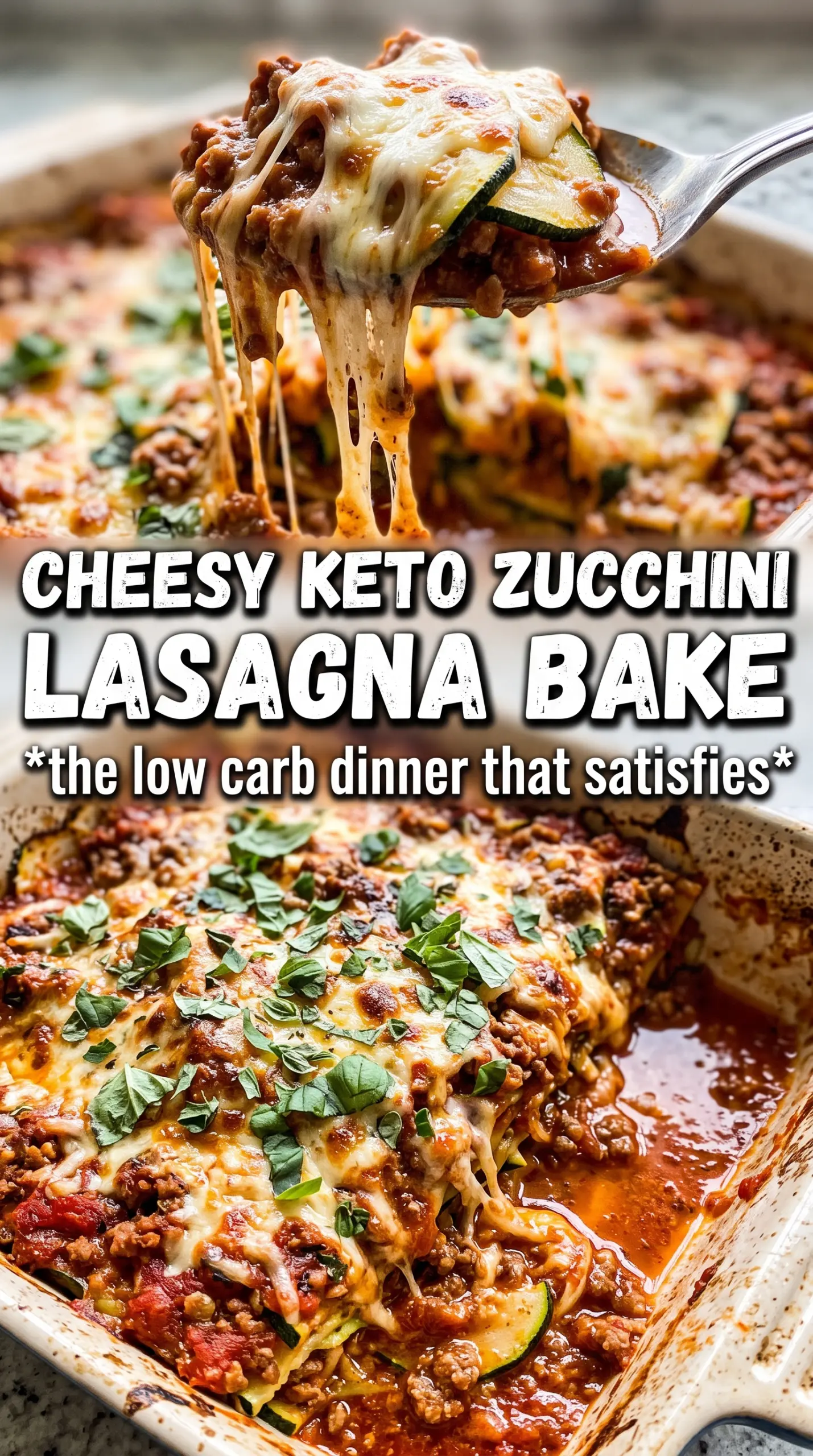
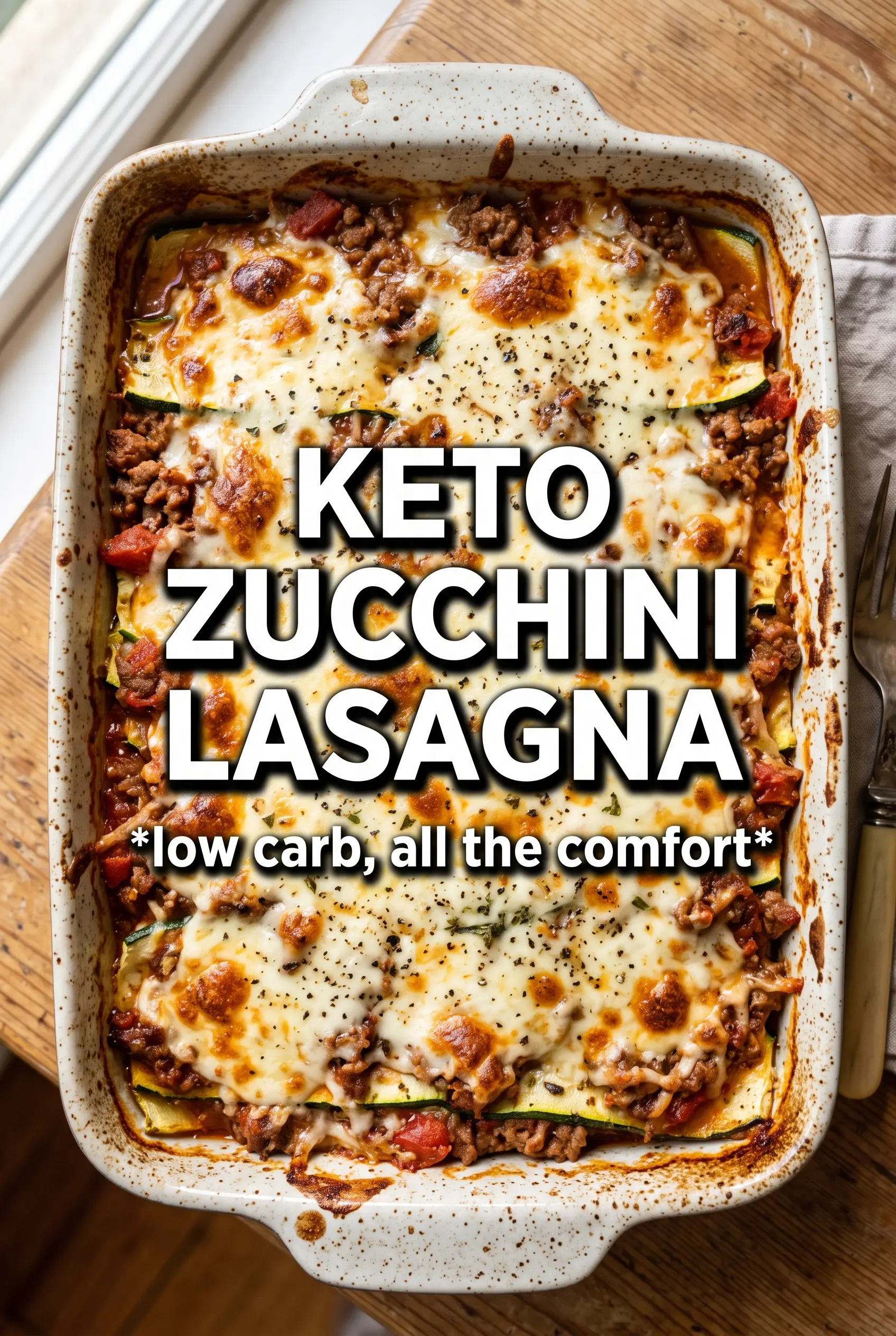
Layered, saucy, and rich enough to stand up to the classic version, keto zucchini lasagna earns its place by tasting like comfort food instead of a compromise. The zucchini softens into tender noodles, the ricotta turns creamy and set, and the top bakes into a browned, bubbling cap of mozzarella that slices cleanly once it rests.
The trick is treating the zucchini like a watery vegetable first and a lasagna noodle second. Salt pulls out excess moisture, a short roast dries the planks even more, and that step keeps the finished dish from turning soupy under the meat sauce. The sauce itself needs to simmer until it’s thick enough to mound on a spoon, because thin sauce and zucchini moisture will always fight each other in the oven.
Below, you’ll find the exact drying method that keeps the layers intact, plus the small assembly details that make the difference between a casserole that holds its shape and one that slides apart on the plate.
The zucchini actually held its shape, and I didn’t end up with a puddle at the bottom of the pan. The meat sauce thickened up beautifully, and after the rest time I got clean slices with the ricotta layer still in place.
Save this keto zucchini lasagna for the night you want a hearty low carb casserole with creamy layers and a golden mozzarella top.
The Dry Zucchini Step That Keeps This Lasagna from Collapsing
Zucchini is the part that usually ruins a low carb lasagna. It gives off water twice: once when it sits with salt, and again as it bakes. If you skip the drying step, the sauce loosens, the ricotta layer slips, and the bottom of the pan ends up watery instead of sliceable.
The fix is to treat the zucchini like a moisture-heavy ingredient that needs prep before assembly. Salt it first, let it sit long enough to pull out the liquid, then roast the planks until they look a little shrunken and matte on the surface. You are not trying to brown them hard. You are trying to drive off enough moisture that they can sit under sauce without turning the whole dish into soup.
- Zucchini — Use large zucchini so you can cut wider planks that mimic noodles better. Thin slices work, but they tear more easily. If yours are especially watery, give them a second blot with paper towels after roasting.
- Salt — This does the first round of moisture removal, and it matters. Table salt or kosher salt both work here because you’re rinsing nothing; you’re using it as a drawing agent, not a seasoning finish.
- Whole milk ricotta — Whole milk ricotta gives a creamier layer that bakes into a custard-like middle. Part-skim can work, but it tends to set drier and grainier.
What Each Ingredient Is Doing in the Pan
- Ground beef — An 80/20 blend gives you enough fat for flavor without making the dish greasy. Leaner beef works, but the sauce will taste flatter unless you add a little extra olive oil while browning.
- Crushed tomatoes and tomato paste — The crushed tomatoes build the body of the sauce, while the paste pushes it into that thick, clingy texture you need for layering. If you use only crushed tomatoes, the filling stays loose.
- Ricotta, eggs, parmesan, and mozzarella — The eggs help the ricotta layer set so it cuts instead of oozing. Parmesan adds salt and a sharper edge, and the cup of mozzarella mixed into the filling helps tie the dairy layers together so the slices stay cohesive.
- Italian seasoning and red pepper flakes — These keep the sauce from tasting heavy and flat. The pepper flakes don’t make it spicy; they wake up the meat sauce just enough to balance the richness.
Building the Layers So They Slice Cleanly
Cooking Down the Meat Sauce
Brown the beef with the onion until the meat loses its pink color and the onion turns soft and translucent. Drain off the excess fat so the finished lasagna doesn’t pool in grease, then add the garlic just long enough to smell fragrant. Stir in the tomatoes, paste, seasoning, and pepper flakes, then simmer until the sauce is thick and spoonable. If it still looks loose in the pan, it will loosen more in the oven.
Making the Ricotta Layer Hold Its Shape
Mix the ricotta with the eggs, parmesan, parsley, and some of the mozzarella until it looks thick and spreadable. The eggs are what keep this layer from turning into a sloppy cheese puddle once it bakes. If the mixture seems thin, it usually means the ricotta was wet; drain it briefly in a fine mesh strainer next time before mixing.
Assembling Without Pressing the Layers Flat
Start with sauce on the bottom, then zucchini, then ricotta, and repeat. Don’t smash the layers down with the back of a spoon; gentle spreading keeps the zucchini intact and preserves the structure. Finish with sauce and the remaining mozzarella, because cheese on top protects the casserole and gives you the browned lid everyone wants.
Baking Until the Center Is Set
Cover the dish tightly with foil for the first stretch of baking so the center heats through before the top browns too fast. Then uncover it to let the mozzarella melt, bubble, and take on color. If the top is dark but the middle still looks loose, give it a few more minutes covered again instead of letting the cheese burn.
Ways to Adjust This for the Ingredients You Have
Dairy-Free Version
Swap the ricotta and mozzarella for your favorite dairy-free alternatives that melt and set well, and expect a softer, less structured center. The lasagna still works, but the filling won’t have the same custardy finish, so let it rest a full 20 minutes before cutting.
Lower-Prep Shortcut with No Sacrifice in Structure
You can slice the zucchini a few hours ahead and salt it in a colander, then roast it just before assembly. That saves time without changing the final texture, as long as you pat it dry again before it goes into the pan.
Turkey Instead of Beef
Ground turkey works if you want a lighter pan, but it needs a little help. Add a drizzle of oil when browning and don’t rush the simmer, because turkey sauce can taste thin unless it cooks down until it’s dense and savory.
Storage and Reheating
- Refrigerator: Store covered for up to 4 days. The lasagna firms up as it chills, which actually helps the slices hold together.
- Freezer: It freezes well in individual portions or as a whole baked pan. Wrap it tightly and thaw overnight in the fridge before reheating for the best texture.
- Reheating: Reheat covered in a 350°F oven until hot in the center. The common mistake is blasting it uncovered in the microwave, which can make the zucchini rubbery and the cheese separate.
Answers to the Questions Worth Asking
Keto Zucchini Lasagna
Ingredients
Equipment
Method
- Salt the zucchini planks and let them sit for 20 minutes, then pat very dry with a towel to remove excess moisture.
- Roast the dried zucchini on a sheet pan at 425°F for 10–12 minutes until slightly dried out, using this step to prevent watery keto lasagna.
- Brown the ground beef with the diced onion in a cast iron skillet, then drain the fat.
- Add the minced garlic and cook briefly, then stir in crushed tomatoes, tomato paste, Italian seasoning, red pepper flakes, salt, and pepper.
- Simmer the sauce for 15 minutes until thick, stirring occasionally.
- Mix ricotta with eggs, grated parmesan, chopped parsley, 1 cup of mozzarella, and salt and pepper until smooth and evenly combined.
- Preheat the oven to 375°F and grease a 9x13 baking dish.
- Assemble the lasagna by spreading meat sauce, layering zucchini planks, adding the ricotta mixture, then adding another meat sauce layer, another zucchini layer, and another ricotta layer, ending with meat sauce and the remaining mozzarella on top.
- Cover tightly with foil and bake at 375°F for 40 minutes.
- Uncover and bake at 375°F for 15 minutes until deeply golden and bubbling.
- Rest the lasagna for 15 minutes before cutting so the layers set.
- If any liquid pools, blot it with paper towels before serving.