Joanna Gaines’ zucchini bread bakes up with that split, domed top and a tender crumb that stays moist for days. The outside turns deeply golden with a little crackle from the sugar on top, while the inside stays soft and warmly spiced without tasting heavy or greasy. It’s the kind of loaf people slice while it’s still warm, then come back for another piece later because the texture somehow gets even better after it sits.
What makes this version work is the balance: plenty of zucchini for moisture, but not so much that the loaf turns dense, and enough cinnamon and nutmeg to give it that classic farmhouse comfort without pushing it into cake territory. The oil keeps the crumb soft and flexible, and the turbinado sugar on top gives the crust a delicate crunch that makes each slice feel finished. I also like that the zucchini goes in unsqueezed. That moisture is part of what gives the bread its staying power.
Below, I’m walking through the small details that matter most, including why the loaf rises the way it does, how to avoid a gummy center, and the best swaps if you want to add nuts or make it a little more your own.
I’ve made a lot of zucchini breads, and this one finally gave me that tall, split top and a moist center without being soggy. The cinnamon and nutmeg were just right, and the turbinado sugar made the crust taste bakery-style.
Save this Joanna Gaines zucchini bread for a tall, moist loaf with a crackly cinnamon-sugar top.
The Reason This Loaf Stays Tall Instead of Sinking in the Middle
The lift comes from a dry-to-wet balance that’s easy to throw off if you rush the mixing. Baking soda and baking powder work together here, but they only give you that domed top if the batter isn’t overworked and the loaf pans aren’t overfilled. A lot of zucchini breads go wrong because the batter gets mixed until smooth, which builds gluten and makes the crumb tight instead of tender.
The other trap is excess zucchini water. This recipe uses unsqueezed grated zucchini on purpose, which sounds backward until you taste the result. The moisture helps the loaf stay soft, but the flour has enough structure to hold it. If your loaf has a gummy streak near the center, it usually means the pan came out too soon or the batter was stirred too long after the flour went in.
- Two leaveners — Baking soda and baking powder work together to give the loaf height and a nice rounded top.
- Unsqueezed zucchini — The moisture stays in the batter instead of being lost in the sink, which is part of what keeps the crumb soft for days.
- Vegetable oil — Oil gives a finer, more even crumb than butter in a quick bread like this, and it stays moist longer.
- Turbinado sugar — That coarse sugar on top adds a light crunch and helps the crust bake up with a bakery-style finish.
What Each Ingredient Is Doing in the Batter
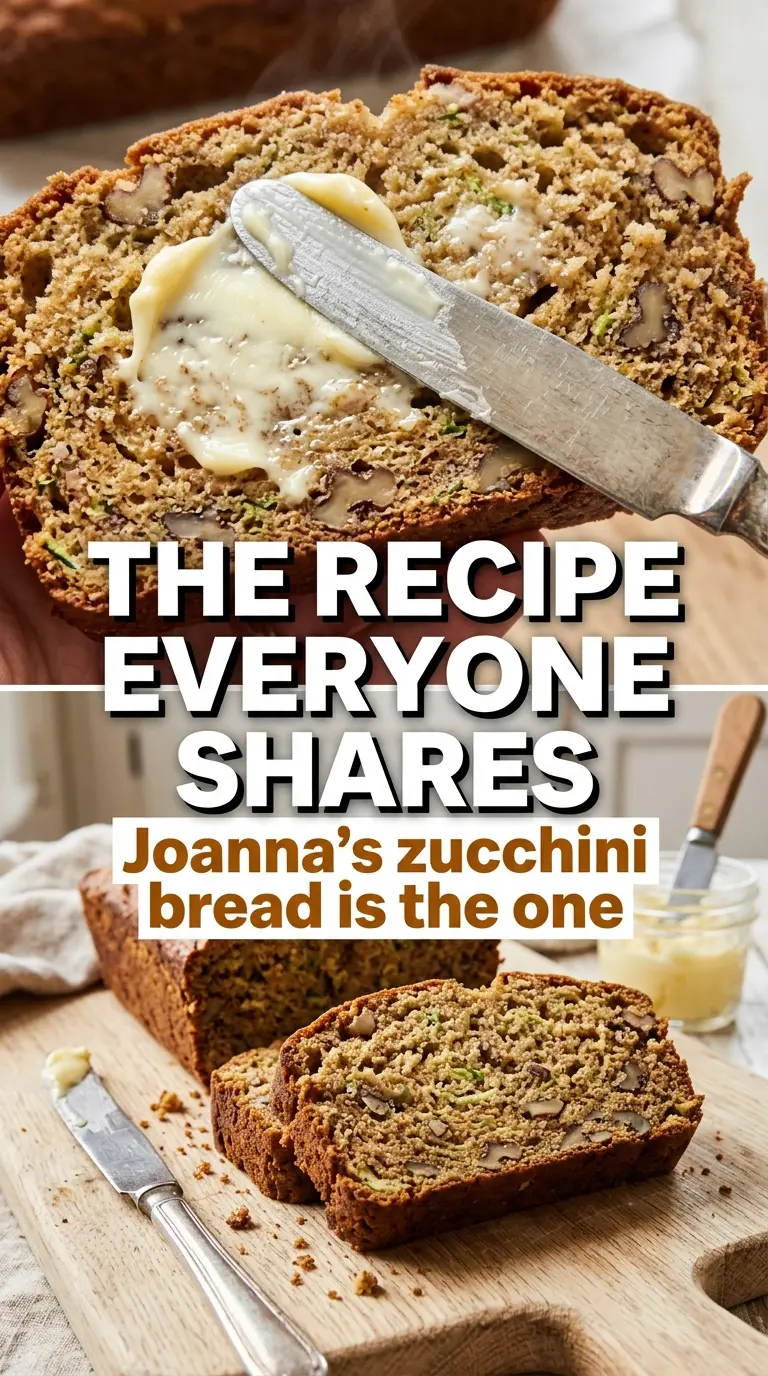
- All-purpose flour — This gives the loaf its structure. Bread flour is too strong here and can make the texture chewy, while all-purpose keeps it tender.
- Granulated sugar — The amount looks generous, but it’s doing more than sweetening. It helps with moisture, browning, and that soft quick-bread crumb.
- Eggs — They bind the batter and help the loaf rise evenly. Room-temperature eggs whisk in more smoothly, but cold eggs still work if that’s what you have.
- Vegetable oil — Use a neutral oil here. Melted butter changes the crumb and can make the loaf feel a little firmer once cooled.
- Cinnamon and nutmeg — These are the background notes that make the bread taste warm and familiar. Freshly grated nutmeg is nice if you have it, but pre-ground works fine.
- Zucchini — Grate it on the fine or medium side. Don’t pack it down, and don’t squeeze it dry.
- Walnuts — Optional, but they add crunch and a little bitterness that keeps the loaf from tasting one-note. Toast them first if you want a deeper nut flavor.
Mixing the Batter Without Beating the Life Out of It
Whisk the dry ingredients first
Start by whisking the flour, baking soda, baking powder, salt, cinnamon, and nutmeg together until the color looks even. This keeps the leaveners from clumping in one spot, which matters more than people think in quick bread. If the spices are streaky in the bowl, they’ll be streaky in the loaf too.
Build the wet mixture until it looks glossy
Whisk the sugar, eggs, oil, and vanilla in a large bowl until the mixture loosens and looks pale and glossy. You’re not trying to whip air into it like cake batter. You just want everything fully combined so the sugar starts dissolving and the loaf bakes with a uniform crumb.
Fold in the zucchini at the end of the wet stage
Stir the grated zucchini into the wet mixture before the flour goes in. It should look heavy and loose at the same time, and that’s exactly right. If the zucchini has been sitting around already grated, give it a quick fluff with your fingers so any clumps separate before it goes into the bowl.
Stop mixing the moment the flour disappears
Add the dry ingredients and stir just until no dry streaks remain. A few small lumps are fine; a smooth batter usually means you’ve gone too far. Fold in the walnuts only after the flour is almost incorporated so they don’t break up the batter while you’re mixing.
Watch the top, not just the timer
Divide the batter between the prepared pans, top with turbinado sugar, and bake until the loaves are domed, deeply golden, and a toothpick comes out clean from the center. If the tops brown before the middle is done, tent loosely with foil for the last part of the bake. Let the loaves cool for 20 minutes in the pans so they set enough to release cleanly.
How to Adapt This Loaf Without Losing the Texture
Make it walnut-free without changing the crumb
Leave the nuts out completely and the loaf still bakes up tender and tall. If you want a little texture in their place, add a handful of chocolate chips or sunflower seeds, but keep the total mix-ins modest so the batter doesn’t get overloaded.
Swap in whole wheat for a heartier breakfast loaf
Replace up to half of the all-purpose flour with white whole wheat flour. The loaf will taste a little nuttier and feel slightly denser, so don’t go all the way to 100 percent whole wheat unless you’re okay with a heavier crumb.
Make it dairy-free and naturally rich
This recipe already fits a dairy-free kitchen as written, since the richness comes from oil instead of butter. That’s part of why the bread stays soft after it cools, and it means you don’t have to change a thing to serve it that way.
Bake it as one larger loaf or two smaller ones
The recipe works in two 9×5 pans, which gives you that classic tall slice, but you can also bake one large loaf if that’s how your kitchen is set up. Just watch the center closely, because a thicker loaf needs a little more time before the toothpick comes out clean.
Storage and Reheating
- Refrigerator: Store the cooled loaf wrapped well for up to 5 days. The texture stays moist, though the crust softens a bit after day one.
- Freezer: This bread freezes well. Wrap individual slices or whole cooled loaves tightly in plastic, then foil, and freeze for up to 3 months.
- Reheating: Warm slices in a 300°F oven for a few minutes or toast them gently. The biggest mistake is blasting zucchini bread in the microwave too long, which turns the crumb rubbery instead of soft.
Answers to the Questions Worth Asking
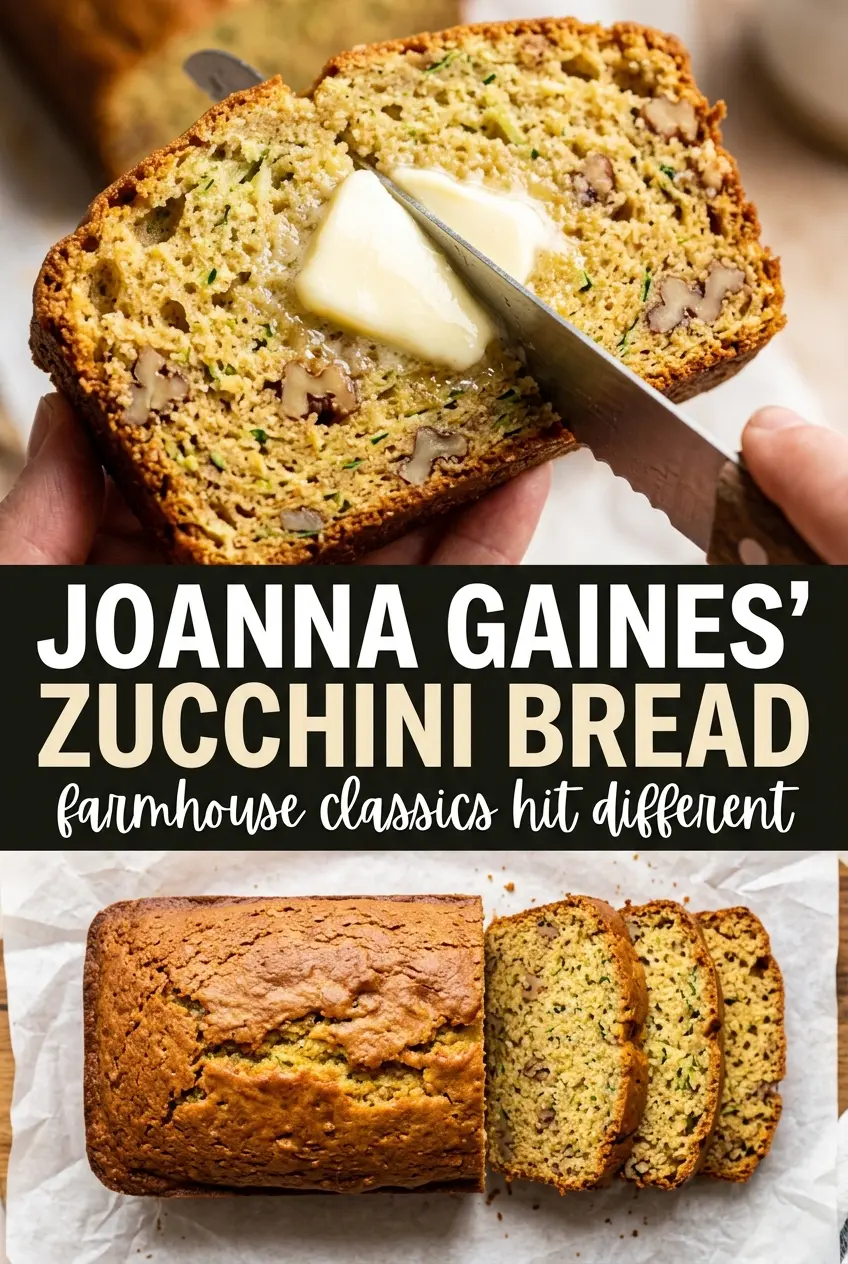
Joanna Gaines' Zucchini Bread
Ingredients
Equipment
Method
- Preheat oven to 350°F and grease two 9x5 loaf pans (or bake in one large pan).
- Set the pans aside so they’re ready for batter right after mixing.
- Whisk all-purpose flour, baking soda, baking powder, salt, cinnamon, and nutmeg together until evenly combined.
- Whisk granulated sugar, eggs, vegetable oil, and vanilla extract in a large bowl until well combined and glossy.
- Stir in grated zucchini (no squeezing—keep the moisture).
- Add the dry ingredients and stir until just combined, then fold in walnuts if using.
- Divide batter between the prepared loaf pans and sprinkle turbinado sugar on top.
- Bake 55–65 minutes at 350°F until a toothpick comes out clean.
- Cool for 20 minutes before removing from the pans to help the domed top set.