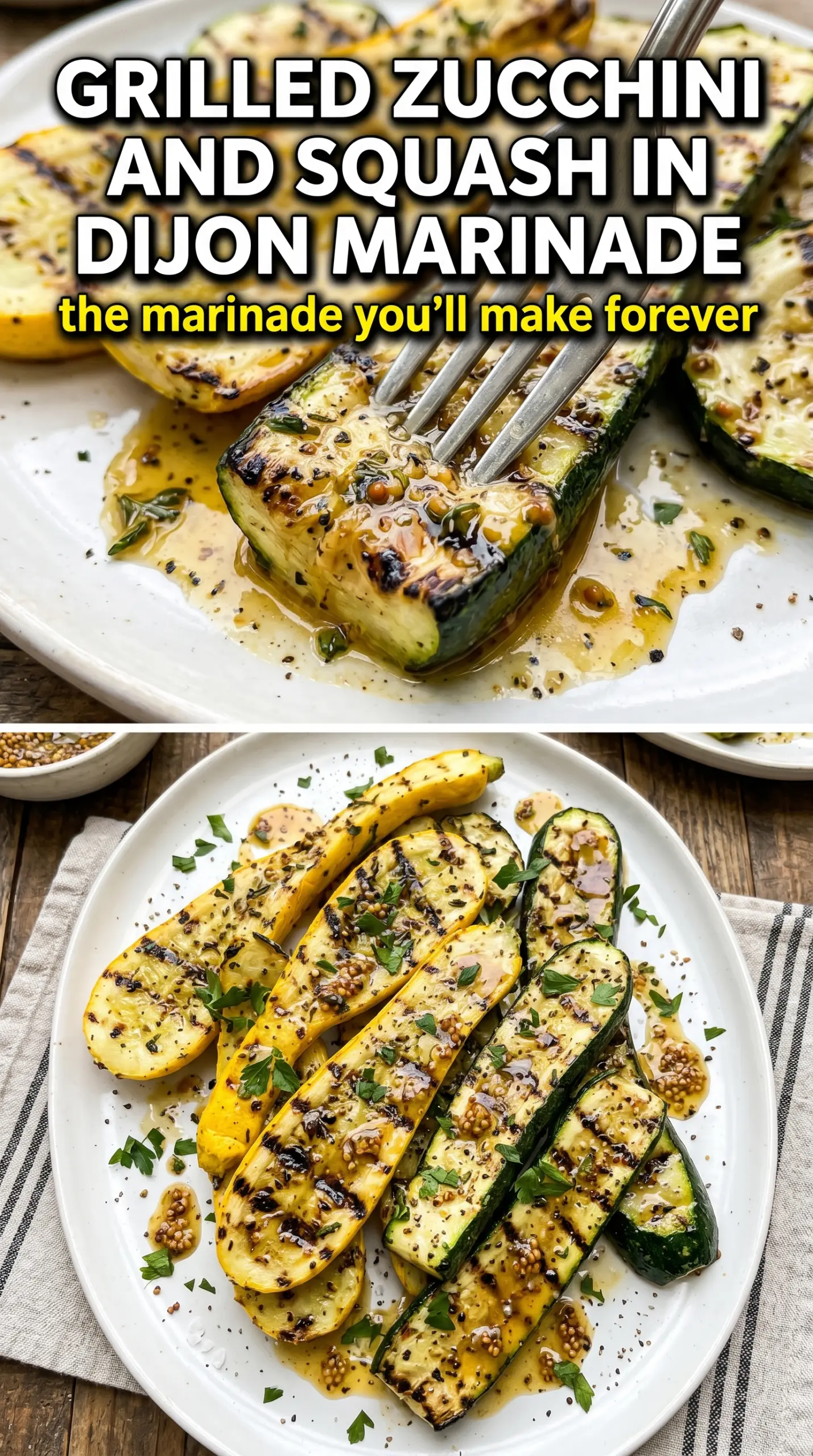
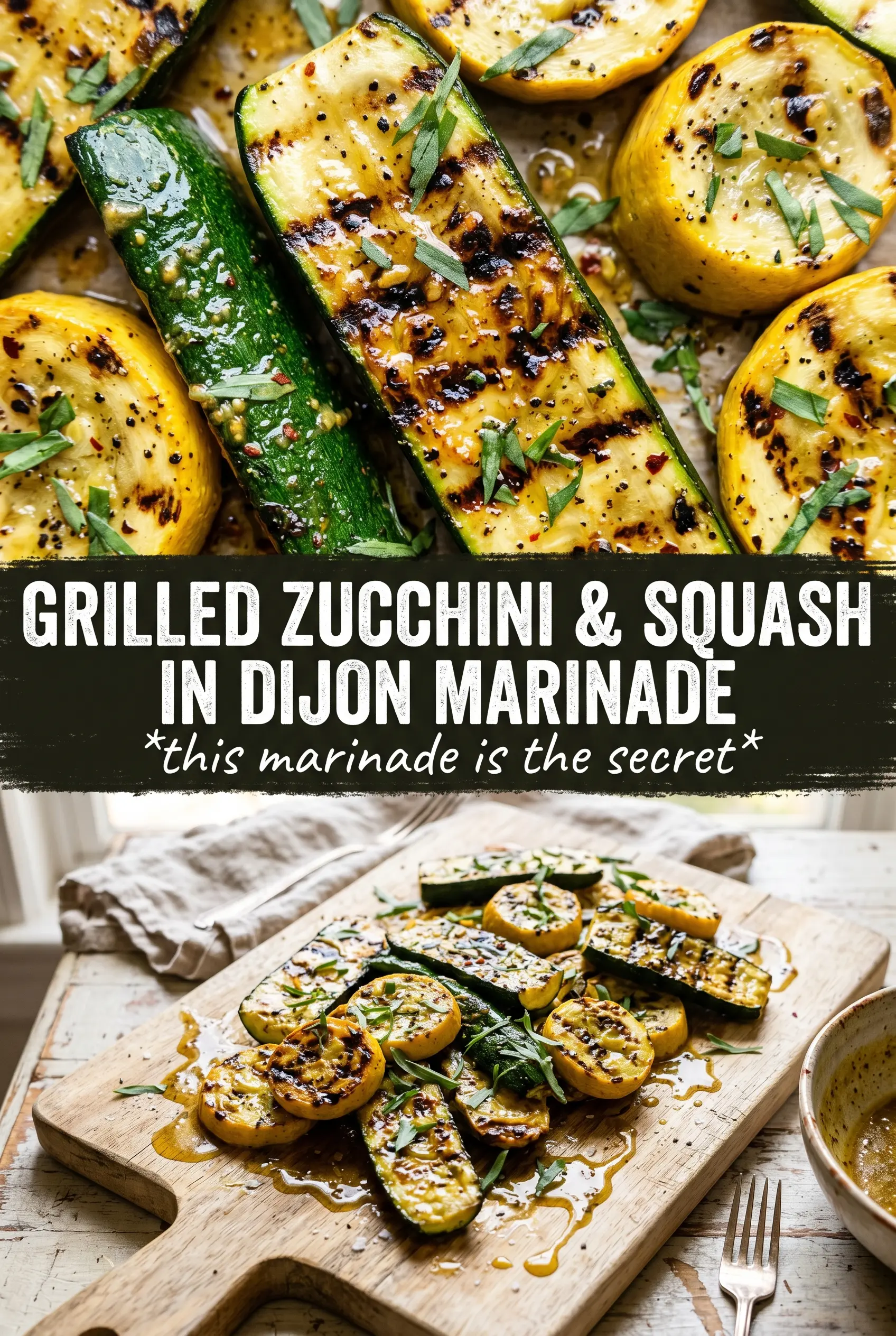
Grilled zucchini and yellow squash turn out best when the surface is glossy, deeply marked, and still tender in the center. The Dijon marinade in this version does more than season the vegetables; it helps them brown instead of drying out, and it leaves behind a sharp, savory coating that tastes intentional, not just lightly salted. The result is the kind of side dish that disappears first at the table.
The balance here matters. Olive oil carries the heat, Dijon and whole grain mustard bring body and bite, and a little honey keeps the vinegar from reading too aggressively once the vegetables hit the grill. Thirty minutes of marinating is enough to pull flavor into the cut surfaces without turning the squash soggy. I slice the planks on a diagonal so they stay wide enough to handle on the grates and give you those long, good-looking char marks.
Below, I’ll walk through the one part that keeps this recipe from sliding into mush: how to grill the squash so it browns fast and stays sturdy. You’ll also find a few smart swaps and the storage notes that matter if you’re making it ahead.
The Dijon marinade caramelized on the grill instead of sliding off, and the squash stayed tender with just enough bite. I served it with chicken, and everyone kept reaching for the charred edges.
Grilled zucchini and squash in Dijon marinade stays glossy, tangy, and charred in all the right places — pin it for your next cookout side.
The Trick to Getting Char Instead of Steamed Squash
The biggest mistake with grilled zucchini and squash is crowding the grill or giving the vegetables too much marinade to carry onto the grates. Squash holds a lot of water, so if the heat isn’t high enough, it softens before it can brown. You want medium-high heat, an oiled grate, and enough space between the planks that the moisture can escape. That is what gives you those dark grill marks instead of pale, floppy strips.
The second mistake is leaving the marinade on as a thick coating. The sugars in the honey and the Dijon solids help with browning, but the vegetables should be lightly slicked, not dripping. Brush on a little reserved marinade at the end for a final hit of flavor. That keeps the mustard sharp and fresh instead of burning off during the first turn.
What the Dijon Marinade Is Doing Here
- Dijon mustard — This is the backbone of the marinade. It brings sharpness, emulsifies with the oil, and clings to the vegetables better than vinegar and oil alone. Use a good Dijon here; the flavor shows.
- Whole grain mustard — This adds texture and a gentler mustard note. If you only have Dijon, use it all the way through, but the whole grain mustard gives little pops of flavor that make the dish feel finished.
- White wine vinegar — The acid brightens the squash and keeps the marinade from tasting heavy. Lemon juice works in a pinch, though it reads a little fruitier and less clean.
- Honey — Just enough to round out the vinegar and help the edges caramelize. Skip it only if you want a more sharply savory result; otherwise it earns its place on the grill.
- Fresh thyme — Dried thyme can work, but use less because it gets dusty fast on the palate. Fresh thyme gives the marinade that French-American herb note that matches the mustard.
- Diagonal squash planks — The cut matters more than it looks. Wider planks are easier to turn, less likely to fall through the grates, and they brown more evenly than thin rounds.
Grilling the Squash So It Stays Tender, Not Limp
Whisking the Marinade Until It Clings
Start by whisking the oil, mustards, vinegar, garlic, thyme, honey, salt, and pepper until the mixture looks thick and glossy. It should emulsify enough to coat the back of a spoon, not separate into an oily puddle. If the garlic is minced too finely, it can burn fast on the grill, so keep the pieces small but not paste-like.
Marinating Without Waterlogging
Toss the zucchini and yellow squash in the marinade and let them sit for 30 minutes. That is long enough for flavor to settle into the cut surfaces, but not so long that the vegetables lose their structure. If the squash starts looking wet and slack before it hits the grill, drain off the excess marinade and keep moving.
Hitting the Grill at the Right Heat
Preheat the grill to medium-high and oil the grates well. You want a clean sizzle as the squash goes down; if it just sits there, the grill isn’t hot enough yet. Lay the planks crosswise over the grates so they don’t fall through, then leave them alone until the first side releases with defined grill marks.
Finishing With the Reserved Marinade
Grill each side for 3 to 4 minutes, until the squash is tender but still has shape and the edges are caramelized. Brush with the reserved marinade in the last minute, not the beginning, so the mustard and honey don’t scorch too early. When the vegetables come off, they should be glossy, charred in spots, and fragrant with garlic and thyme.
How to Adapt This for a Different Table
Make It Dairy-Free and Naturally Gluten-Free
This recipe already lands in that lane as written, which is one reason it works so well as a side dish for mixed menus. Just double-check that your Dijon mustard is gluten-free if that’s a concern, since a few brands use additives or vinegar sources that vary.
Swap the Grill for a Broiler
If the weather won’t cooperate, broil the squash on a foil-lined sheet pan set close to the heat source. You’ll lose a little smoky edge, but the mustard still caramelizes well if you keep a close eye on it and flip once halfway through.
Turn It Into a Heartier Vegetable Mix
Add thick slices of red onion or bell pepper to the same marinade and grill them alongside the squash. Onion brings sweetness and bell pepper brings a little more structure, which makes the platter feel more substantial without changing the flavor balance.
Use It as a Warm Salad Base
Pile the grilled vegetables over arugula and add crumbled goat cheese or shaved parmesan if you want more contrast. The warm squash softens the greens just enough, and the leftover marinade works like a sharp vinaigrette once it hits the plate.
Storage and Reheating
- Refrigerator: Store in an airtight container for up to 3 days. The squash softens a little as it sits, but the flavor stays good.
- Freezer: I don’t recommend freezing this one. Grilled squash turns watery and soft once thawed, and the texture loses the best part of the dish.
- Reheating: Warm it in a hot skillet or under the broiler just until heated through. The biggest mistake is microwaving it too long, which wipes out the char and leaves the squash limp.
Answers to the Questions Worth Asking
Grilled Zucchini and Squash in Dijon Marinade
Ingredients
Equipment
Method
- Whisk olive oil, Dijon mustard, whole grain mustard, white wine vinegar, minced garlic, fresh thyme, honey, salt, and black pepper together until smooth. Visual cue: the mixture should look glossy and evenly mustard-colored.
- Toss the zucchini and yellow squash planks in the marinade until coated, then let sit at room temperature for 30 minutes. Visual cue: planks will look slick and lightly thickened from the mustard.
- Preheat the grill to medium-high and oil the grates well to prevent sticking. Visual cue: grates should be hot enough to sizzle when vegetables land.
- Remove the vegetables from the marinade (reserve remaining marinade) and place them on the grill. Visual cue: grill marks begin forming immediately.
- Grill for 3–4 minutes per side until caramelized and charred. Visual cue: edges turn deep golden-brown with darker char spots.
- Brush the reserved marinade over the vegetables during the last minute of cooking. Visual cue: coating looks tacky and shiny as it caramelizes.
- Arrange the grilled zucchini and yellow squash on a platter and drizzle any remaining marinade over. Visual cue: the surface should look glossy, with char marks facing up.
- Garnish with fresh thyme and serve with lemon. Visual cue: bright herb flecks and lemon wedges add a fresh color contrast.