Charred grilled vegetables with chimichurri have a way of turning a simple side dish into the thing everyone reaches for first. The vegetables stay tender in the middle with crisp, smoky edges, and the bright herb sauce cuts through all that grill flavor in a way that feels balanced instead of heavy. It’s the kind of platter that disappears fast because every bite tastes fresh, punchy, and just a little rustic.
What makes this version work is the order of operations. The vegetables get only a light coating of oil so they char instead of steaming, and the chimichurri stays rough-chopped instead of pureed, which keeps the sauce lively and textured. Eggplant, zucchini, peppers, and onions each cook at their own pace, so the trick is to pull them off as soon as they’re tender and marked, not to wait until everything looks identical.
Below, I’ve included the timing cues that matter most on the grill, plus a few swaps for when you want to change up the vegetables or make the platter fit what you have on hand.
The chimichurri stayed bright and the vegetables picked up beautiful grill marks without turning mushy. I loved that the onions softened just enough to get sweet, and the sauce tasted even better after sitting on the platter for a few minutes.
Save this grilled veggies with chimichurri platter for the nights when smoky vegetables and bright herb sauce need to carry the whole table.
The Part Most People Miss: Grill Marks Without Overcooking the Vegetables
The biggest mistake with grilled vegetables is chasing dark marks so long that the centers collapse. Zucchini and eggplant need high enough heat to brown fast, but they also need enough structure left to hold the chimichurri once they hit the platter. If the grill isn’t hot enough, the vegetables soften before they color and end up tasting flat and watery instead of smoky.
Different vegetables need different timing, and that matters here. Bell peppers can take a little more time because their thicker flesh holds up well, while onion rounds need just long enough to soften and pick up some sweetness. The goal is a tender bite with edges that still have some bite, not a limp pile of mixed vegetables.
- Preheating the grill — A properly hot grill gives you clean char marks fast, which keeps the vegetables from sticking and drying out.
- Oiling the vegetables lightly — Just enough oil to help with browning. Too much and you’ll get flare-ups and soggy edges.
- Cooking in batches — Crowding the grill drops the heat around the food, and that’s how vegetables steam instead of sear.
What the Parsley, Cilantro, and Vinegar Are Doing in the Chimichurri
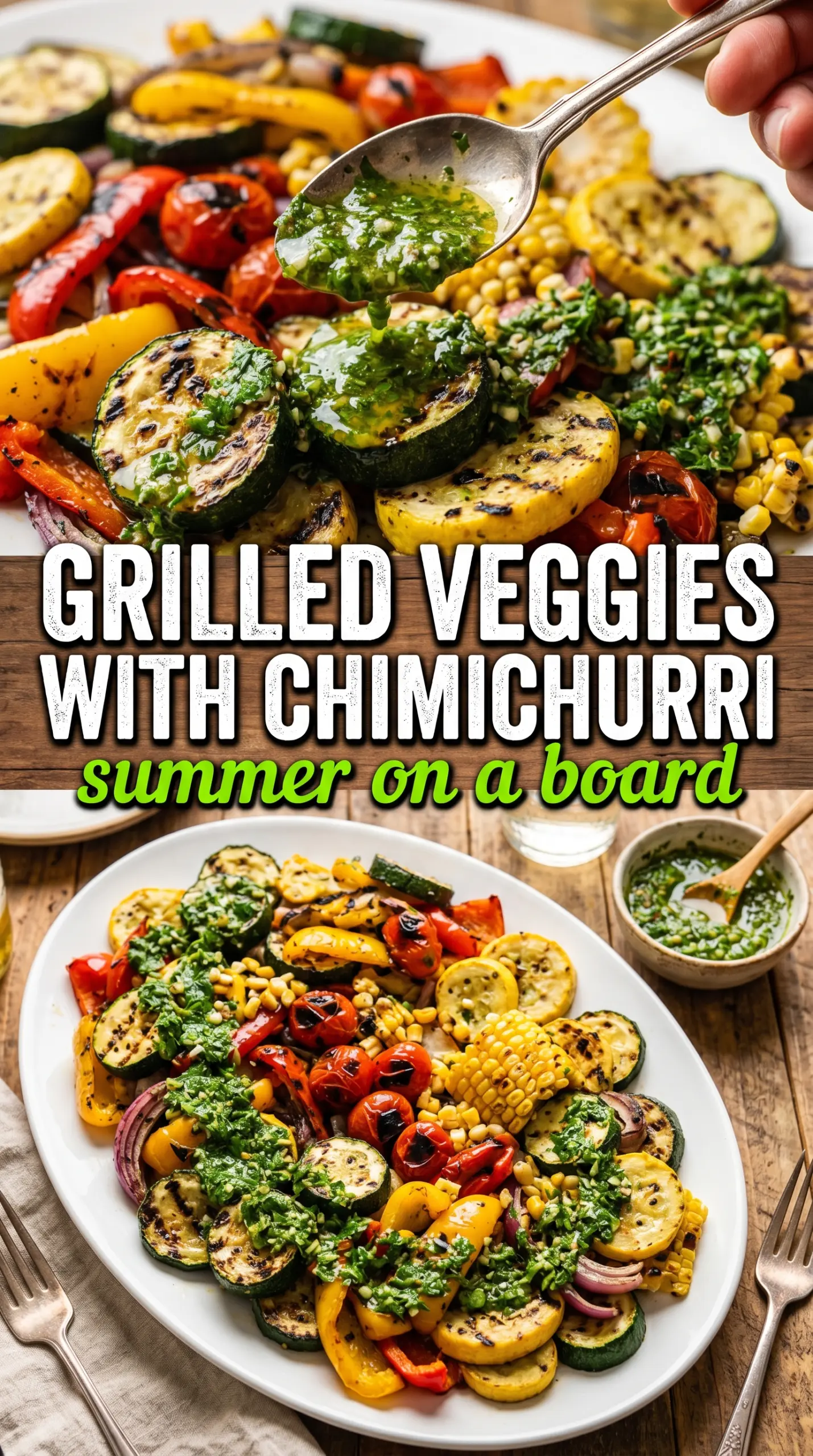
The chimichurri is more than a sauce on top. It’s the sharp, herbal contrast that keeps the grilled vegetables from tasting one-note. Parsley gives it body and freshness, cilantro adds a greener edge, and the vinegar lifts everything so the smoky vegetables taste even sweeter by comparison.
- Parsley — Use packed leaves, not a few loose sprigs. Parsley is the backbone of the sauce and gives it that classic chimichurri bite.
- Cilantro — This adds a softer, brighter herbal note. If you don’t love cilantro, replace it with more parsley and the sauce will still work.
- Garlic — Raw garlic gives the sauce its sharp finish. Four cloves sound bold, but they mellow a bit once they hit the warm vegetables.
- Red wine vinegar — Don’t swap this for balsamic. You want clean acidity, not sweetness, because the vinegar keeps the platter lively.
- Olive oil — Use a good-tasting oil here if you can. It carries the herbs and helps the sauce cling to the vegetables instead of pooling underneath them.
Grilling the Vegetables in the Right Order
Chopping for Even Cooking
Cut the zucchini lengthwise so each piece has enough surface area to char without falling through the grates. Slice the eggplant thick enough to hold together, and keep the onion rounds intact so they don’t separate before they’re done. If the pieces are wildly different sizes, the smaller ones will go soft before the larger ones are tender.
Getting the First Side to Set
Brush the vegetables with olive oil and season them before they go on the grill. Lay them down and leave them alone long enough for the surface to set; if you move them too early, they tear and leave half their flesh stuck to the grates. You want clear grill marks and vegetables that release with a little nudge.
Knowing When to Pull Them Off
Bell peppers usually need the longest time, followed by eggplant, then zucchini and onion rounds. Pull each batch as soon as it’s tender with visible char, because carryover heat keeps softening them on the platter. If you wait for all the vegetables to look identical on the grill, some will overshoot and turn mushy.
Ways to Change the Platter Without Losing the Point
Make it dairy-free and naturally vegan
This recipe already fits a dairy-free, vegan table as written. The vegetables and chimichurri bring all the flavor, so there’s nothing to replace — just keep the grill hot and the sauce generously spooned over the top so the platter feels finished.
Swap the vegetable lineup for what’s at the market
Portobello mushrooms, asparagus, summer squash, and thick cauliflower steaks all work well here. The important part is keeping the pieces large enough to grill without falling apart, then adjusting the timing so each vegetable still has some texture when it comes off.
Turn down the heat without losing the char
If your grill runs hot, move the vegetables to a cooler zone after they get their marks. That gives the centers time to soften without burning the outside, which is especially useful for thicker eggplant and onion rounds.
Make the chimichurri ahead for deeper flavor
The sauce tastes brighter right after blending, but it gets better after resting for 20 to 30 minutes. That short rest lets the garlic mellow and the herbs settle into the oil, which makes the sauce taste less sharp and more rounded.
Storage and Reheating
- Refrigerator: Store the grilled vegetables and chimichurri separately for up to 4 days. The vegetables soften a little as they sit, but the flavor stays good.
- Freezer: The grilled vegetables can be frozen, but the texture turns softer after thawing, so I only do this if I’m planning to use them in grain bowls or scrambled eggs later. Chimichurri does not freeze well because the herbs lose their fresh texture.
- Reheating: Warm the vegetables in a skillet over medium heat or on a sheet pan in a hot oven just until heated through. Don’t microwave them too long or they’ll go limp before the center is warm.
Answers to the Questions Worth Asking
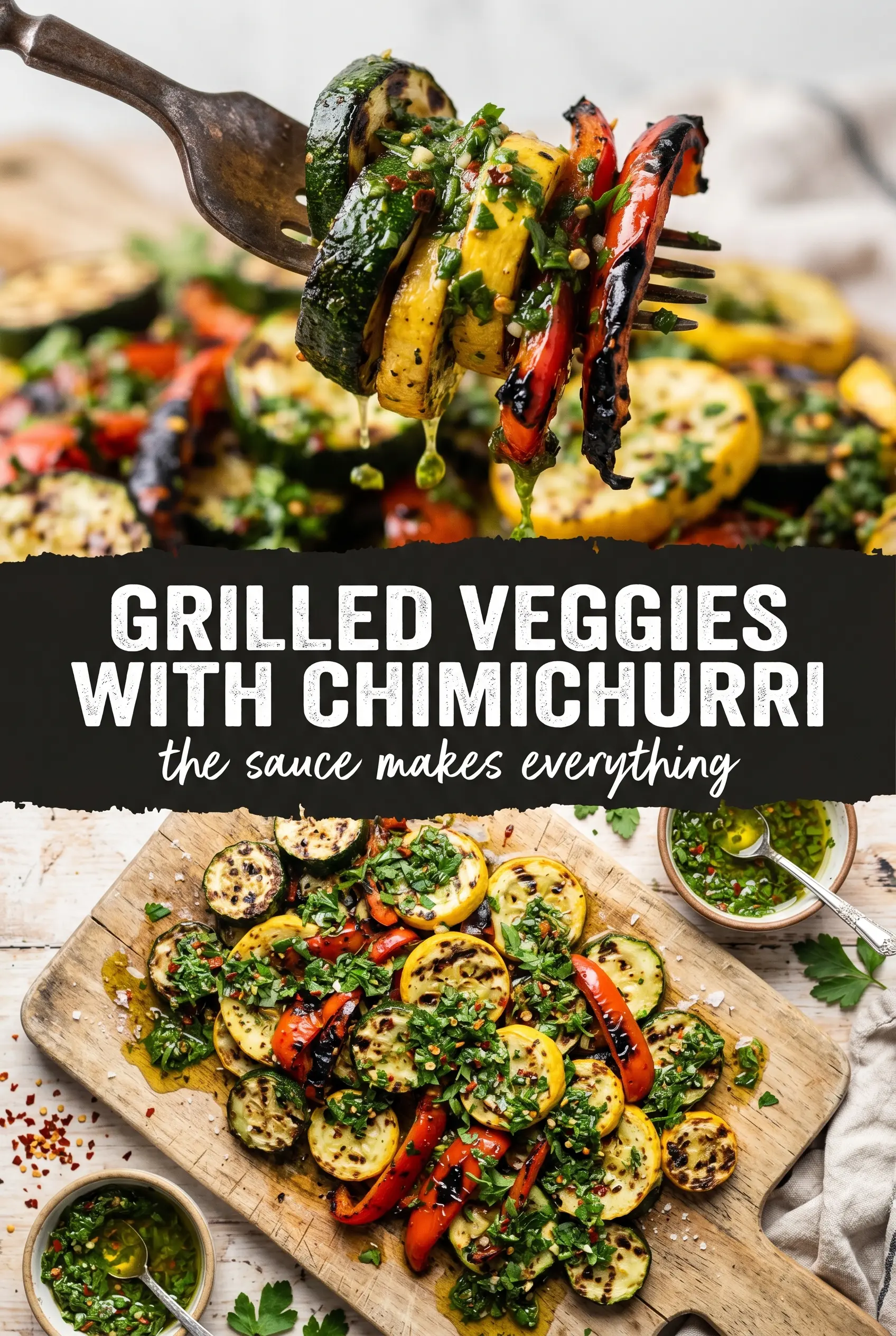
Grilled Veggies with Chimichurri Sauce
Ingredients
Equipment
Method
- Blend fresh parsley, fresh cilantro, garlic, olive oil, and red wine vinegar until roughly chopped, not fully smooth.
- Add dried oregano, red pepper flakes, salt, and black pepper, then blend again briefly and set aside.
- Brush the zucchini, red bell peppers, eggplant, and red onions with olive oil, then season all over with salt and black pepper.
- Preheat the grill to medium-high and oil the grates to prevent sticking.
- Grill the bell peppers for 4–5 minutes per side until char marks form and the peppers are tender.
- Grill the zucchini for 3–4 minutes per side until char marks form and the zucchini is tender.
- Grill the eggplant for 3–4 minutes per side until char marks form and the eggplant is tender.
- Grill the onion rounds for 3 minutes per side until they show char marks and are tender.
- Arrange the grilled vegetables on a large serving platter as they come off the grill.
- Spoon chimichurri generously over all the vegetables.
- Serve immediately at any temperature.