Classic zucchini bread earns its place because it stays tender for days and cuts into slices that hold together without feeling dense. The top bakes into a crackly, golden crust while the middle stays soft, cinnamon-scented, and speckled with tiny green bits of zucchini. It tastes like the kind of loaf you keep meaning to put on the table for breakfast, then end up slicing warm from the pan before it ever cools completely.
The key here is moisture balance. Zucchini brings plenty of water, and that’s what gives this loaf its plush crumb, so there’s no need to squeeze it dry. The batter also leans on oil instead of butter, which keeps the texture soft even after a day or two, and the cinnamon-nutmeg combination gives the bread that familiar bakery-style warmth without turning it into spice cake.
Below you’ll find the small details that matter most: how to tell when the loaf is actually done, why overmixing changes the texture, and how to adapt it if you want nuts, a single large loaf, or a freezer-friendly batch.
I always squeezed zucchini dry before, and my bread kept coming out a little tough. Leaving it as-is gave me the softest loaf I’ve made, and the top cracked beautifully just like a bakery loaf.
Save this classic zucchini bread for the days when you want a moist, cinnamon-spiced loaf with a crackly golden top.
The Mistake That Makes Zucchini Bread Heavy Instead of Tender
Zucchini bread goes wrong when the batter gets overworked or the loaf is pulled too early. Once flour goes in, the goal is just to combine it until no dry pockets remain. Stirring past that point builds too much structure, and the loaf turns tight instead of soft.
The other trap is baking by the clock alone. A loaf pan can look done on top while the center is still underbaked, especially with the extra moisture from zucchini. The toothpick should come out clean or with a few moist crumbs, and the top should spring back lightly when touched in the center. If the loaf sinks after cooling, it needed a little more time in the oven.
What Each Ingredient Is Actually Doing in This Zucchini Bread or Baked Good
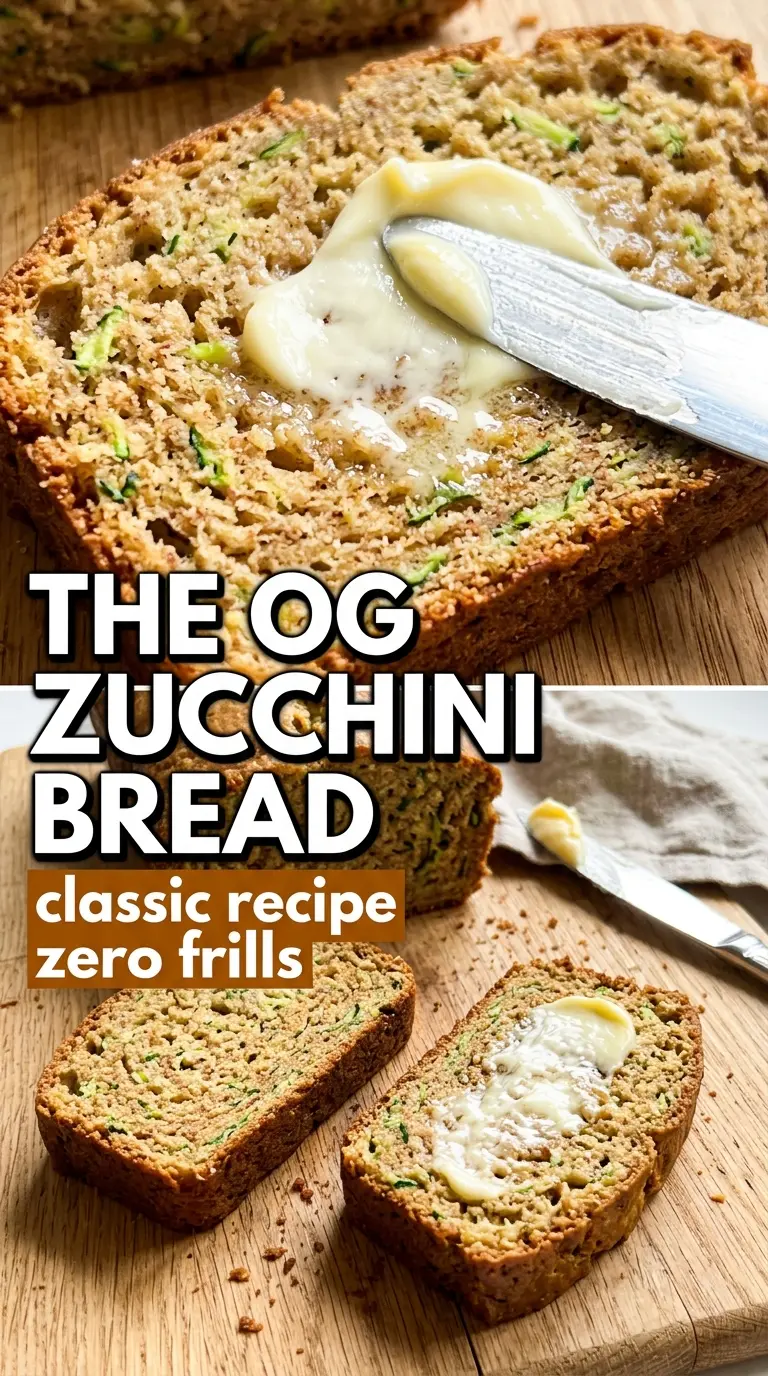
- Zucchini (the moisture keeper) — Grate finely and squeeze out excess moisture. The remaining moisture adds tenderness without sogginess.
- Flour (the structure base) — Don’t overmix or the baked good becomes tough. Mix just until dry ingredients are incorporated.
- Sugar (the sweetness and browning) — This tenderizes and helps create browning. Adjust based on other ingredients.
- Oil or butter (the richness) — This creates tender crumb. Oil makes moister; butter makes richer.
- Eggs (the binder) — These hold everything together and add structure. Use room temperature eggs.
- Leavening (baking powder or soda) — This creates rise and light crumb. Too much makes it taste bitter.
- Spices (cinnamon, nutmeg, or allspice) — These warm up zucchini flavor. Layer so no single one overpowers.
- Optional mix-ins (nuts, chocolate, or dried fruit) — These add texture and prevent bland taste.
What the Zucchini, Oil, and Spices Are Each Doing Here
- Zucchini — This is the moisture source, not just a vegetable hiding in the loaf. Grating it finely helps it disappear into the crumb while still releasing enough water to keep the bread tender. Don’t squeeze it dry unless your zucchini is unusually wet and watery; that moisture is part of the texture.
- Vegetable oil — Oil keeps the loaf soft longer than butter does, which matters in a quick bread that you may eat over several days. Melted butter gives more flavor, but it also firms up as it cools and makes the crumb a little less plush. Neutral oil is the better choice here.
- Cinnamon and nutmeg — Cinnamon carries the bread, and the nutmeg gives it that warm background note that makes the loaf taste complete. Freshly grated nutmeg is great if you have it, but pre-ground works fine. The spice level should taste cozy, not like pie filling.
- Walnuts or pecans — These are optional, but they add contrast against the soft crumb. Toasted nuts give the best flavor. If you skip them, the bread is still fully balanced; if you add them, fold them in at the very end so they stay evenly distributed.
Building the Batter Without Losing the Loft
Mix the dry ingredients first
Whisk the flour, baking soda, baking powder, salt, cinnamon, and nutmeg together until the mixture looks uniform. That even distribution matters because small pockets of baking soda can leave bitter streaks. A quick whisk is enough; you’re not aerating here, just making sure the leavening is spread throughout the flour.
Combine the wet ingredients until smooth
Beat the sugar, oil, eggs, and vanilla until the mixture looks glossy and thickened slightly. Stir in the grated zucchini next. The batter will look loose and a little shaggy at this stage, and that’s exactly right. If the zucchini clumps, break it up with your spoon before moving on.
Fold the batter only until the flour disappears
Add the wet mixture to the dry ingredients and fold gently with a spatula. Stop the second you stop seeing dry flour. Overmixing develops gluten and steals the soft crumb this bread is known for, so a few streaks at the start are better than a tough loaf at the end. Fold in the nuts at the last moment if you’re using them.
Bake until the center is set, not just the top
Divide the batter between the pans and bake at 350°F until deeply golden and a toothpick comes out clean from the center. If you’re using one large loaf pan, expect it to need the full bake time or a little more. The top should crack open and feel firm when you press it lightly. If the edges are getting dark before the center is done, tent the loaf loosely with foil for the last part of baking.
Let the loaf rest before slicing
Cool the bread in the pan for 20 minutes, then turn it out onto a rack. That rest lets the crumb finish setting so it doesn’t collapse when you cut into it. If you slice too early, the center can look gummy even when it’s baked through. Wait until it’s just warm if you want the cleanest slices.
How to Adapt This Loaf Without Losing the Texture
Make it nut-free
Leave out the walnuts or pecans and bake the batter exactly the same way. You’ll lose the crunch, but the loaf stays moist and balanced. If you want a little texture back without nuts, scatter a few oats over the top before baking.
Turn it into one large loaf
Use a single large loaf pan if that’s what you have, but expect a longer bake and a little more patience in the center. The outside can brown before the middle is done, so the foil tent becomes useful here. The texture stays the same; you just need to watch the middle more closely.
Make it dairy-free without changes
This loaf is already dairy-free as written, which makes it easy to serve to a crowd. Keep the vegetable oil and skip any temptation to swap in butter if you want the same long-lasting softness. The finished crumb stays just as tender.
Freeze slices for later
Cool the loaf completely, slice it, and freeze the pieces with parchment between them. That way you can pull out one piece at a time instead of thawing the whole loaf. The texture holds up well because the oil keeps the crumb from drying out.
Storage and Reheating
- Refrigerator: Store tightly wrapped at room temperature for 3 days or refrigerate for up to 1 week. The crumb stays moist, but the chilled loaf will taste firmer.
- Freezer: Freeze whole or sliced for up to 3 months. Wrap well, then place in a freezer bag so the loaf doesn’t pick up freezer odors.
- Reheating: Warm slices in the toaster oven or microwave just until heated through. Don’t overheat it, or the crumb will go dry at the edges before the center warms.
Questions I Get Asked About This Recipe
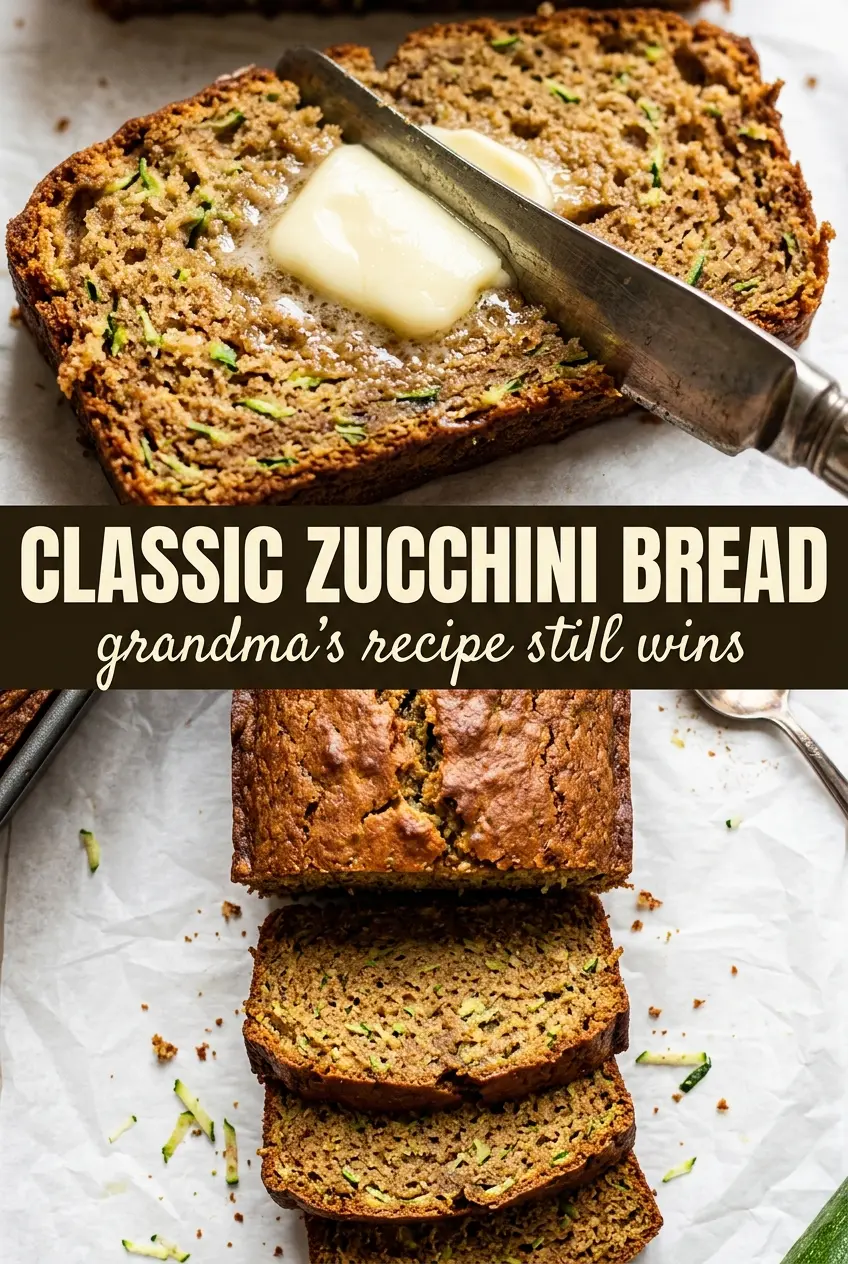
Classic Zucchini Bread
Ingredients
Equipment
Method
- Preheat the oven to 350°F and grease two 9x5 loaf pans (or one large loaf pan). Set pans aside so the batter goes in right after mixing.
- Whisk the flour, baking soda, baking powder, salt, cinnamon, and nutmeg in a large bowl until evenly combined. The mixture should look uniformly speckled with spices.
- Beat the sugar, vegetable oil, eggs, and vanilla extract in a separate bowl until well combined. Stop when the mixture looks glossy and smooth.
- Stir the grated zucchini into the wet mixture. Fold until the zucchini is distributed and the batter looks thicker.
- Add the wet ingredients to the dry ingredients and fold until just combined. The batter should be thick and lumpy, not overmixed.
- Fold in the walnuts or pecans if using. Mix only until the nuts are evenly scattered.
- Divide the batter between the loaf pans and bake for 55–65 minutes at 350°F. Bake until a toothpick comes out clean and the top is deeply golden with a cracked crust.
- Cool the loaves in the pan for 20 minutes. The tops should firm up before you lift them out.
- Transfer the loaves to a wire rack after 20 minutes. Let cool until warm or fully cool for the moist crumb to set.