Piña colada zucchini bread bakes up as a soft, fragrant loaf with a tender crumb, little bursts of pineapple, and just enough coconut to make each slice taste bright instead of heavy. The zucchini keeps it moist without making it taste like vegetables, and the toasted coconut on top gives it the kind of finish that makes a plain quick bread feel special.
What makes this version work is balance. The pineapple has to be well drained, or the loaf turns gummy in the center. The zucchini needs to be squeezed dry for the same reason. Coconut oil and coconut cream carry the tropical flavor through the batter, while a simple coconut glaze adds sweetness without smothering the bread.
Below, I’ve included the small details that keep this loaf from sinking or turning wet, plus a few easy swaps if you want to adjust the texture or make it dairy-free. The best part is that it slices cleanly once cooled, so it’s just as good for breakfast as it is with coffee later in the day.
The loaf came out moist but not dense, and draining the pineapple like you said made all the difference. The coconut glaze set up beautifully and my slices held together even the next day.
Save this piña colada zucchini bread for the mornings when you want a tropical loaf with pineapple, coconut, and a glaze that sets up just right.
The Trick to Keeping This Tropical Loaf from Turning Dense
The biggest problem with fruit-and-vegetable quick breads is excess moisture. Pineapple and zucchini both hold a lot of water, and if either one goes into the batter wet, the center can stay heavy and tacky even after the top looks done. Draining the pineapple well and squeezing the zucchini dry solve that problem before it starts.
The other thing that matters here is how you mix the batter. Once the dry ingredients go in, stir only until the flour disappears. Overmixing builds structure in the wrong way and gives you a tighter loaf instead of that soft, sliceable crumb you want from a breakfast bread.
- Coconut oil — This gives the loaf its coconut backbone and a tender texture once it cools. Melt it first so it blends smoothly into the eggs and sugar.
- Coconut cream — Use the thick kind, not coconut milk. It adds richness and helps the glaze stay creamy instead of thin.
- Crushed pineapple — Drain it well, then drain it again if needed. A little leftover juice is fine; a wet spoonful is what makes the loaf sink in the middle.
- Zucchini — Grate it finely and squeeze it dry in a clean towel or your hands. You want the moisture inside the bread, not in the batter bowl.
- Sweetened shredded coconut — This adds little chewy bits throughout the loaf. Unsweetened coconut works too, but the bread will taste less dessert-like.
What Each Ingredient Is Actually Doing in This Zucchini Bread or Baked Good

- Zucchini (the moisture keeper) — Grate finely and squeeze out excess moisture. The remaining moisture adds tenderness without sogginess.
- Flour (the structure base) — Don’t overmix or the baked good becomes tough. Mix just until dry ingredients are incorporated.
- Sugar (the sweetness and browning) — This tenderizes and helps create browning. Adjust based on other ingredients.
- Oil or butter (the richness) — This creates tender crumb. Oil makes moister; butter makes richer.
- Eggs (the binder) — These hold everything together and add structure. Use room temperature eggs.
- Leavening (baking powder or soda) — This creates rise and light crumb. Too much makes it taste bitter.
- Spices (cinnamon, nutmeg, or allspice) — These warm up zucchini flavor. Layer so no single one overpowers.
- Optional mix-ins (nuts, chocolate, or dried fruit) — These add texture and prevent bland taste.
Building the Batter in the Right Order
Start with the dry mix
Whisk the flour, baking soda, baking powder, and salt together first so the leaveners are evenly distributed. That matters more than people think in quick bread, because a pocket of baking soda can leave a bitter spot. You want the mixture to look uniform before it ever touches the wet ingredients.
Whip the wet ingredients until smooth
Beat the sugar, eggs, coconut oil, coconut cream, vanilla, and coconut extract until the mixture looks glossy and thickened. This helps dissolve the sugar a bit and gives the bread a finer crumb. If the coconut oil starts to harden because your ingredients are cold, the batter can look slightly curdled; that is fine as long as it comes together once the dry ingredients go in.
Fold in the fruit and zucchini without overworking them
Stir in the drained pineapple and squeezed zucchini before the flour. They should be evenly dispersed but not smashed. Once the dry ingredients go in, fold just until you no longer see streaks of flour, then add the coconut and stop. Overmixing at this stage is the fastest way to get a tough loaf.
Bake until the center is set, not just the top
Pour the batter into the loaf pan and bake until a toothpick comes out clean from the center, usually 55 to 65 minutes. The top should be deeply golden and set, and the loaf should spring back lightly when touched in the middle. If the top browns too fast, tent it loosely with foil for the last 15 minutes so the center can finish without drying out.
Make it dairy-free without changing the texture
This recipe is already close to dairy-free as written, which is part of what makes it easy to love. Just double-check that your coconut cream is full-fat and unsweetened, and use a glaze made with the same ingredient so the finish stays rich instead of watery.
Use walnuts for a more bakery-style loaf
A small handful of chopped walnuts gives the bread a little crunch and a more traditional quick-bread feel. Add them with the coconut so they stay evenly distributed. They do compete slightly with the tropical flavor, so keep the amount modest.
Skip the glaze for a less sweet breakfast loaf
Without the glaze, the bread reads more like a tender tea loaf than a dessert-style quick bread. The coconut and pineapple still come through, but the finish is cleaner and a little lighter. This is the best move if you want something you can toast and spread with butter.
Storage and Reheating
- Refrigerator: Store covered for up to 4 days. The crumb stays moist, and the coconut flavor gets a little more pronounced after a day.
- Freezer: Freeze slices tightly wrapped for up to 2 months. Thaw at room temperature so the glaze doesn’t get sticky.
- Reheating: Warm slices in a toaster oven or a low oven for a few minutes. Microwaving too long can make the pineapple bits rubbery and soften the glaze too much.
Answers to the Questions Worth Asking
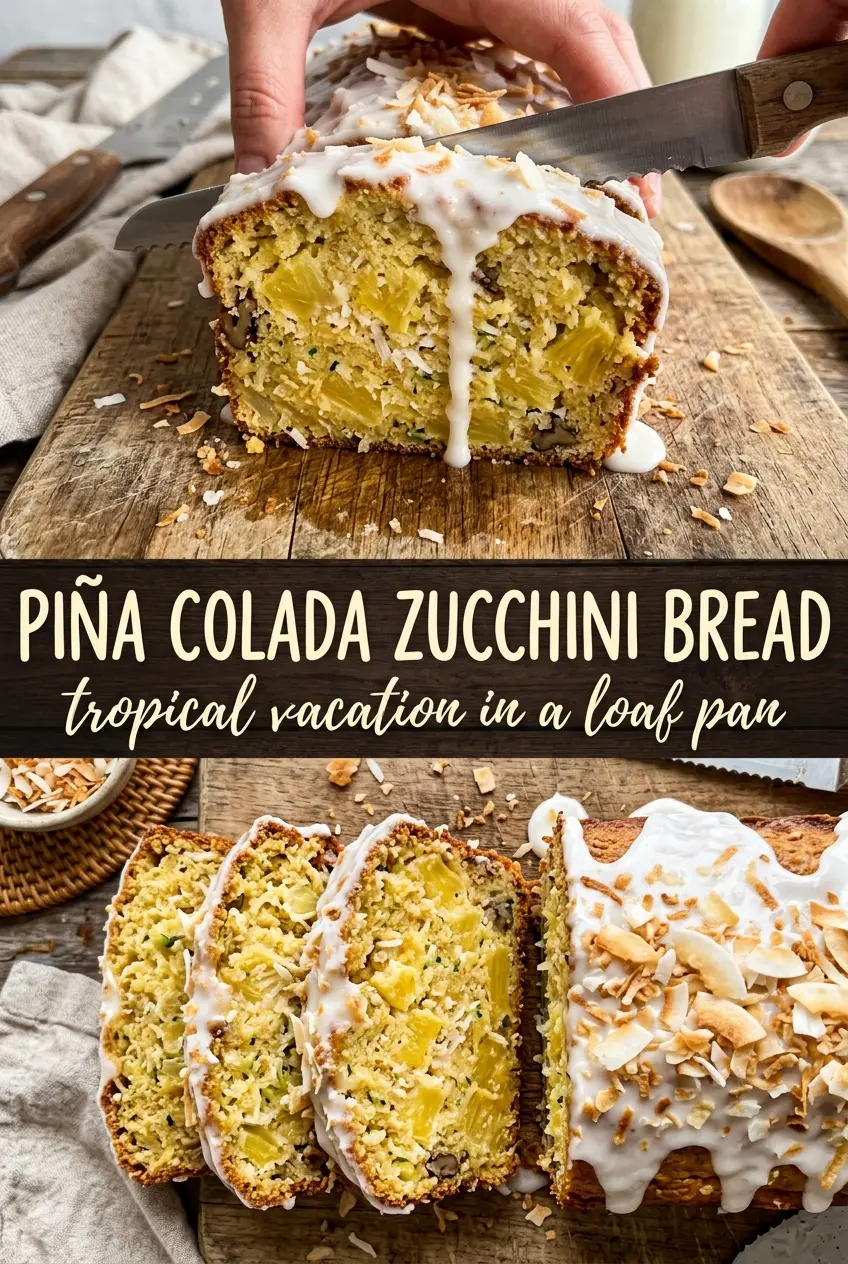
Piña Colada Zucchini Bread
Ingredients
Equipment
Method
- Preheat the oven to 350°F and grease a 9x5 loaf pan. Set aside so the pan is ready for pouring.
- Whisk all-purpose flour, baking soda, baking powder, and salt together in a bowl. Mix until the dry ingredients look evenly speckled.
- Beat granulated sugar, eggs, melted coconut oil, coconut cream, vanilla extract, and coconut extract until smooth. Keep mixing until the mixture turns glossy and uniform.
- Stir in well-drained crushed pineapple and grated, squeezed-dry zucchini. Mix until the batter is evenly distributed with visible fruit and zucchini.
- Fold the dry ingredients into the wet ingredients until just combined, then fold in sweetened shredded coconut. Stop mixing as soon as no dry streaks remain.
- Pour the batter into the greased 9x5 loaf pan. Smooth the top for even baking.
- Bake at 350°F for 55–65 minutes, until a toothpick comes out clean. The loaf should be golden and spring back lightly when touched.
- Cool for 15 minutes before glazing. Let the loaf set so the glaze stays on top.
- Mix powdered sugar, coconut cream, and coconut extract until smooth. The glaze should pour thickly but spread over the loaf.
- Drizzle the coconut glaze over the cooled loaf. Finish by scattering toasted coconut on top so it looks lightly toasted and textured.