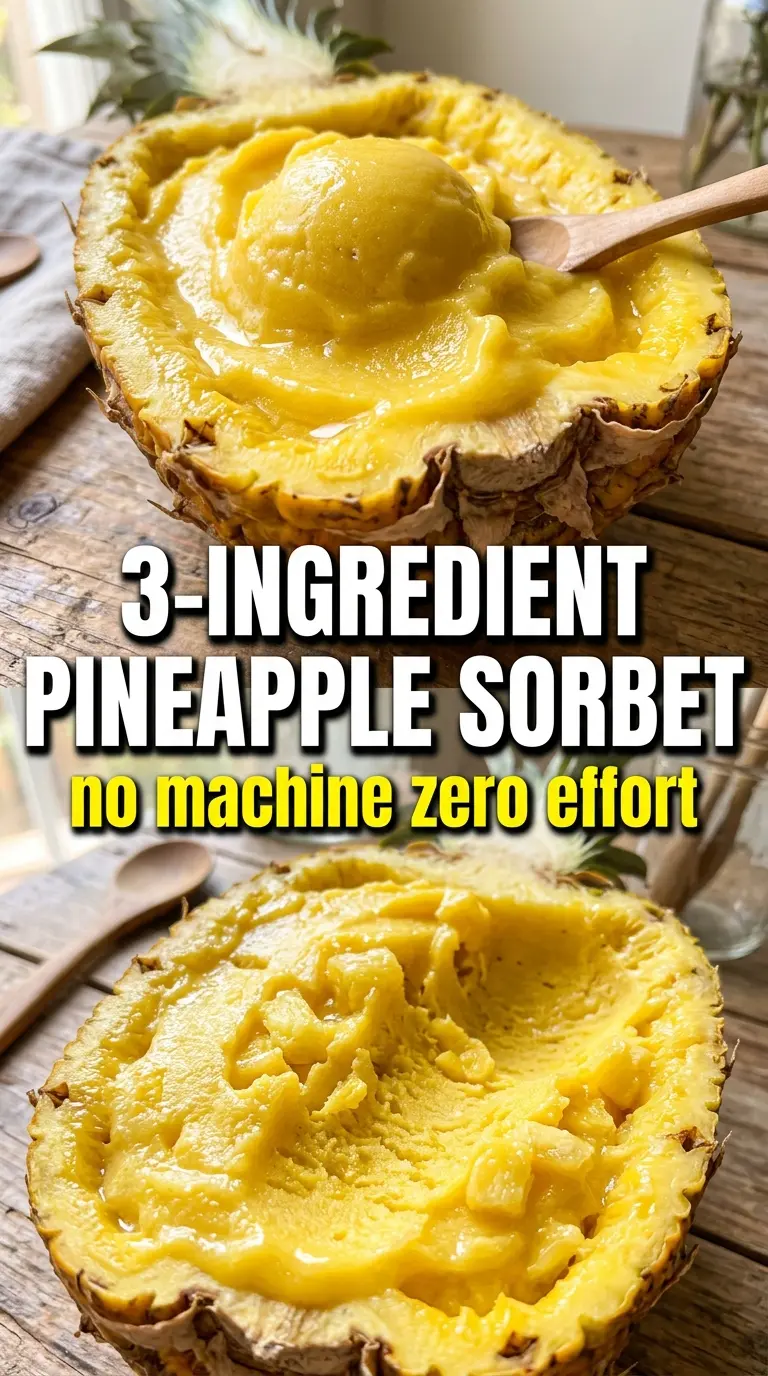
Bright pineapple sorbet like this earns its keep fast: it blends into a vivid, icy-smooth dessert with a clean tropical bite and none of the heaviness that can dull fruit flavor. The texture lands somewhere between soft scoop and frozen slush if you serve it right away, and it firms up into something spoonable after a short freeze without turning icy or dull.
The trick is keeping the ingredient list lean enough for the pineapple to stay front and center. A little lime sharpens the fruit instead of making it taste tart, and the honey or agave gives the blender just enough help to turn frozen chunks into something smooth. Letting the fruit sit for a few minutes before blending matters more than people think; too-frozen pineapple can stall the blades and leave you with chunky bits instead of that glossy sorbet finish.
Below you’ll find the small timing detail that makes the texture come together, plus a few useful swaps and storage notes for when you want a firmer scoop later.
The pineapple blended up into the smoothest sorbet, and after a couple hours in the freezer it scooped beautifully. The lime kept it bright without being sour.
Like this 3-ingredient pineapple sorbet? Save it for the days when you want a bright frozen dessert with almost no effort and no dairy.
The Part That Keeps Pineapple Sorbet Smooth Instead of Icy
Frozen fruit sorbet sounds foolproof until the blender starts fighting back. Pineapple is full of juice, but once it’s fully frozen, those chunks can clump and trap air pockets instead of turning creamy. That’s why the short room-temperature rest matters here. It softens the outer edges just enough for the blades to catch and keep moving.
The other mistake is pushing the sweetness too low and expecting the freezer to fix it. Cold dulls flavor, so the sorbet should taste a little brighter and sweeter than you want in the final bowl. Once it firms up, the balance settles in. Lime does the lifting on freshness, but it also keeps the pineapple from tasting flat after freezing.
What the Three Ingredients Are Doing Here
- Frozen pineapple chunks — These are the base, the body, and the flavor all in one. Fresh pineapple won’t give you the same icy texture unless you freeze it first, and canned pineapple brings too much extra liquid. Use ripe fruit for the best sweetness, because the blender can’t create flavor that isn’t already there.
- Lime juice — This keeps the sorbet from tasting one-note. A little goes a long way; it should brighten the pineapple, not turn the dessert sour. If your pineapple is very sweet, lime becomes even more important because it keeps the finish clean.
- Honey or agave — Either one helps the sorbet blend smoother and softens the freeze. Honey adds a rounder, warmer flavor; agave stays more neutral. If you want to keep it vegan, use agave and start with a little less, since pineapple sweetness can vary a lot.
Blending the Fruit Until It Turns Glossy
Softening the Pineapple Just Enough
Let the frozen pineapple sit out for about 5 minutes before it goes into the blender. You want the pieces cold and firm, not rock hard. If they’re too frozen, the blender will stall or leave behind big icy shards, and that’s when people start adding too much liquid to force it along.
Adding the Lime and Sweetener
Pour in the lime juice and honey or agave before you start blending. That small amount of liquid helps the blades move, but it shouldn’t turn the mixture sloshy. If you see the mixture jam up, stop the blender and scrape down the sides instead of adding more juice. Extra liquid makes the sorbet softer and less scoopable later.
Watching for the Right Texture
Keep blending until the mixture is completely smooth and pale yellow, with no visible chunks. It should look thick and glossy, almost like soft-serve. If it’s grainy, it needs a little more time in the blender. Taste it at the end and adjust the lime or sweetener before freezing, because once it’s firm, those flavors read more muted.
Freezing for a Firmer Scoop
Scoop the sorbet into a freezer container if you want a tighter texture. After 2 to 4 hours, it firms up enough to spoon cleanly. If it freezes very hard, let it sit on the counter for a few minutes before serving, or scrape it with a fork for a more granita-like texture.
How to Make This Work With What You Have
Make It Vegan
Use agave instead of honey. Honey and agave both help the blender work, but agave keeps this fully plant-based without changing the texture much. The flavor stays a little cleaner with agave, which suits pineapple well.
Make It Extra Tangy
Add another teaspoon of lime juice if you want a sharper finish. That makes the pineapple taste brighter, but too much will start to read sour once frozen, so add it in small amounts and taste again before you chill it.
Turn It Into a Granita
Freeze the blended mixture, then scrape it with a fork instead of re-blending. You’ll get a lighter, flaky texture that feels more icy and less creamy. This is the best route if your blender isn’t powerful enough to get the mixture perfectly smooth.
Storage and Reheating
- Refrigerator: Don’t refrigerate it. Sorbet turns watery as it warms and then refreezes poorly.
- Freezer: Keep it in a sealed container for up to 1 week. Press parchment or plastic wrap directly onto the surface to reduce ice crystals.
- Reheating: There’s no reheating here. For best texture, let it sit at room temperature for 5 to 10 minutes before scooping, then stir or re-blend briefly if it has frozen hard.
Questions I Get Asked About This Recipe
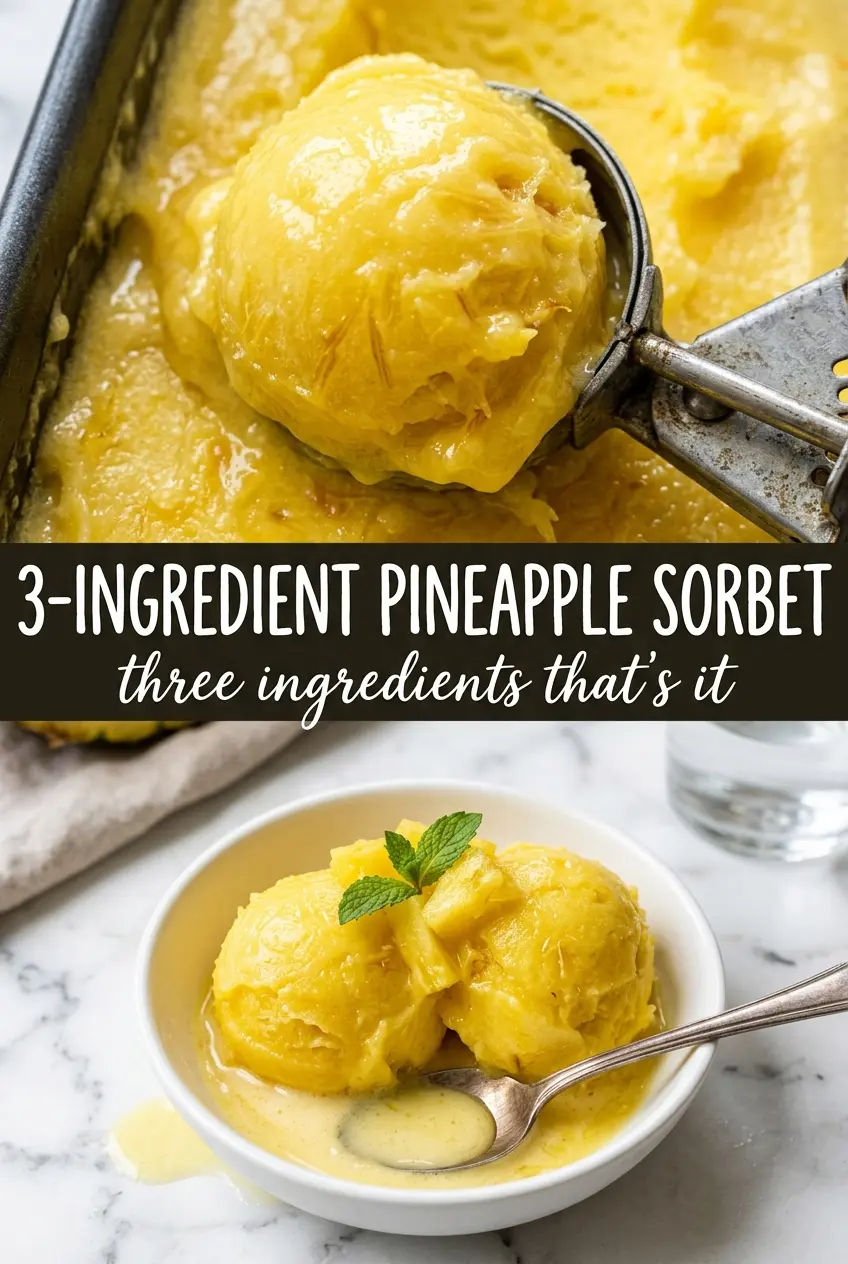
3-Ingredient Pineapple Sorbet
Ingredients
Equipment
Method
- Let the frozen pineapple chunks sit at room temperature for 5 minutes to soften slightly, so they blend smoothly.
- Blend the pineapple chunks, lime juice, and honey or agave in a high-powered blender until completely smooth, with no visible ice bits.
- Taste and adjust sweetness or acidity by blending again briefly if you want more honey or more lime juice.
- Serve immediately as a soft sorbet, or transfer to a freezer container and freeze for 2 to 4 hours until firmer for scooping.
- For a granita texture, scrape the partially frozen sorbet with a fork to create icy flakes, or blend again after freezing for a smoother sorbet.