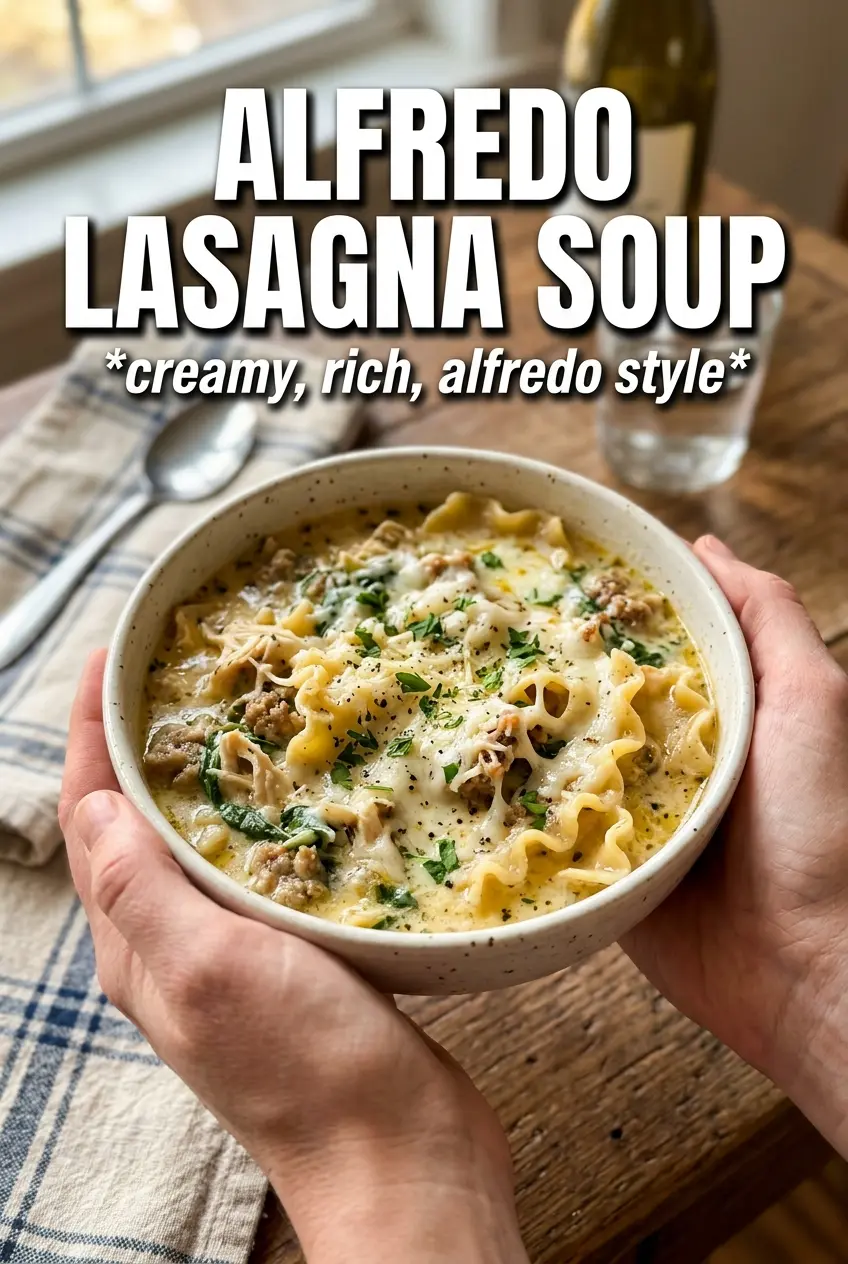
Alfredo lasagna soup takes everything cozy and satisfying about baked lasagna and turns it into a spoonable, creamy dinner with less fuss and a lot more comfort in the bowl. The broth is rich without feeling heavy, the broken noodles keep that familiar lasagna bite, and the chicken gives it enough substance to stand on its own as a full meal.
What makes this version work is the way the sauce is built in layers. The flour cooks in the butter before any liquid goes in, which keeps the soup from tasting chalky, and the parmesan plus cream cheese go in off the heat so the broth stays smooth instead of grainy. The ricotta-parmesan dollop on top isn’t just garnish either; it melts into the hot soup and gives you that lasagna-style finish in every bite.
Below you’ll find the small details that matter here: when to stop simmering the noodles, how to keep the dairy from splitting, and what to change if you want a lighter bowl or a version that works with what you’ve got in the kitchen.
The broth stayed silky and the noodles held their shape without going mushy. I added the ricotta dollop on top just like suggested, and it made the whole bowl taste like lasagna in soup form.
Like this creamy Alfredo lasagna soup? Save it to Pinterest for the nights when you want a rich, cozy bowl with chicken, noodles, and a ricotta finish.
The Part Where Most Creamy Soups Turn Grainy
The trouble with a soup like this usually starts when the dairy goes in too hot or the cheese gets dumped in before the base is ready. Heavy cream can handle gentle heat, but parmesan and cream cheese need a calm pot and a little patience. If the soup is boiling when you add them, you get little flecks of cheese and a sauce that looks broken instead of smooth.
That’s why the flour gets cooked into the butter first. It gives the broth just enough body to carry the cream without turning thin or watery, and it keeps the final texture velvety instead of loose. The other detail that matters is the noodle timing: add them after the broth has come to a simmer, not before, or they’ll soak up too much liquid and leave you with a starchy stew by the time dinner hits the table.
- Butter and flour — This is the base that gives the soup its body. Cook the flour for a full minute so the raw taste disappears, but don’t let it brown unless you want a deeper, toastier flavor.
- Parmesan — Freshly grated parmesan melts far better than the pre-shredded kind, which often has anti-caking starch that makes the soup less smooth. This is one place where the better cheese is worth it.
- Cream cheese — It softens the finish and helps the broth cling to the noodles. Cut it into small pieces and add it off the heat so it melts evenly.
- Lasagna noodles — Broken noodles are perfect here, but keep the pieces on the larger side. Tiny scraps overcook fast and disappear into the broth.
What Each Ingredient Is Actually Doing in This Recipe

- Primary ingredient (the star) — Quality matters most. Choose the best you can find.
- Cooking medium (oil, butter, or broth) — This carries flavors and prevents dryness.
- Seasonings (salt, pepper, spices, herbs) — Layer flavors so nothing overpowers. Build depth gradually.
- Aromatics (garlic, onion, herbs) — Cook with fat to bloom flavors. Become the foundation.
- Supporting ingredients — Complement the main ingredient without overpowering it.
- Sauce or liquid (if applicable) — Brings flavors together. Balance richness with acid.
- Acid (lemon, vinegar, wine, or other) — Brightens and prevents flat-tasting results.
- Final finish (garnish, glaze, or sauce) — Prevents one-dimensional taste and adds visual appeal.
Building the Alfredo Base Without Curdling It
Brown the Chicken First
Season the diced chicken with salt and pepper, then let it get some color in the butter before you pull it out. You want browned edges, not pale steamed cubes, because that first sear leaves behind flavor in the pot. If the chicken crowds the pan, it will release liquid and gray instead of brown, so cook it in a single layer if your pot is tight.
Cook the Onion Until It Softens
Use the same pot and let the onion pick up the browned bits from the chicken. Three minutes is enough to soften it without losing its shape. Add the garlic only at the end of this stage; if it sits in the pot too long, it can turn bitter and muddy the broth.
Whisk the Broth in Gradually
Once the flour is cooked, pour in the broth in a slow stream while whisking. That keeps the flour from clumping and gives you a smooth base before the cream goes in. After the broth is blended, add the cream and milk, then keep the heat at a steady simmer instead of a boil so the dairy stays stable.
Finish Off the Heat
The parmesan and cream cheese belong at the very end, after the pot comes off the burner. Stir until the soup turns glossy and the cheese disappears into the broth. Put the chicken back in after that, just long enough to warm through, then serve with the ricotta-parmesan dollop so it melts into the top of the bowl instead of disappearing into the soup.
How to Adapt This Bowl for Different Kitchens
Gluten-Free Version
Swap the lasagna noodles for a gluten-free pasta that holds up in soup, then cook it just until tender. Keep an eye on the package timing, because gluten-free pasta goes soft faster than wheat noodles and can thicken the broth more as it sits.
Dairy-Free Adjustment
Use a full-bodied unsweetened oat or cashew cream in place of the heavy cream and milk, then skip the cream cheese and ricotta. The soup will still be rich, but it will lose the same tangy, cheesecake-like finish that makes the original taste so much like Alfredo.
Using Rotisserie Chicken
Skip the browning step and stir shredded rotisserie chicken in at the very end. That saves time, but you lose the deeper flavor from searing the chicken in the pot, so let the onion cook a minute longer to build more flavor in the base.
Making It Thicker
If you want a spoon-coating soup, simmer it uncovered for a few extra minutes before adding the cheese. Don’t push it into a hard boil, though, or the dairy will separate and the noodles will overcook before the soup has a chance to tighten up.
Storage and Reheating
- Refrigerator: Store for up to 4 days. The noodles will keep absorbing broth, so expect a thicker soup the next day.
- Freezer: It freezes, but the dairy and noodles don’t come back as neatly after thawing. For best results, freeze the base without the pasta, then cook fresh noodles when reheating.
- Reheating: Warm it gently over low heat, adding a splash of broth or milk to loosen it. High heat is the mistake here; it can split the sauce and make the cheese grainy.
Answers to the Questions Worth Asking
Alfredo Lasagna Soup
Ingredients
Equipment
Method
- Season the chicken breast with salt and white pepper, then brown it in the butter in a large pot for 4-5 minutes, until lightly golden. Remove the chicken from the pot.
- Sauté the diced onion in the same pot for 3 minutes, until softened. Add the minced garlic and cook for 1 minute.
- Whisk in the all-purpose flour and cook for 1 minute to remove the raw flour taste. Slowly whisk in the chicken broth, heavy cream, and whole milk until smooth.
- Stir in the garlic powder and nutmeg, then bring the mixture to a simmer. Add the broken lasagna noodles and cook for 10-12 minutes, stirring occasionally, until the noodles are tender.
- Return the browned chicken to the pot and simmer briefly until heated through, about 1-2 minutes. Remove from heat.
- Stir in the parmesan and softened cream cheese until smooth and thick. Taste and adjust with more salt and white pepper if needed.
- Serve hot with a ricotta-parmesan dollop and top with fresh parsley.