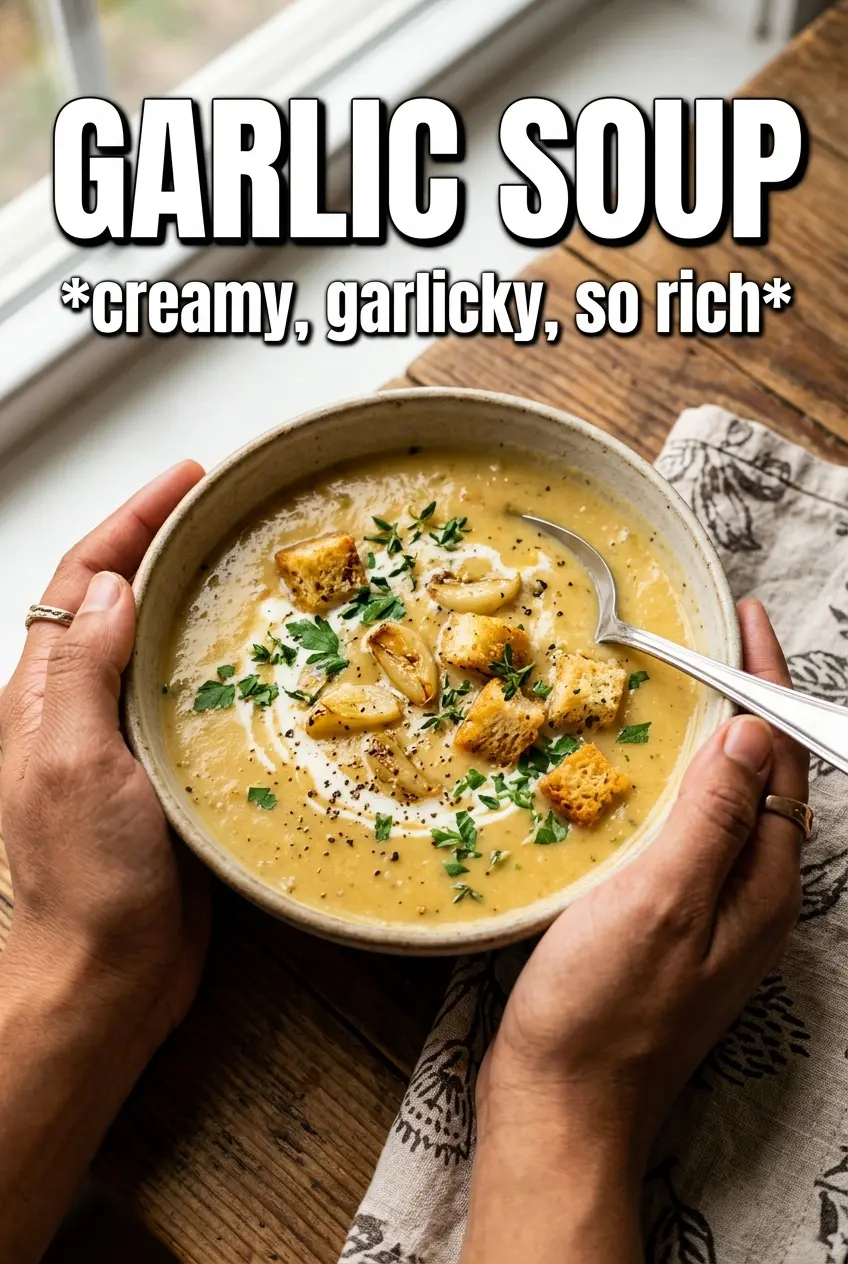
Garlic soup earns its place when you want something that tastes far deeper than the short ingredient list suggests. The garlic turns soft, sweet, and almost buttery after its slow cook in olive oil, and the broth picks up that mellow richness instead of the sharp bite people sometimes expect from garlic-heavy soups. Finished with a poached egg and crusty toast, it lands somewhere between rustic and elegant, with a silky spoonful and a little crunch in every bowl.
The trick is patience at the stove. Garlic cooked over medium-low heat becomes sweet and fragrant; garlic rushed over higher heat turns bitter and throws off the whole pot. Blending most of the cloves gives the soup body without making it heavy, and leaving a few whole cloves behind keeps the texture interesting. The smoked paprika and cayenne are subtle here, but they round out the sweetness and keep the soup from tasting flat.
Below you’ll find the exact timing that keeps the garlic soft instead of scorched, plus a few ways to adapt the soup if you’re working with vegetable broth, want it dairy-free, or need to make it ahead for a fast lunch.
The garlic went sweet and mellow instead of sharp, and the egg on top made it feel like a full meal. I loved that the soup stayed silky even after blending.
Save this garlic soup for the nights when you want a silky bowl with roasted garlic, toast, and a runny egg.
The Part That Stops Garlic Soup From Turning Bitter
The difference between sweet garlic soup and a harsh one comes down to heat. Garlic needs enough time to soften and turn golden, but not enough heat to fry the edges before the centers have mellowed. If the cloves brown too fast, the soup can taste acrid even after you add broth. Slow cooking in olive oil is what gives this soup its round, almost creamy base without needing cream at all.
The second detail that matters is what happens after the broth goes in. A long simmer gives the garlic time to collapse into the liquid, but blending only most of it keeps the soup from becoming puree. That little bit of texture makes each spoonful feel homemade instead of uniform. If you skip the whole cloves, the bowl loses some of its rustic character.
- Medium-low heat keeps the garlic sweet and soft. Higher heat browns the outside before the inside loses its raw edge.
- Immersion blending gives you body without turning the soup heavy. Blend just until most of the garlic breaks down.
- A few whole cloves add contrast. They give you little pockets of stronger garlic flavor and a better texture.
What Each Ingredient Is Actually Doing in the Bowl

- Garlic — This is the whole point of the soup, so fresh peeled cloves matter. Pre-minced garlic won’t soften and sweeten the same way, and it can bring a sharper, cleaner bite that doesn’t mellow as well.
- Olive oil — It gently carries the garlic at the beginning and adds a round, fruity note to the broth. Use a decent olive oil here because it’s one of the main flavors, not just a cooking fat.
- Broth — Chicken broth gives the soup a fuller, deeper base, while vegetable broth keeps it lighter and fully meatless. Either works, but a thin broth will make the soup taste flat, so choose one with real body.
- Smoked paprika and cayenne — These don’t make the soup spicy in a loud way. They add warmth and a faint smoky edge that keeps the garlic from tasting one-dimensional.
- Bread — Crusty toasted bread gives the bowl structure and helps soak up the broth without dissolving immediately. Soft sandwich bread turns mushy too fast.
- Eggs — Poaching them right in the soup makes the finished bowl feel complete. The yolk enriches the broth as soon as you break into it.
Building the Garlic Base and Poaching the Eggs Without Clouding the Soup
Softening the Garlic Slowly
Warm the olive oil over medium-low heat, then add the peeled garlic cloves and let them cook for 12 to 15 minutes. Stir often enough to keep them from coloring unevenly, and watch for a pale golden edge and a fork-tender center. If the garlic starts to brown aggressively, pull the pan off the heat right away; once it goes too far, there is no way to take the bitterness back out. You want soft cloves that smell sweet and nutty, not roasted to the point of dryness.
Spicing and Simmering the Broth
Stir in the smoked paprika and cayenne for about a minute, just until the spices bloom in the oil and smell fragrant. Then add the broth and water and bring everything up to a simmer, not a hard boil. A calm simmer keeps the garlic intact enough to blend smoothly later and gives the broth time to pick up the flavor without turning cloudy and aggressive. After about 15 minutes, the garlic should be very tender and easy to crush with the back of a spoon.
Blending for Body, Not Purée
Use an immersion blender to smooth out most of the garlic, but stop before the soup becomes perfectly uniform. A little texture is the difference between a bowl that feels rich and one that feels overprocessed. If you don’t have an immersion blender, blend a few cups at a time in a regular blender and return it to the pot, but vent the lid and go carefully because hot soup expands fast. Season with salt, pepper, and thyme after blending so the flavors read clearly.
Poaching the Eggs in the Finished Soup
Lower the heat so the soup stays at a gentle simmer, then crack the eggs directly into the pot one at a time. Three to four minutes is usually enough for soft whites and a yolk that still runs a little when you cut in. If the soup boils hard, the whites shred and the yolks overcook before the centers set. Spoon the soup into bowls, add the poached egg on top if needed, and finish with parsley and the toasted bread.
Make It Vegetarian With Vegetable Broth
Vegetable broth works well here because the garlic is carrying most of the flavor anyway. Use a broth with enough body to taste savory on its own, or the soup can end up thin after blending. A splash more olive oil at the end helps replace the richness you lose from chicken broth.
Keep It Dairy-Free Without Losing Richness
This soup is already dairy-free as written, which is part of why it works so well. If you want a little more richness, drizzle each bowl with a small amount of good olive oil before serving. That gives the broth a fuller finish without changing the texture.
Skip the Eggs and Add More Toast for a Lighter Bowl
If you want a simpler bowl, leave out the poached eggs and serve the soup with extra toasted bread on the side. You lose some of the richness and protein, but the garlic broth still feels complete. This version is especially good if you’re serving it as a starter rather than a main dish.
Storage and Reheating
- Refrigerator: Store the soup for up to 4 days in a covered container. The garlic flavor deepens overnight, and the texture may thicken slightly after chilling.
- Freezer: The soup freezes well for up to 2 months, but freeze it without the eggs and bread. Thaw overnight in the fridge and add fresh eggs when reheating.
- Reheating: Warm it slowly over medium-low heat until steaming, not boiling. If it boils hard, the broth can taste dull and the garlic can turn sharp again; add the eggs only after the soup is hot and gently simmering.
Answers to the Questions Worth Asking
Garlic Soup
Ingredients
Equipment
Method
- Heat 3 tablespoons olive oil in a large saucepan and gently cook the peeled garlic cloves over medium-low heat for 12-15 minutes until soft and golden but not brown.
- Add smoked paprika and cayenne and cook for 1 minute to bloom the spices.
- Add chicken or vegetable broth and water, then bring to a boil and simmer for 15 minutes.
- Use an immersion blender to blend most of the garlic smooth, leaving a few cloves whole for texture.
- Season the soup with salt, pepper, and fresh thyme leaves.
- Poach eggs directly in the simmering soup for 3-4 minutes, keeping the simmer gentle.
- Serve the soup with toasted crusty bread, a poached egg in the center, and fresh parsley for garnish.