Slow cooker chicken stew turns out thick, comforting, and full of real texture when it’s built with bone-in thighs and enough vegetables to give the broth some body. The chicken goes tender enough to shred with a spoon, the potatoes hold their shape, and the gravy finishes rich instead of watery. It’s the kind of dinner that tastes like it simmered all afternoon because it did, with almost no hands-on work.
What makes this version work is the layering. The vegetables go in first so they can sit in the broth and soften without turning to mush, and the chicken thighs stay on top where they braise gently instead of boiling apart. The cream of chicken soup and tomato paste give the stew a deeper, rounder base than broth alone, while the cornstarch slurry gets added at the end so the stew thickens cleanly instead of going gluey in the slow cooker.
You’ll find the little details that matter most below: how to keep the potatoes intact, when to add the slurry, and what to change if you need a dairy-free or gluten-free version without losing that cozy, spoonable finish.
The chicken shredded beautifully and the gravy thickened up after the last 20 minutes just like you said. My husband kept saying the potatoes tasted like they’d been simmering in a roast dinner all day.
Save this slow cooker chicken stew for a hands-off dinner with tender thighs, hearty vegetables, and a gravy that thickens properly at the end.
The Trick to a Thick Stew Instead of a Thin Slow Cooker Broth
The most common problem with slow cooker stew is that it tastes right but looks watery. That happens when everything goes in at once and the stew is left to thicken on its own for hours, which usually softens the vegetables too much before the liquid reduces enough. This version fixes that by relying on two separate stages: first the stew cooks until the chicken is tender, then the slurry goes in at the end to tighten the broth without overcooking the vegetables.
Bone-in thighs matter here because they stay juicy through a long cook and bring more flavor than boneless chicken breasts. If you use breasts, they’ll work, but they need less time and can turn dry and stringy before the potatoes are done. The soup adds body, but it’s the final cornstarch slurry that gives you that spoon-coating consistency people expect from a proper chicken stew.
What Each Ingredient Is Actually Doing in the Pot
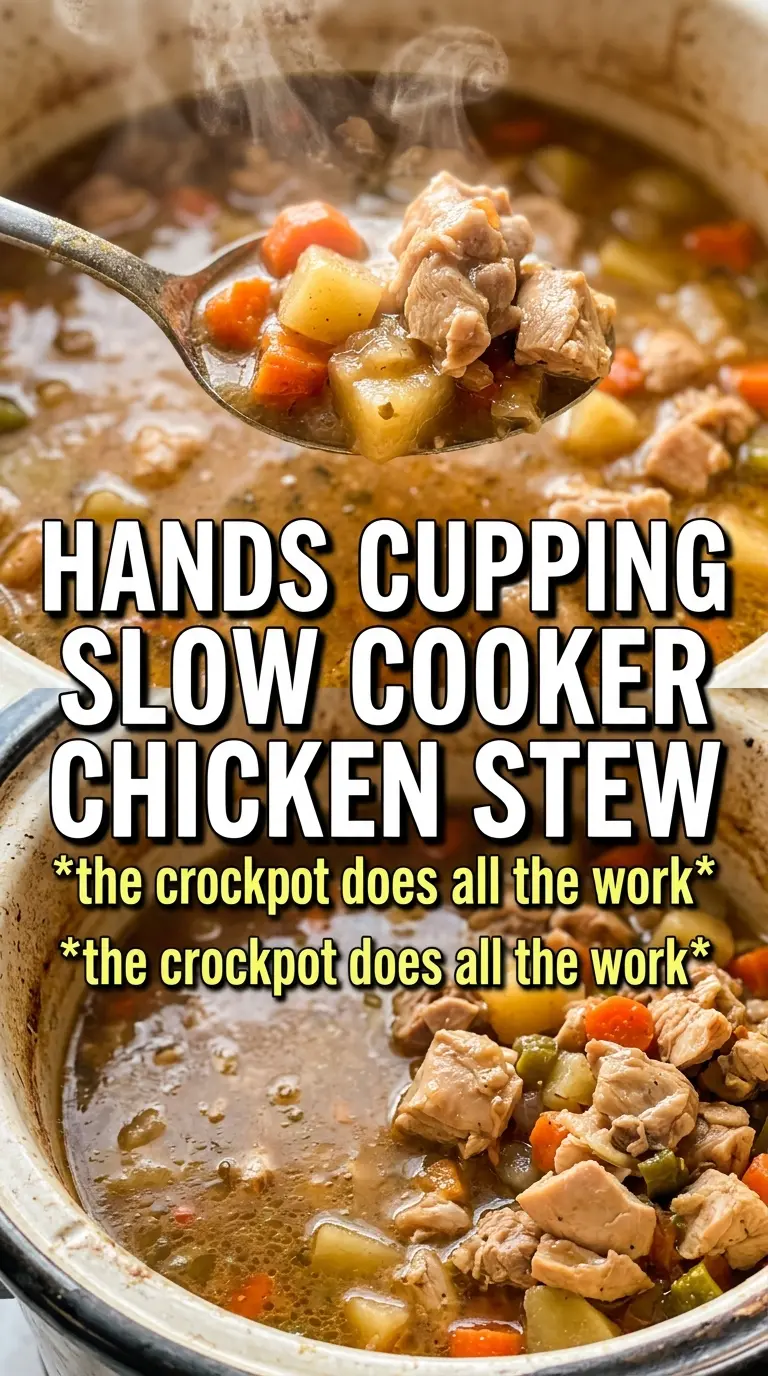
- Bone-in chicken thighs — These bring the best flavor and stay tender through a long, low cook. Boneless thighs can work in a pinch, but they won’t give the broth quite as much richness, and chicken breasts need careful timing so they don’t dry out.
- Baby potatoes — Halved baby potatoes hold their shape better than russets and give you soft edges without turning grainy. If you only have larger potatoes, cut them into big chunks so they survive the cook.
- Cream of chicken soup — This adds instant body and a savory base that plain broth can’t match. If you need a swap, cream of mushroom works too, though it brings a slightly earthier flavor.
- Tomato paste — This isn’t here to make the stew taste like tomato. It deepens the color and gives the broth a more cooked, rounded taste that keeps the stew from tasting flat.
- Dried thyme and rosemary — These herbs hold up well in a slow cooker and echo the kind of flavor you want in a chicken stew. Fresh herbs can be used, but add them sparingly since they’re more delicate.
- Cornstarch slurry — This is the cleanest way to thicken the stew at the end. Stir it in only after the chicken is shredded and the stew is hot, or it can clump and never fully smooth out.
How to Build the Stew So the Chicken Stays Tender and the Vegetables Don’t Collapse
Start with the vegetables on the bottom
Layer the potatoes, carrots, celery, and onion in the bottom of the slow cooker first. They need the most direct contact with the liquid, and this placement keeps them from floating above the broth and cooking unevenly. If you dump the chicken in first, the vegetables can end up dry in spots while the meat sits too low and overcooks.
Let the chicken braise, not boil
Set the chicken thighs on top of the vegetables, then add the broth, soup, tomato paste, herbs, and garlic. The chicken should be mostly nestled into the liquid but not submerged like it would be in a soup pot on the stove. Slow cooker chicken gets tough when it’s cooked too hot for too long, so Low gives you a more forgiving texture and better shredding.
Thicken after the chicken comes out
When the chicken is fall-apart tender, lift it out and discard the skin and bones before shredding. Pull the bay leaf before you add the slurry, then stir the cornstarch and water together and mix it into the hot stew. Let it cook on High for about 20 minutes until the broth turns glossy and lightly coats a spoon; if it still looks thin, give it a few more minutes before adding the chicken back in.
How to Adapt This for What You Have on Hand
Gluten-Free Slow Cooker Chicken Stew
Use a certified gluten-free cream of chicken soup and check that your broth is gluten-free too. The cornstarch slurry is already gluten-free, so the final texture stays the same as long as the soup base is safe.
Dairy-Free Version
Swap the cream of chicken soup for a dairy-free cream soup alternative or use a thickened broth base made with extra cornstarch and a spoonful of dairy-free butter. You’ll lose a little of the canned-soup richness, but the stew still finishes thick and comforting.
Using Boneless Chicken Thighs or Breasts
Boneless thighs are the safest swap and usually need a little less time. Chicken breasts can work, but check them early because they dry out fast in a slow cooker and the stew tastes better when the meat stays juicy enough to shred cleanly.
Storage and Reheating
- Refrigerator: Store for up to 4 days. The stew thickens as it chills, and the potatoes soften a bit more overnight.
- Freezer: It freezes well for up to 3 months. Cool it completely, portion it into airtight containers, and leave a little headspace so the liquid can expand.
- Reheating: Warm it gently on the stove or in the microwave, adding a splash of broth if it looks too thick. Don’t blast it on high heat, or the chicken can turn dry and the gravy can separate.
Questions I Get Asked About This Recipe
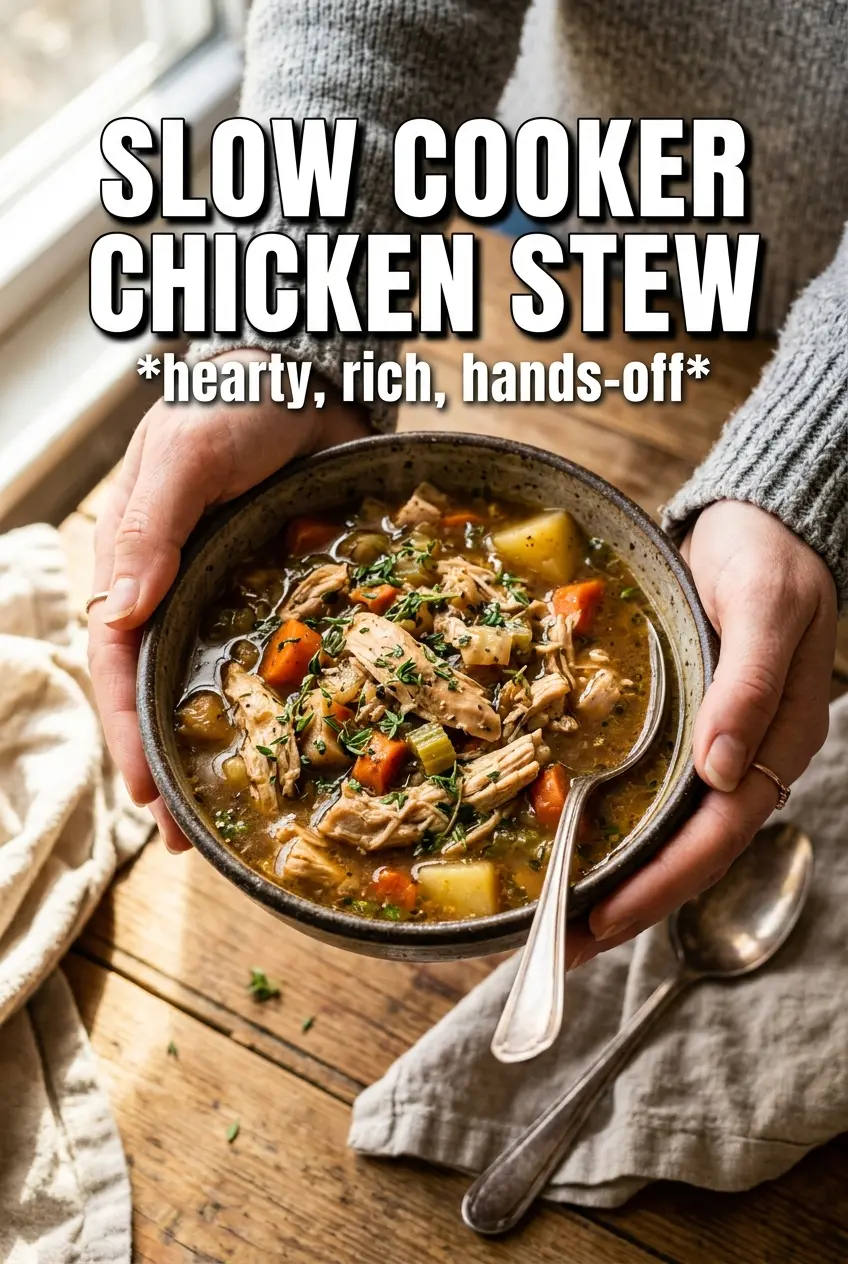
Slow Cooker Chicken Stew
Ingredients
Equipment
Method
- Add the baby potatoes, carrots, celery, and onion to the bottom of the slow cooker in an even layer.
- Nestle the bone-in chicken thighs on top, then add the minced garlic.
- Pour in the chicken broth, cream of chicken soup, and tomato paste, then sprinkle in dried thyme, dried rosemary, and add the bay leaf so they’re distributed.
- Cover and cook on Low for 6-8 hours, or on High for 3-4 hours, until the chicken thighs are very tender and easy to pull apart.
- Transfer the chicken to a plate and discard the skin and bones, then shred the meat.
- Remove the bay leaf from the stew and stir the cornstarch slurry (cornstarch mixed with water) into the cooking liquid.
- Cook on High for 20 minutes until the stew thickens to a gravy-like consistency and looks glossy.
- Return the shredded chicken to the slow cooker and stir to combine.
- Season with salt and black pepper to taste, then garnish with fresh parsley before serving.