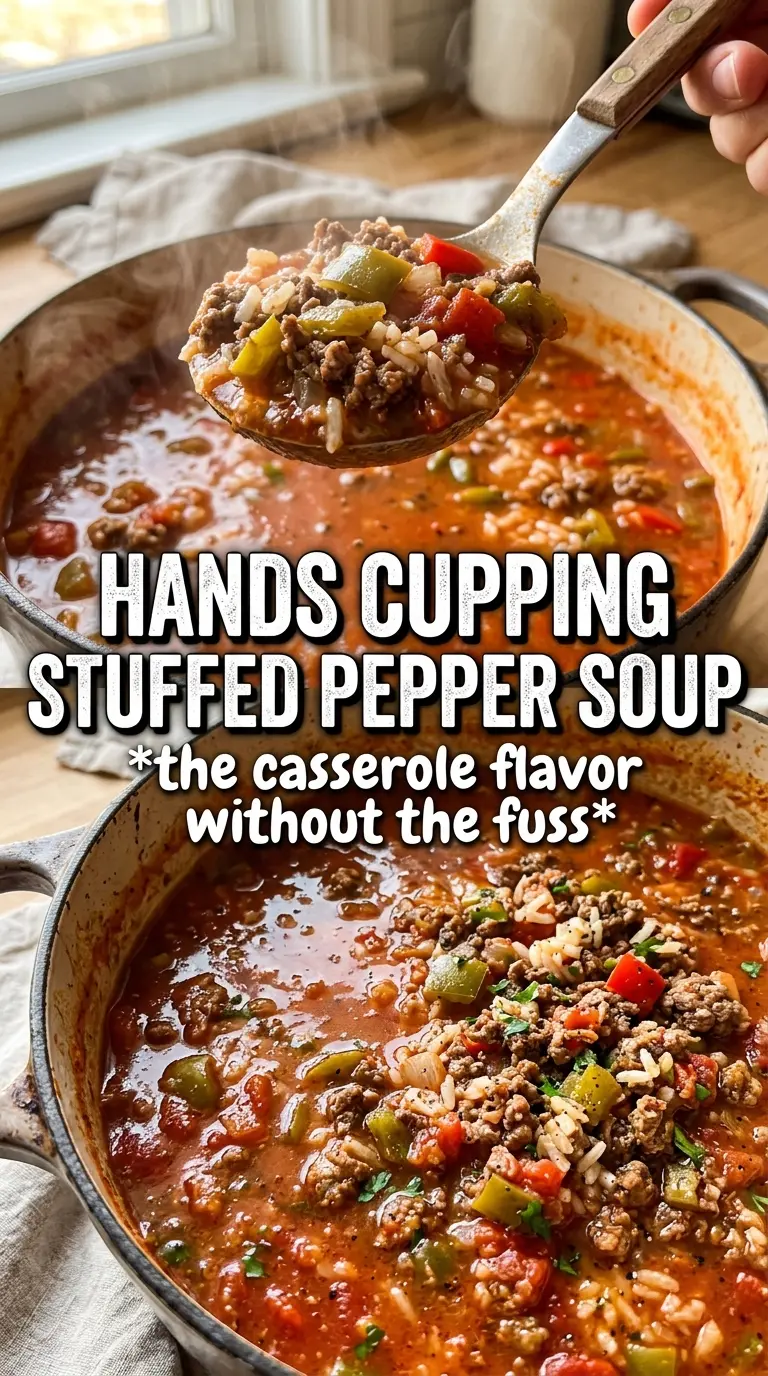
Stuffed pepper soup gives you all the comfort of classic stuffed peppers without the extra work of hollowing, filling, and baking each one. What lands in the bowl is a rich tomato broth loaded with tender peppers, seasoned beef, and rice that picks up the savory base underneath it. The best part is how the soup keeps its shape and substance instead of turning thin and flat.
This version works because the tomato paste gets cooked with the onions and peppers before the liquid goes in. That little step deepens the base and keeps the broth from tasting like canned tomatoes straight from the pantry. The rice goes in uncooked, which lets it absorb flavor as it softens, but it also means the timing matters. Pull it at the point where the grains are tender and the soup still looks brothy, not porridge-thick.
Below you’ll find the one technique that keeps the texture right, plus a few smart swaps if you need to work with what you have on hand. I’ve also included the reheating note that saves this soup from turning heavy the next day.
The rice stayed tender without getting mushy, and the tomato broth thickened up beautifully after a few minutes off the heat. My husband went back for a second bowl before I’d even grabbed mine.
Save this stuffed pepper soup for the nights when you want a hearty tomato-and-beef soup with tender rice and melted cheddar.
The Trick That Keeps the Rice From Taking Over
Stuffed pepper soup can turn heavy fast if the rice cooks too long in a rolling boil. Once the grains start softening, they keep drinking liquid, and what began as a broth ends up closer to a stew by the time it hits the bowl. The fix is simple: simmer gently and stop when the rice is just tender, because carryover heat finishes the job.
The tomato base also needs a little help before the broth goes in. Cooking the tomato paste with the onions, peppers, and garlic wakes it up and takes away the raw, metallic edge that can make tomato soups taste flat. That step gives this soup the deeper, rounder flavor people expect from stuffed peppers without adding extra ingredients.
- Tomato paste — This is the backbone of the broth. It gives the soup a concentrated tomato taste that crushed tomatoes alone can’t match, and it needs a minute in the pot to lose its sharp edge.
- Uncooked white rice — Long grain white rice holds its shape better than short grain, which matters here because you want distinct spoonfuls, not a thick paste. If you use brown rice, it needs a longer simmer and a little more broth.
- Bell peppers — Green peppers bring that classic stuffed pepper bite, while the red pepper softens the edges with a sweeter note. Dicing them evenly helps them cook at the same pace as the onion.
- Beef broth — Use a broth with enough body to stand up to the tomatoes. If yours is low on flavor, a pinch of extra salt at the end is better than dumping in more tomato paste and muddying the balance.
What Each Ingredient Is Actually Doing in This Recipe
- Primary ingredient (the star) — Quality matters most. Choose the best you can find.
- Cooking medium (oil, butter, or broth) — This carries flavors and prevents dryness.
- Seasonings (salt, pepper, spices, herbs) — Layer flavors so nothing overpowers. Build depth gradually.
- Aromatics (garlic, onion, herbs) — Cook with fat to bloom flavors. Become the foundation.
- Supporting ingredients — Complement the main ingredient without overpowering it.
- Sauce or liquid (if applicable) — Brings flavors together. Balance richness with acid.
- Acid (lemon, vinegar, wine, or other) — Brightens and prevents flat-tasting results.
- Final finish (garnish, glaze, or sauce) — Prevents one-dimensional taste and adds visual appeal.
Building the Soup Base Without Losing Texture
Brown the Beef First
Cook the ground beef in a large pot until it loses its pink color and starts picking up browned bits on the bottom. Those little bits matter because they dissolve into the broth later and give the soup its savory backbone. If there’s a lot of fat in the pot, drain it off before adding the vegetables, or the finished soup will taste greasy instead of rich.
Cook the Vegetables in the Same Pot
Add the onion and both bell peppers to the same pot and cook them until they soften at the edges and the onion starts to turn translucent. You want them tender, not collapsed, because they still need to hold up after the rice goes in. Stir in the garlic and tomato paste and cook them for about two minutes until the garlic smells sweet and the paste darkens slightly.
Simmer the Rice in the Tomato Broth
Pour in the crushed tomatoes, diced tomatoes, broth, and seasonings, then bring everything up to a boil before lowering it to a steady simmer. Add the uncooked rice, cover the pot, and cook until the grains are tender but not split open. If the heat stays too high, the rice can burst and absorb too much liquid, which makes the soup dense instead of comforting.
Finish With Cheese and Herbs
Season the soup with salt and pepper only after the rice is cooked, because the broth tightens up as it reduces and the seasoning concentrates. Ladle it into bowls while it’s hot, then top with shredded cheddar and fresh parsley. The cheese should melt into soft ribbons, not sit in stiff clumps, so add it right before serving.
How to Adapt This for Different Kitchens and Different Schedules
Make it gluten-free without changing the comfort factor
This recipe is naturally gluten-free as written, as long as your beef broth is certified gluten-free. Keep an eye on the seasoning blend too, because some bottled Italian seasoning mixes include anti-caking agents with hidden gluten. The texture and flavor stay the same.
Use ground turkey for a lighter bowl
Ground turkey works well if you want a leaner version, but it brings less built-in richness than beef. Add a little extra salt and don’t skip the tomato paste step, because that deeper base matters more when the meat is milder. The soup will still eat like stuffed peppers, just with a cleaner finish.
Swap the rice if you need a lower-carb bowl
For a lower-carb version, leave out the rice and stir in cauliflower rice during the last 5 minutes of cooking. Cauliflower rice softens fast and releases moisture, so adding it at the end keeps the soup from thinning out too much. The result is lighter and less hearty, but the tomato-beef-pepper base still comes through clearly.
Storage and Reheating
- Refrigerator: Store for up to 4 days. The rice will keep absorbing broth, so the soup thickens as it sits.
- Freezer: Freeze for up to 3 months, but the rice will soften more after thawing. For the best texture, freeze the soup without rice and add fresh cooked rice when reheating.
- Reheating: Rewarm gently on the stove over low heat with a splash of broth or water. If you boil it hard, the rice can break apart and the tomatoes can taste sharp instead of balanced.
Questions I Get Asked About This Recipe
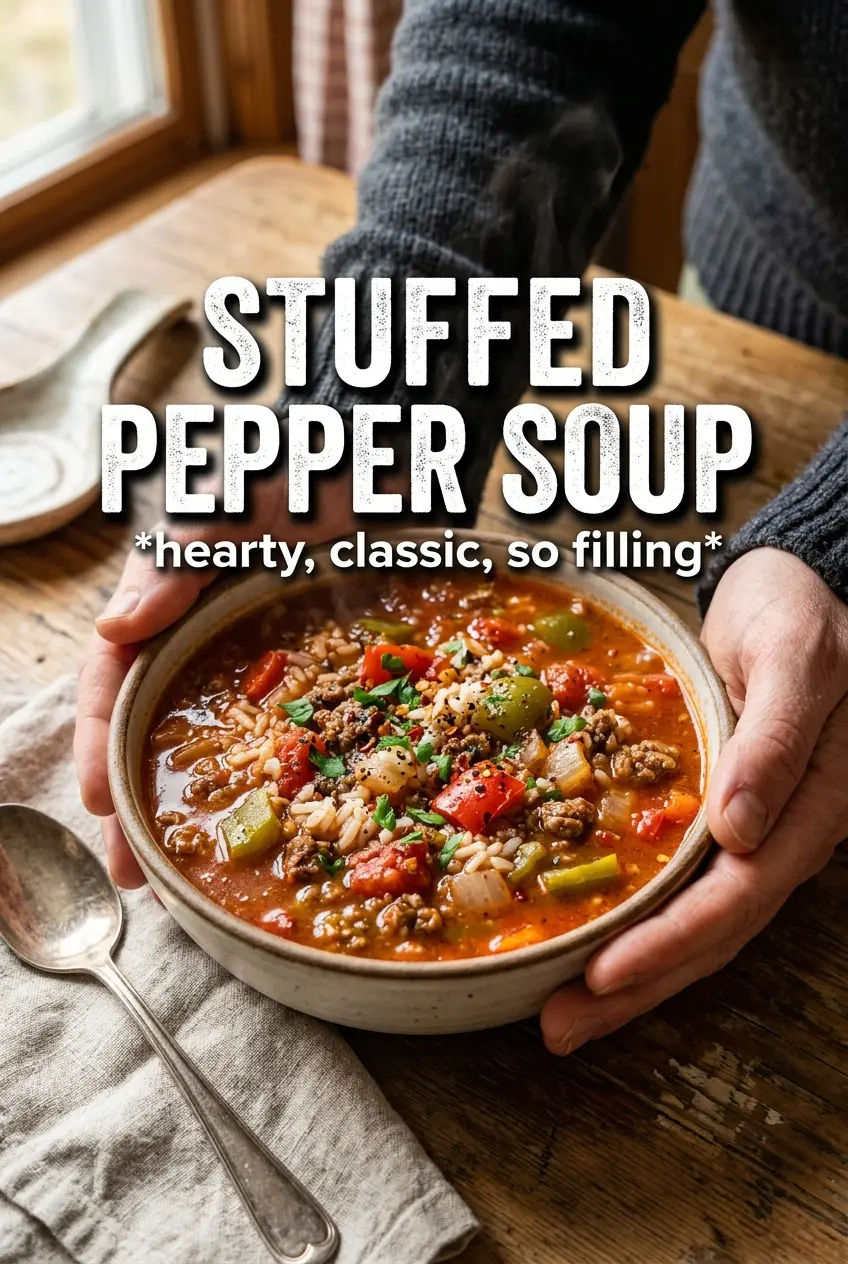
Stuffed Pepper Soup
Ingredients
Equipment
Method
- Brown the ground beef in a large pot, then drain the fat.
- Keep the pot over medium-high heat so the beef browns well and doesn’t steam.
- Sauté the onion and all diced bell peppers in the same pot for 4-5 minutes, until slightly softened.
- Add the minced garlic and tomato paste and cook for 2 minutes, stirring to coat the vegetables.
- Add the crushed tomatoes, diced tomatoes, beef broth, Italian seasoning, garlic powder, and smoked paprika, then bring the mixture to a boil.
- Add the uncooked long grain white rice, reduce the heat to a simmer, cover, and simmer 18-20 minutes until the rice is cooked.
- Season the soup with salt and pepper to taste.
- Serve topped with shredded cheddar and fresh parsley.