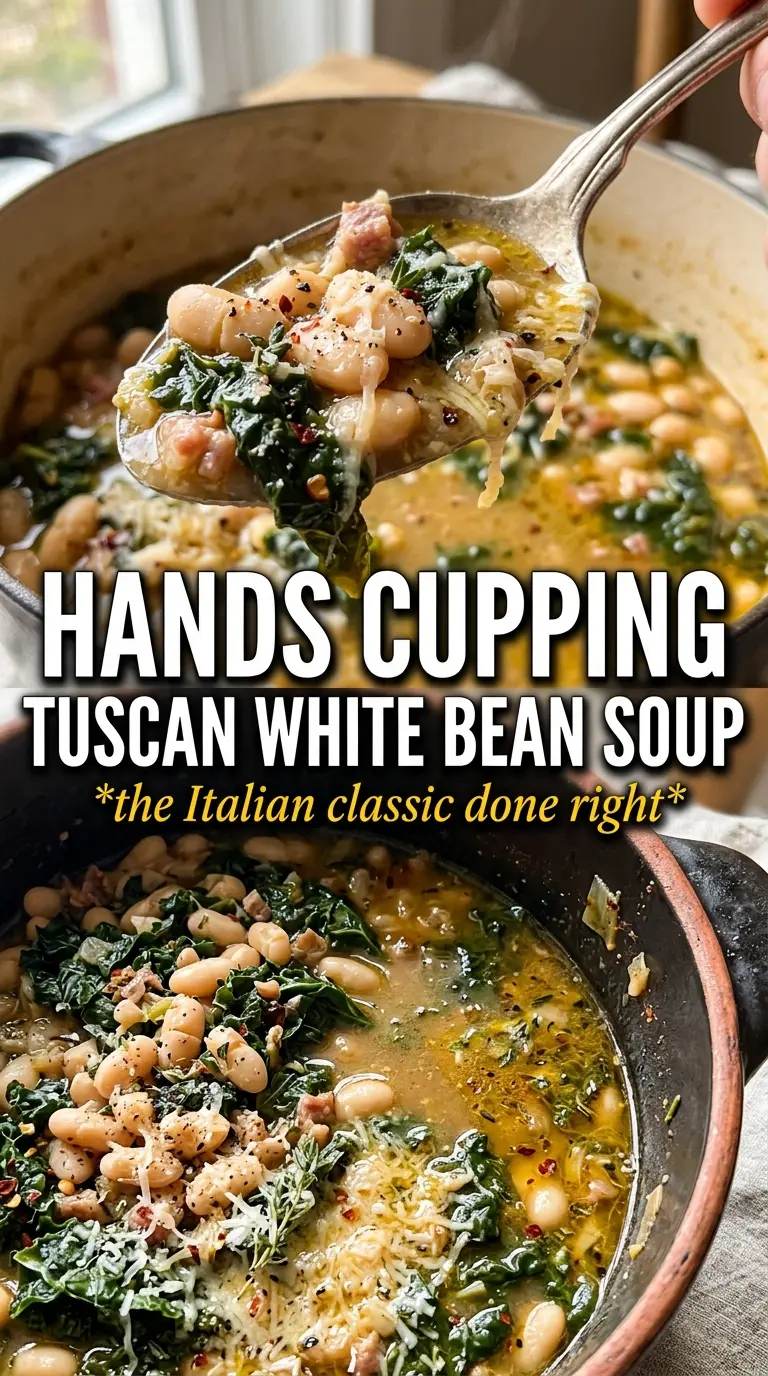
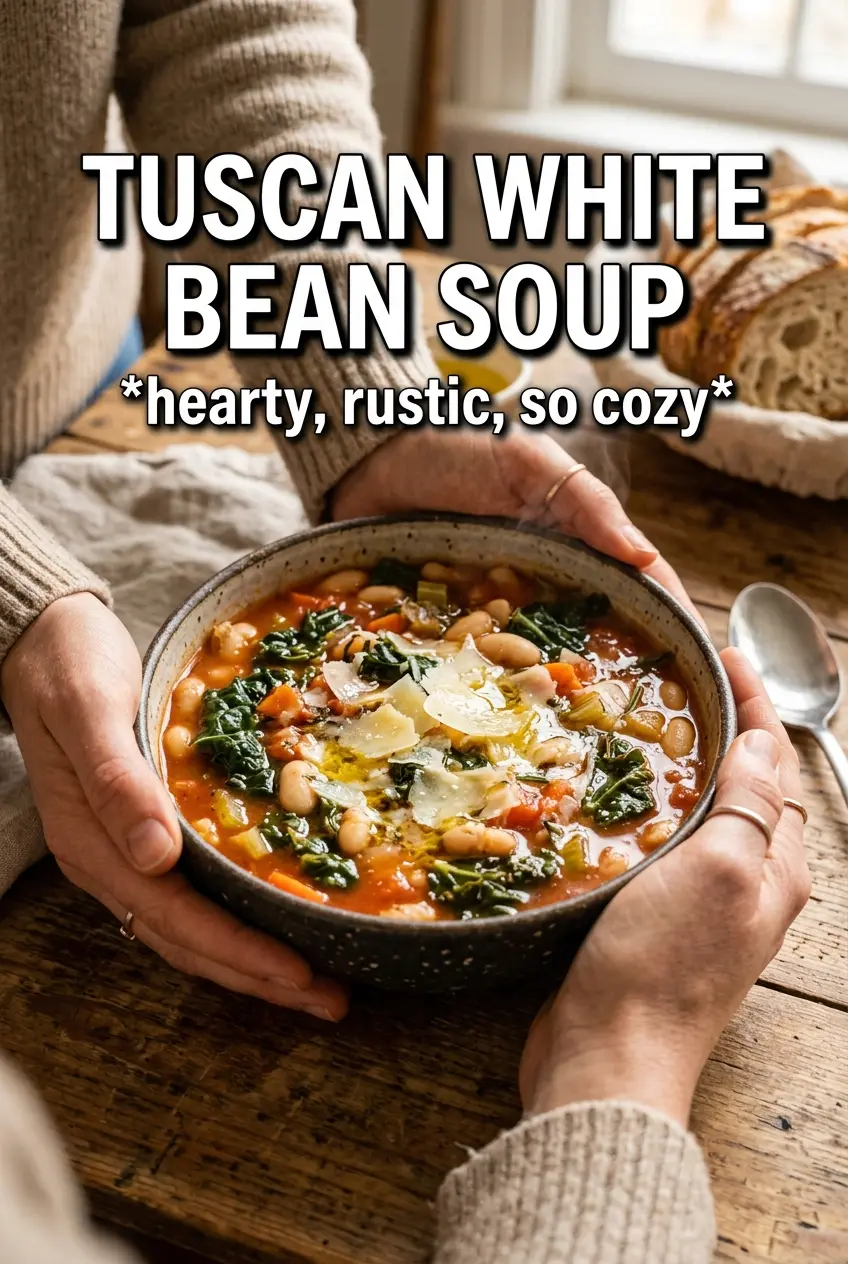
Tuscan white bean soup lands in the bowl with a broth that tastes deeper than the short ingredient list suggests. The beans soften just enough to make the soup creamy at the edges, the kale stays green and sturdy, and the pancetta brings a salty backbone that keeps every spoonful interesting. It’s the kind of pot of soup that disappears fast because it eats like a full meal, especially with crusty bread for dunking.
What makes this version work is the way the flavor builds in layers instead of relying on one heavy ingredient. The pancetta goes in first so the rendered fat can carry the onion, celery, and garlic, and the parmesan rind quietly does the kind of work you notice only when it’s missing. Mashing part of the beans at the end thickens the broth without turning it into a puree, which keeps the texture rustic and satisfying.
If you’ve made bean soups that tasted thin or flat, the notes below will help. I’ve included the small timing details that keep the kale tender, the broth balanced, and the finished soup hearty instead of cloudy.
The beans held their shape, the broth thickened up after I mashed a few in the pot, and the rosemary gave it that cozy Italian restaurant taste. My husband went back for seconds before I even sat down.
Save this Tuscan White Bean Soup for a cozy pot of rosemary broth, creamy cannellini beans, and kale.
The Reason This Soup Tastes Rich Without Needing Cream
White bean soup can go bland fast if the broth never gets a chance to pick up real depth. The fix here is to build the base in stages and keep the heat controlled once the beans go in. If the pot boils hard for too long, the beans start to split apart before the kale even has a chance to soften, and the soup turns muddy instead of rustic.
The parmesan rind matters more than most people expect. It doesn’t melt into the soup; it slowly seasons the broth from the inside out while the rosemary infuses the liquid with a woodsy edge. The last step, mashing part of the beans, gives you body without taking away the whole-bean texture that makes this soup satisfying.
- Pancetta or bacon — This is your first layer of flavor. Pancetta brings a cleaner, gentler saltiness, while bacon adds a smokier note. If you use bacon, drain off excess fat before sautéing the vegetables so the soup doesn’t taste greasy.
- Cannellini beans — These are the backbone of the soup because they soften into a creamy texture without falling apart completely. Great canned beans work perfectly here. If you cook dried beans from scratch, keep them tender but not mushy, or they’ll disappear when you mash some of them.
- Parmesan rind — Optional, but it adds a round, savory depth you can’t quite fake with extra salt. Drop it in early so it has time to work. If you don’t have one, add a little extra parmesan at serving and taste the broth carefully before salting.
- Kale — Add it near the end so it stays bright and a little chewy. Overcooking kale is the fastest way to lose the fresh edge that balances the beans. Curly kale or lacinato both work; just strip the stems well so the leaves turn tender at the same time.
What Each Ingredient Is Actually Doing in This Recipe
- Primary ingredient (the star) — Quality matters most. Choose the best you can find.
- Cooking medium (oil, butter, or broth) — This carries flavors and prevents dryness.
- Seasonings (salt, pepper, spices, herbs) — Layer flavors so nothing overpowers. Build depth gradually.
- Aromatics (garlic, onion, herbs) — Cook with fat to bloom flavors. Become the foundation.
- Supporting ingredients — Complement the main ingredient without overpowering it.
- Sauce or liquid (if applicable) — Brings flavors together. Balance richness with acid.
- Acid (lemon, vinegar, wine, or other) — Brightens and prevents flat-tasting results.
- Final finish (garnish, glaze, or sauce) — Prevents one-dimensional taste and adds visual appeal.
Building the Pot in the Right Order
Crisping the Pancetta First
Cook the pancetta in a large pot over medium heat until it’s browned and crisp at the edges. You want rendered fat in the pot, not a scorched bottom, so keep the heat moderate and stir once or twice. If the pancetta is crowded, it steams instead of crisping, and you lose the flavor base that carries the rest of the soup. Remove it to a plate and leave the fat behind.
Softening the Aromatics
Add the onion, celery, and garlic to the fat and cook until the onion turns translucent and the edges start to look glossy. The garlic only needs a minute or two; if it browns, it turns bitter fast. This stage should smell sweet and savory, not sharp. If the pot looks dry, add a small splash of olive oil rather than turning up the heat.
Simmering the Broth and Beans
Pour in the tomatoes, broth, rosemary, parmesan rind, and Italian seasoning, then bring everything to a boil before lowering it to a steady simmer. Add the beans and let them simmer until they’re hot through and flavored all the way to the center, about 20 minutes. Don’t boil hard here — that’s what breaks the beans and makes the broth cloudy in a bad way. A gentle simmer keeps the texture intact.
Finishing With Kale and Thickness
Pull out the rosemary sprigs and parmesan rind, then mash about a third of the beans against the side of the pot with a spoon or potato masher. Stir in the kale and cook just until the leaves are wilted and tender, 5 to 8 minutes. This is the point where the soup comes together: the broth thickens, the kale stays vibrant, and the beans give the pot body without turning it into paste. Taste at the end and season after the parmesan has had a chance to do its work.
How to Adjust This Soup Without Losing the Good Part
Make It Vegetarian
Skip the pancetta and use olive oil to sauté the vegetables, then choose a broth with enough body to stand on its own. The soup will still be hearty if you keep the parmesan rind, but if you need it fully vegetarian, leave that out too and finish with extra parmesan shavings at the table. You lose the smoky-salty edge, so taste more carefully with salt at the end.
Make It Dairy-Free
Leave out the parmesan rind and the parmesan topping, then use an extra drizzle of good olive oil at the end to give the broth a little more roundness. The soup stays satisfying because the beans still thicken the base on their own. If it tastes a little flatter without cheese, add another pinch of Italian seasoning and a bit more black pepper before serving.
Use Great Northern Beans Instead
Great Northern beans work if that’s what you have, but they’re a little smaller and a touch less creamy than cannellini beans. The soup will still thicken well once you mash some of them. Keep the simmer gentle so they hold their shape.
Storage and Reheating
- Refrigerator: Store in an airtight container for up to 4 days. The broth thickens as it sits, so it may look almost stew-like the next day.
- Freezer: This soup freezes well for up to 3 months. Freeze it without the bread or parmesan topping, and leave a little space in the container because the beans and broth will expand.
- Reheating: Warm it gently on the stove over medium-low heat with a splash of broth or water to loosen it. Don’t boil it hard, or the beans can break down too much and the kale turns dull.
Questions I Get Asked About This Recipe
Tuscan White Bean Soup
Ingredients
Equipment
Method
- Cook pancetta in a large pot over medium heat until crispy, then remove and set aside (keep the rendered fat in the pot).
- Sauté onion, celery, and garlic in the fat over medium heat for 5 minutes, stirring, until softened and fragrant.
- Add diced tomatoes, broth, rosemary sprigs, parmesan rind if using, and Italian seasoning, then bring to a boil.
- Add cannellini beans and simmer for 20 minutes, maintaining a gentle bubble.
- Remove rosemary and parmesan rind, then mash about a third of the beans in the pot to thicken the broth.
- Add kale and simmer for 5-8 minutes, until wilted and bright green.
- Season with salt and pepper to taste, then drizzle with olive oil and top with parmesan shavings and pancetta.
- Serve immediately with crusty bread on the side.