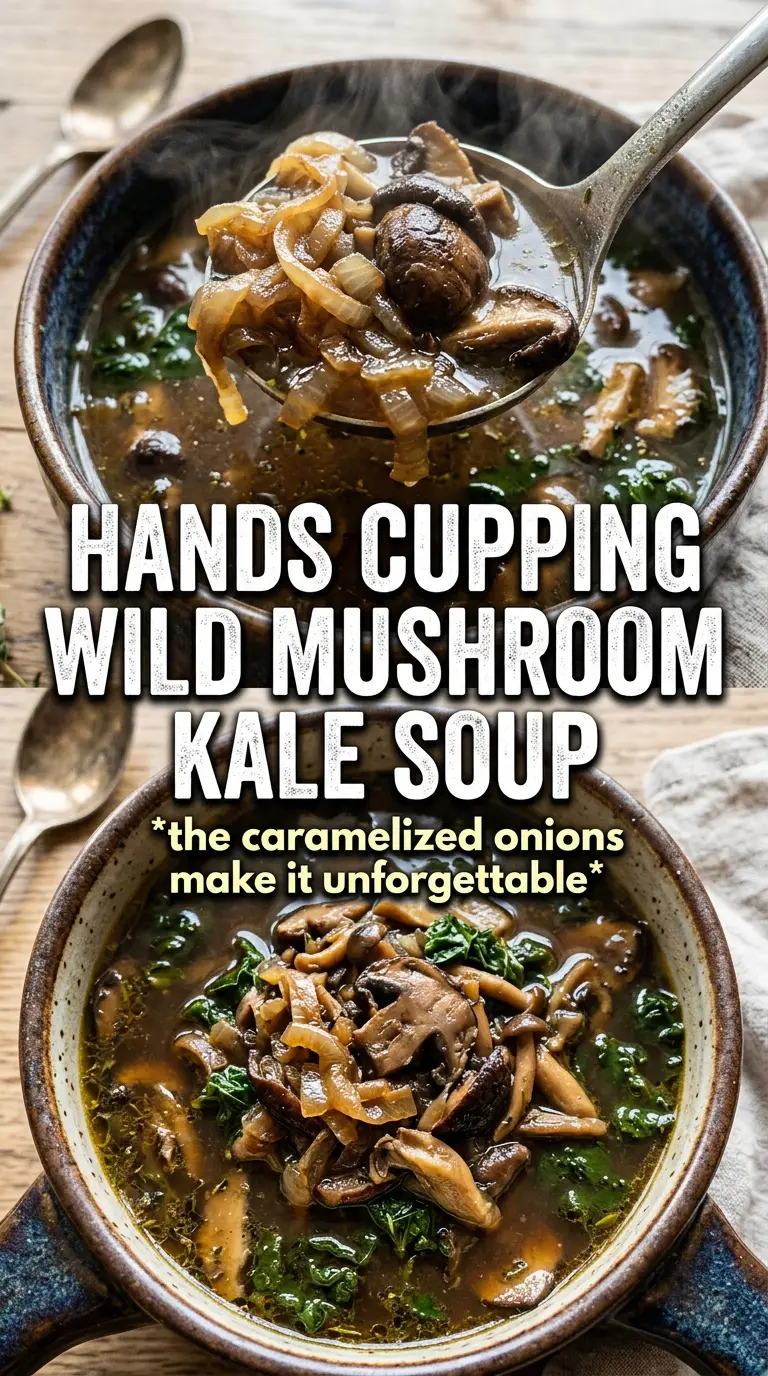
Deep, savory mushroom soup like this earns its place in the regular rotation because it tastes like it simmered all day, even though the actual cooking is straightforward. The broth turns dark and glossy from slow caramelized onions and soaked porcini, while the wild mushrooms bring that meaty, wooded depth you can’t fake with a shortcut. The kale stays just tender enough to give the bowl some structure instead of fading into the background.
What makes this version work is the layering. The onions need time to soften and brown until they taste sweet instead of sharp, and the mushroom mixture needs enough heat to lose its moisture before the wine goes in. The porcini soaking liquid is part of the soup, too, as long as you strain it well so you get all the flavor without any grit.
Below, I’ve laid out the parts that matter most: how to get the onions truly caramelized without rushing them, which mushroom swap still gives you good texture, and how to keep the kale from going dull and overcooked.
The onions cooked down into a rich, sweet base and the porcini soaking liquid gave the broth an incredible depth. I loved that the kale stayed bright and had a little bite instead of turning mushy.
Save this wild mushroom caramelized onion and kale soup for the nights when you want a deeply savory bowl with real mushroom flavor and a silky broth.
The part that keeps this soup from tasting flat
The difference between a good mushroom soup and one that tastes muddy is how hard you work the onions and mushrooms before the liquid goes in. If you rush the onions, they stay sharp and dominate the bowl. If you leave too much moisture in the pan when the mushrooms go in, they steam instead of browning, and the soup loses that deep, savory edge.
Caramelized onions need patience more than attention. Let them go over medium heat until they collapse, turn mahogany, and smell sweet enough to eat on their own. The mushrooms need a hotter pan and enough space to release their water and brown instead of crowding into a soft heap. That contrast is what gives the finished soup its body.
- Wild mushrooms — Shiitake, cremini, and oyster mushrooms give you a mix of chew and earthiness. If you use only button mushrooms, the soup will still work, but it won’t have the same depth or texture.
- Dried porcini — These are the backbone of the broth. The soaking liquid adds concentrated mushroom flavor, but strain it through a coffee filter or fine cloth if you can; any grit left behind will show up in the final bowl.
- Dry sherry or white wine — This sharpens the base and lifts the browned bits from the pot. If you skip it, the soup will still be good, but it loses a layer of brightness that keeps all the sweetness from the onions in check.
- Balsamic vinegar — Use it at the end of the simmer, not at the start. It rounds out the broth without making it taste tangy, and it helps the soup taste finished instead of one-note.
What Each Ingredient Is Actually Doing in This Recipe
- Primary ingredient (the star) — Quality matters most. Choose the best you can find.
- Cooking medium (oil, butter, or broth) — This carries flavors and prevents dryness.
- Seasonings (salt, pepper, spices, herbs) — Layer flavors so nothing overpowers. Build depth gradually.
- Aromatics (garlic, onion, herbs) — Cook with fat to bloom flavors. Become the foundation.
- Supporting ingredients — Complement the main ingredient without overpowering it.
- Sauce or liquid (if applicable) — Brings flavors together. Balance richness with acid.
- Acid (lemon, vinegar, wine, or other) — Brightens and prevents flat-tasting results.
- Final finish (garnish, glaze, or sauce) — Prevents one-dimensional taste and adds visual appeal.
Building the broth without losing the mushroom flavor
Melt the butter with the olive oil first, then add the onions and give them time. The onions should shrink down slowly and turn a deep golden brown; if the heat is too high, they’ll scorch at the edges before they soften in the center. Stir every so often and scrape the bottom of the pot so the sugars caramelize evenly instead of catching.
When the onions are ready, add the garlic and mushrooms. The mushrooms will release a lot of liquid at first, and that’s normal. Keep cooking until that moisture cooks off and the edges start to brown, because that’s when the flavor deepens. Deglazing with the sherry should make the pan hiss and loosen the browned bits immediately; if the liquid disappears almost at once, the pan is too hot.
Caramelizing the onions
Keep the heat at medium and give the onions time to move from pale gold to a rich brown. They should smell sweet, almost jammy, not sharp or raw. If they start sticking aggressively, add a small splash of broth or water and loosen the bottom of the pot instead of turning the heat up. That keeps the color deep without burning the sugars.
Brown the mushrooms, don’t steam them
Add the fresh mushrooms in a fairly hot pot and let them sit long enough to take on color before stirring constantly. At first they’ll look crowded and watery, then the moisture will cook off and the pan will start to smell meaty and toasty. If you stir too often during the wet stage, they’ll stay pale and soft. That’s the point where the soup loses its backbone.
Finish with the kale at the end
Pour in the strained porcini liquid, the broth, thyme, and balsamic, then simmer long enough for the flavors to come together. Add the kale only for the last few minutes so it wilts but still keeps its color and slight chew. If you cook it too long, it turns dull and loses the contrast that makes the soup feel hearty instead of heavy. Season at the end so the broth tastes balanced after it reduces.
How to adapt this soup when you need a different version
Make it dairy-free
Swap the butter for more olive oil or a plant-based butter that browns well. You’ll lose a little richness, but the caramelized onions, porcini, and mushrooms carry enough weight that the soup still tastes full and layered.
Use all vegetable broth
Vegetable broth keeps the soup fully vegetarian, and it works best if you choose one that tastes clean and savory rather than sweet. Because the porcini and browned onions do most of the heavy lifting, you won’t miss the beef broth as much as you might expect.
Swap the kale for spinach
Spinach wilts faster and turns softer, so add it in the last minute instead of giving it a full five-minute cook. The soup will feel lighter and silkier, but it won’t have the same sturdy bite that kale brings.
Storage and Reheating
- Refrigerator: Store in an airtight container for up to 4 days. The broth gets deeper overnight, and the kale softens a little more by day two.
- Freezer: This soup freezes well, but the kale will be softer after thawing. Freeze without the parmesan and truffle oil, then add those fresh when serving.
- Reheating: Warm it gently on the stove over medium-low heat until steaming. Don’t boil it hard, or the mushrooms can turn rubbery and the greens can lose what’s left of their texture.
Questions I Get Asked About This Recipe

Wild Mushroom Caramelized Onion And Kale Soup
Ingredients
Equipment
Method
- Melt butter with olive oil in a large heavy pot over medium heat, then add the thinly sliced onions. Cook for 35-40 minutes, stirring occasionally, until deeply golden and caramelized (a dark mahogany color).
- Add the minced garlic and the sliced mixed wild mushrooms to the pot. Cook for 8 minutes, stirring occasionally, until the mushrooms are browned with visibly reduced liquid.
- Pour in the dry sherry or white wine and deglaze the pot, scraping up any browned bits from the bottom. Cook for 2 minutes until the alcohol smell mellows.
- Drain the soaked dried porcini mushrooms and reserve the soaking liquid. Add porcini, the strained soaking liquid, broth, fresh thyme, and balsamic vinegar, then bring to a simmer.
- Simmer the soup for 15 minutes to meld flavors. Add the chopped kale and cook for 5 minutes until wilted and bright green-tinted.
- Season with salt and pepper to taste, then ladle into bowls. Top with Parmesan shavings and a drizzle of truffle oil.