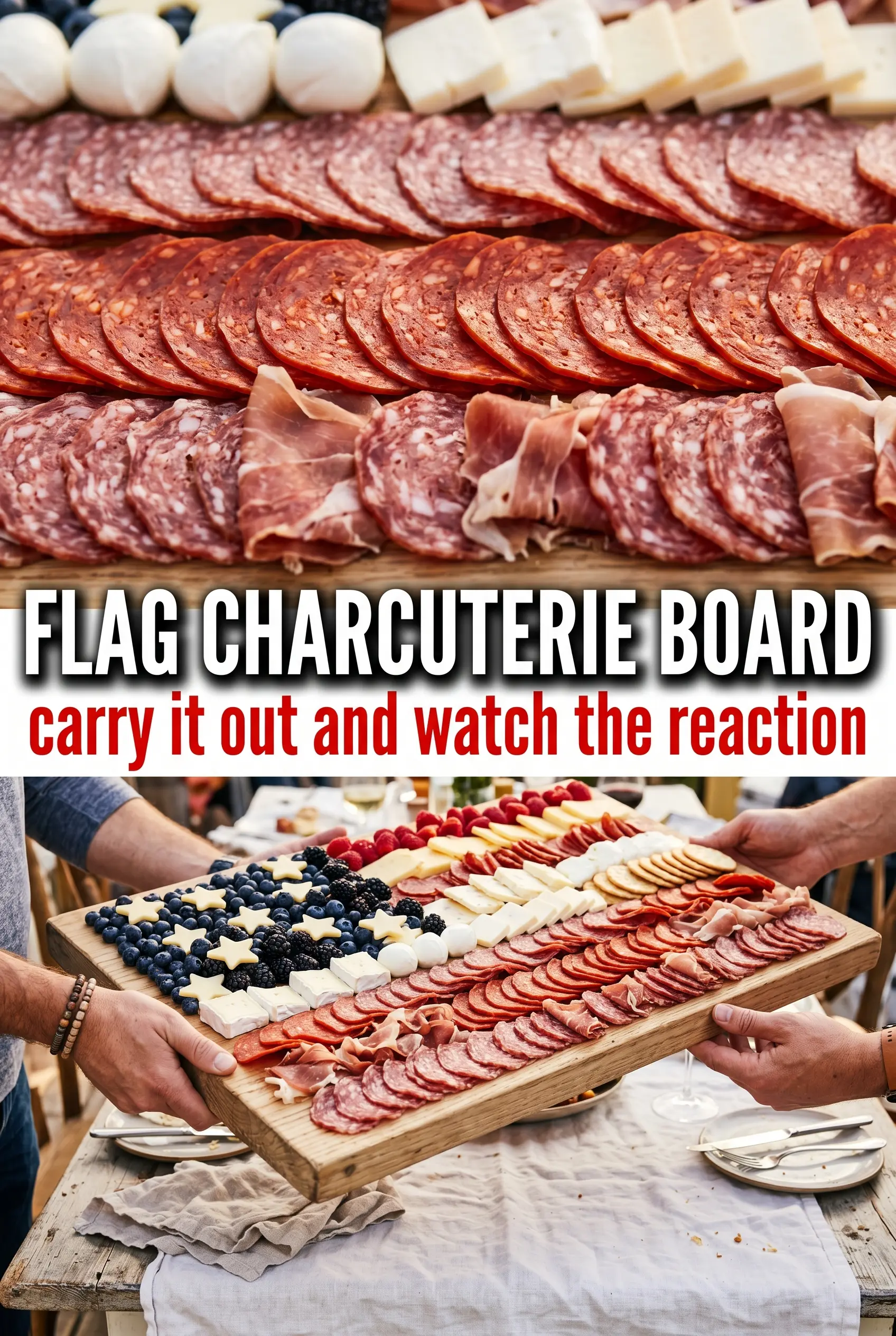
An American flag charcuterie board lands on the table with instant impact, and this version keeps the layout clean enough to recognize from across the room. The trick is balance: tight blueberry clusters in the canton, sturdy rolled salami for the “stars,” and crisp red-and-white stripes that hold their shape long enough for people to admire before they start snacking.
What makes this board work is the way the ingredients do double duty. The blueberries create a dense blue field without sliding around, while the rolled salami adds height and texture instead of trying to look like literal stars. Using both sliced cheese and mozzarella balls gives the white stripes structure and visual contrast, and the strawberries and prosciutto help reinforce the red bands without making the board look crowded.
Below, I’m walking through the layout choices that keep the flag readable, plus the small swaps that help when you need to scale it up, work with different cheeses, or build it a little ahead of time.
The blueberries packed down perfectly in the corner and the rolled salami held its shape better than I expected. The stripes stayed neat for the whole party, even after people started serving themselves.
Like this American flag charcuterie board? Save it to Pinterest for the next party when you want a bold red, white, and blue centerpiece without turning on the oven.
The Layout Problem That Makes Flag Boards Look Messy
The biggest mistake with a themed charcuterie board is treating it like a pile of patriotic ingredients instead of a picture. If the canton isn’t squared off first, the whole board starts drifting and the stripes lose their clean lines. Build the flag shape with the strongest visual anchors first: blueberries packed tight, then the rolled salami, then the broad red-and-white bands across the rest of the board.
Another common failure is using ingredients that won’t hold their place. Thin cheese slices drape well for stripes, but they need something beside them to keep the lines from breaking up. That’s why this board works best on a large rectangular tray or board with enough surface area to let each stripe breathe.
- Blueberries — Pack them tightly so the canton reads as a solid blue block instead of a scattered patch.
- Rolled salami — The curls give the “stars” a little lift and make the corner look intentional.
- White cheddar or provolone — Sliced cheese gives the white stripes clean edges; provolone is softer, cheddar is sharper and firmer.
- Prosciutto and strawberries — These help reinforce the red stripes without making the board feel repetitive.
What Each Ingredient Is Doing in the Flag Shape
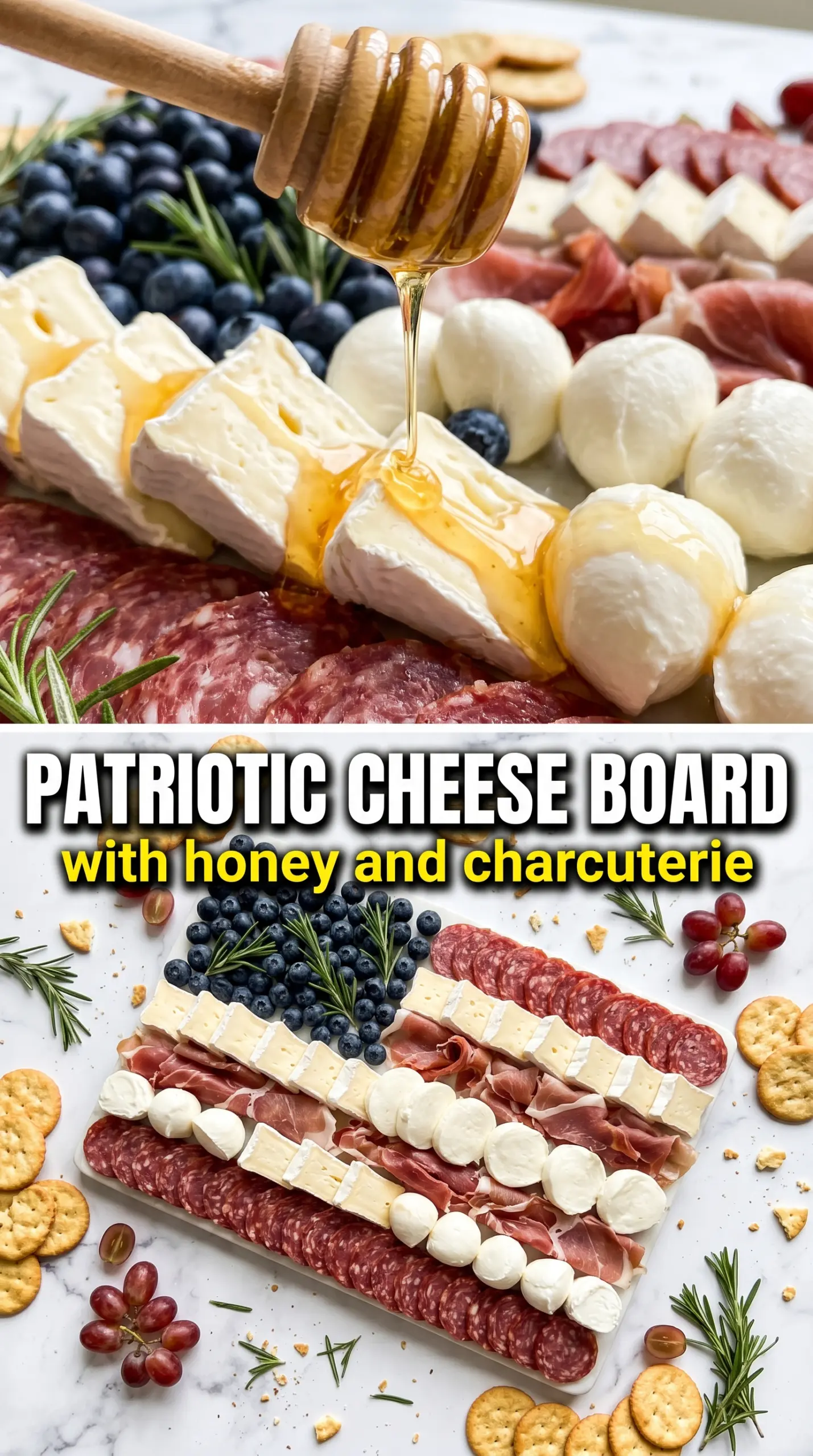
The ingredient list is less about variety and more about structure. You need a few ingredients that read instantly from a distance, and a few that fill space without stealing the show. That’s why the board uses two different reds, two different whites, and one deeply saturated blue.
- Pepperoni slices — These form the strongest red stripe because the color is bold and the rounds stack neatly into a continuous band.
- Salami — Thin slices roll easily and create the textured “star” effect in the canton without much effort.
- Prosciutto — Softer and more delicate than pepperoni, so it helps fill gaps and adds movement to the red stripes.
- Fresh mozzarella balls — They give the white stripes a round, clean look and keep the board from feeling too flat.
- Blueberries — There isn’t a real substitute for the way blueberries create instant color density; blackberries are too dark and raspberries are too loose for this job.
Building the Flag So the Shape Stays Sharp
Mark the Canton First
Start by mentally dividing the upper-left corner into a rectangle before you place anything else. Fill that space tightly with blueberries, pressing them close enough that the blue looks solid instead of dotted. Tuck the rolled salami into the center of that section once the blueberries are in place, because if you start with the salami first, it tends to drift and leave awkward gaps.
Lay the Stripes in Clean Passes
Build the stripes from the top right across the full width of the board, alternating red and white as you go. Pepperoni makes the strongest red line, while sliced cheddar or mozzarella balls keep the white bands bright and readable. If a stripe starts to look uneven, add more of the same ingredient rather than switching to something different; mixing too many textures inside one stripe makes the flag harder to recognize.
Fill Gaps Without Breaking the Design
Use prosciutto folds and strawberry halves to patch any open spaces in the red bands after the main layout is set. Add rosemary sprigs at the corners and edges last, because they frame the board without competing with the flag itself. Crackers go around the perimeter, not inside the stripes, so the board still looks like a flag when people start serving themselves.
How to Scale This Board Without Losing the Flag Look
Make it on a smaller tray
If your board is smaller, keep the stripes simple and use more pepperoni and blueberries than prosciutto or extra garnishes. The board will read better with fewer elements packed tightly than with too many ingredients fighting for space.
Swap in a different cheese
Provolone gives a softer, more pliable stripe, while white cheddar brings a sharper edge and a little more bite. If you use mozzarella only, pair it with a firmer cheese somewhere else on the board so the white sections don’t look too soft and uneven.
Go dairy-free
Replace the cheese stripes with thick cucumber ribbons, jicama sticks, or white fruit like peeled pear slices if you need a dairy-free board. The look changes a little, but the structure still works as long as the white bands stay broad and the pieces are cut consistently.
Build it a little ahead
You can arrange the meats and cheese about an hour ahead, then cover the board loosely and chill it. Add the crackers and rosemary right before serving so the crackers stay crisp and the herbs look fresh instead of wilted.
Storage and Reassembly
- Refrigerator: Leftover meats, cheese, and fruit keep for 2 days if stored separately in airtight containers. The assembled board softens quickly once it sits out.
- Freezer: Don’t freeze the finished board. The fruit, cheese, and cured meats lose texture and the layout won’t recover well after thawing.
- Reheating: No reheating is needed. If the cheese has been chilled, let it sit out for 15 to 20 minutes before serving so the flavors open up and the texture isn’t too firm.
Questions I Get Asked About This Recipe
American Flag Charcuterie Board
Ingredients
Equipment
Method
- Use a large rectangular wooden board or serving tray and mentally divide the upper left into a canton rectangle.
- Fill the canton with blueberries packed tightly together, then tuck rolled salami pieces in the center to resemble stars.
- Starting from the top right of the board, layer pepperoni slices in a clean row across the full width of the board to form a red stripe.
- Create the white stripes using rows of sliced white cheddar or provolone, alternating with the red stripes down the full board.
- Add prosciutto folds or strawberry halves to reinforce the red stripes and fill any gaps.
- Tuck rosemary sprigs at the corners and edges, then arrange crackers around the perimeter and serve.