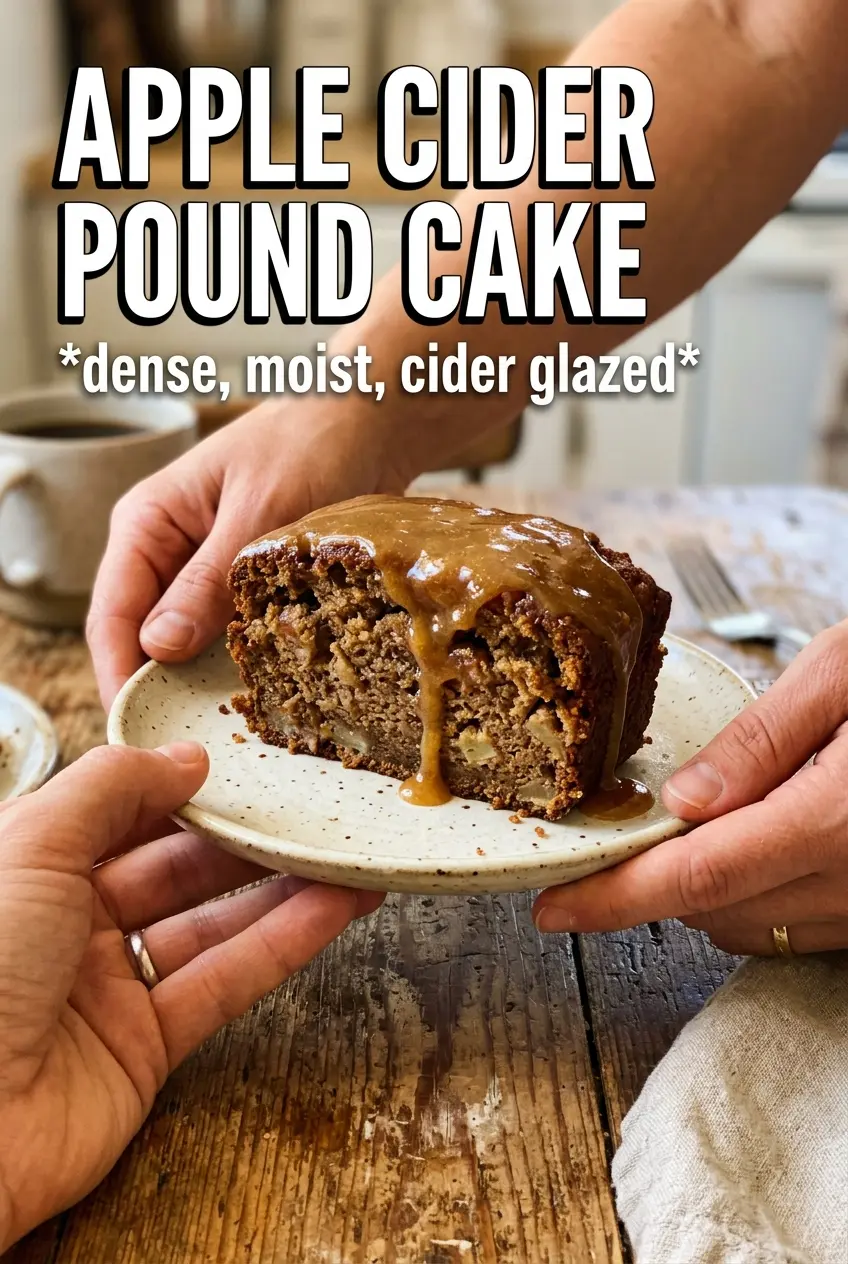
Apple cider pound cake bakes up with a tight, plush crumb and that deep, bakery-style butter flavor that makes a second slice feel inevitable. The cider doesn’t just flavor the batter; reducing it first concentrates the apple notes so they hold up after baking, instead of disappearing into the cake. The glaze on top gives each ridge of the bundt pan a sweet, spiced finish that settles into the crust without making it soggy.
This cake works because the batter is built for structure. Softened butter and sugar are beaten until genuinely airy, then the eggs and reduced cider are added in a way that keeps the mixture smooth. Sour cream adds moisture without thinning the batter too much, which is what keeps the crumb dense but still tender. If you’ve ever had pound cake turn dry at the edges or bland in the center, this version fixes both problems by leaning on concentrated cider and enough fat to keep the texture plush.
Below, I’ve included the one step that matters most for keeping the cake moist, plus a few ways to adapt the recipe if you want to change the spice level or bake it ahead.
The cider flavor came through in every slice, and the crumb stayed moist for days. I reduced the cider like you said and the glaze set up beautifully instead of sliding off the cake.
Save this apple cider pound cake for the days when you want a dense, spiced bundt with a cider glaze that actually stays put.
The Step That Keeps Apple Cider Pound Cake From Tasting Flat
Reducing the cider before it goes into the batter is what gives this cake its apple backbone. A full cup of cider sounds like a lot, but if you add it straight in, the flavor gets diluted and the batter gets looser than a pound cake should be. Cook it down to half a cup and let it cool completely before mixing it in. That concentrated cider brings a deeper, almost caramel-apple note without throwing off the texture.
The other place people go wrong is the mixing order. Pound cake depends on air from the butter and sugar, then gentle alternation of dry ingredients and dairy to keep the batter from breaking. If you dump everything in at once, the cake can bake up heavy in the center or tunnel around the edges. This batter should look thick, smooth, and glossy before it goes into the pan.
What Each Ingredient Is Doing in the Crumb
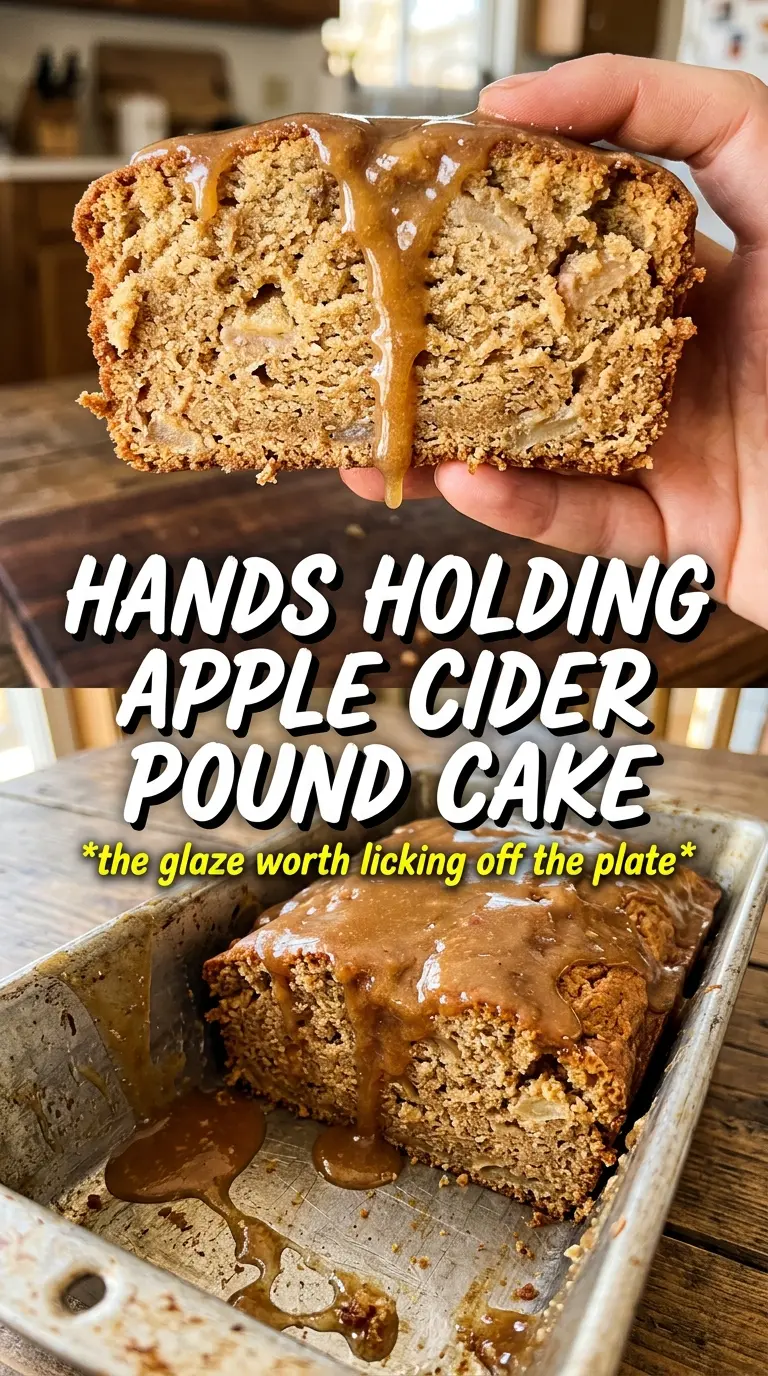
- Apple cider — Reducing the cider is non-negotiable here. The concentrated liquid adds real apple flavor without watering down the batter, and it gives the glaze enough punch to taste like cider instead of just sugar.
- Sour cream — This is what keeps the crumb plush. It adds fat and acidity, which softens the texture and helps the cake stay tender for several days. Plain Greek yogurt works in a pinch, but the cake will be a little tangier and slightly less rich.
- Butter and sugar — Creaming them until very light and fluffy builds the cake’s structure. If the mixture still looks dense and sandy, keep beating; that step matters more than people think for a pound cake that slices cleanly.
- Cinnamon and nutmeg — These don’t make the cake taste like pie. They frame the cider and keep the flavor warm and round. Freshly grated nutmeg has the best payoff if you have it.
- All-purpose flour — It gives the cake enough strength to hold the bundt shape without becoming tough. Cake flour makes a softer cake, but it loses that classic pound cake density.
Building the Batter and Baking It Through the Center
Reducing the Cider
Pour the cider into a small saucepan and cook it over medium heat until it measures about half a cup. You want steady bubbling, not a hard boil that scorches the edges. Let it cool completely before it goes anywhere near the butter, or it can melt the emulsion and make the batter look curdled. If you rush this part, the cake can bake with a tighter, slightly gummy streak in the middle.
Creaming for a Fine, Even Crumb
Beat the butter and sugar until the mixture looks pale, fluffy, and a little increased in volume, about five minutes. This is where the cake gets its lift, so don’t stop when it just looks combined. Add the eggs one at a time and let each one disappear before adding the next. If the batter starts to look split, keep going; once the flour goes in, it usually comes back together.
Alternating the Dry Ingredients and Sour Cream
Add the flour mixture in batches, alternating with the sour cream and ending with flour. That keeps the batter stable and prevents overmixing, which is the fastest way to make pound cake tough. The finished batter should be thick enough to mound in the bowl, not pour like a loaf batter. Scrape the bottom and sides of the bowl once more before transferring it to the pan so there are no pockets of unmixed flour.
Baking and Unmolding Cleanly
Spread the batter evenly in a well-greased and floured bundt pan, then bake until a toothpick comes out clean from the center. The top should be deeply golden and the sides should pull slightly from the pan. Let it rest for 15 minutes before turning it out; too soon and it can tear, too late and the sugar can stick. Once it’s out, cool it all the way before glazing so the glaze stays on top instead of disappearing into the cake.
Three Ways to Adjust This Cake Without Losing the Texture
Make it dairy-free with plant butter and coconut yogurt
Use a full-fat dairy-free butter that behaves like stick butter and swap in plain unsweetened coconut yogurt for the sour cream. The cake will still be rich, but the crumb will be a little softer and the flavor a touch less buttery. Keep the cider reduction step exactly the same so the apple flavor doesn’t get lost.
Turn it into a stronger spice cake
Add another 1/4 teaspoon of cinnamon and a pinch of cloves. That pushes the cake toward a warmer, more aromatic finish without changing the structure. Don’t go heavy on the cloves; they can take over fast and bury the cider.
Bake it ahead for an easier dessert day
This cake holds up well overnight, and the flavor settles in even more by the next day. Bake it, cool it completely, then glaze it just before serving if you want the cleanest look. If you glaze it the night before, the top will soften a bit, but the cake itself stays moist.
Storage and Reheating
- Refrigerator: Store covered for up to 5 days. The crumb tightens a little in the fridge, but the flavor stays excellent.
- Freezer: Freeze unfrosted or glazed slices tightly wrapped for up to 2 months. Thaw at room temperature in the wrapping so the cake doesn’t dry out.
- Reheating: Warm individual slices for 10 to 15 seconds in the microwave or a few minutes in a low oven. Don’t overheat it or the crumb turns dry and the glaze melts away completely.
Questions I Get Asked About This Recipe
Apple Cider Pound Cake
Ingredients
Equipment
Method
- Reduce 1 cup apple cider to 1/2 cup over medium heat, stirring occasionally until thickened slightly; cool completely so it doesn’t scramble the batter.
- Preheat the oven to 325F; grease and flour a 10-inch bundt pan so the cake releases cleanly.
- Whisk all-purpose flour, baking powder, baking soda, salt, cinnamon, and nutmeg together until evenly combined.
- Beat unsalted butter and granulated sugar until very light and fluffy, about 5 minutes, for a tender crumb.
- Add eggs one at a time, mixing well after each addition so the batter stays smooth.
- Mix in vanilla extract and the reduced, cooled apple cider until incorporated.
- Alternate adding the flour mixture and sour cream to the batter, beginning and ending with flour; stop mixing once the last streaks disappear.
- Pour the batter into the prepared bundt pan and spread it evenly for an even bake.
- Bake at 325F for 70-80 minutes until a toothpick comes out clean, indicating the center is set.
- Cool the cake in the pan for 15 minutes, then invert and cool completely so the glaze won’t melt.
- Whisk powdered sugar, apple cider, and cinnamon for the glaze until smooth, then drizzle over the cooled cake to coat the ridges.


