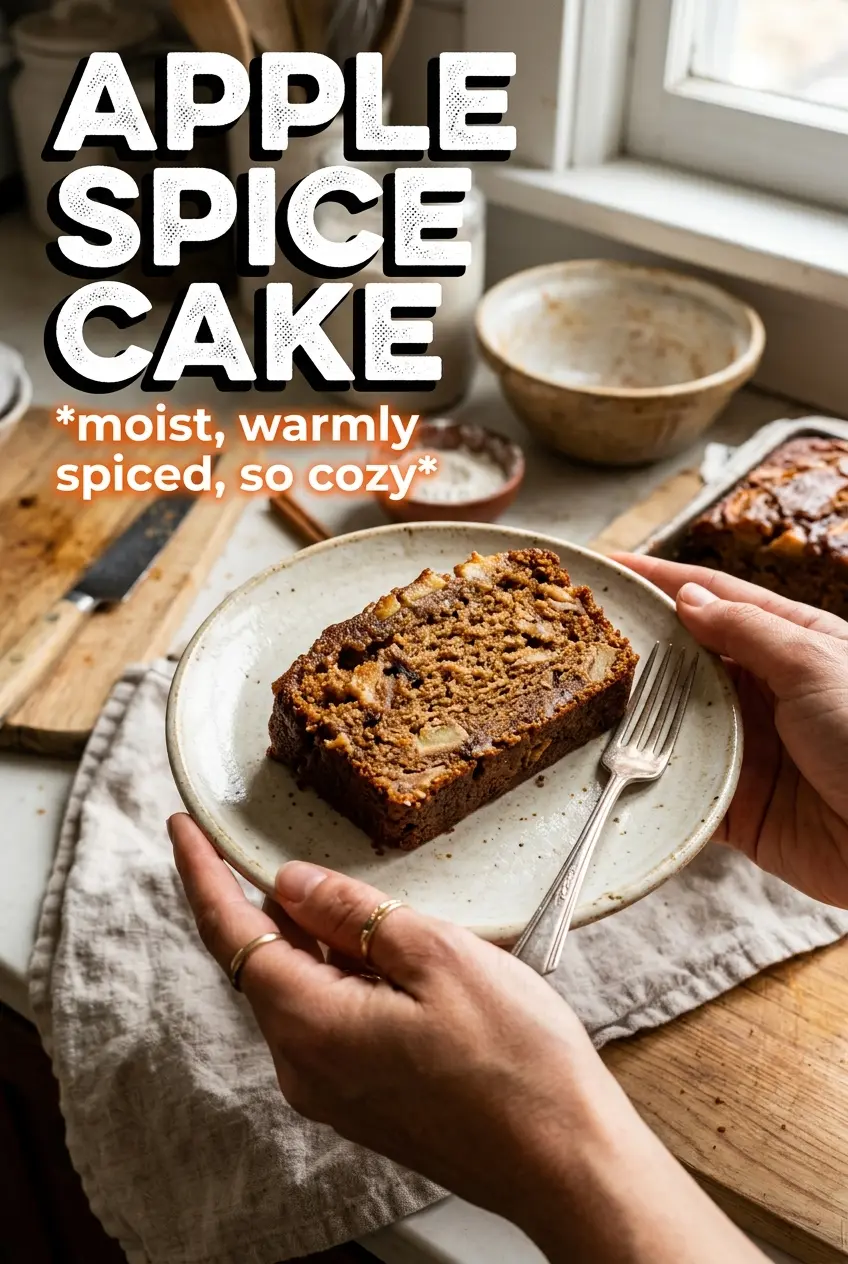
Apple spice cake bakes up tender and moist, with a dense crumb that stays soft for days and enough warm spice to taste like more than just apple dessert. The grated apple melts into the batter, while the little bits of fruit in a diced version give you a more obvious bite. Either way, the cake comes out with a deep cinnamon-gold color and a finish that holds a thick layer of brown butter cream cheese frosting without getting heavy.
What makes this version work is the balance of oil, sour cream, and apples. Oil keeps the crumb plush even after chilling, sour cream adds enough acidity to keep the cake from tasting flat, and the brown sugar brings a deeper note that plain white sugar can’t give you. The spices are measured to stand up to all that fruit without turning the cake muddy or bitter.
Below, I’ve included the little details that matter most: how grated apples behave differently from diced ones, why the cake needs to cool all the way before frosting, and what to do if you want to bake it as a layer cake instead of a sheet cake.
I used grated apples like you suggested, and the cake stayed unbelievably moist without getting soggy. The brown butter frosting was the best part — it set up smooth and spread like a dream.
Save this apple spice cake for the days when you want a moist, spiced layer cake with brown butter cream cheese frosting.
The Trick Most Apple Cakes Miss: Keeping the Crumb Light Even With All That Fruit
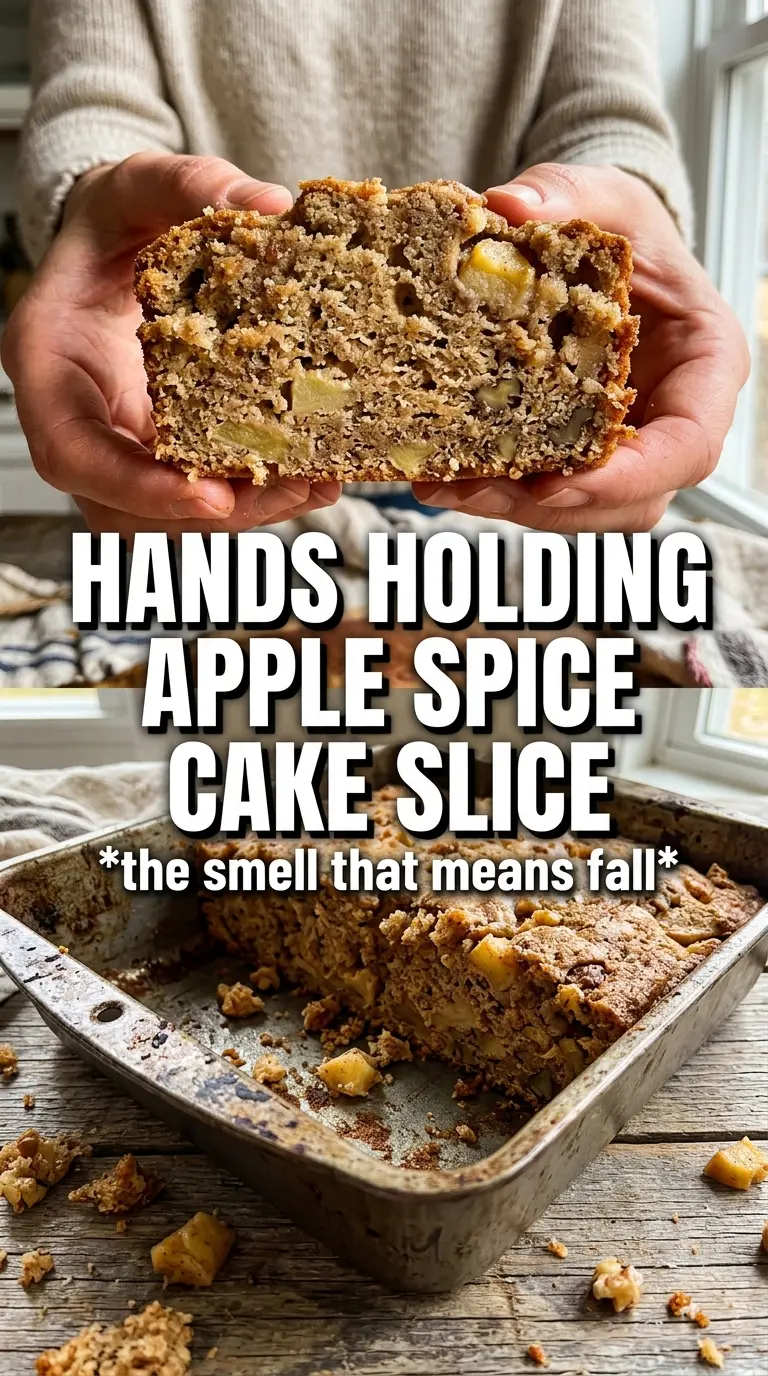
Apple cake can turn heavy fast when the batter gets overmixed or the apples release too much liquid in one spot. That’s why this recipe works best when the dry ingredients are folded in only until the flour disappears, then the apples go in at the end. You want the batter to look a little rough, not glossy and elastic.
Grated apples disappear into the crumb and help keep every slice moist. Finely diced apples give you more texture, but they can sink if the batter is too loose, so toss them in right before the pan goes into the oven. The sour cream and oil do their part here too: one adds tenderness, the other keeps the cake soft after it cools.
What Each Ingredient Is Actually Doing in This Cake
- All-purpose flour — This gives the cake enough structure to hold three cups of apple without collapsing. Cake flour would be too fragile here.
- Baking soda — It reacts with the sour cream and helps the cake lift despite the moisture from the apples. If yours is old, the cake can bake up dense.
- Cinnamon, ginger, cloves, allspice, and nutmeg — This is the backbone of the cake. Cinnamon leads, but the smaller amounts of clove, allspice, and nutmeg keep it from tasting one-note.
- Vegetable oil — Oil gives you the soft, plush texture this cake is known for. Butter won’t stay as tender once the cake chills.
- Brown sugar — It adds moisture and a little caramel depth that works beautifully with the apples and spices.
- Sour cream — This keeps the crumb rich and helps the cake stay tender for days. Plain yogurt works in a pinch, but it’s a little tangier and less lush.
- Apples — Grated apples melt in for moisture, while diced apples add visible bites. If your apples are very juicy, pat them lightly with a towel before folding them in.
Building the Batter Without Losing the Texture
Mix the wet ingredients until just smooth
Whisk the oil, both sugars, eggs, vanilla, and sour cream until the mixture looks cohesive and a little thick. You don’t want to whip air into it; this cake gets its lift from baking soda, not from a foamy batter. If the eggs are cold and the mixture looks separated for a moment, keep whisking until it comes back together.
Fold in the flour by hand
Add the dry ingredients and stir only until the flour disappears. Overmixing at this point makes the cake tougher and can create tunnels in the crumb. A few streaks are fine when you start folding in the apples; they’ll finish the job.
Get the apples into the batter right before baking
Fold in the grated or diced apples last so they don’t start leaking juice while the batter sits. The batter should look thick and spoonable, not pourable. Spread it evenly in the pan and tap the pan once on the counter to release any big air pockets.
Watch for the clean-center test
Bake until a toothpick comes out clean or with just a few moist crumbs, not wet batter. In a 9×13 pan, that usually takes the full 50 to 55 minutes, while round layers finish sooner. If the top is getting too dark before the center sets, tent it loosely with foil for the last part of baking.
How to Adapt This Cake for Different Pans and Different Needs
Turn it into a layer cake
Bake the batter in two 9-inch rounds for a taller, more celebration-style cake. The layers bake faster than the sheet cake, so start checking early. Let them cool in the pans for 10 minutes, then turn them out carefully so the apples don’t trap steam underneath.
Make it dairy-free
Swap the sour cream for a thick dairy-free yogurt and use a dairy-free cream cheese frosting if you still want the same finish. The cake itself stays moist and tender, though the frosting will taste a little less tangy and a little softer at room temperature.
Use a nutty frosting instead of brown butter
If you want a simpler finish, skip the browning step and use softened butter in the cream cheese frosting. You’ll lose the toasted, nutty note, but the frosting will still be rich and spreadable. This is the easier route if you’re making the cake on a tight schedule.
Add chopped nuts for more texture
Fold in up to 1 cup of toasted walnuts or pecans with the apples. They add crunch and make the cake feel a little more old-fashioned, but they also make each slice heavier, so keep the pieces small and even.
Storage and Reheating
- Refrigerator: Store frosted cake covered for up to 5 days. The crumb stays moist, and the frosting firms up a bit in the cold.
- Freezer: Freeze unfrosted layers tightly wrapped for up to 2 months. Thaw overnight in the refrigerator before frosting.
- Reheating: Let slices sit at room temperature for 20 to 30 minutes, or microwave briefly at low power. Too much heat softens the frosting and can make the crumb feel greasy.
Questions I Get Asked About This Recipe
Apple Spice Cake
Ingredients
Equipment
Method
- Preheat the oven to 350°F, then grease a 9x13 pan or two 9-inch rounds with a light coating so the cake releases cleanly.
- Whisk all-purpose flour, baking soda, cinnamon, ginger, cloves, allspice, nutmeg, and salt in a bowl until the spices and leavening are evenly distributed.
- Beat vegetable oil, granulated sugar, brown sugar, eggs, vanilla extract, and sour cream until the batter looks smooth and fully combined.
- Fold the flour mixture into the wet ingredients until just combined, then fold in the grated or finely diced apples so you don’t overmix.
- Bake for 50–55 minutes in a 9x13 pan (or 35–40 minutes for rounds) until a toothpick inserted in the center comes out clean and the top is golden-brown.
- Cool completely, then keep the cake at room temperature until it’s cool to the touch so frosting won’t melt.
- Beat cream cheese, browned butter, powdered sugar, vanilla, and milk until smooth and spreadable with no lumps.
- Generously frost the cooled cake, spreading evenly to the edges so the spiced layers stay moist under the creamy topping.


