Cold pasta salad gets a lot more interesting when the dressing actually tastes like something you’d want to eat on its own. This Asian pasta salad brings together tender noodles, crunchy cabbage and carrots, sweet edamame, and a sesame-ginger dressing that clings to every strand instead of pooling at the bottom of the bowl.
The small details matter here. Rinsing the pasta stops the cooking and keeps the salad from turning heavy, while the balance of soy sauce, rice vinegar, sesame oil, and honey gives you that salty-tangy-slightly-sweet finish that makes people go back for a second scoop. Fresh ginger and garlic keep the dressing sharp enough to wake up all those vegetables.
Below, I’ve added the parts that make this salad hold up well after chilling, plus the swaps I’d use if I needed to make it gluten-free or change up the vegetables without losing the crunch.
The dressing soaked into the pasta just enough after chilling, and the cabbage still had a great crunch the next day. I added extra sesame seeds on top and it tasted even better after sitting for an hour.
Save this sesame-ginger Asian pasta salad for lunches, potlucks, and make-ahead dinners when you want crunchy vegetables and noodles that taste even better after chilling.
The Trick to Keeping the Noodles Light Instead of Sticky
The biggest mistake with pasta salad is treating it like hot pasta that happens to be cold. Once the noodles are cooked, they need a hard rinse under cold water so the starch stops working and the strands stay separate. That step matters even more here because the sesame dressing is thinner than a creamy one, which means it has to coat cleanly instead of fighting through a gummy pasta base.
Chilling also changes the texture in your favor. The dressing gets a chance to settle into the noodles, and the vegetables stay crisp if they’re cut thin enough to soften just a little without going limp. If the salad tastes flat after chilling, it usually needs a pinch more salt or a splash more rice vinegar, not more sesame oil.
What Each Ingredient Is Actually Doing in This Salad
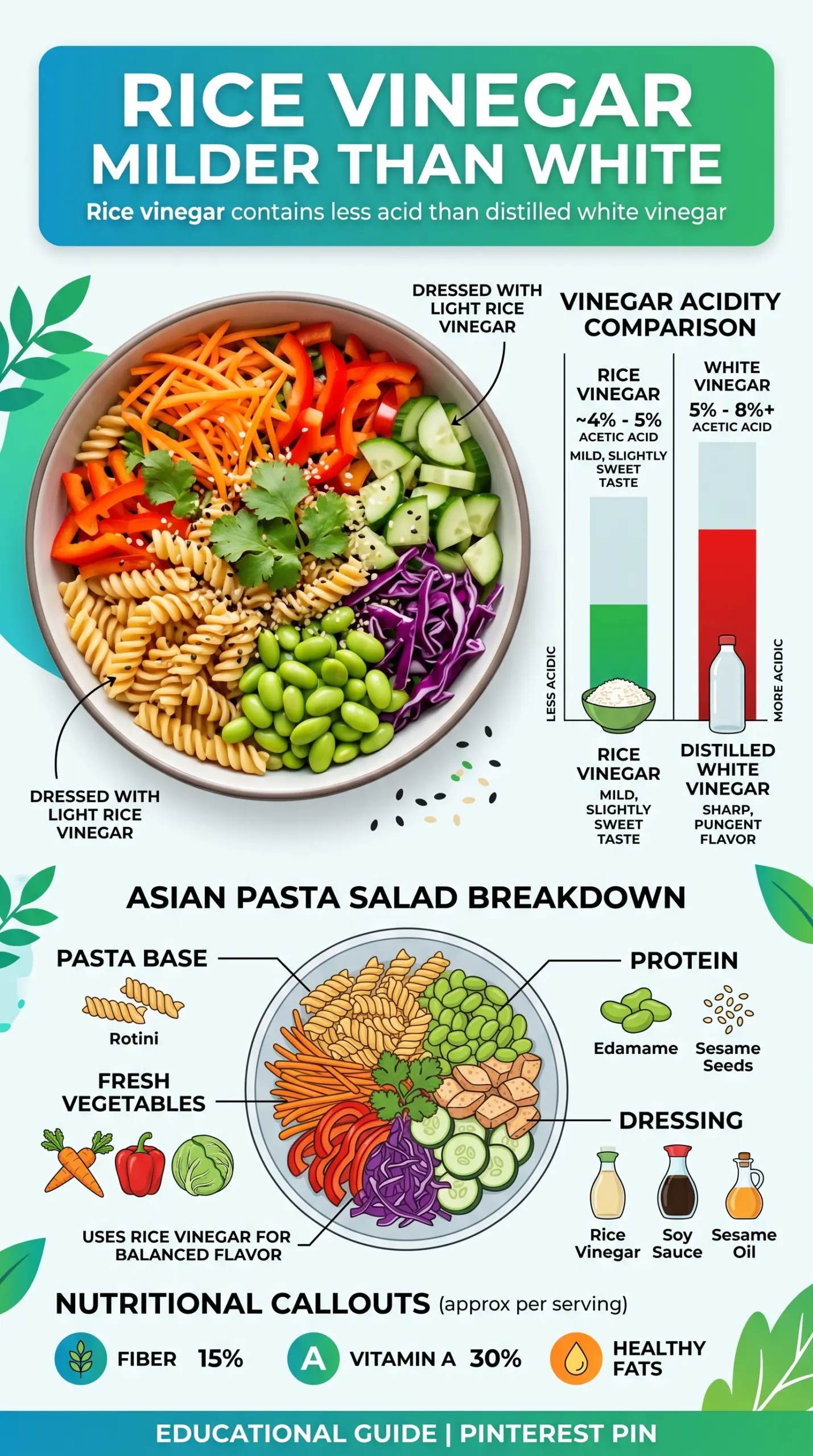
- Spaghetti or linguine — Broken long pasta works better than short shapes here because it catches the dressing and mixes neatly with the shredded vegetables. If you use a thicker noodle, the salad feels heavier and less balanced.
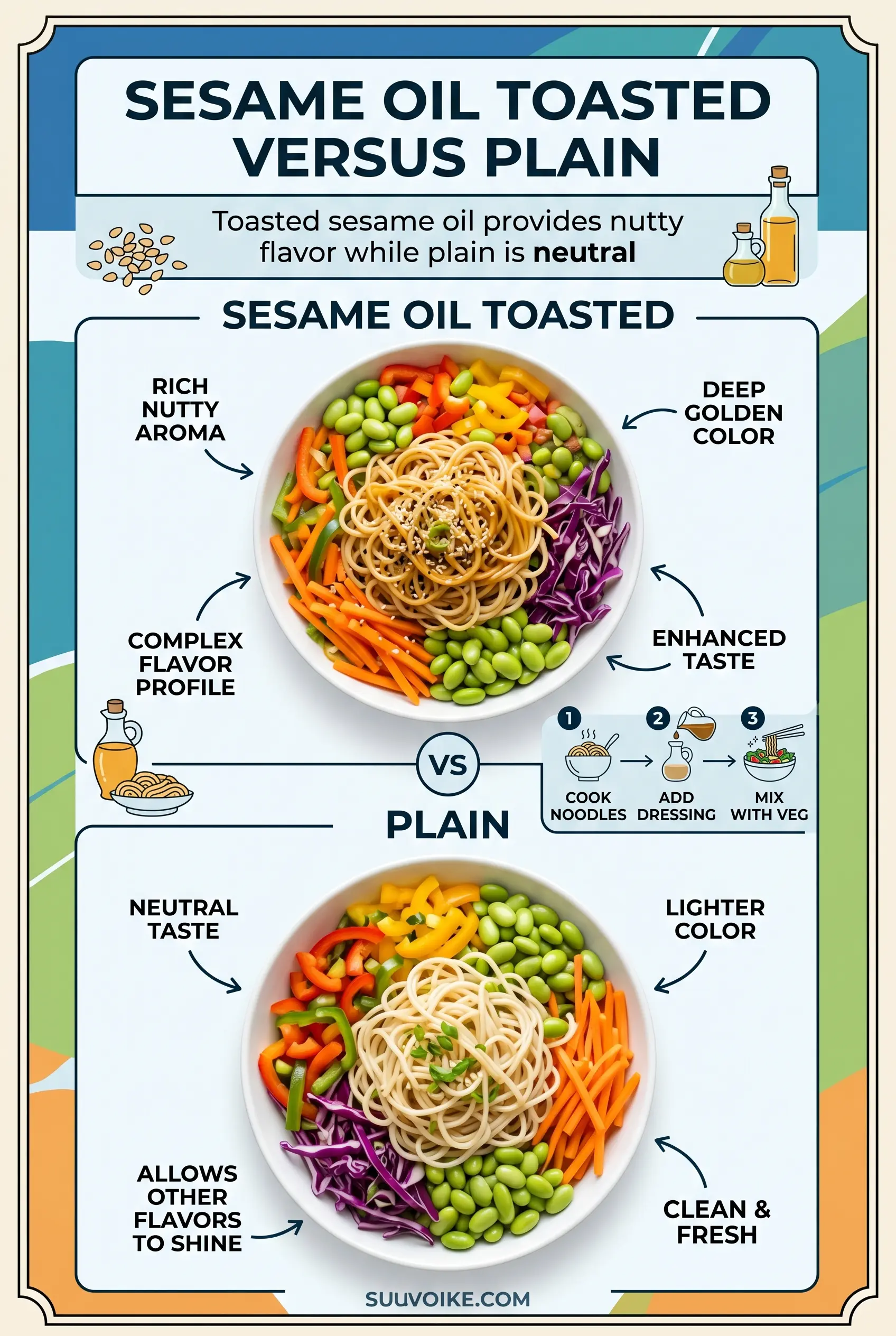
- Sesame oil — This is the ingredient that gives the salad its nutty, unmistakable backbone. Don’t swap it for a neutral oil unless you’re okay losing that flavor; use toasted sesame oil for the strongest result.
- Rice vinegar — It keeps the dressing bright without tasting sharp or acidic the way distilled vinegar can. If that’s what you have, apple cider vinegar can work in a pinch, but use a little less because it’s louder.
- Fresh ginger and garlic — Fresh is worth it here. Powdered versions won’t give the same clean heat or bite, and the dressing depends on that contrast to keep the salad from tasting one-note.
- Red cabbage, carrots, and bell pepper — These bring color and crunch that hold up after chilling. Slice them thin so they soften just enough to eat easily while still staying crisp.
- Edamame — It adds substance and a gentle, nutty flavor that makes this salad feel complete. If you skip it, the dish eats more like a side than a meal.
Building the Dressing So It Clings Instead of Pooling
Whisk the Dressing Until the Honey Disappears
Start with the soy sauce, rice vinegar, sesame oil, honey, ginger, garlic, salt, and pepper in a bowl and whisk until the honey is fully dissolved. If the dressing still looks streaky, it hasn’t emulsified enough to coat the pasta evenly. Taste it now, before it hits the salad, because once it’s mixed in, small adjustments are harder to notice.
Cool the Pasta Completely Before Mixing
Drain the pasta, rinse it cold, and let it sit for a minute or two so excess water drains away. If the noodles are still warm, they’ll soften the vegetables and dilute the dressing. You want the pasta cool to the touch before it goes into the bowl, not just no longer steaming.
Toss, Then Chill for the Full Hour
Mix the pasta, edamame, cabbage, carrots, and bell pepper in a large bowl, then pour the dressing over everything and toss until every strand is glossy. The salad needs that hour in the refrigerator because the noodles absorb some of the seasoning and the vegetables relax just enough to taste integrated. Right before serving, check for seasoning again; cold food almost always needs a final pinch of salt.
How to Adapt This for Different Diets and Pantry Swaps
Make It Gluten-Free
Use gluten-free pasta and swap the soy sauce for tamari or a certified gluten-free soy sauce. The texture stays close to the original, but gluten-free noodles can get soft faster, so pull them right at al dente and rinse them thoroughly.
Make It Vegan
Replace the honey with maple syrup or agave. The sweetness still balances the vinegar, but maple gives a slightly deeper finish while agave stays more neutral.
Swap the Vegetables Without Losing Crunch
Snap peas, cucumber, shredded napa cabbage, or thinly sliced radish all work well. Keep the pieces thin and crisp, because this salad depends on contrast between the soft noodles and the fresh vegetables.
Storage and Reheating
- Refrigerator: Keeps for 3 to 4 days. The vegetables soften a little, but the flavor gets even better after the first day.
- Freezer: Don’t freeze it. The noodles and vegetables turn watery and lose the fresh crunch that makes the salad work.
- Reheating: Serve it cold or let it sit at room temperature for 15 to 20 minutes. Heating it ruins the texture and makes the sesame dressing taste dull.
Questions I Get Asked About This Recipe
Asian Pasta Salad with Sesame-Ginger Dressing
Ingredients
Method
- Cook the spaghetti or linguine according to package directions until al dente, then drain and rinse with cold water to stop the cooking (keep it cool and springy).
- Whisk soy sauce, rice vinegar, sesame oil, honey, grated ginger, minced garlic, salt, and pepper until smooth and glossy.
- Combine the cooled pasta, shelled edamame, shredded red cabbage, shredded carrots, and thinly sliced red bell pepper in a large bowl for an even mix of color.
- Pour the dressing over the salad and toss until everything is coated so the pasta looks lightly lacquered.
- Refrigerate for at least 1 hour to let the flavors meld and the salad turn satisfyingly chilled.
- Top with sliced green onions and sesame seeds right before serving for a fresh crunch and visible sesame specks.