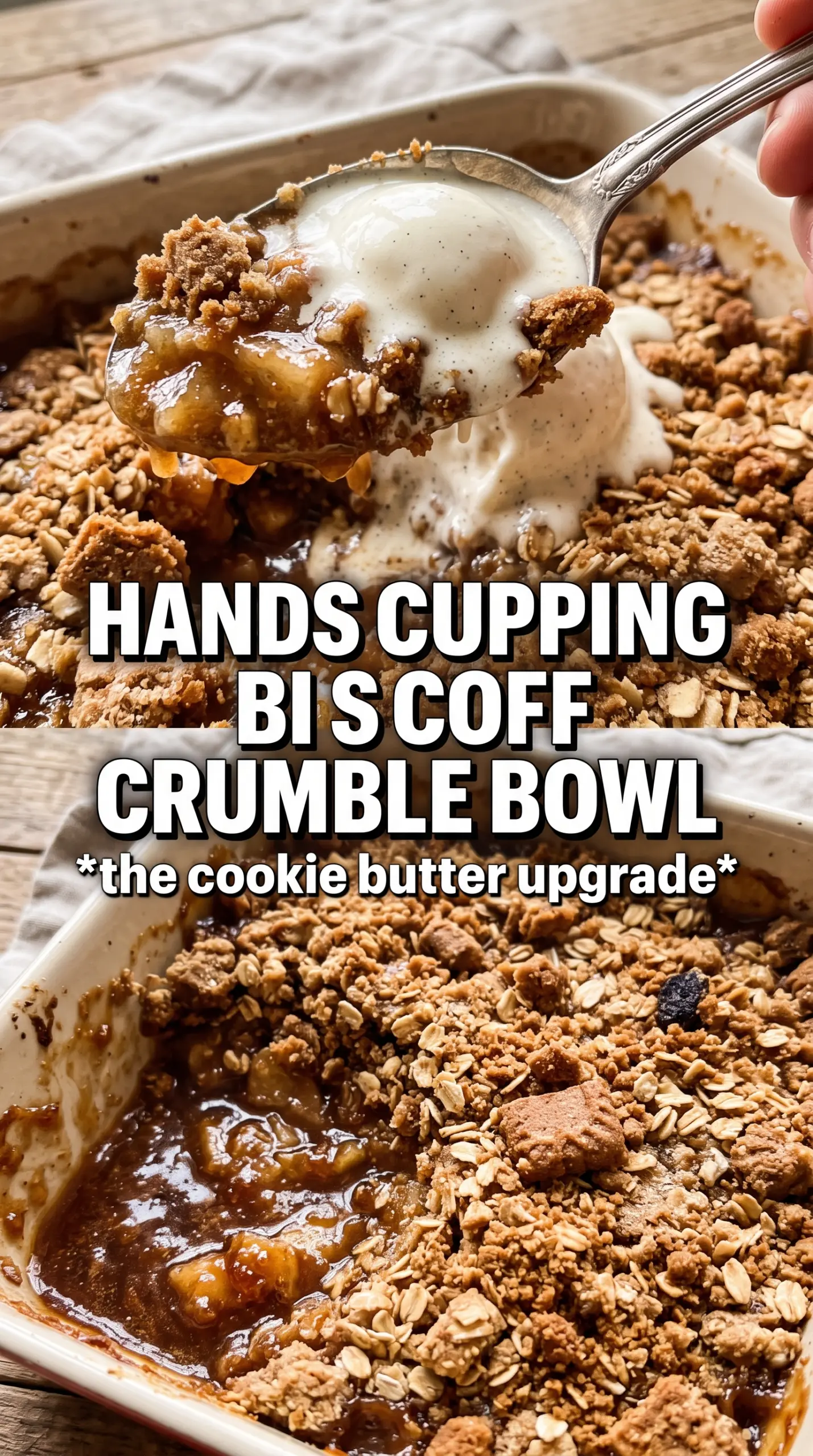
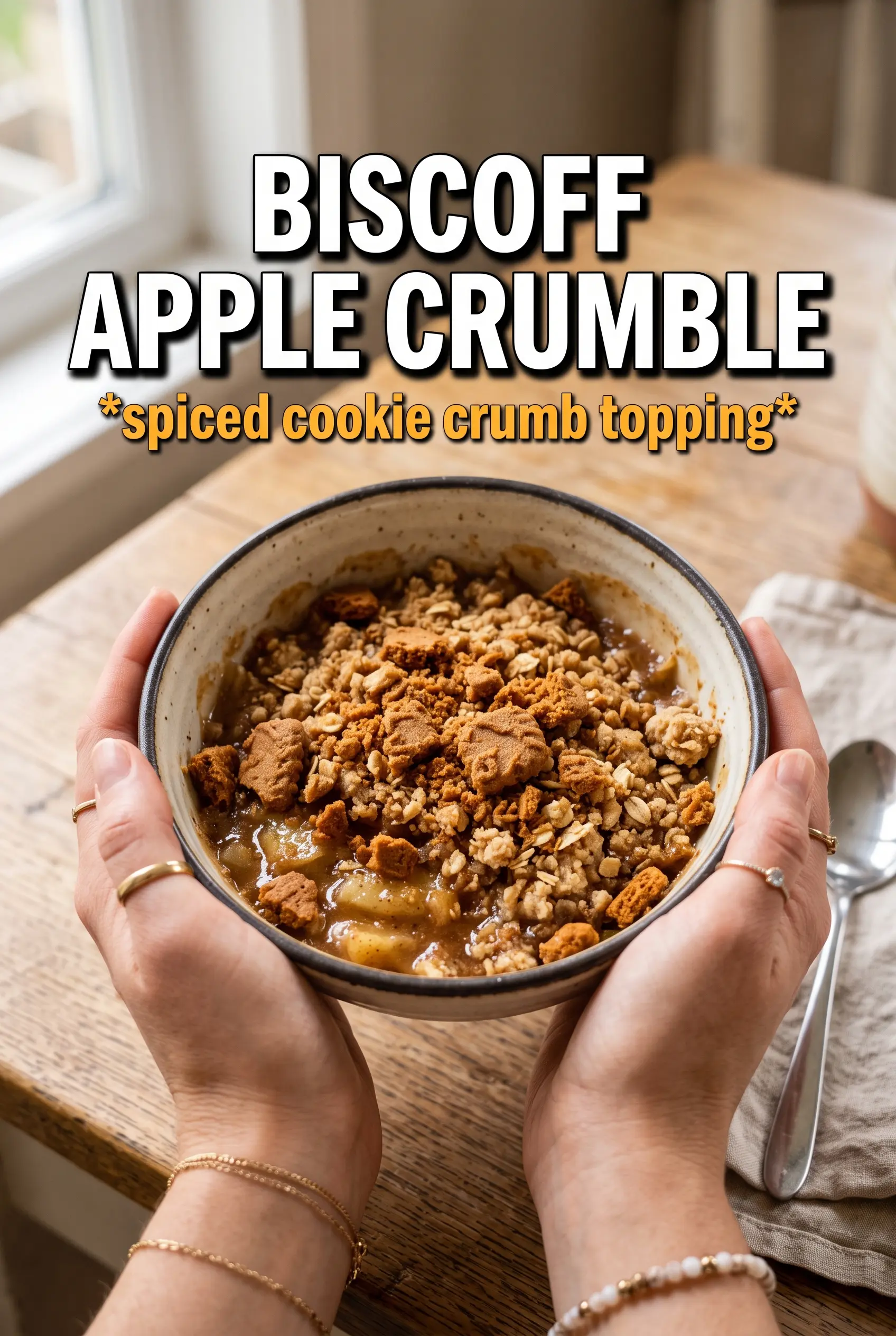
Golden Biscoff crumble over bubbling cinnamon apples is the kind of dessert that disappears fast because it hits every note at once: soft fruit, crisp topping, and that deep caramel spice Biscoff brings without turning the whole pan cloying. The topping bakes into a rough, craggy layer with just enough oat chew to keep it from reading like cookie crumbs dumped on fruit. It feels familiar the first bite and then a little more interesting the second time around.
The trick here is treating Biscoff like part of the structure, not just a flavor add-in. A spoonful goes into the apples so the filling tastes rounded and warm, then more gets worked into the crumble for those cookie-butter pockets that melt into the topping as it bakes. Cornstarch matters too; apples throw off a lot of juice, and without it you end up with a puddle instead of a spoonable filling.
Below, I’ll show you how to keep the topping crumbly instead of sandy, which apples hold their shape best, and a few swaps that still keep the Biscoff character intact.
The filling set up beautifully instead of running all over the plate, and the Biscoff topping stayed crisp on top with just enough chew underneath. I served it warm with ice cream and everyone went back for seconds.
Save this Biscoff Apple Crumble for the nights when you want a bubbling apple dessert with a cookie-butter topping and vanilla ice cream.
The Part That Keeps the Filling From Turning Watery
Apple crumble fails when the fruit and topping are fighting each other: the apples dump too much juice, the topping steams, and the whole dish turns soft before it gets a chance to brown. This version avoids that by using cornstarch in the filling and by keeping the crumble loose enough to breathe as it bakes. The filling should look juicy before it goes in the oven, but not soupy; cornstarch needs that liquid to thicken properly.
The other thing that matters is the apple choice. Firm apples hold their shape and give you distinct slices under the topping instead of applesauce. If your apples are very sweet, the dessert can taste flat, so the lemon juice and cinnamon are doing more than seasoning here — they keep the filling bright enough to balance the cookie butter.
- Apple variety — Use firm baking apples like Honeycrisp, Granny Smith, Braeburn, or a mix. Softer apples collapse fast and make the filling mushy.
- Cornstarch — This is what turns the apple juices into a glossy, spoonable filling. Flour can work in a pinch, but it makes the filling cloudier and less clean-tasting.
- Biscoff cookie butter — Stirring a little into the filling gives you that deep caramel spice all the way through, not just on top. Peanut butter or another spread won’t taste the same and will pull the dessert in a different direction.
- Cold butter — For the crumble, cold butter is the difference between clumps and paste. If it softens before it goes into the flour and oats, the topping bakes up dense instead of crisp.
What Each Ingredient Is Actually Doing in This Recipe
- Primary ingredient (the star) — Quality matters most. Choose the best you can find.
- Cooking medium (oil, butter, or broth) — This carries flavors and prevents dryness.
- Seasonings (salt, pepper, spices, herbs) — Layer flavors so nothing overpowers. Build depth gradually.
- Aromatics (garlic, onion, herbs) — Cook with fat to bloom flavors. Become the foundation.
- Supporting ingredients — Complement the main ingredient without overpowering it.
- Sauce or liquid (if applicable) — Brings flavors together. Balance richness with acid.
- Acid (lemon, vinegar, wine, or other) — Brightens and prevents flat-tasting results.
- Final finish (garnish, glaze, or sauce) — Prevents one-dimensional taste and adds visual appeal.
Building the Crumble So It Bakes Up Crisp, Not Sandy
Seasoning the Apples
Toss the sliced apples with sugar, cinnamon, nutmeg, cornstarch, and lemon juice until every slice looks lightly coated. The sugar should start pulling a little moisture from the fruit, which is fine; that liquid is what helps the cornstarch activate in the oven. Stir in the Biscoff cookie butter last so it distributes without clumping in one spot. If you see dry patches of cornstarch at the bottom of the bowl, keep mixing before the apples go into the dish.
Making the Biscoff Crumble
Mix the crushed cookies, flour, oats, brown sugar, and cinnamon first, then cut in the cold butter until the mixture forms uneven clumps. You want some pieces the size of peas and some bigger chunks; that range gives the topping texture once it bakes. Drizzle in the melted Biscoff spread and toss just enough to create sticky pockets. If you work it until the whole bowl looks uniform, the topping loses its craggy edges and bakes up more like a crust.
Baking to the Right Bubble
Scatter the crumble over the apples in a thick layer and bake until the top is deep golden and the filling is bubbling up around the edges. Those bubbles matter more than the clock because they tell you the cornstarch has cooked through. If the topping is browning before the center bubbles, cover it loosely with foil for the last stretch. Pull it too early and the filling stays loose once it cools.
Pear and Apple Crumble
Swap half the apples for firm pears if you want a softer, more floral filling. Keep the cornstarch amount the same, since pears can release just as much juice as apples once they hit the oven.
Gluten-Free Version
Use a 1:1 gluten-free flour blend in place of the all-purpose flour and check that your oats are certified gluten-free. The topping will still brown and crisp, though it may be a little more delicate when you scoop it.
Nut-Free, Dairy-Free Serving
This recipe is naturally nut-free as written, and the filling stays dairy-free because the butter is only in the crumble. For a dairy-free version, swap in a good plant-based butter that bakes solid when cold, then serve with coconut or oat-based vanilla ice cream.
Make-Ahead for a Crowd
Assemble the filling and crumble separately up to a day ahead, then add the topping right before baking. If you top it too early, the oats and cookies start soaking up moisture and you lose that crisp finish.
Storage and Reheating
- Refrigerator: Store leftovers covered for up to 4 days. The topping softens, but the flavor stays good.
- Freezer: Freeze baked portions tightly wrapped for up to 2 months. Thaw in the fridge before reheating for the most even texture.
- Reheating: Warm in a 325F oven until the filling is hot and the top starts crisping again. The microwave works in a pinch, but it turns the crumble soft and loses the contrast that makes this dessert worth serving.
Answers to the Questions Worth Asking
Biscoff Apple Crumble
Ingredients
Equipment
Method
- Preheat oven to 375F and grease a 9x13 baking dish.
- Toss apple slices with granulated sugar, cinnamon, nutmeg, cornstarch, and lemon juice, then stir in Biscoff cookie butter until combined.
- Spread the apple filling in the prepared dish.
- Combine crushed Biscoff cookies, all-purpose flour, rolled oats, brown sugar, and cinnamon, then cut in cold butter until the mixture forms clumpy crumbs.
- Drizzle melted Biscoff spread over the crumble and toss briefly so it looks evenly coated.
- Scatter the crumble generously over the apples, covering them as evenly as possible.
- Bake for 35-40 minutes until the topping is golden and the filling bubbles at the edges.
- Serve warm with vanilla ice cream.


