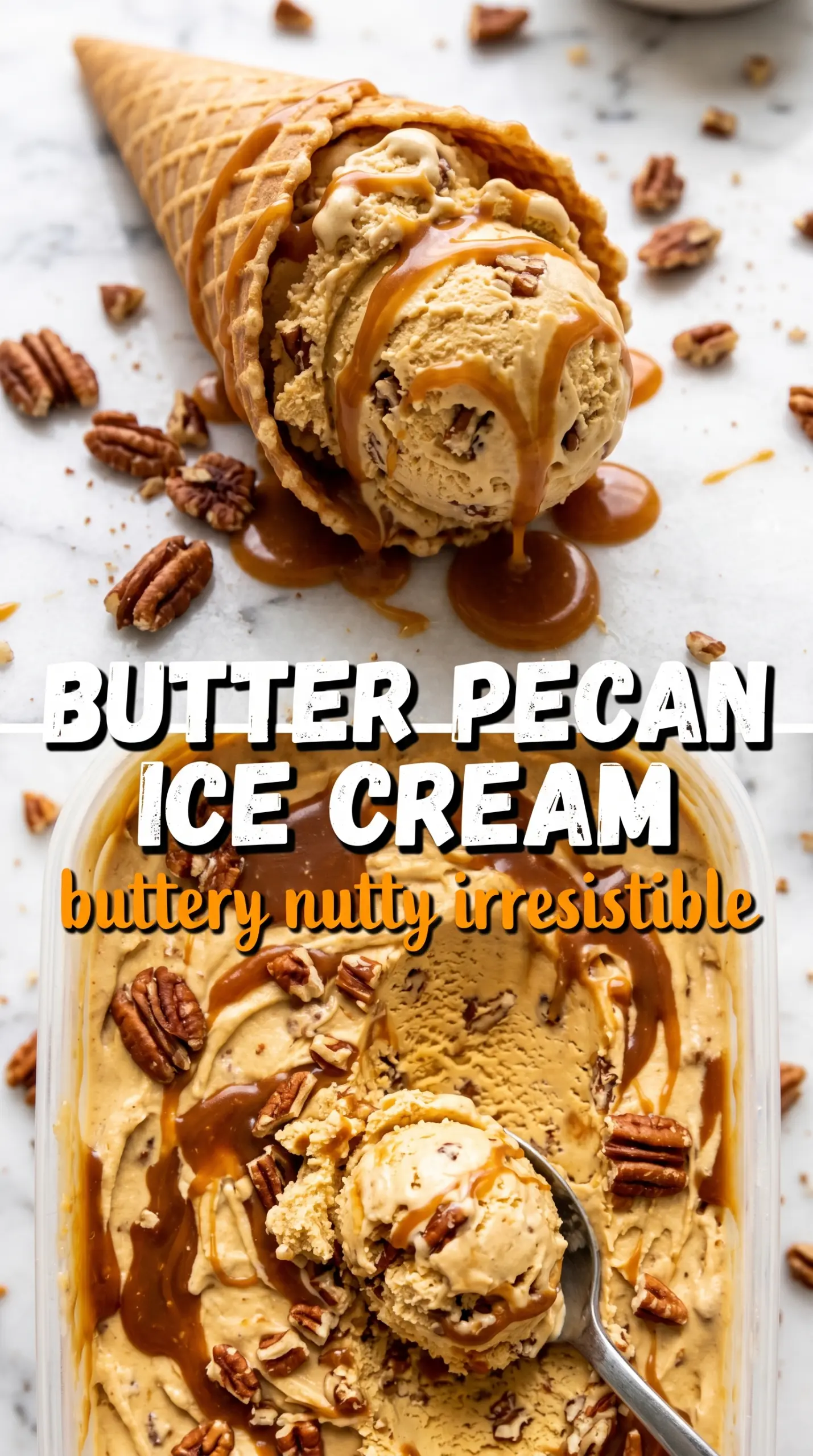
Butter pecan ice cream tastes like the best part of a homemade dessert bowl: creamy, nutty, and just salty enough to keep the sweetness in check. The custard base turns rich and smooth in the freezer, while the butter-glazed pecans stay toasted and fragrant instead of going bland or chewy. That contrast is what makes this flavor worth keeping in regular rotation.
The trick is treating the pecans like an ingredient with its own job, not just a mix-in. Toasting them in butter pulls out a deeper, almost caramel note, and a little salt keeps the whole batch from leaning flat. The custard also matters here; egg yolks give the ice cream body, which means you get a dense scoop that melts slowly instead of an icy churn.
Below, you’ll find the small details that make the texture work, the ingredient swaps that still hold up, and the one timing step that keeps the pecans crunchy after churning.
The buttered pecans stayed crunchy all the way through, and the custard froze up smooth instead of icy. I let it churn the full time, and the flavor tasted like a fancy scoop shop version.
Save this butter pecan ice cream for the nights when you want a custard base and buttery toasted pecans in every scoop.
The Part Most Ice Cream Gets Wrong: The Pecans Need Their Own Toast
A lot of butter pecan ice cream recipes treat the nuts like an afterthought, and that is where the flavor gets lost. Pecans need enough heat to turn fragrant and a little darker than you might expect before they ever meet the churned base. Under-toasted pecans taste dusty once frozen; properly toasted ones bring the round, almost caramel edge that defines the whole dessert.
The other place this recipe can go sideways is the custard. If the yolks hit high heat too fast, you get little bits of scrambled egg instead of a smooth base. Cook it patiently to 175°F, stirring constantly, and strain it anyway. That extra step catches the tiny bits that can make the finished ice cream feel grainy.
- Pecans — Use good pecan halves, not chopped pieces, if you want the best texture. Halves stay noticeable after churning and give you those satisfying bites instead of disappearing into the base.
- Brown sugar — This is where the flavor starts to tilt toward caramel. Light or dark brown sugar both work, but dark brown sugar gives you a deeper molasses note.
- Egg yolks — They thicken the custard and give the ice cream that dense, scoopable body. There isn’t a true substitute here if you want classic custard ice cream texture.
- Heavy cream and whole milk — Use both. All cream makes the base heavy and dull; the milk keeps it balanced and helps the vanilla and pecans come through clearly.
What Each Ingredient Is Actually Doing in This Ice Cream
- Base ingredient (cream, milk, or custard) — This provides the foundation and richness. Quality matters.
- Sweetener (sugar, honey, or condensed milk) — This sweetens and prevents ice crystals. The ratio is critical.
- Flavor element (vanilla, fruit, chocolate, coffee, or other) — This defines the ice cream personality. Use quality ingredients.
- Egg yolks (if making custard base) — These create richness and silky texture. Optional but elevates ice cream.
- Churning (if using ice cream maker) — This incorporates air and prevents ice crystals. Critical for smooth texture.
- Freezing temperature and time — Proper freezing prevents rock-hard texture. Store at 0°F or below.
- Mix-ins (chocolate, cookies, fruit, or swirls) — These add texture and prevent one-dimensional flavor. Add near end of churning.
- Serving temperature (slightly soft, not rock hard) — This provides creamy mouthfeel. Remove from freezer 5 minutes before serving.
Building the Custard, Then Folding in the Pecans at the Right Moment
Toasting the Pecans in Butter
Melt the butter over medium heat, add the pecans and salt, and stir often until the nuts smell deep and nutty and the butter takes on a toasted aroma. You want color, but not blackened edges. If the heat is too high, the butter will scorch before the pecans are ready. Spread them on parchment right away so they cool in a single layer and stop cooking.
Warming the Dairy and Sugar
Heat the cream, milk, and brown sugar together just until the sugar dissolves and the mixture starts steaming. Don’t rush this to a boil. Boiling dairy can change the texture and make tempering the yolks harder to control, while gentle heat keeps the base smooth from the start.
Tempering and Cooking the Custard
Whisk the yolks until smooth, then drizzle in the hot dairy slowly while whisking the whole time. That keeps the yolks from seizing into bits. Return everything to the saucepan and cook, stirring constantly, until it reaches 175°F and lightly coats the back of a spoon. If you stop at a runny consistency, the ice cream freezes loose and icy instead of creamy.
Chilling Before Churning
Strain the custard, stir in the vanilla, and cool it completely before it goes into the refrigerator. This part matters more than people think. A warm base churns poorly and can turn soft and slushy instead of thick and smooth. Give it the full chill time so the machine can do its job.
Adding the Pecans at the End
Churn the custard until it looks like soft-serve, then add the butter-toasted pecans during the last few minutes. That timing keeps them distributed without giving them too long to sit in the base and soften. If you add them too early, they lose their crunch and sink into the churn as the ice cream thickens.
How to Adapt This Butter Pecan Ice Cream Without Losing the Texture
Dairy-Free Version
Use full-fat canned coconut milk in place of the cream and whole milk, and expect a faint coconut note in the finished ice cream. The custard won’t be quite as rich, but the egg yolks still give it body. Keep the pecans and brown sugar the same so the flavor stays anchored in the toasted nutty base.
No-Egg Custard Shortcut
If you want a simpler base, replace the yolk custard with a cornstarch-thickened ice cream base. It will freeze a little lighter and less velvety than the classic version, but it still carries the butter pecan flavor well. The key is to cool it completely before churning so it doesn’t ice up.
Extra-Salty Southern Style
Add a small pinch more salt to the pecans and finish the custard with a tiny pinch in the base. That pushes the butter and brown sugar notes forward and gives you a more old-fashioned Southern butter pecan flavor. Don’t overdo it; the salt should sharpen the sweetness, not make the ice cream taste savory.
Storage and Reheating
- Refrigerator: The custard base can be refrigerated up to 2 days before churning. Stir before freezing if it separates a little.
- Freezer: Butter pecan ice cream keeps well for about 2 weeks in an airtight container. Press parchment or plastic wrap against the surface to limit ice crystals.
- Reheating: Let the container sit at room temperature for 5 to 10 minutes before scooping. If it is rock hard, don’t microwave the whole tub; it melts the edges and leaves the center icy.
Questions I Get Asked About This Recipe
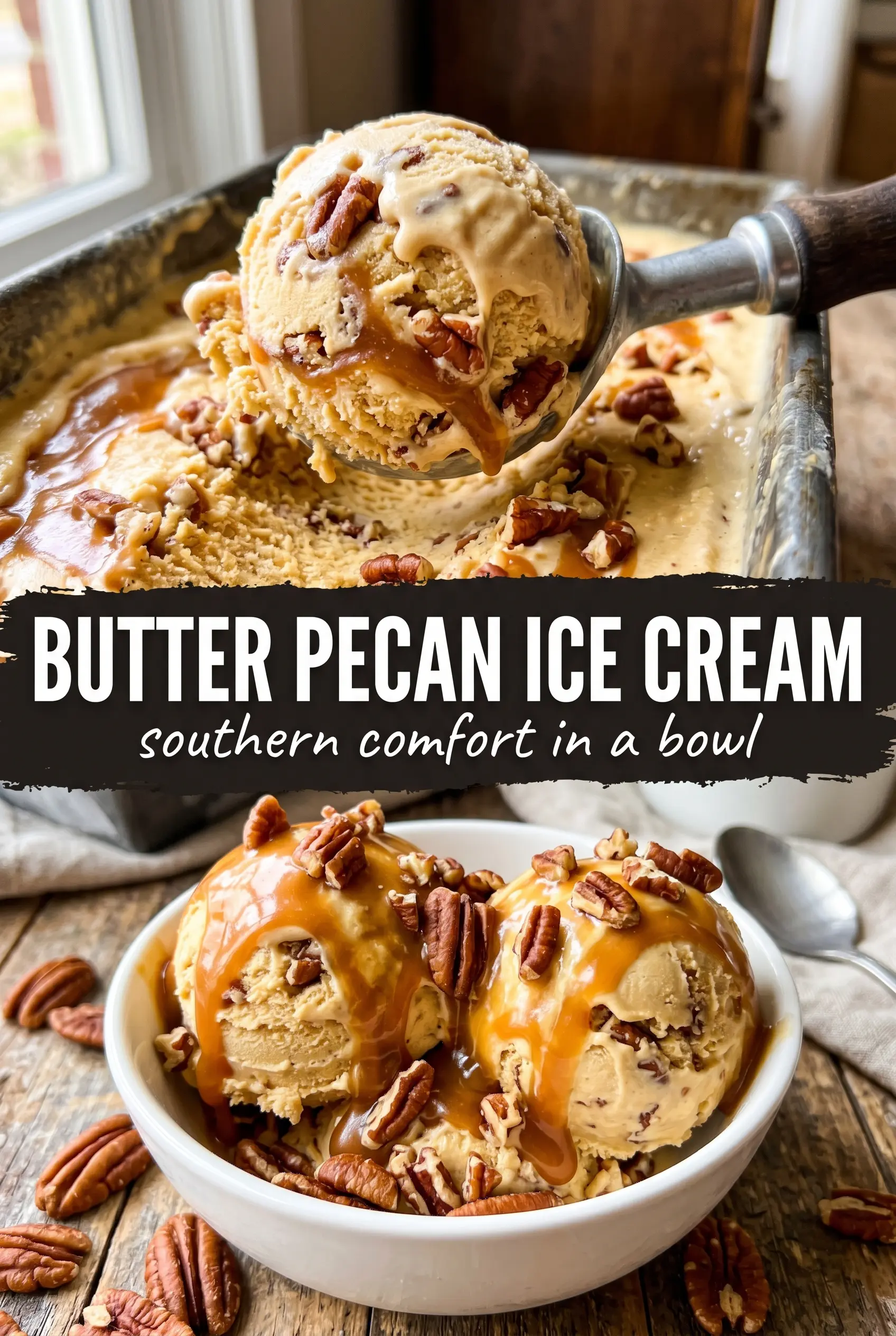
Butter Pecan Ice Cream
Ingredients
Equipment
Method
- Melt unsalted butter in a skillet over medium heat, add pecan halves and 1/2 tsp salt, then toast for 4-5 minutes until deeply golden and fragrant. Spread on a parchment-lined sheet and cool completely for crisp, crunchy pieces.
- In a saucepan, heat heavy cream, whole milk, and brown sugar together until the sugar dissolves and the mixture steams. Keep it at a gentle heat so the base stays smooth before tempering.
- Whisk egg yolks in a bowl until smooth, then slowly whisk in the hot cream mixture. Pour back into the saucepan and cook, stirring constantly, until it reaches 175°F.
- Strain the custard, then stir in vanilla extract and let cool completely. Refrigerate at least 4 hours so the base thickens and churns properly.
- Churn the chilled base in an ice cream maker. Add the butter-toasted pecans in the last 5 minutes so they stay evenly distributed with visible crunch.
- Transfer to a container and freeze until firm. This final freeze sets the texture for clean scoops.