Butternut squash, caramelized onion, and goat cheese make a quiche that cuts cleanly, holds together on the plate, and still tastes like something you’d order at a café. The squash brings soft sweetness, the onions go deep and savory, and the goat cheese gives each bite a tangy edge that keeps the custard from feeling heavy. It’s the kind of quiche that disappears at brunch, but it’s just as good sliced cold from the fridge the next day.
What makes this version work is restraint. The squash is roasted first so it stays distinct instead of turning watery in the custard, and the onions are cooked slowly until their sharpness is gone and their natural sweetness comes through. A blind-baked crust helps protect the bottom from getting soggy, which matters when you’re using a filling this rich. The custard itself stays simple: eggs, cream, a little milk, thyme, and nutmeg so the vegetables and cheese still lead the way.
Below, I’ll show you the one step that keeps the crust crisp, how to tell when the center is set without overbaking it, and a few smart swaps if you need to work with what you already have.
The custard set up beautifully and the bottom crust stayed crisp, even with all that squash and onion. I served it for brunch and the goat cheese on top made every slice taste balanced instead of heavy.
Save this butternut squash goat cheese and caramelized onion quiche for a brunch that slices cleanly and tastes even better after the flavors settle.
The Trick to Keeping the Bottom Crust Crisp Under a Rich Filling
A quiche like this can go wrong in one place faster than anywhere else: the crust. Butternut squash and onion both hold moisture, and the custard needs enough bake time to set the center without flooding the pastry. Blind baking the crust first gives it a head start, which is what keeps the bottom from turning soft or gummy once the filling goes in.
The other detail that matters is how the vegetables go in. Roasted squash tastes concentrated and stays in clean cubes, while caramelized onions bring sweetness without dumping extra water into the custard. If either one is undercooked, the filling can taste flat and loose. This quiche rewards patience more than speed.
- Blind-baked crust — This is what gives you a crisp base under the custard. Without it, the bottom crust has to bake through while the filling is setting, and that’s when sogginess happens.
- Roasted butternut squash — Roasting drives off excess moisture and gives the squash better shape and flavor. Boiled or steamed squash turns soft fast and can disappear into the custard.
- Slow caramelized onions — Medium-low heat is the difference between sweet, jammy onions and browned onions with a bitter edge. Give them the full time so they melt into the filling instead of standing out as sharp pieces.
- Rest time after baking — The custard keeps setting as it cools. Cut too early and the slices slump; wait the full 10 minutes and you’ll get cleaner wedges.
What Each Ingredient Is Doing in the Custard

- Butternut squash — This gives the quiche body and sweetness. Roast it until the edges are tender and lightly caramelized, because that deeper flavor is what keeps the filling from tasting one-note.
- Onion — The long caramelization is worth it here. A quick sauté leaves you with harsh onion flavor, while slow cooking builds the savory backbone of the whole dish.
- Goat cheese — Goat cheese melts into little tangy pockets that cut through the cream. Feta can work in a pinch, but it’s saltier and firmer, so the quiche will taste sharper and a little less lush.
- Heavy cream and whole milk — The cream gives the custard richness and the milk keeps it from becoming heavy. Using all cream makes the texture denser; using all milk makes the filling less silky.
- Fresh thyme and nutmeg — Thyme ties the vegetables together, and nutmeg gives the custard that quiet warm note French-style quiche depends on. Dried thyme works if that’s what you have, but use less because it reads stronger.
Building the Filling So the Custard Sets Without Curdling
Roast the squash until it holds its shape
Roast the squash at 425F until it’s tender at the edges but not collapsing. You want cubes that still look like cubes, because they’ll soften a little more in the oven once the custard surrounds them. If the squash starts out waterlogged, the quiche can taste loose and the filling can separate around the edges.
Cook the onions until they turn sweet and jammy
Use medium-low heat and give the onions time. They should slowly shift from pale and sharp to golden, then deep amber, with a soft, almost spreadable texture. If you rush them over higher heat, they brown on the outside before the sweetness develops, and that rough onion note sticks out in the finished quiche.
Whisk the custard just until smooth
Beat the eggs, cream, milk, thyme, nutmeg, salt, and pepper together until the mixture looks even and fully blended. Don’t whip in a lot of air; too much foam can make the top puff unevenly and create a bouncy texture instead of a silky slice. Pour the custard over the filling slowly so it settles into the gaps between the squash and onion.
Stop baking at the slight wobble
The quiche is done when the edges are set and the center still gives a small wobble when you move the pan. That wobble should look like set gelatin, not liquid slosh. Pull it from the oven at that point; carryover heat finishes the center while it rests, and that’s what protects you from dry, overbaked custard.
Three Ways to Adapt This Quiche Without Losing the Balance
Dairy-Free Version with a Softer Set
Use a full-fat unsweetened oat or cashew cream in place of the heavy cream and milk, and choose a dairy-free crust. The custard won’t be quite as silky, but it will still set if you keep the filling close to the original volume and bake until the center just trembles.
Gluten-Free Crust Swap
Use a sturdy gluten-free pie crust that can hold a wet custard, not a crumbly press-in shell unless it’s built for baking. Blind baking matters even more here, because gluten-free dough tends to soften faster once the filling goes in.
Swap the Cheese for a milder finish
Cream cheese or ricotta can replace the goat cheese if you want a gentler flavor, but the quiche will lose that tangy edge. Ricotta makes the filling a little lighter; cream cheese makes it richer and more cohesive.
Storage and Reheating
- Refrigerator: Store covered for up to 4 days. The custard firms up a little more in the fridge, which makes the slices even cleaner.
- Freezer: It freezes well if you wrap individual slices tightly and freeze them after cooling completely. The texture is best if you reheat from thawed, not straight from frozen.
- Reheating: Warm in a 325F oven until heated through, about 15 to 20 minutes for slices. The mistake people make is using the microwave, which can turn the custard rubbery and soften the crust.
Answers to the Questions Worth Asking
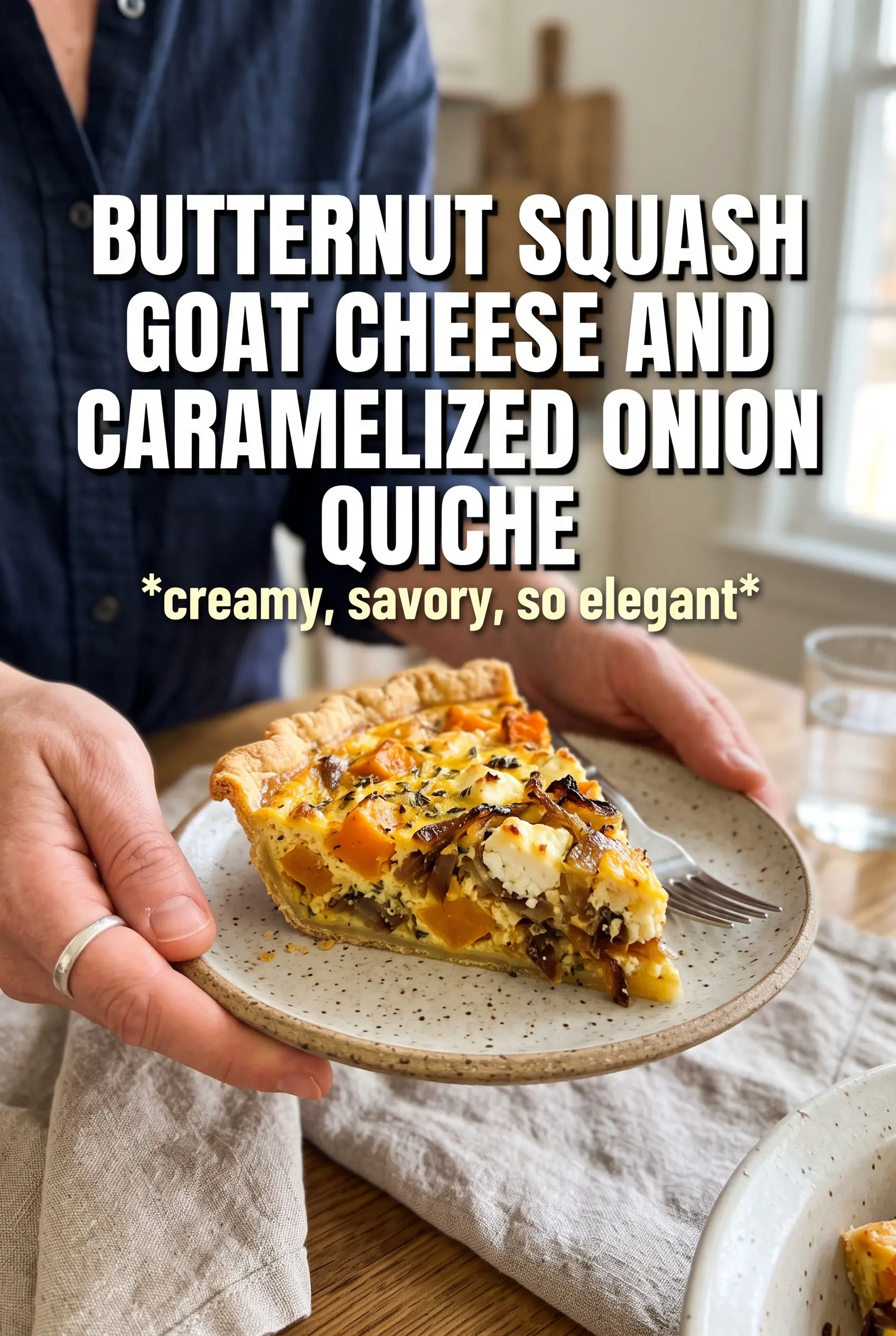
Butternut Squash Goat Cheese and Caramelized Onion Quiche
Ingredients
Equipment
Method
- Roast the cubed butternut squash on a sheet pan at 425F until tender, about 25 to 30 minutes, then set aside to cool slightly so it doesn’t steam the custard.
- Preheat oven to 375F, fit the crust into a 9-inch tart or pie pan, and blind bake for 12 minutes to set the base.
- Caramelize the thinly sliced onion in unsalted butter over medium-low heat for 30 minutes until golden and sweet, stirring often so the edges don’t burn.
- Whisk the eggs, heavy cream, whole milk, fresh thyme, nutmeg, salt, and black pepper until smooth and evenly combined.
- Scatter the caramelized onions and roasted butternut squash over the blind-baked crust in an even layer.
- Crumble the goat cheese evenly over the filling so it melts into small creamy pockets.
- Pour the custard over everything and bake at 375F for 40 to 45 minutes, until just set with a slight wobble in the center (a gentle jiggle, not liquid).
- Rest the quiche for 10 minutes before slicing so the custard firms up and cleaner wedges hold their shape.


