Campfire potatoes come out with the kind of texture people remember: tender slices at the center, smoky edges, and just enough buttery richness to make the whole packet disappear fast. The onions soften into the potatoes, the paprika gives the butter a warm color, and if you let the packet sit over steady heat long enough, the bottom layer gets those crisp, almost fried spots that make foil-pack potatoes worth making in the first place.
The trick is in the cut and the heat. Thin, even slices cook at the same pace, which keeps you from ending up with a mix of crunchy and mushy pieces. Heavy-duty foil matters too, because regular foil tears when the butter melts and the packet gets flipped over a fire. A tight seal traps steam at first, then the last few minutes over the grate turn that steam into soft, seasoned potatoes with a little browned character around the edges.
Below, I’ve included the one place people usually go wrong with foil packets, plus the best way to handle cheese if you want the extra melty finish without turning the whole thing greasy.
The potatoes cooked through evenly and the butter, onion, and paprika soaked into every layer. I opened the packet after 30 minutes and the bottom had those perfect golden edges without burning.
Save these buttery campfire potatoes for the next night you want a foil packet side with crispy edges and tender centers.
The Layering Trick That Keeps the Bottom From Turning Mushy
Foil packet potatoes fail when the slices are piled too thick in one spot. The bottom layer steams before it ever has a chance to pick up heat, and by the time the top is tender, the center can still be a little firm. Spreading the potatoes and onion in an even layer gives the packet a better shot at cooking at the same pace from top to bottom.
The other mistake is sealing in too much air. You want the packet tight, but not ballooned up like a pillow. A snug seal keeps the butter and seasoning in contact with the potatoes, and that contact is what carries the flavor through every slice.
- Uniform slices — Thin, even potatoes cook through without breaking down into a soft mash at the bottom of the packet.
- Onion — Adds moisture and sweetness as it softens; slice it thin so it melts into the potatoes instead of staying sharp.
- Butter — This is the flavor base and the cooking fat. Cold cubes melt slowly and coat the potatoes as the packet heats.
- Heavy-duty foil — Regular foil can split when the packet gets flipped. Heavy-duty foil holds up better over direct campfire heat.
What Each Seasoning Is Actually Doing in the Packet

- Garlic powder — Gives the potatoes that savory, campfire-friendly base flavor without the risk of fresh garlic burning in the packet.
- Paprika — Adds color and a warm, lightly smoky note. It matters more than people think here, because the butter carries it across every slice.
- Salt and pepper — Salt is what makes the butter taste like more than melted fat. Pepper gives the finished potatoes a little bite right at the end.
- Cheddar cheese — Optional, but worth it if you want a richer finish. Add it only after the potatoes are tender so it melts without separating or turning greasy.
Building the Foil Packet So the Potatoes Cook Through
Layering the Potatoes and Onion
Start with a double layer of foil and spread the potatoes into an even bed before adding the onion. If the pile is too thick, the center steams unevenly and the bottom can stay underdone. Keep the slices in a loose, level layer so the heat has a path through the packet.
Sealing in the Butter and Seasoning
Dot the butter across the top rather than placing it in one lump. That helps it melt and run through the packet instead of pooling in one corner. Sprinkle the seasonings evenly over the potatoes before folding the foil tightly around everything, pressing the seams closed so the steam stays inside.
Cooking Over Medium Heat
Set the packet over medium campfire heat, not the hottest part of the flames. Direct fire that is too aggressive will burn the foil before the potatoes are tender. Flip the packet halfway through so the bottom layer gets a chance to brown and the heat stays even from both sides.
Finishing With Cheese
Open the packet carefully because the steam hits fast. If you’re using cheddar, sprinkle it over the hot potatoes, close the packet again, and let it sit for a couple of minutes until the cheese melts into the butter and clings to the slices. That short rest is enough; leave it too long and the potatoes lose the crisp edges you worked for.
How to Adapt These Campfire Potatoes for Different Fires and Diets
Dairy-Free Foil Packet Potatoes
Swap the butter for a plant-based butter with a high fat content. Coconut oil works in a pinch, but it changes the flavor and firms up as the packet cools, so it’s not my first choice. You’ll still get tender potatoes, just with a slightly different finish.
Extra-Cheesy Campfire Potatoes
Add the cheddar at the end as written, then open the packet for a minute before serving so the top gets glossy instead of watery. If you pile cheese in too early, it can melt out into the foil and form a greasy puddle at the bottom.
Oven or Grill Version
Bake the sealed packet at 400°F or set it on a grill over medium heat for about the same amount of time. The result is close to the campfire version, though you’ll lose a little of that smoky edge. Check early if your slices are very thin, because they can soften faster than you expect.
Storage and Reheating
- Refrigerator: Store leftovers in a sealed container for up to 4 days. The potatoes soften a little as they sit, but the flavor holds well.
- Freezer: They can be frozen, but the texture turns softer after thawing, so I only do it when I have a big batch left over.
- Reheating: Warm in a skillet over medium heat or in a 400°F oven until hot. The microwave works, but it steams away the browned edges, which is the best part of these potatoes.
Answers to the Questions Worth Asking
Campfire Potatoes
Ingredients
Equipment
Method
- Layer the thinly sliced potatoes and sliced onion on a large double-layer of heavy-duty aluminum foil sheets.
- Dot the top with cubed butter cubes, then sprinkle evenly with garlic powder, paprika, salt, and pepper.
- Fold the foil into a sealed packet so it holds steam inside.
- Place the sealed packet on a campfire grate over medium heat for 25-30 minutes, flipping halfway so both sides steam evenly.
- Open the packet, sprinkle with shredded cheddar cheese if desired, and reseal.
- Return the resealed packet to the campfire grate for 2 minutes to melt the cheese until glossy and lightly browned at the edges.
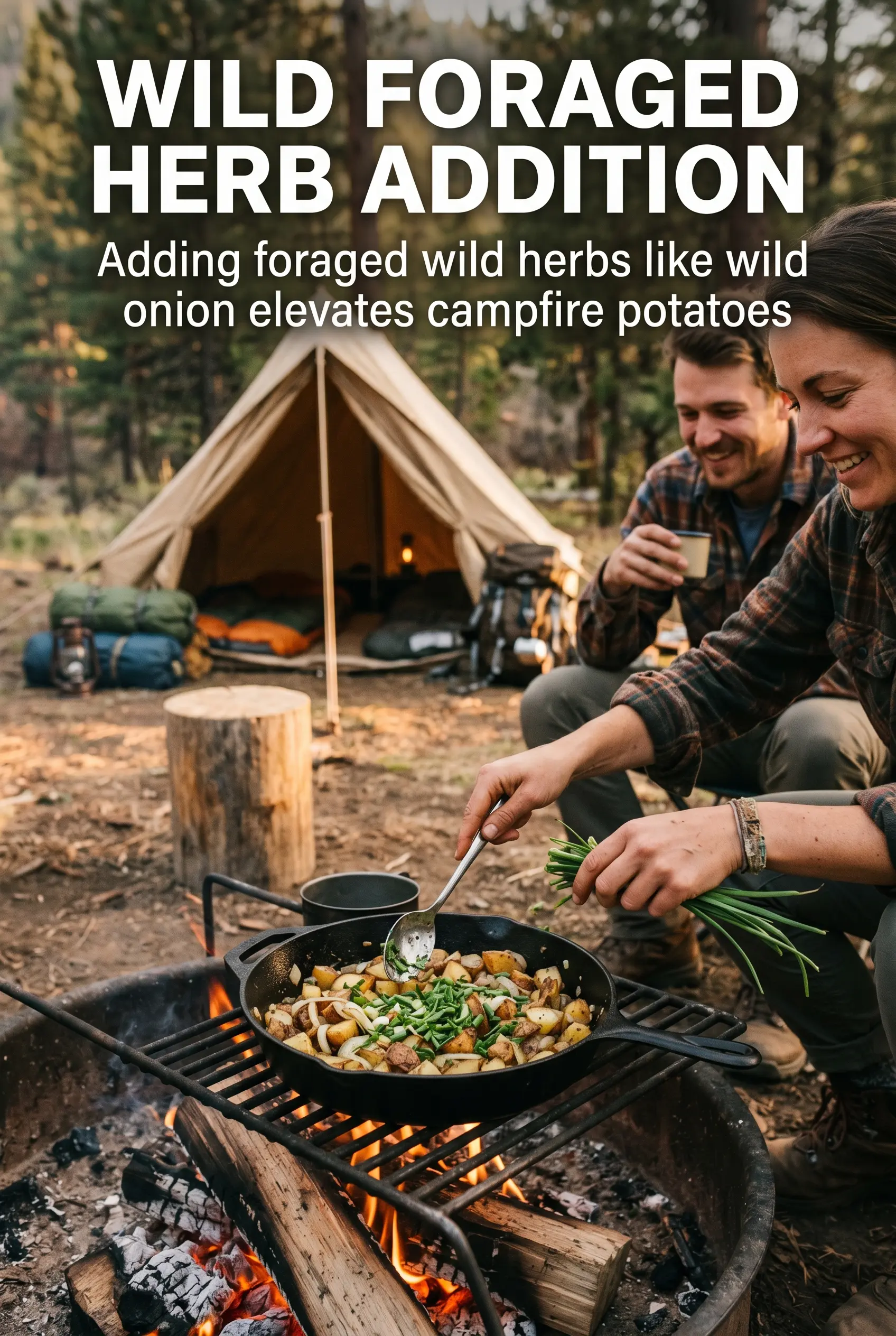
- Serve the campfire potatoes hot directly from the packet, and lift pieces with a fork for that fork-tender, golden look.